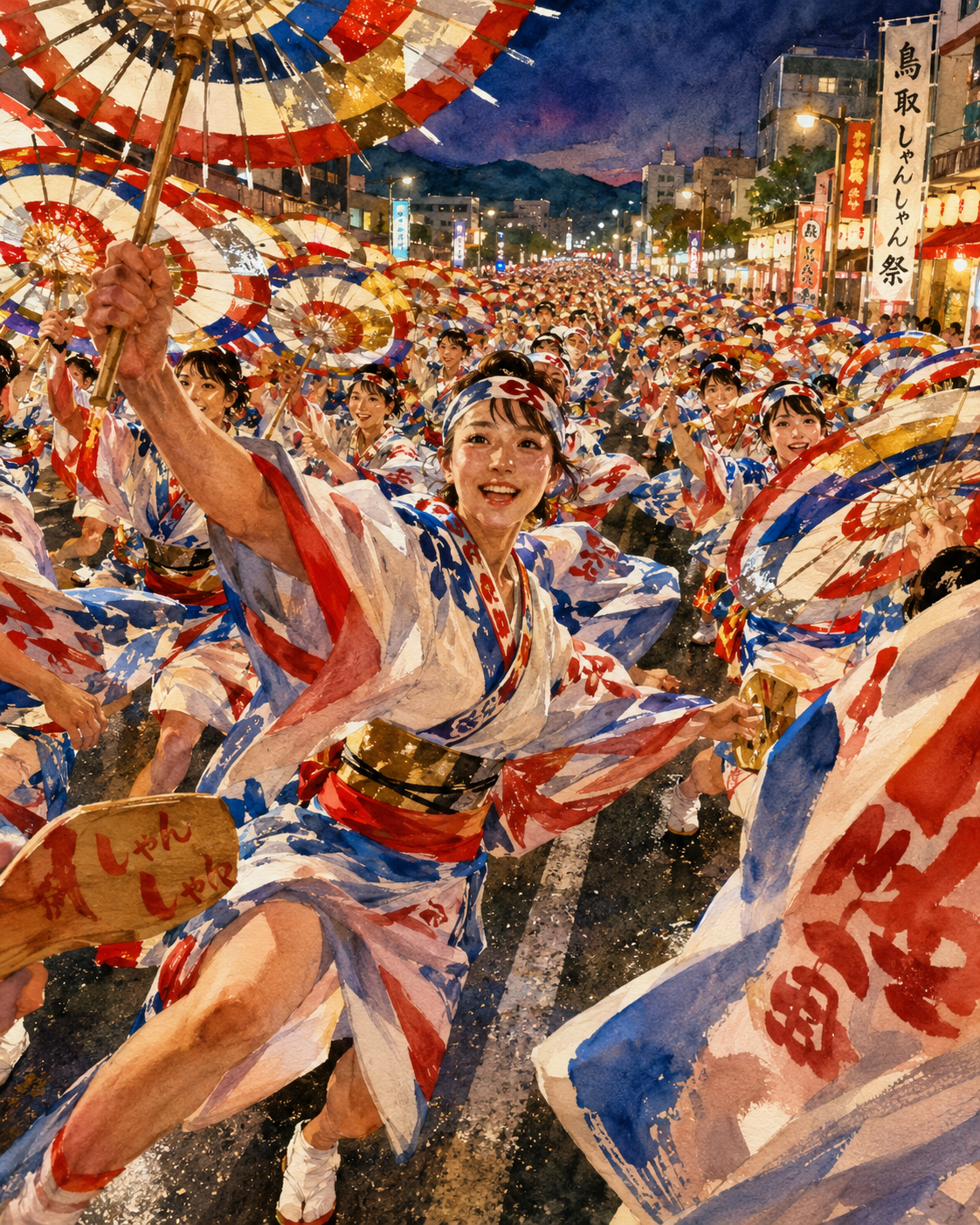
Joyful Whirl of the Shan-Shan Umbrellas
Critique
Introduction This festival watercolor thrusts the viewer into a dance of patterned parasols. A smiling performer reaches forward while participants fill the street behind her. Collective rhythm becomes the image’s true space. Description The central dancer wears a white robe marked with vigorous red and blue shapes, a gold-and-black sash, headband, and white footwear. She raises a striped parasol and extends her other arm. Women around her repeat similar dress and umbrellas. The wet street recedes toward dark hills beneath a violet sky. Lanterns, shopfronts, banners, and dense spectators line both sides. A tall sign identifies the Tottori Shan-Shan Festival. Analysis Overlapping parasol circles create a pulsing field from foreground to horizon. Red, blue, and white repeat across fabric, costumes, signs, and reflected pavement, binding individual figures into one pattern. The central face and raised arm interrupt that pattern with a strong diagonal. Low viewpoint magnifies her energy. Warm lamps articulate depth within cool night. Dense detail risks confusion, but circular repetition and the central gesture maintain organization. Interpretation and Evaluation The performer’s open expression directly includes the viewer, collapsing the division between parade and audience. Repeated costumes signal shared tradition, while variations in faces and poses preserve individuality. Umbrellas transform protection from rain into instruments of display and synchronized motion. Commercial signs and street infrastructure keep celebration tied to lived civic space. The spectacle feels communal because no single dancer owns the rhythm, even when one anchors the picture. Conclusion The work succeeds as an image of coordinated joy. Its abundance is not mere crowding; repetition makes many bodies legible as a temporary collective. The extended hand invites the viewer to enter a tradition sustained through participation.
Same Subcategory
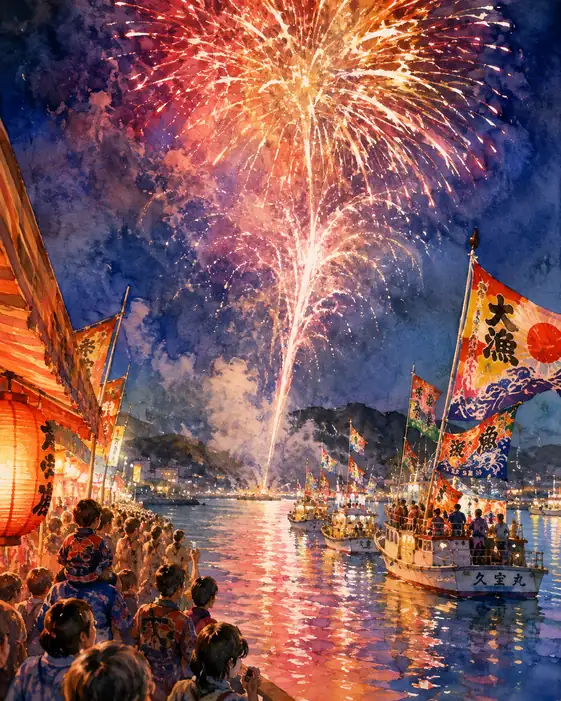 Unforgettable Sky Seen from Fathers Shoulders
Similar Artworks
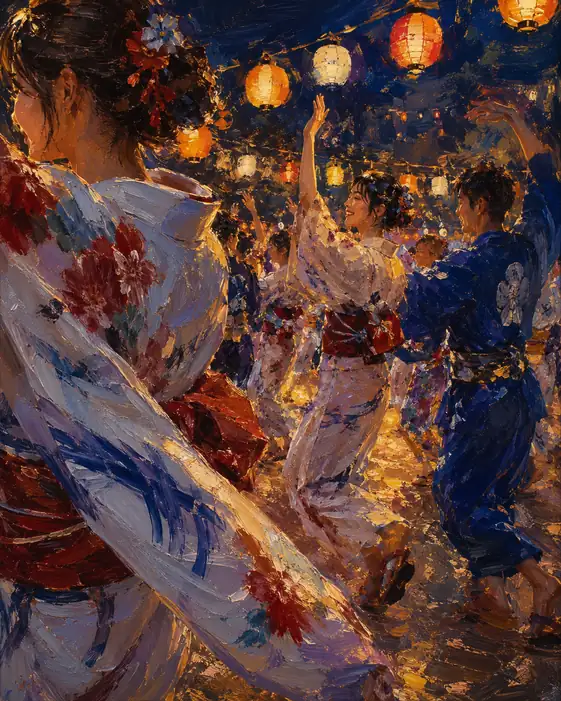 The Pulse of the Summer Night
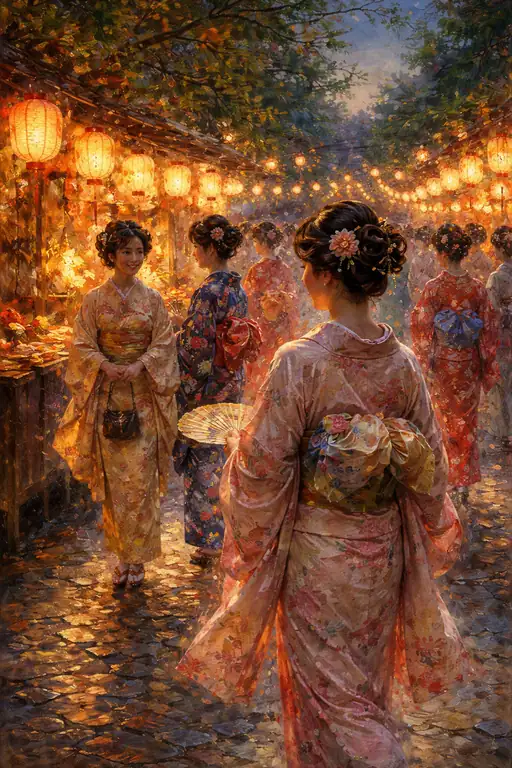 Evening Festivities, Pounding Hearts
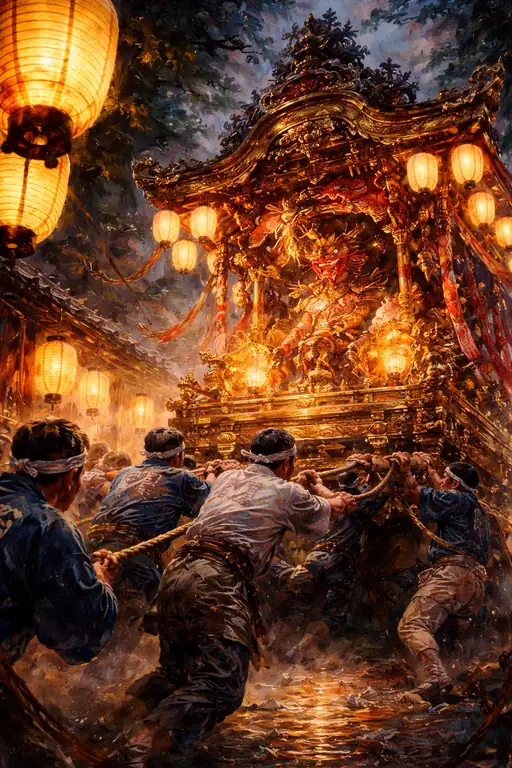 Golden Pulse of the Night Festival
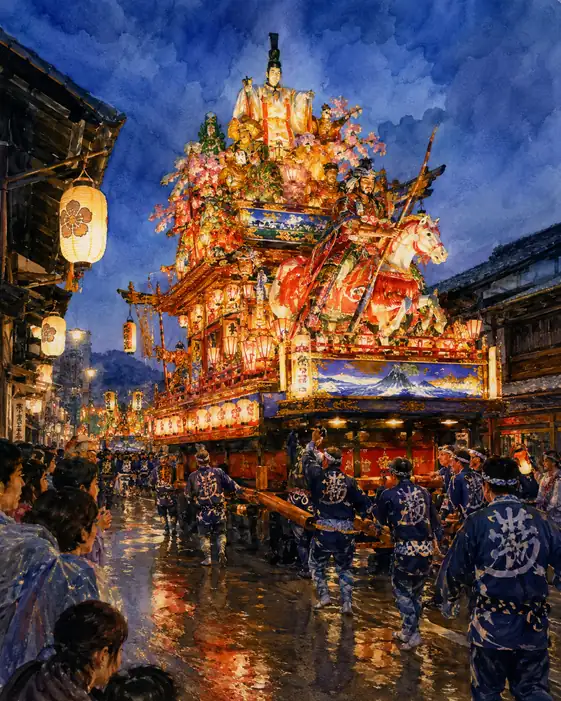 The City Blooms into a Festival
 Night Festival Bon Dance in Yukata
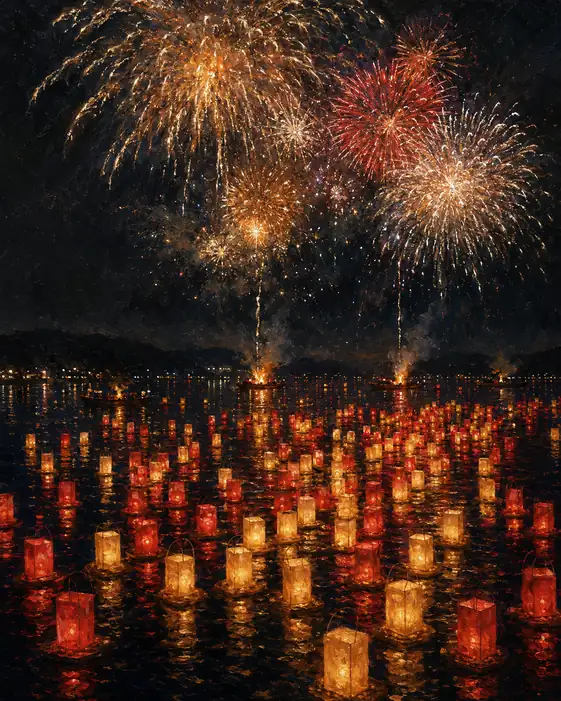 Golden Canopy Over Lake Lanterns
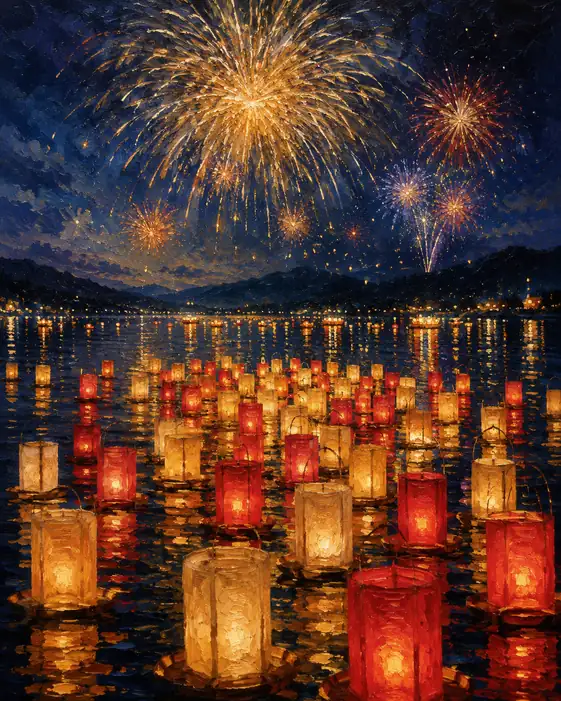 Floating Lanterns and Fireworks Over Lake
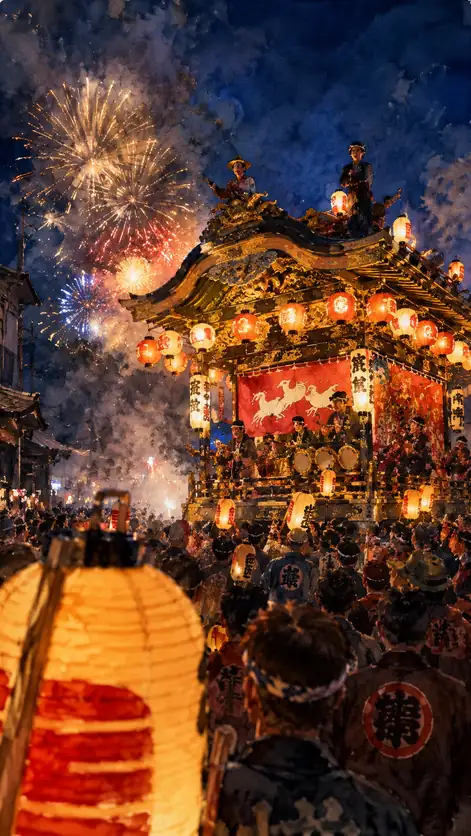 Lanterns Rise with the Festival Heart
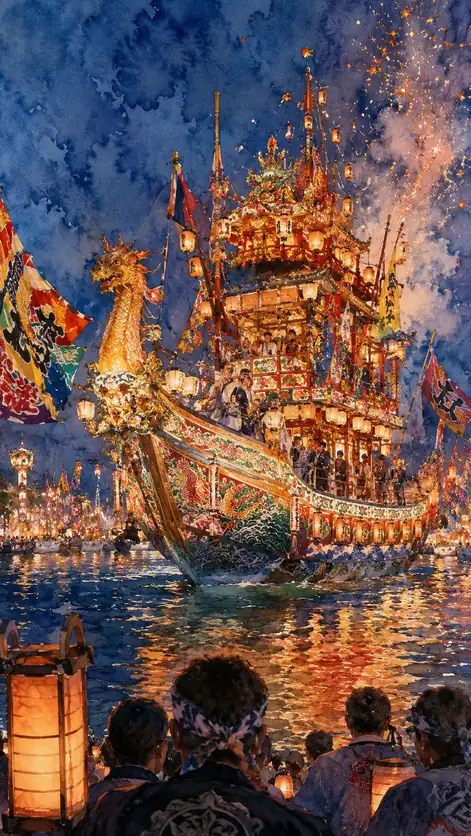 The Golden Vessel Enters the Night
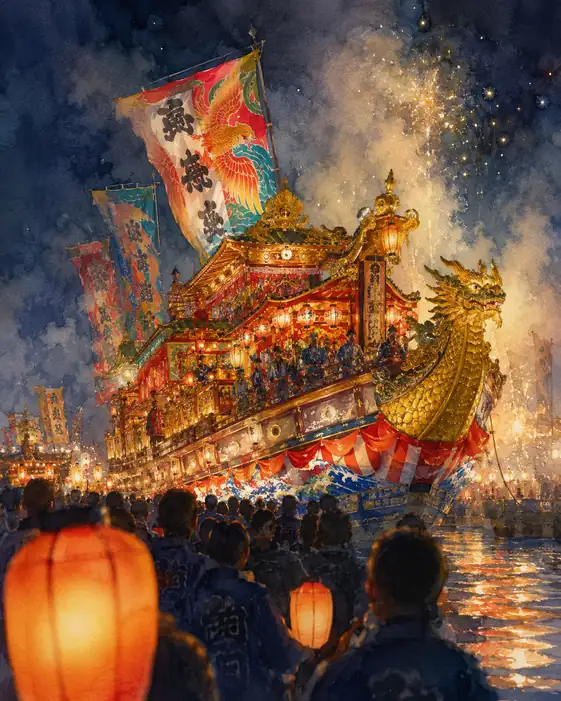 The Festival Ship Carries a Burning Sky