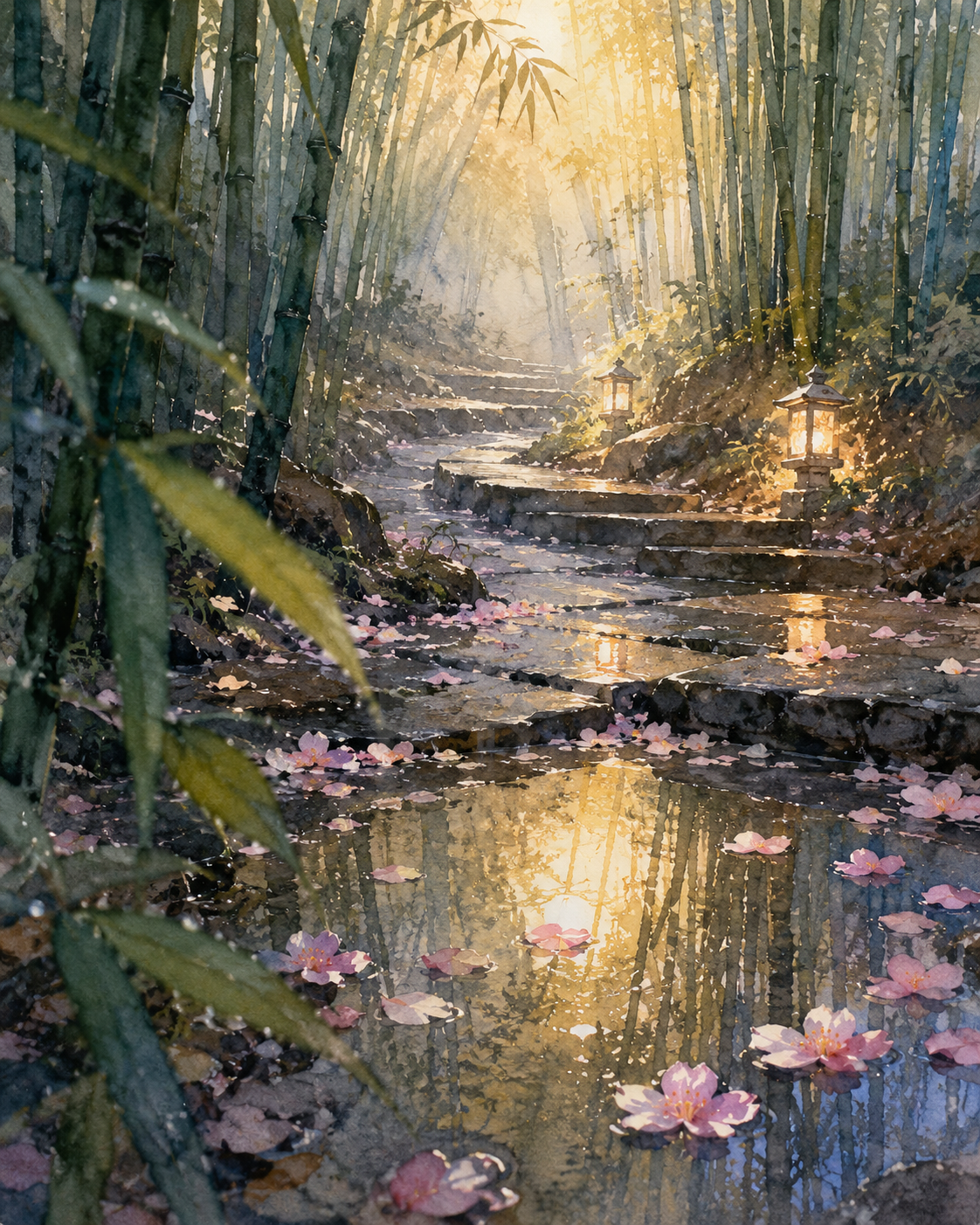
Petals Drifting on a Forest Mirror
Critique
Introduction This watercolor follows a wet bamboo path scattered with blossoms and lit by lanterns. A foreground puddle reflects bamboo and sky, making the route appear to continue downward. Passing weather turns ground into the most expansive part of the forest. Description Uneven stone steps curve upward from lower center into pale mist. Two square lanterns glow along the right bank, with another farther back. Pink flowers and separate petals float in the broad puddle and scatter across the path. Dense bamboo rises on both sides, partly screened by large blurred leaves at left. Sunlight pours from the upper center and repeats as gold in the water. Analysis The path’s zigzag establishes recession while avoiding rigid symmetry. Vertical bamboo is doubled in the puddle, creating a second forest beneath the viewer. Pink petals interrupt the dominant green-gray palette and measure depth through changing scale. Warm lanterns bridge reflected sun and shaded steps. Focus moves from distinct floating blossoms to softened distance. Foreground leaves create a partial veil, increasing the sensation of entering rather than merely observing the grove. Interpretation and Evaluation Fallen flowers traditionally suggest impermanence, but here water preserves their color and makes them appear to float between sky and earth. The lamps provide deliberate continuity beside this seasonal change. Sun, flame, and reflection offer different durations of light. The scene is idealized, yet broken stones and dispersed petals prevent static perfection. Beauty arises from transition, not from an untouched landscape. Conclusion The work succeeds by using reflection to deepen both space and time. The path ascends physically while its mirrored bamboo descends visually, suspending the viewer between directions. Petals mark the present moment within the grove’s longer life.
Same Subcategory
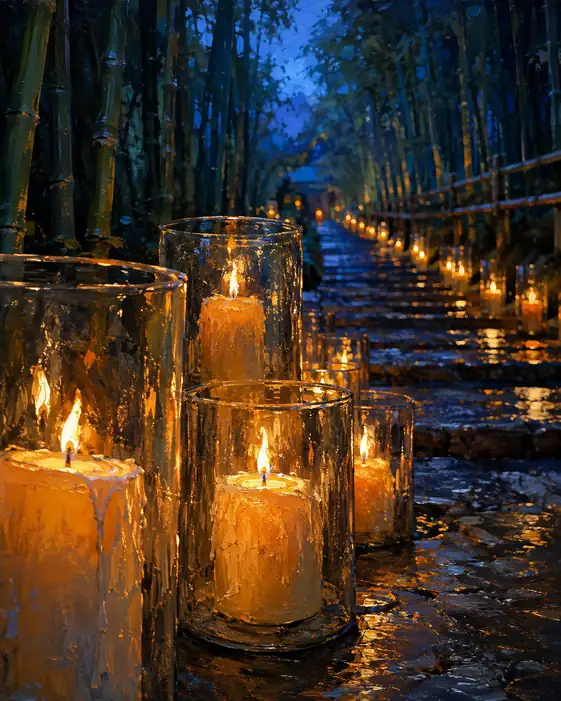 A Constellation of Candles on Forest Steps
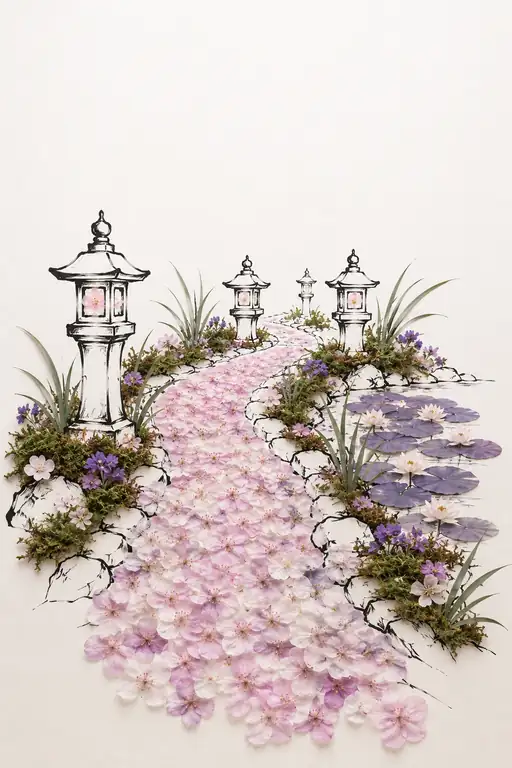 Blossom-Carpeted Pathway by the Stone Lanterns
Similar Artworks
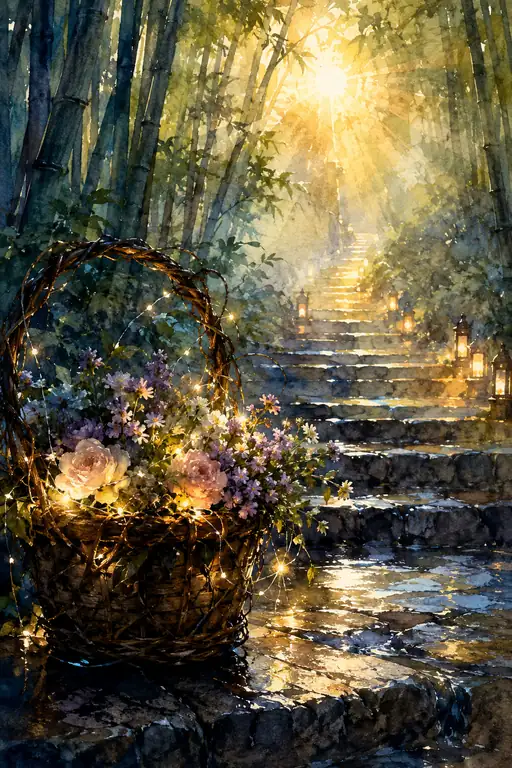 Luminescence in the Bamboo Grove
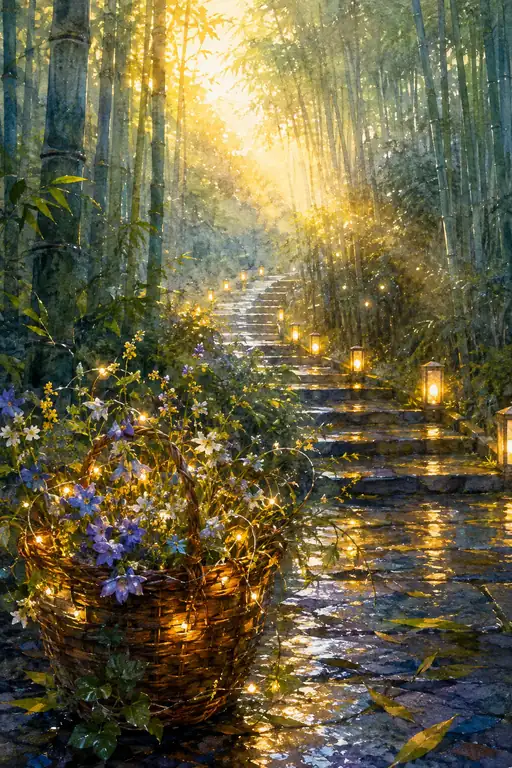 Forest Stairs Woven in Sunlight and Bloom
 Forest Voyage Across a Mirror of Rain
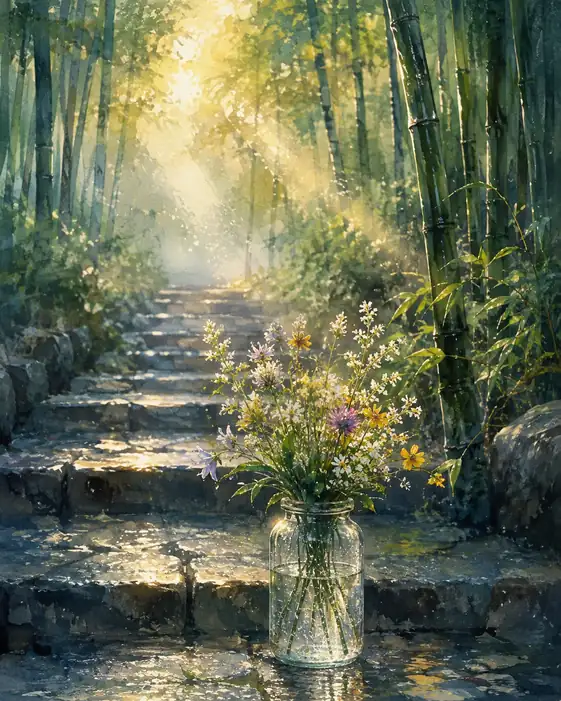 Morning Repose Along the Bamboo Grove
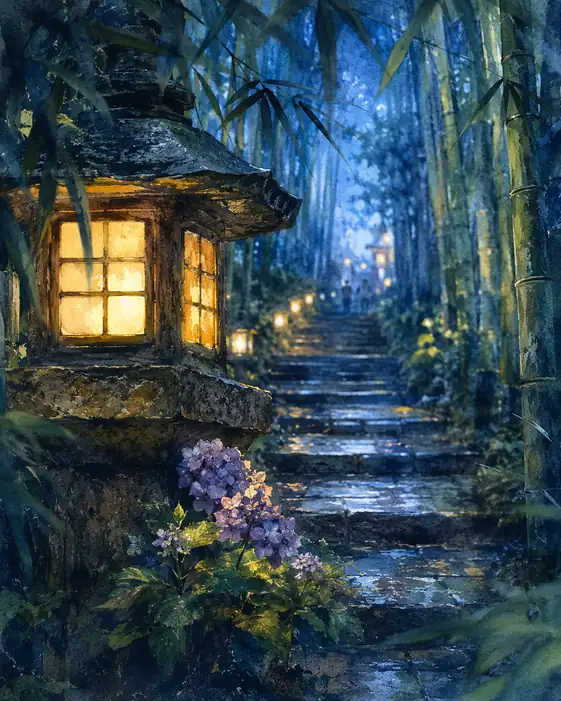 Hydrangeas and Stone Lanterns in the Dusk
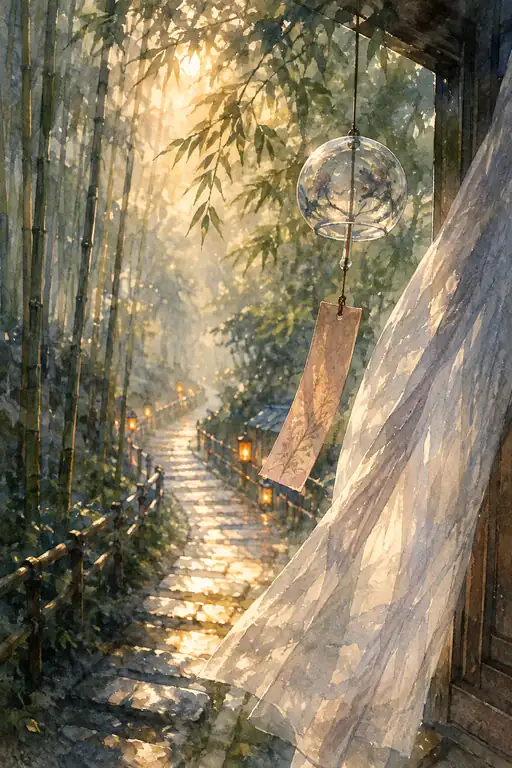 Whispering Curtain and Morning Breeze
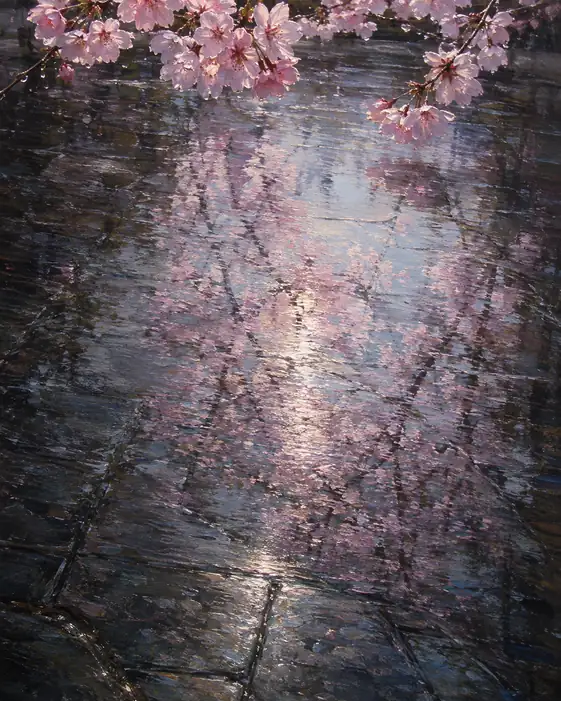 Reflection of the Canopy in Rain-Soaked Stone
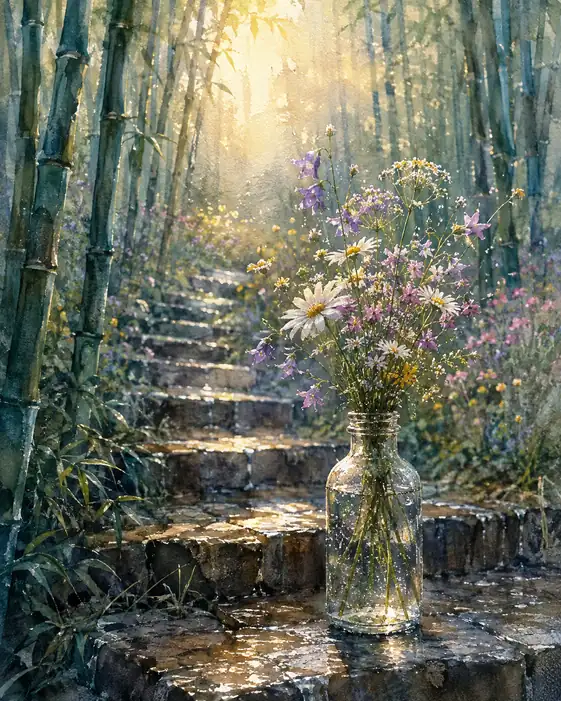 Offering of Wildflowers to the Forest Path
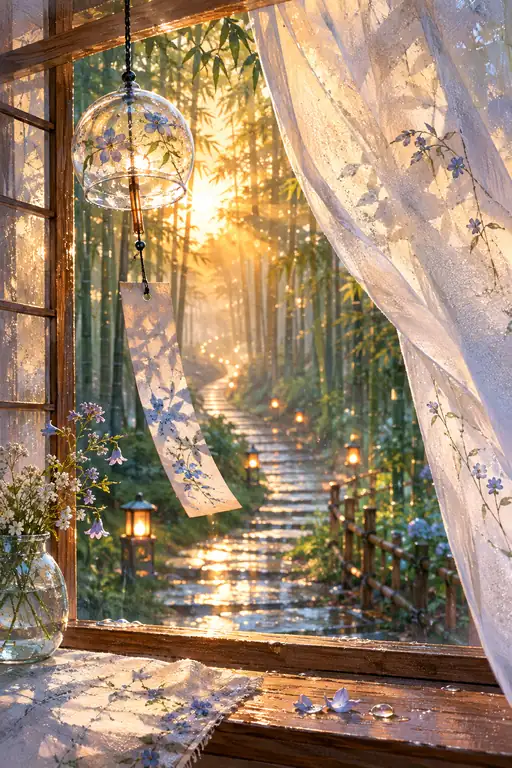 Morning Breeze Between Chime and Bamboo
 Silent Gaze Beyond the Bamboo Lanterns