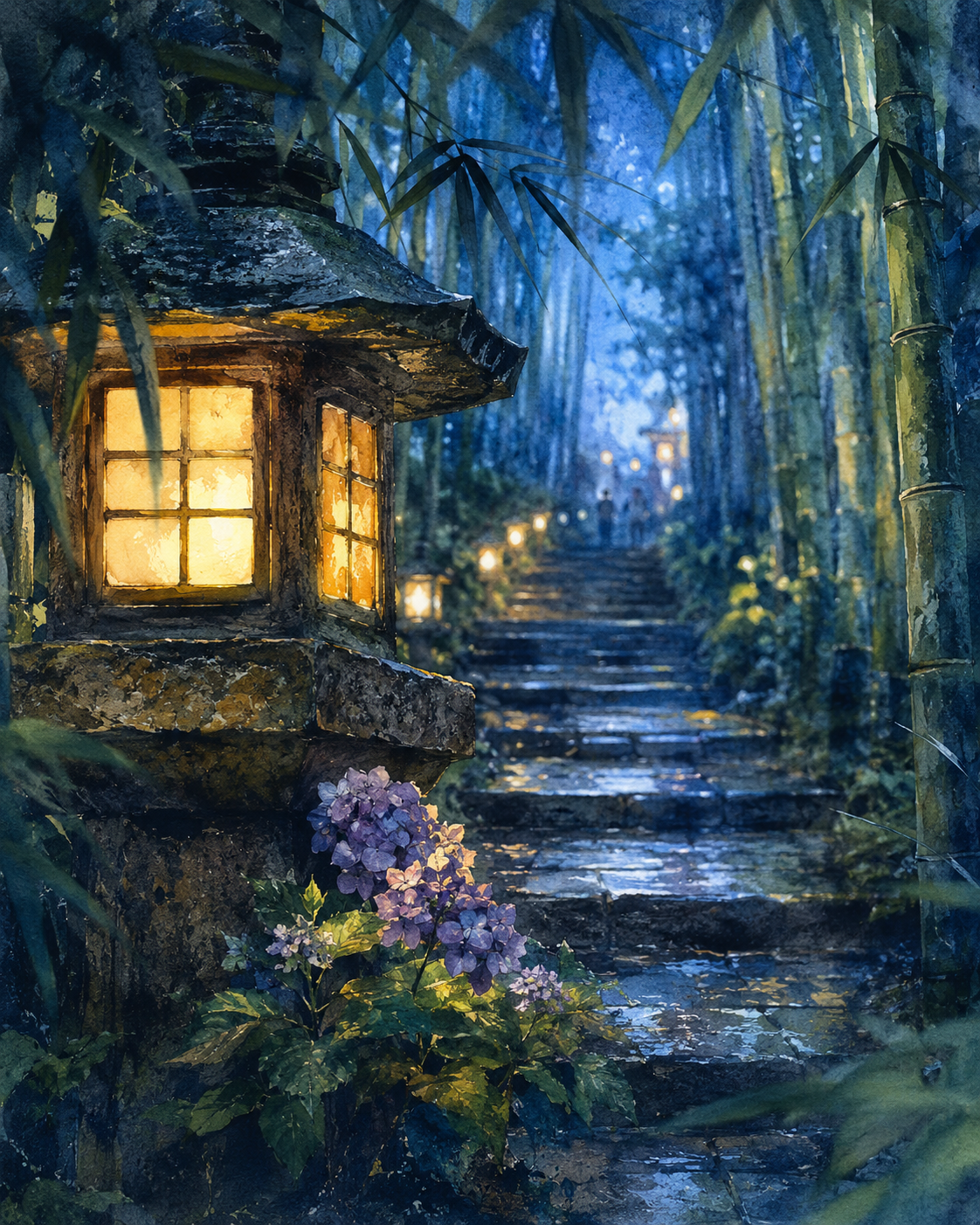
Hydrangeas and Stone Lanterns in the Dusk
Critique
Introduction This nocturne follows a wet stairway through bamboo, beginning with a lantern and hydrangeas. Warm lights recede into the forest as if marking a ceremonial approach. Guidance feels local and fragile rather than triumphant. Description A stone lantern fills the left foreground, its square windows glowing beneath a broad roof. Hydrangeas and glossy leaves grow at its base. Rain-darkened steps rise through the center, bordered by lamps that become soft points in the distance. Bamboo encloses both sides. Leaves cross the upper edge, and reflected light lies across puddles in deep blue air. Analysis The foreground lantern establishes scale and anchors the path’s diagonal recession. Its rectangular panes repeat the step faces, while the roof’s spreading curve counters the bamboo verticals. Gold is limited but intense against layered cobalt and green. Successive lamps create rhythm and lead the eye uphill. Sharp masonry and hydrangea petals near the viewer gradually dissolve into mist, producing depth. Foreground leaves partially obstruct the view and strengthen the sense of entering a real thicket. Interpretation and Evaluation Stone suggests continuity, while the flame it houses remains vulnerable and renewable. Their union makes the lantern an apt image of tradition: a durable form sustained by repeated acts of care. The ascending series extends that care across generations or stages of a journey. The scene encourages spiritual associations without specifying doctrine. Its romantic glow is moderated by rain, moss, and heavy shadow, which preserve effort and uncertainty. Conclusion The painting succeeds through disciplined light and tactile atmosphere. No destination is visible, yet the lamps make continued movement imaginable. The nearest lantern does not explain the forest; it grants enough warmth to take the next wet step.
Same Subcategory
Similar Artworks
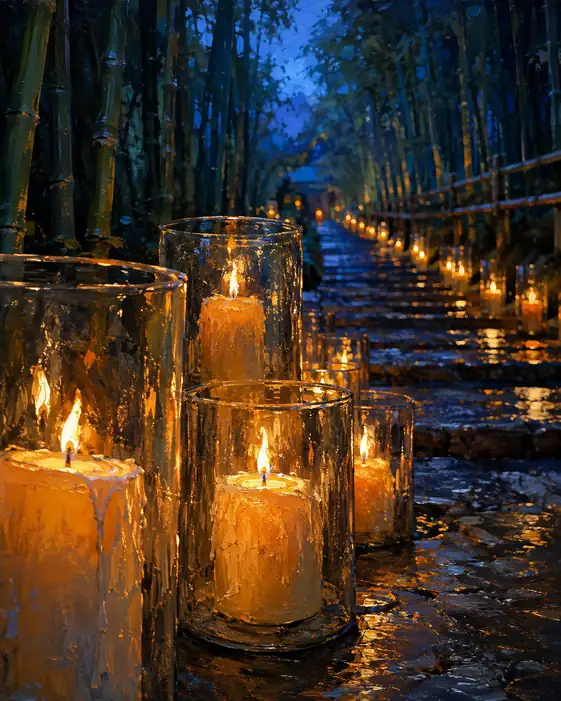 A Constellation of Candles on Forest Steps
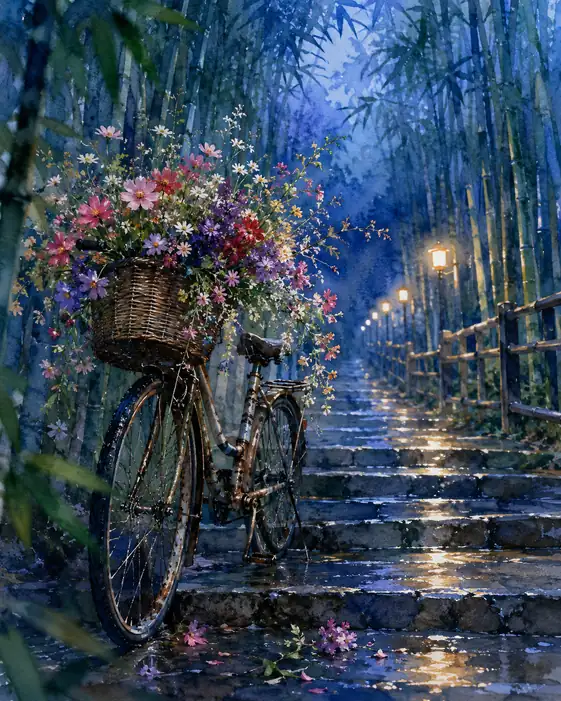 Silence on the Rain-Kissed Bamboo Steps
 Two Chairs Waiting in the Bamboo Dusk
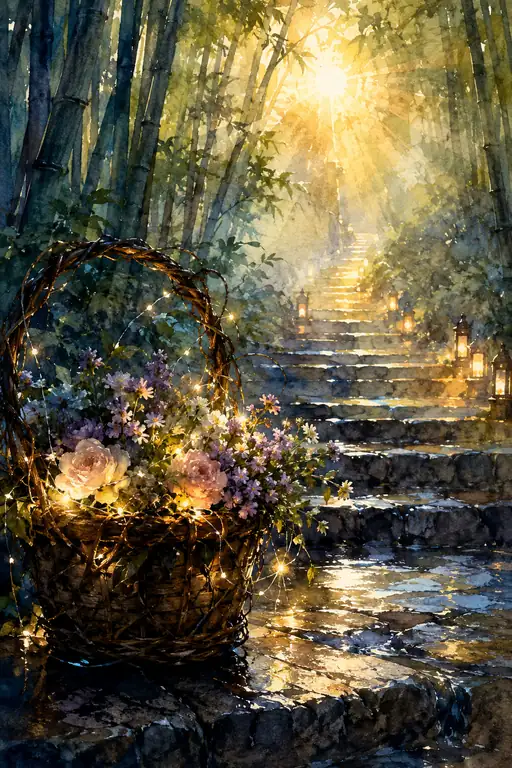 Luminescence in the Bamboo Grove
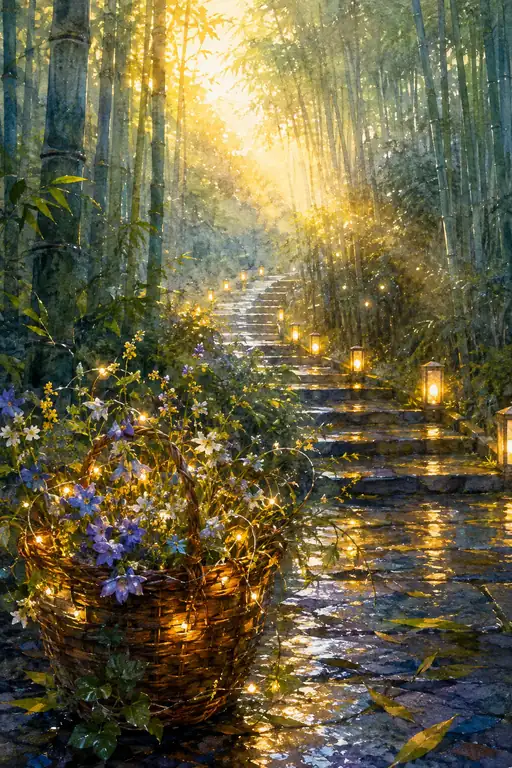 Forest Stairs Woven in Sunlight and Bloom
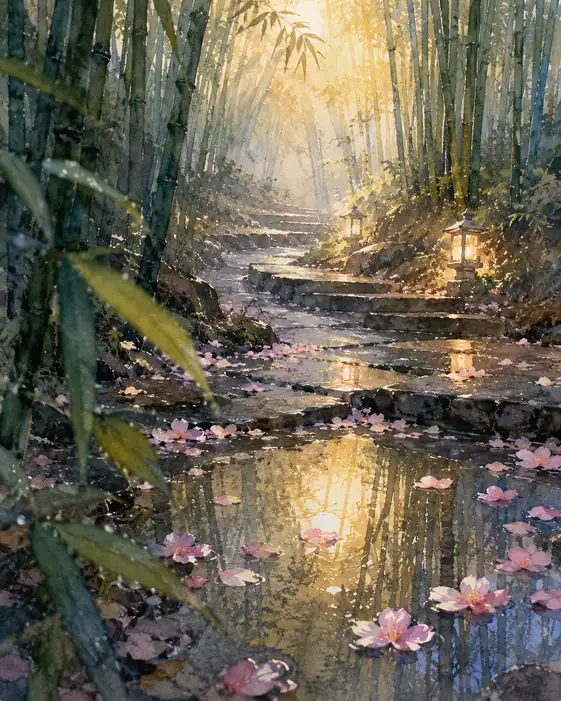 Petals Drifting on a Forest Mirror
 Forest Voyage Across a Mirror of Rain
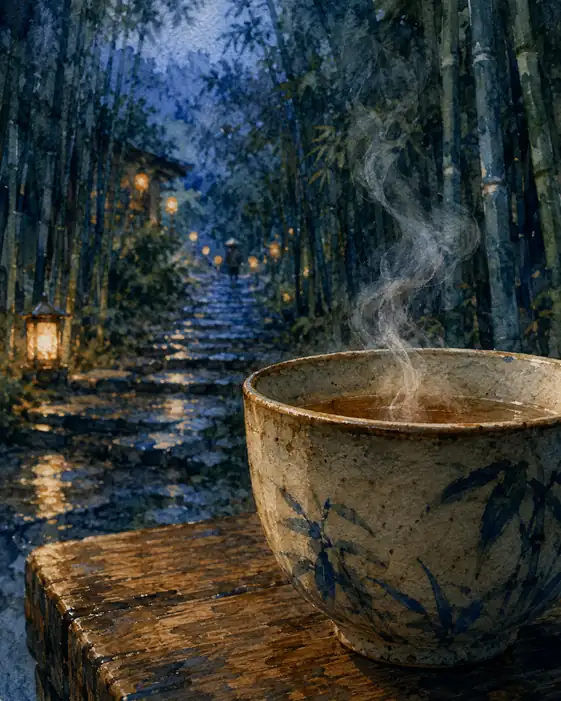 Steaming Solace Before the Night Journey
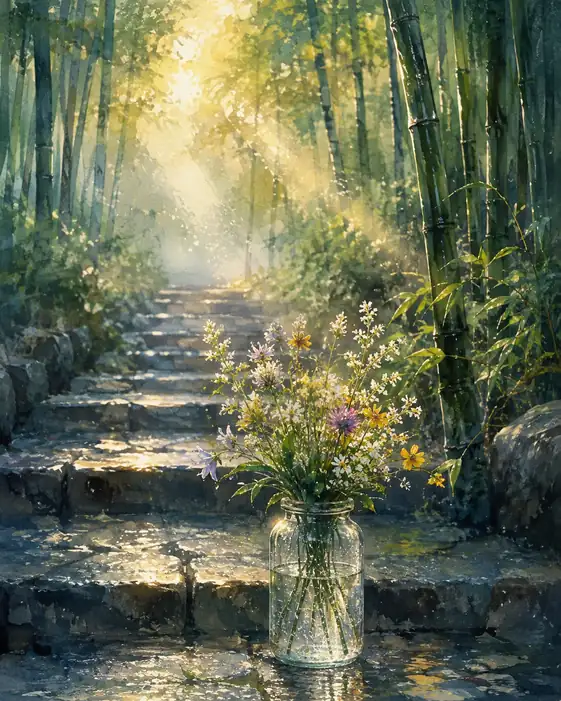 Morning Repose Along the Bamboo Grove
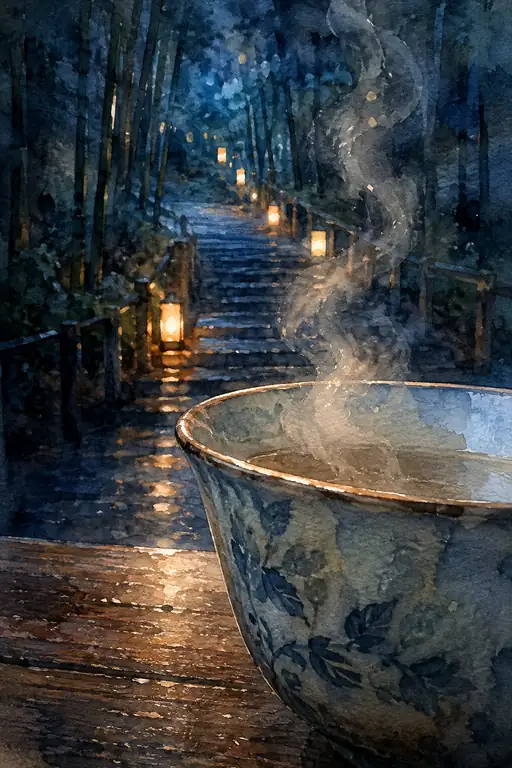 A Warm Bowl Before the Ascent