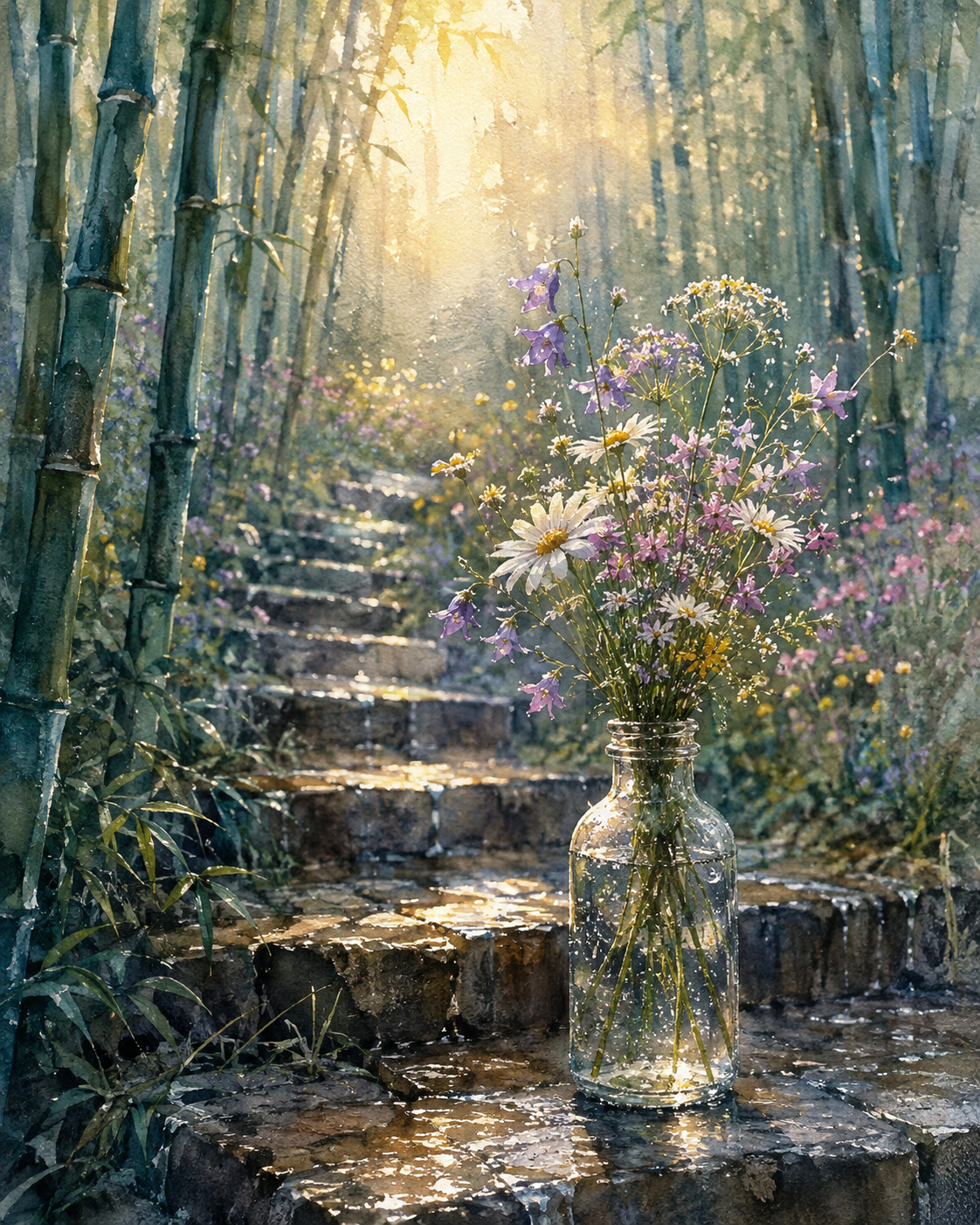
Offering of Wildflowers to the Forest Path
Critique
Introduction This watercolor places a bottle of wildflowers on wet stone steps in a bamboo grove. The bouquet interrupts the forest without dominating it. Sunlight, water, glass, and stems turn a modest arrangement into a meditation on gathering and return. Description A narrow-necked bottle stands near the lower right, half filled with water. It holds daisies, violet bellflowers, pink and yellow blooms, and branching stems. Droplets sparkle on the glass. Stone steps rise diagonally into dense bamboo, their puddled edges catching gold. Green-blue trunks form vertical ranks, while sunlight descends through mist. Analysis The bottle provides a stable vertical counterpoint to the ascending steps. Its transparent body repeats the reflective qualities of rainwater and air, allowing stems and light to overlap. Tall bamboo lines establish rhythm, but their slight angles prevent rigidity. Cool greens and grays surround restrained violet and yellow accents. The bouquet remains sharply articulated against a softened middle distance, creating depth. Backlighting turns fine petals and droplets into luminous edges. Interpretation and Evaluation Someone has selected these flowers, yet no arranger appears. The bottle therefore records an absent gesture of attention. Placed in the grove, the bouquet is both removed from wild growth and returned to its source, making care and possession productively ambiguous. The scene risks excessive purity, but stained stone, bent stems, and uneven water keep it physical. Its quiet scale supports contemplation rather than spectacle. Conclusion The painting succeeds through restraint and correspondence. Bottle and forest share vertical forms; contained water answers the rain on the steps; gathered flowers echo those still growing beyond. A temporary human arrangement becomes a respectful pause within a much longer natural cycle.
Same Subcategory
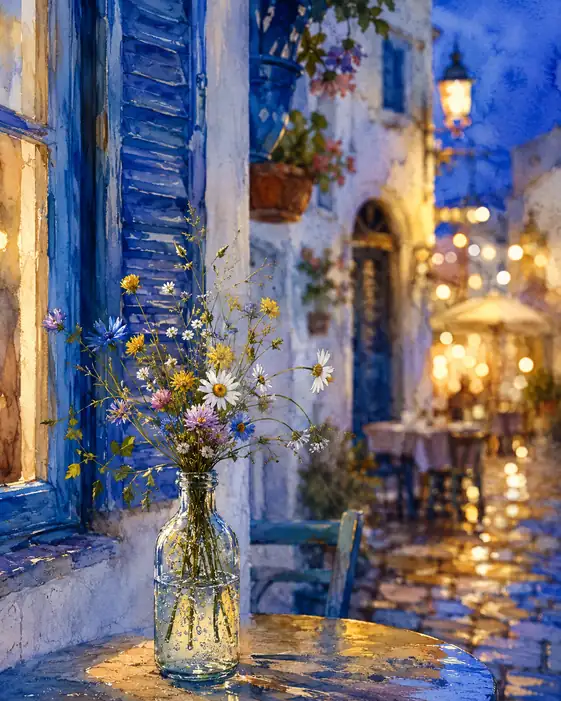 Wild Petals in the Blue Hour
Similar Artworks
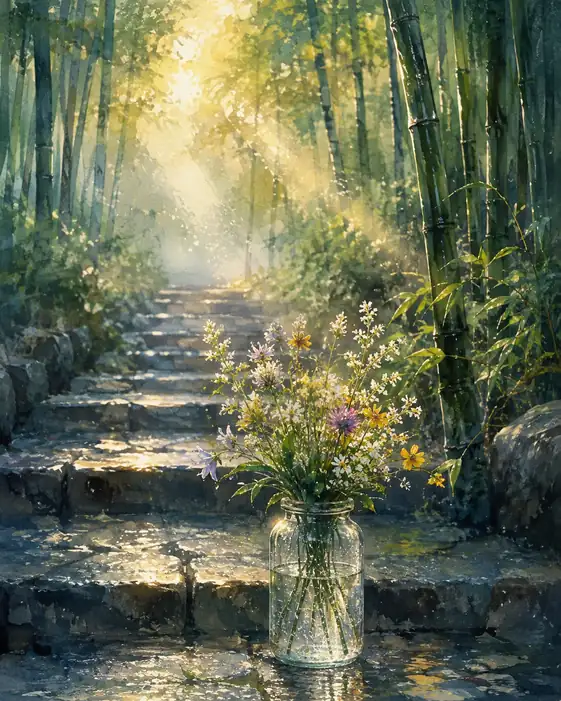 Morning Repose Along the Bamboo Grove
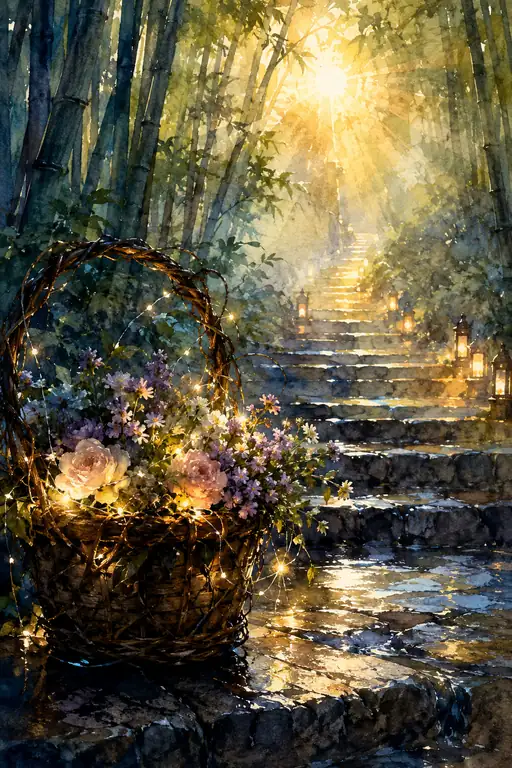 Luminescence in the Bamboo Grove
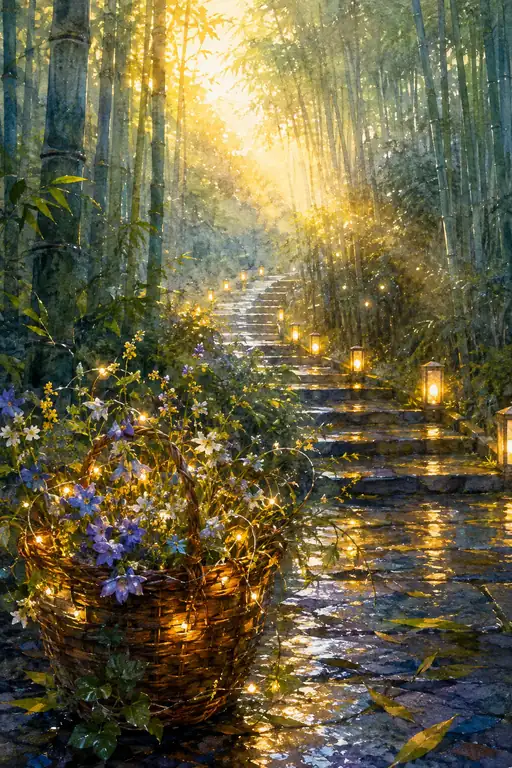 Forest Stairs Woven in Sunlight and Bloom
 Forest Voyage Across a Mirror of Rain
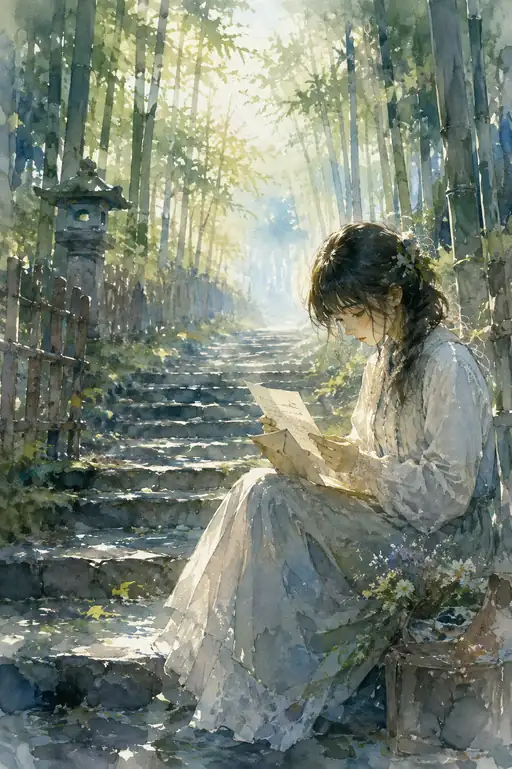 Letters Read in the Bamboo Shade
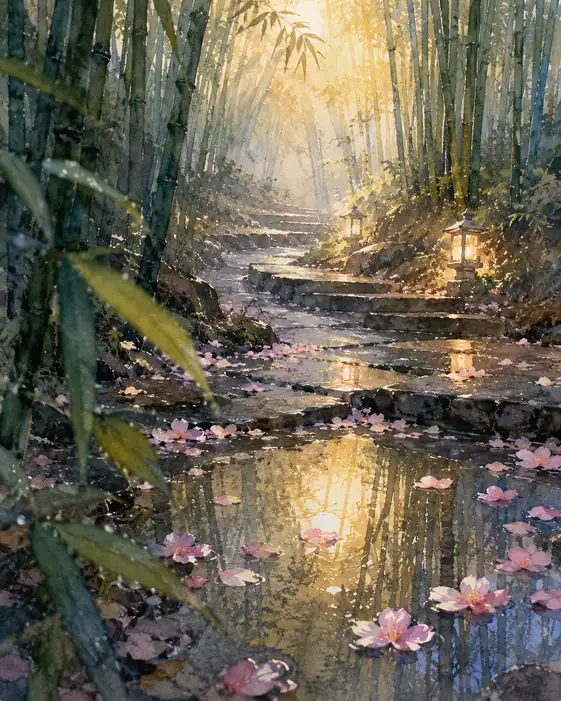 Petals Drifting on a Forest Mirror
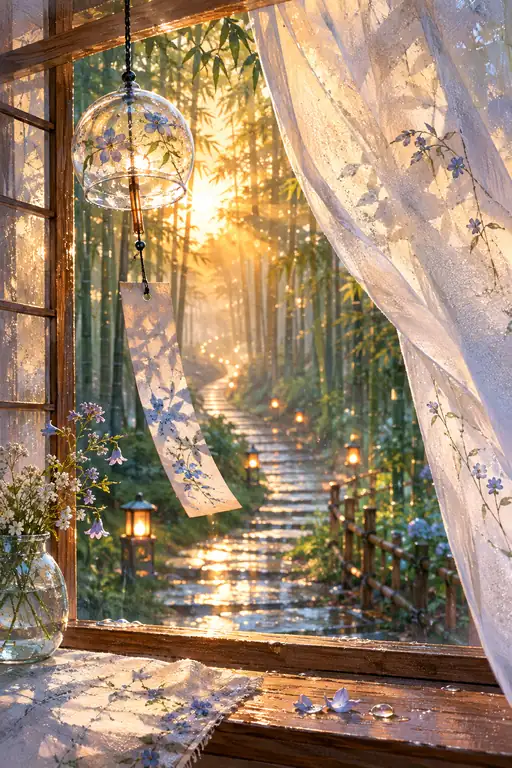 Morning Breeze Between Chime and Bamboo
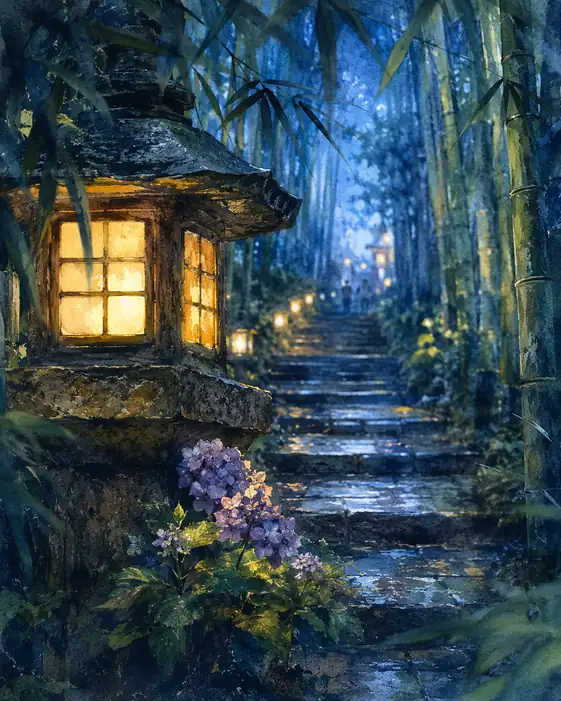 Hydrangeas and Stone Lanterns in the Dusk
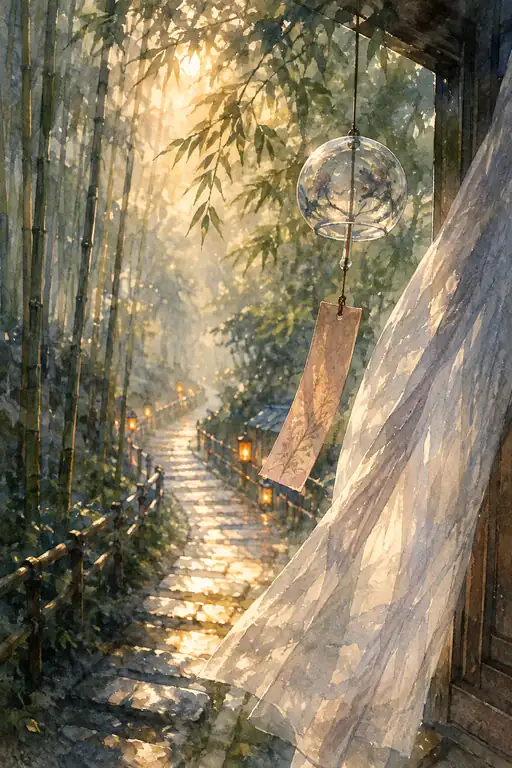 Whispering Curtain and Morning Breeze
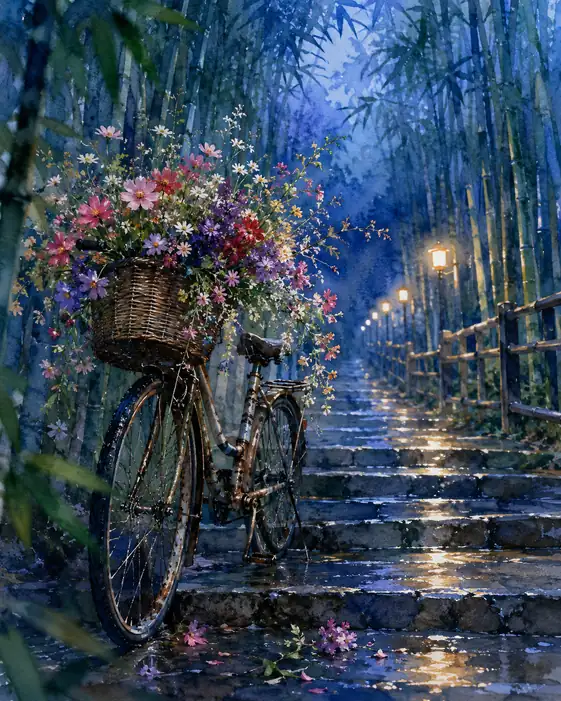 Silence on the Rain-Kissed Bamboo Steps