White Watcher at the Bamboo Window
Critique
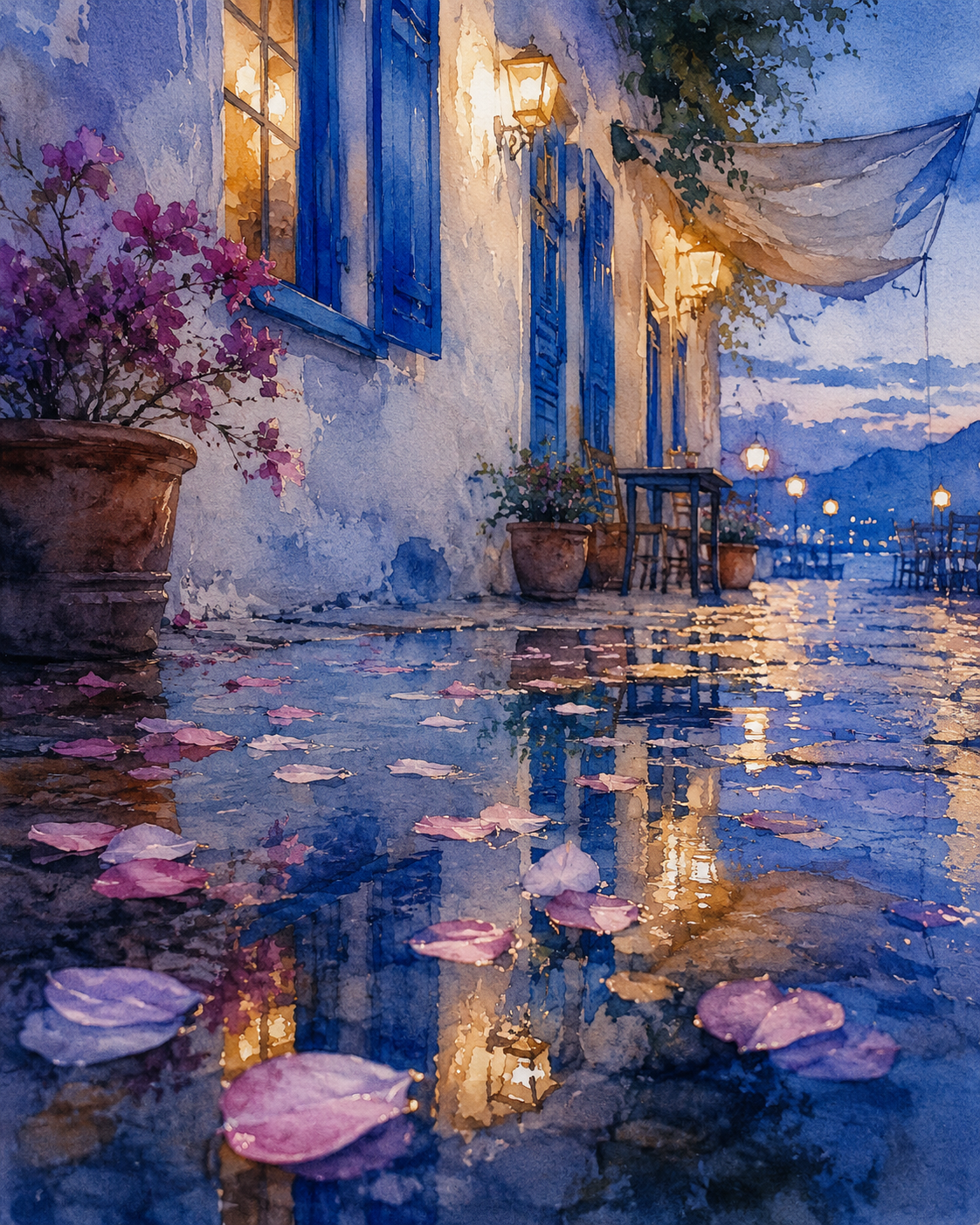
Introduction This watercolor studies a rain-washed terrace beside a white-and-blue coastal house. Fallen bougainvillea petals and reflected lamps occupy more space than the sea. By directing attention downward, the painting makes traces left after rain and bloom its spectacle. Description A puddle fills the foreground, scattered with pink and lavender petals. It mirrors wall lamps, cobalt shutters, pale walls, and evening sky. At left, a terracotta pot holds purple bougainvillea. Tables, chairs, and pots line the house. A loose canopy stretches overhead. Beyond the terrace, lamps lead to a blue waterfront and mountains under a pink horizon. Analysis The low vantage enlarges the reflective pavement into unstable architecture. Horizontal puddle edges counter repeated vertical shutters and lamp posts. Saturated blue governs shadows, water, and distance, while gold and magenta punctuate it. Petals decrease in scale toward the horizon, assisting perspective. Watercolor blooms and broken reflections blur solid forms, though sharply placed petals keep the surface structured. Interpretation and Evaluation The terrace appears between events: rain has ended, flowers have fallen, and guests are absent. Yet lamps are lit, preserving hospitality without visible hosts. Reflection converts loss into another kind of abundance; petals detached from the plant become floating color, and architecture gains a wavering double. The idyllic coastal setting is romanticized, but peeling wall textures and scattered debris introduce time, weather, and imperfection. Conclusion The work succeeds by treating the ground as a field of memory rather than empty foreground. Its reflections hold the house and sky only temporarily, while fallen petals record what has already changed. Beauty resides not before or after the passing shower, but in the brief interval it leaves behind.
Same Subcategory
 Whispers of the Aegean Sunset
Similar Artworks
 Luminous Steps Along the Midnight Cobblestones
 Fairy Lights Mirrored on Wet Cobblestones
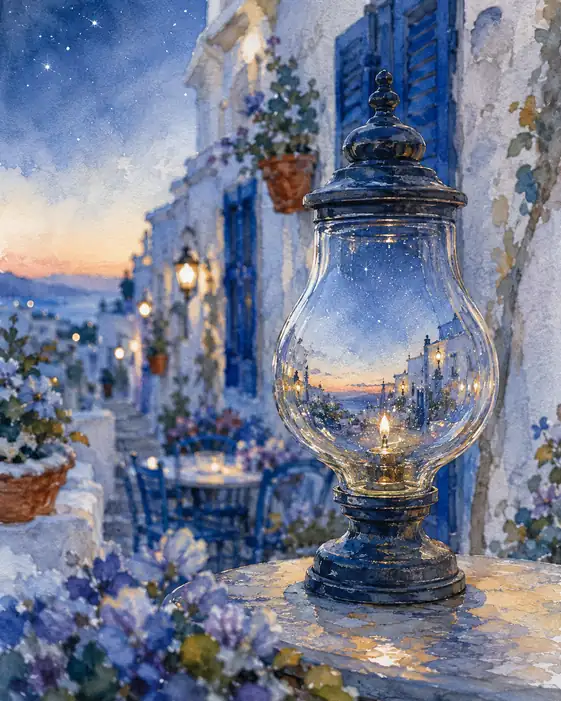 Twilight Captured in a Glass Orb
 Journey Paused in Full Bloom
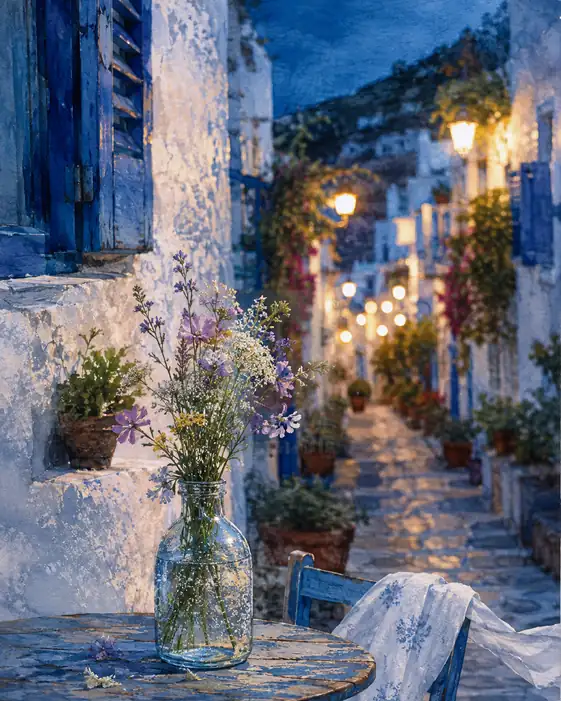 Mediterranean Evening Whispers on the Table
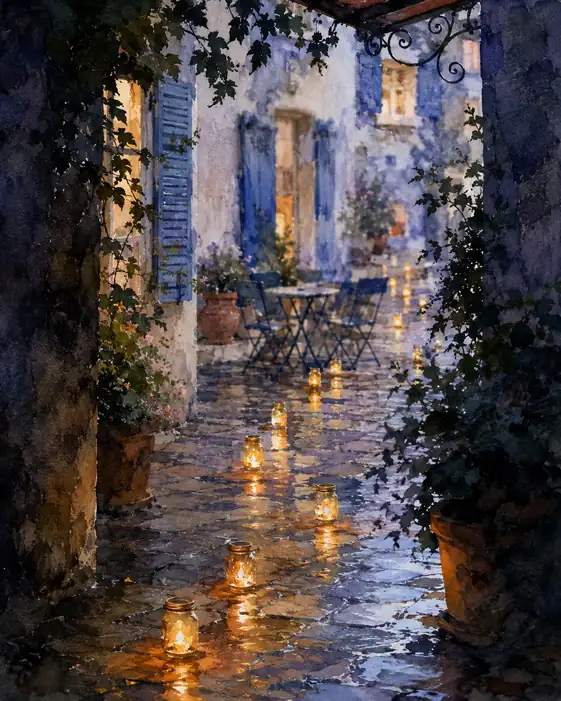 Gentle Step Across Reflected Lanterns
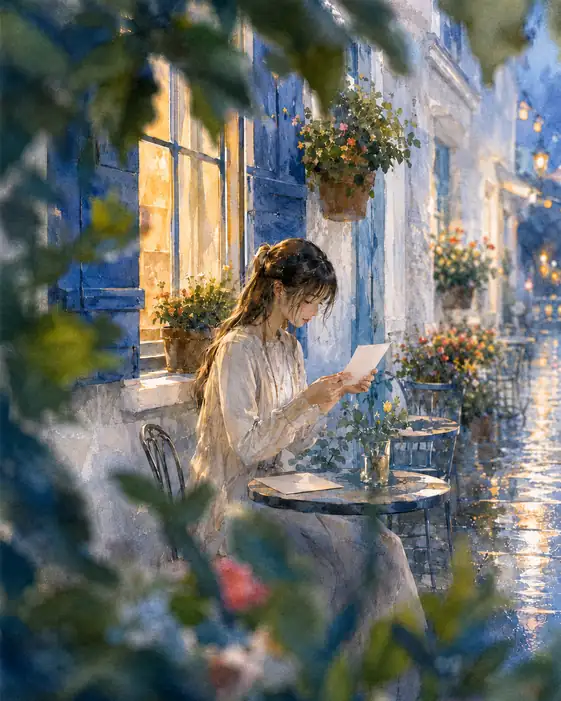 Reading Letters in the Drizzle-Kissed Cafe
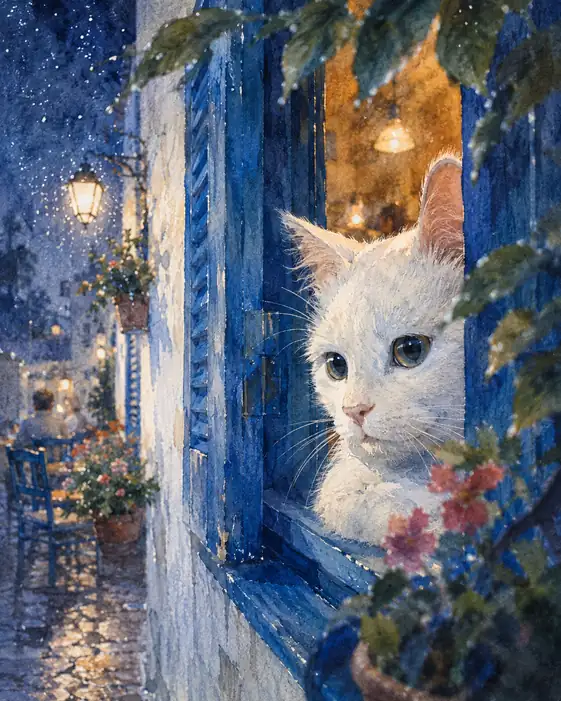 Blue Shutter Curiosity on a Starlit Night
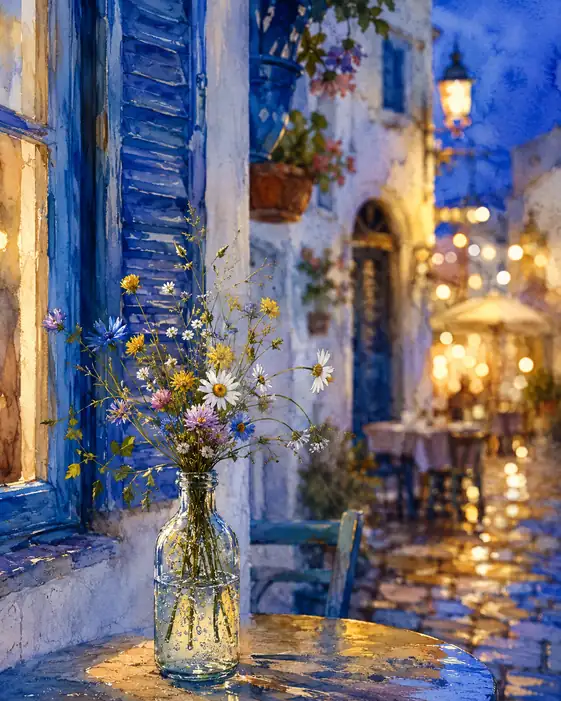 Wild Petals in the Blue Hour
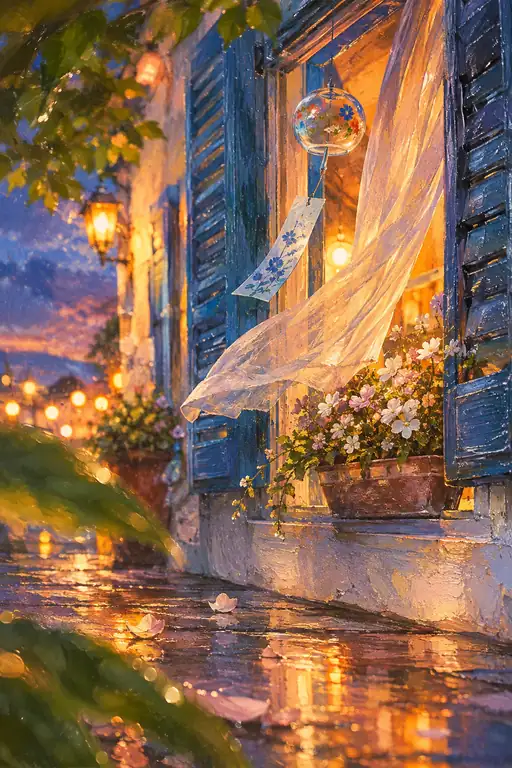 Evening Air Carried on Chimes