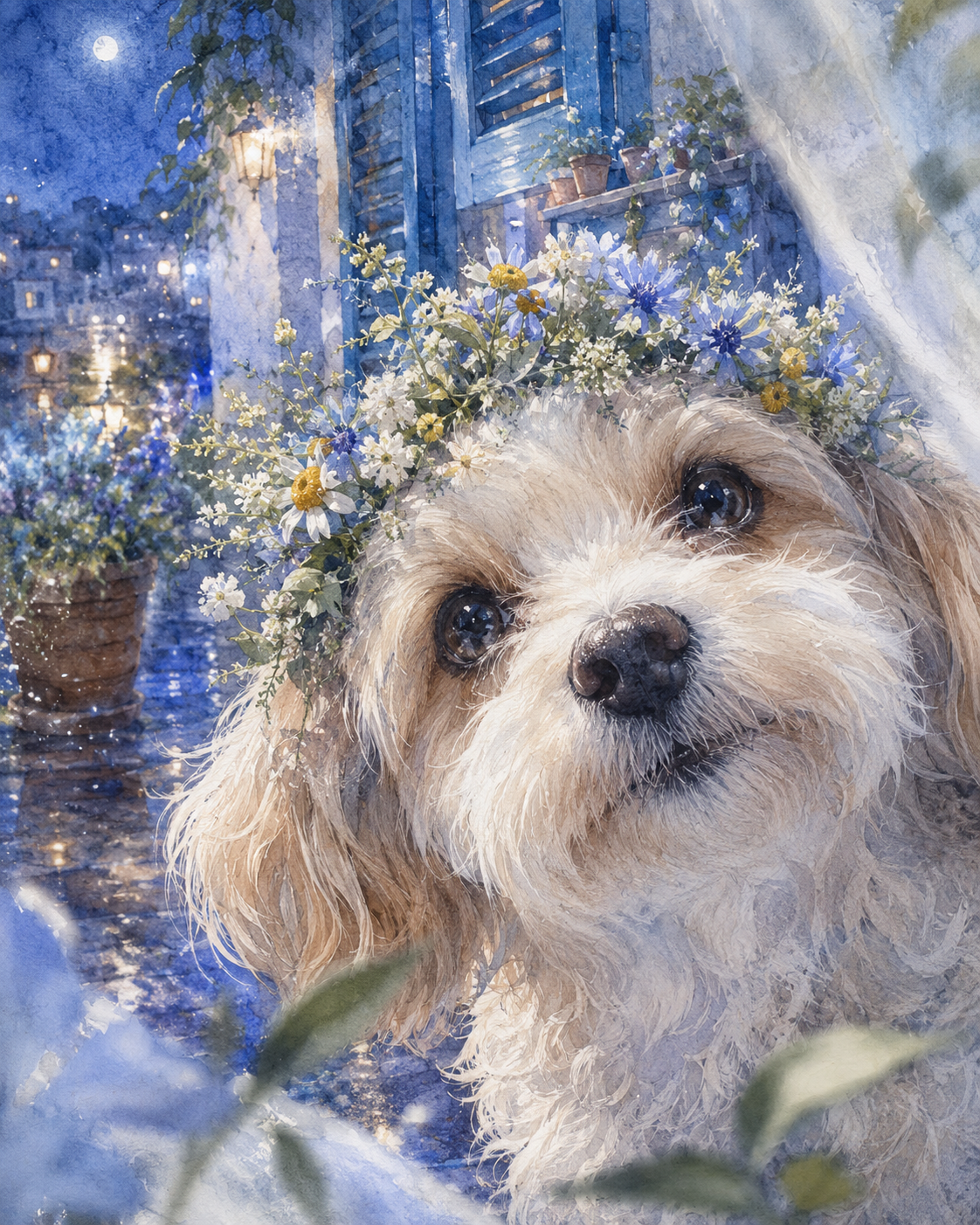
Wreath of Wild Blooms for a Midnight Friend
Critique
Introduction This watercolor places a small dog in the foreground against a moonlit blue street. A wreath of wildflowers makes the animal seem ceremonially adorned, yet its gaze remains gentle and familiar. The image joins affectionate portraiture with an enchanted setting. Description The cream-and-tan dog fills the lower right, its glossy eyes and textured nose rendered clearly. White daisies, yellow centers, tiny blossoms, and blue flowers arc above its head. Behind it stand cobalt shutters, potted plants, a warm wall lamp, and a wet lane descending toward scattered lights. A pale moon occupies the upper left. Soft leaves cross the edge. Analysis The enlarged head creates immediacy, while the street’s shrinking lamps provide depth. A diagonal from moon to lantern to the dog’s eyes organizes the portrait around points of light. Cool blues dominate architecture and night, making the warm fur and yellow flowers advance. Fine dry strokes describe hair and whiskers; looser blooms dissolve the background. The tilted face breaks formality and gives the composition alert tenderness. Interpretation and Evaluation The floral wreath elevates a companion animal without disguising its ordinary vulnerability. Reflections in the eyes echo distant lamps, visually gathering the surrounding village into the dog’s attention. This can read as a celebration of trust: the world appears wondrous because it is encountered through a receptive presence. Although the sweetness approaches sentimentality, damp fur, asymmetrical flowers, and rough walls keep the scene tactile and credible. Conclusion The work succeeds as portrait and miniature night journey. Its strongest achievement is the exchange of gazes: the dog looks outward while moon, lamps, and flowers seem to converge upon it. Affection becomes a way of attending closely to a shared place.
Same Subcategory
 Faithful Dog Seated in Blossom Fur
Similar Artworks
 The Blue Night I Fell for You in a Flower Crown
 Flower Crown Pup in the Dappled Railway Light
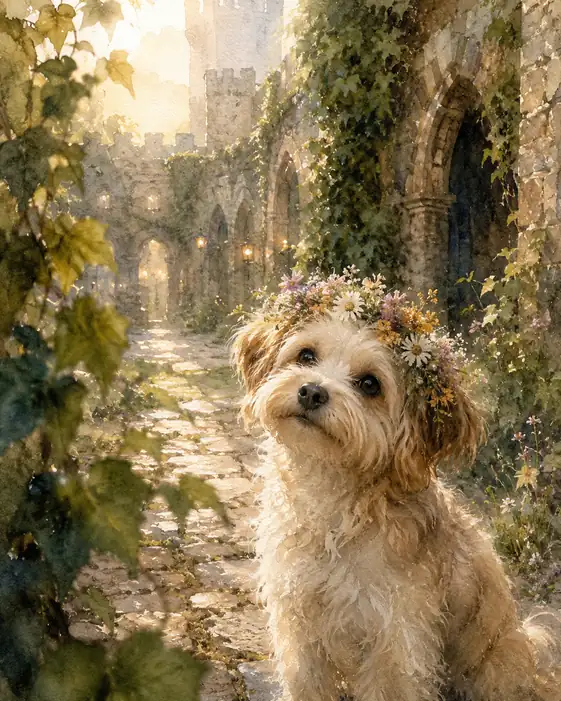 Crown of Wildflowers on the Sunlit Path
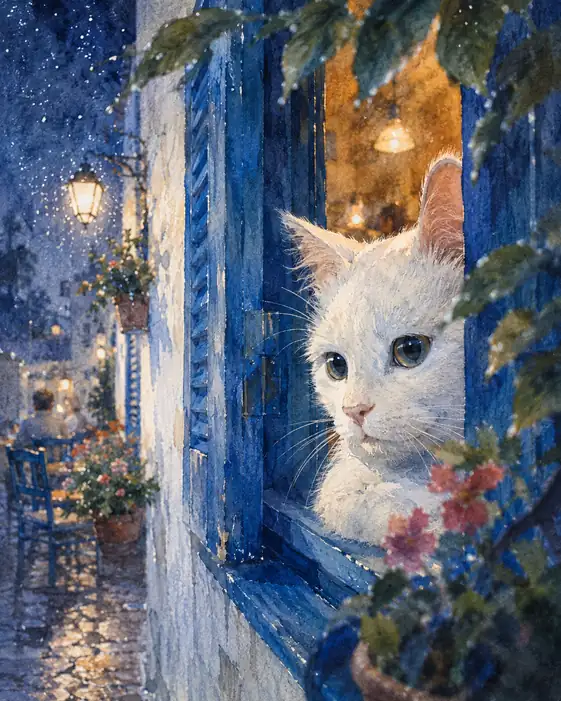 Blue Shutter Curiosity on a Starlit Night
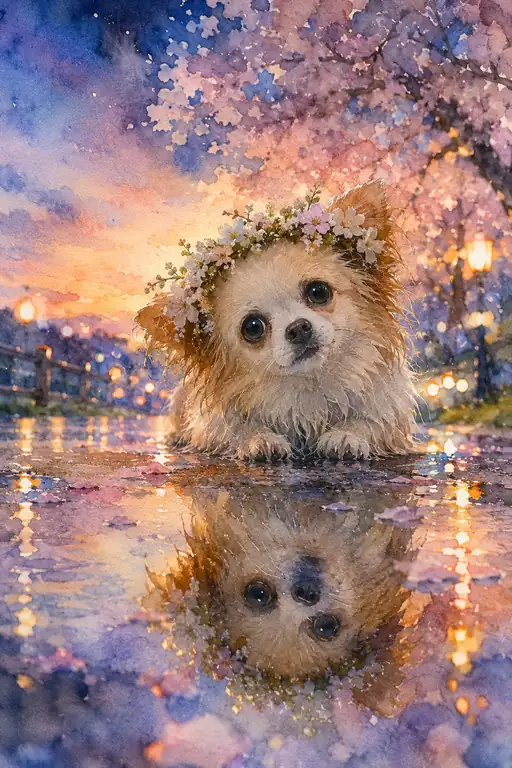 Crown of Petals in the Evening Puddle
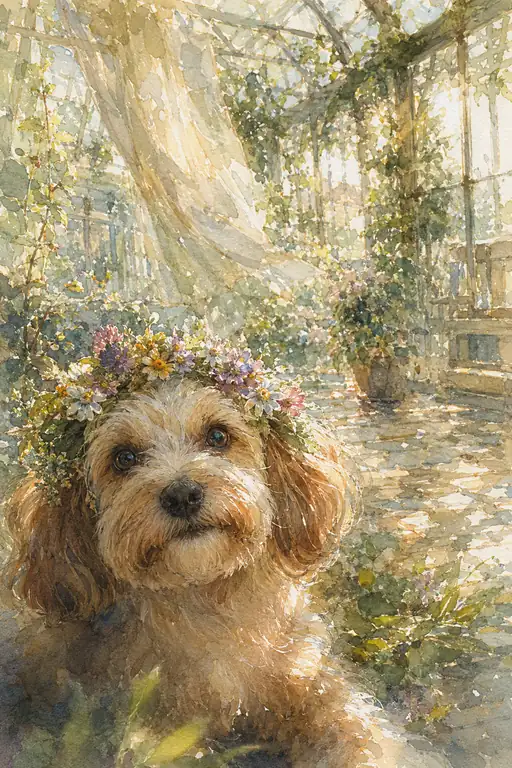 The Little Prince of the Conservatory
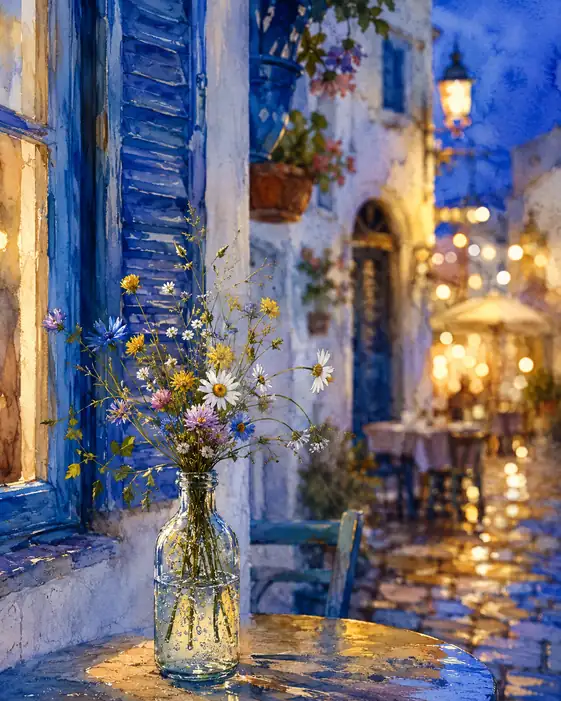 Wild Petals in the Blue Hour
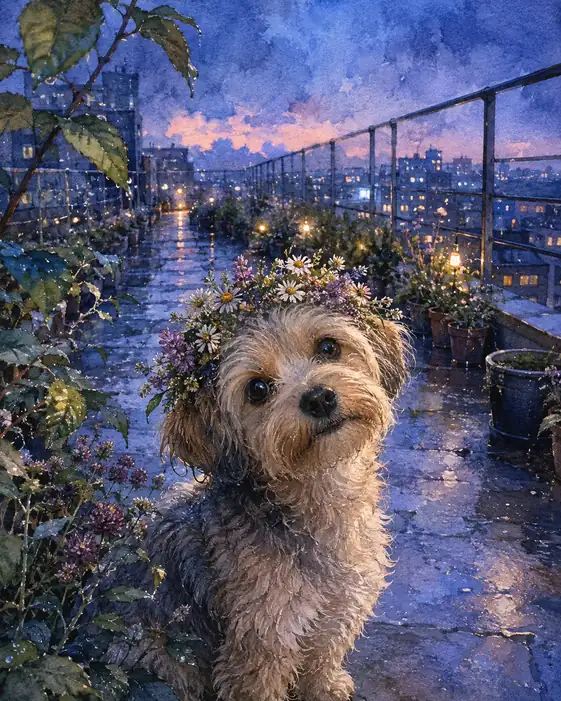 The Flower-Crowned Dog Finds the Rain's Last Star
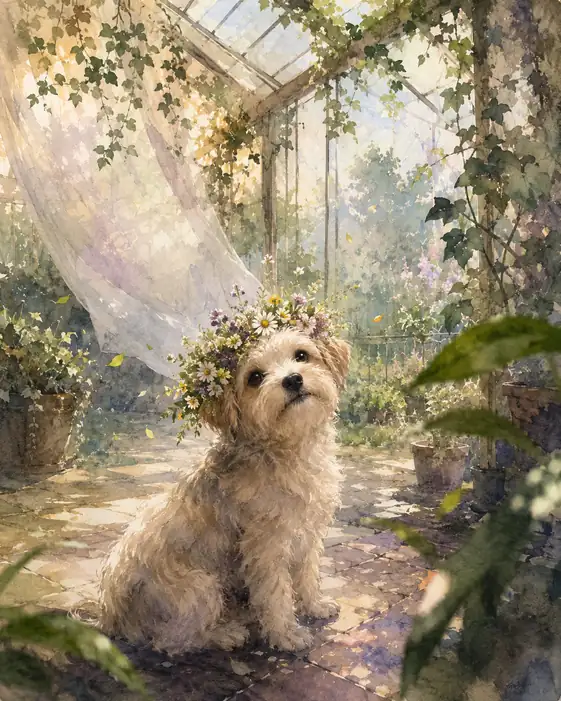 The Little Dog Who Became the Greenhouse Spring
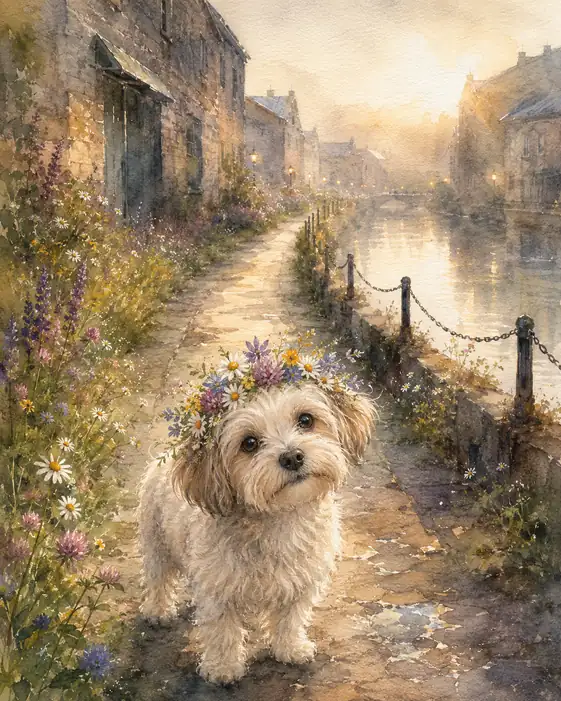 The Little Dog Crowned by Canal Flowers