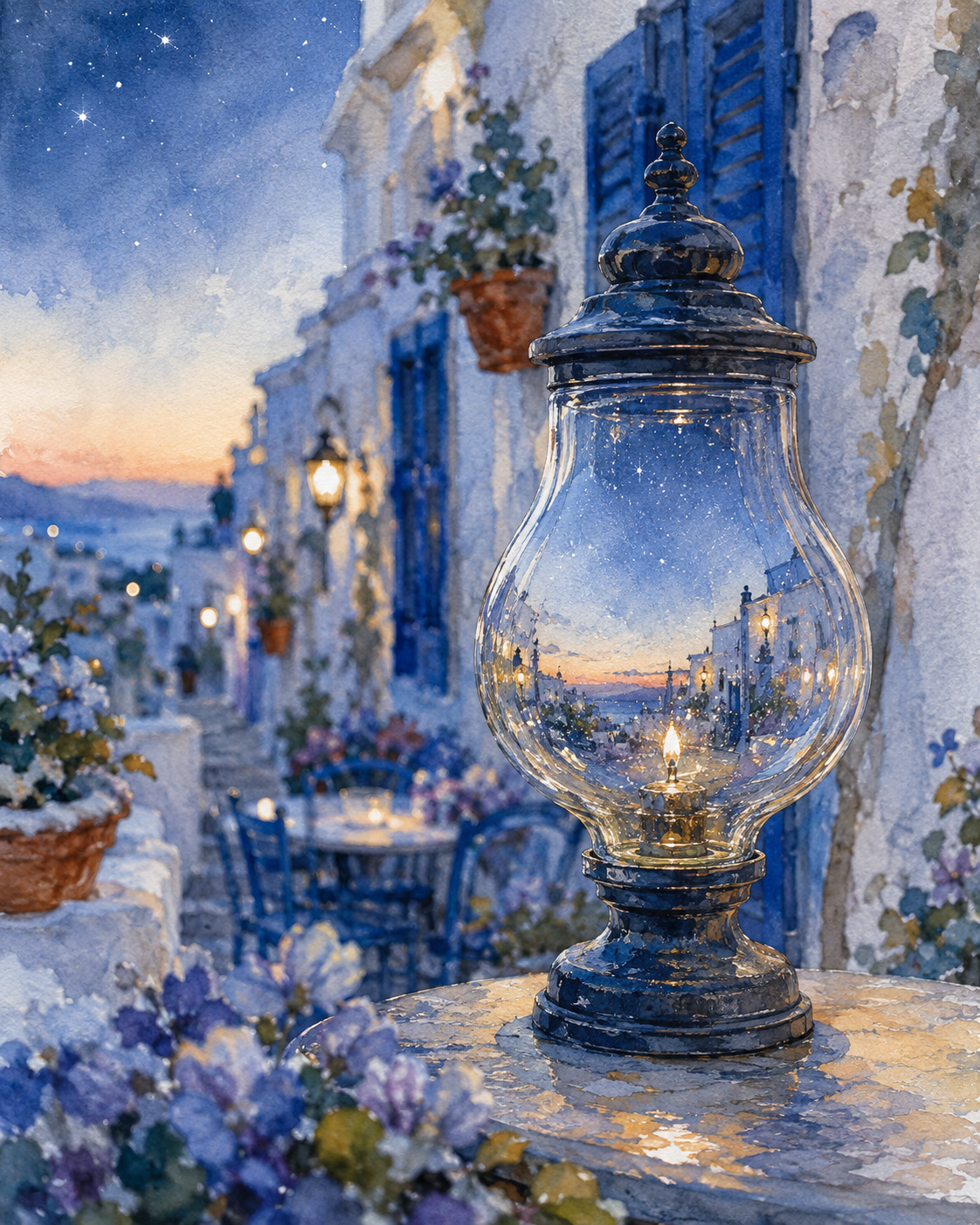
Twilight Captured in a Glass Orb
Critique
Introduction This watercolor makes a large glass lantern both foreground subject and container for the village landscape. Street and sunset reappear inside its curved globe. The optical doubling turns illumination into an image of memory. Description The lantern stands at right on a pale ledge, with a dark blue metal base and ornate cap. Its clear globe surrounds a small flame and a curved reflection of white houses, blue shutters, lamps, distant water, and peach horizon. Outside it, café chairs, tables, flowerpots, and a descending village street soften into blue distance. Violet blossoms blur across the foreground, while stars scatter above. Analysis The globe forms a frame within the frame and compresses broad perspective around the flame. Its swelling contour balances the lane on the left. Repeated circles—glass body, flame, lamps, stars—connect several scales. Cool blue dominates metal, sky, architecture, and shadow; limited peach and gold mark sunset and habitation. Crisp glass highlights contrast with softened background. The central globe is visually commanding but sufficiently transparent to avoid complete obstruction. Interpretation and Evaluation A lantern ordinarily emits light, yet here it also gathers the surrounding world. It becomes a vessel of recollection, making a public route intimate and portable. The inner flame suggests that memory is not passive reflection but active illumination. The effect risks technical showmanship, though the reflected scene directly reinforces the themes of travel and retention. Weathered metal keeps the object materially grounded. Conclusion The work succeeds by making optical distortion meaningful. Inside the globe, distance folds around a small maintained flame. The lantern preserves neither a perfect map nor a fixed past; it holds a curved, luminous version of place shaped by attention.
Same Subcategory
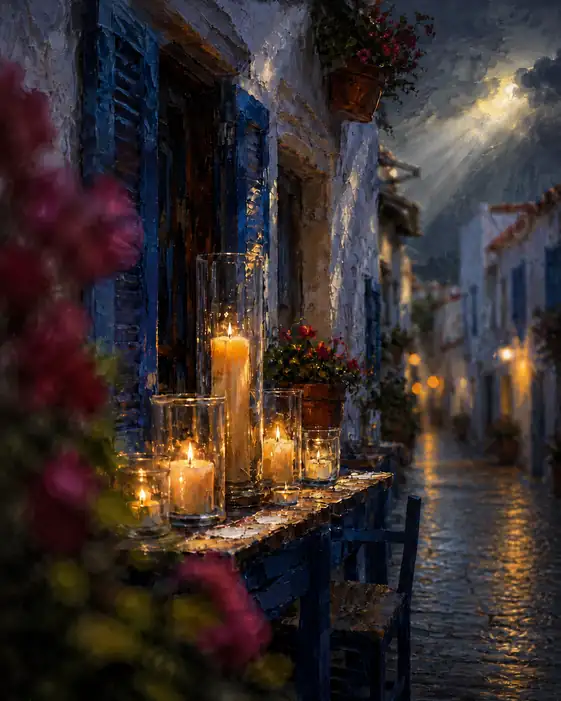 A Quiet Vigil Beneath the Storm
Similar Artworks
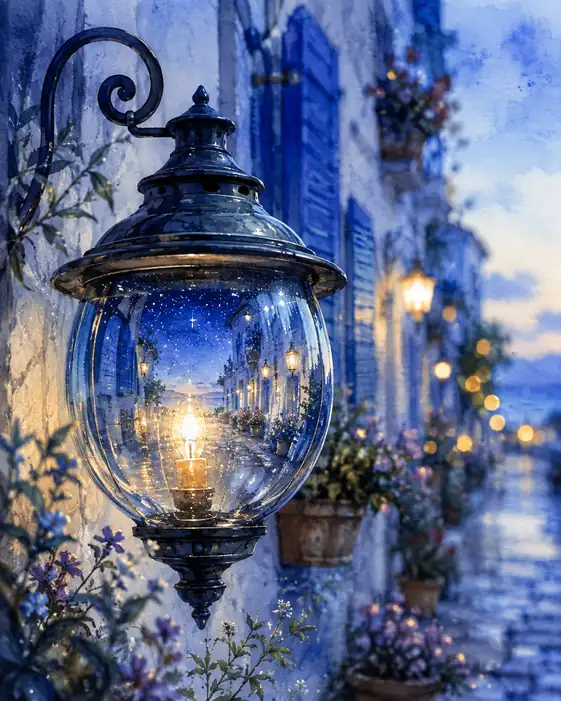 Sanctuary of Starlight in Glass
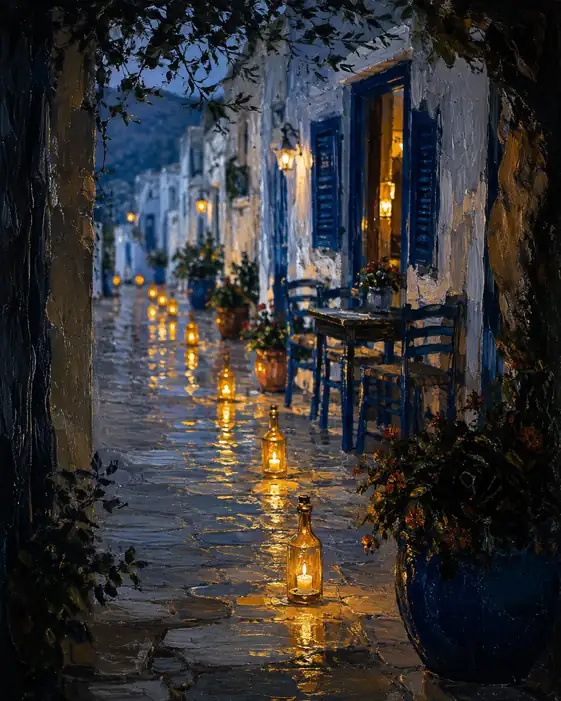 Trail of Small Flames Guided Home
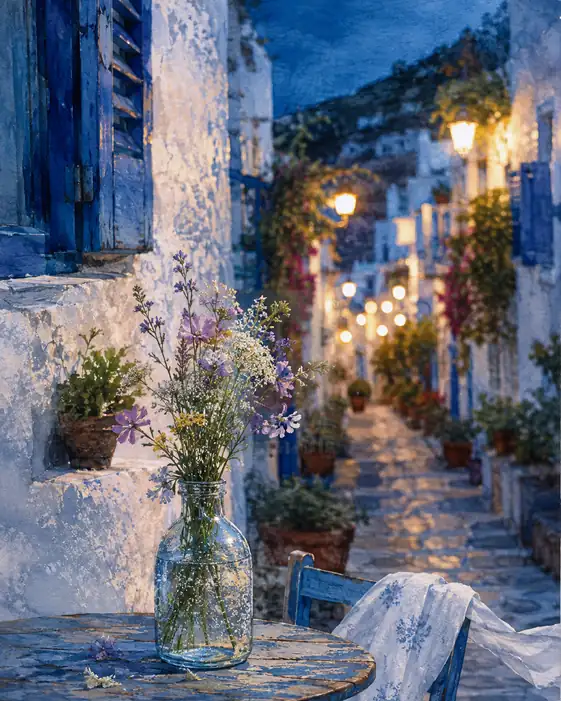 Mediterranean Evening Whispers on the Table
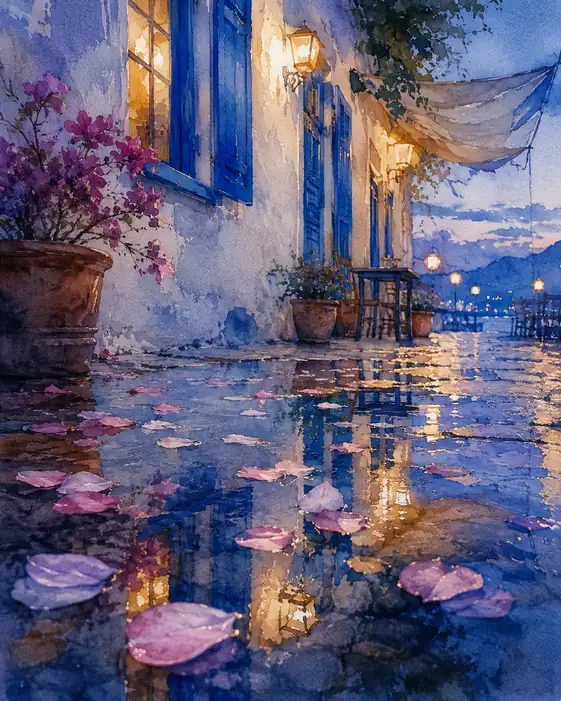 White Watcher at the Bamboo Window
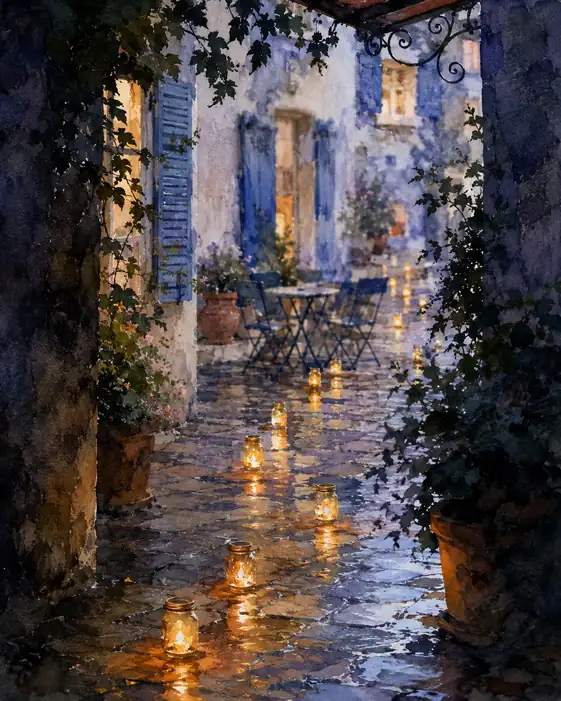 Gentle Step Across Reflected Lanterns
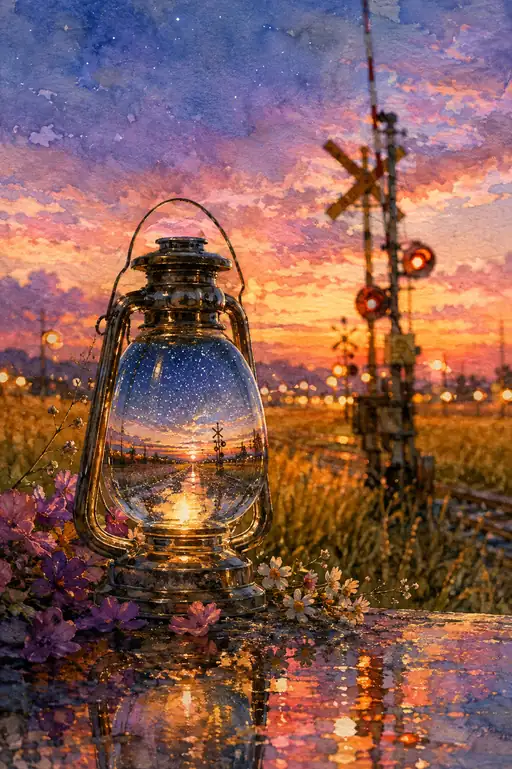 Sunset Train Path Captured in Glass
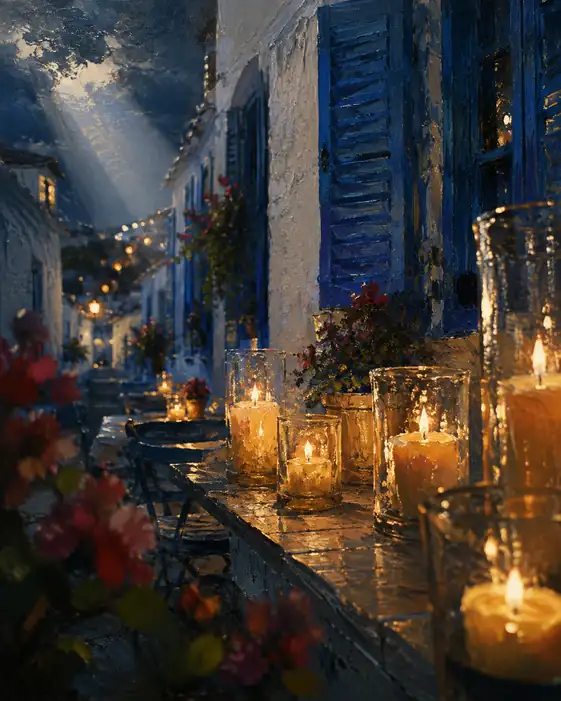 Tender Flame Kept from the Storm
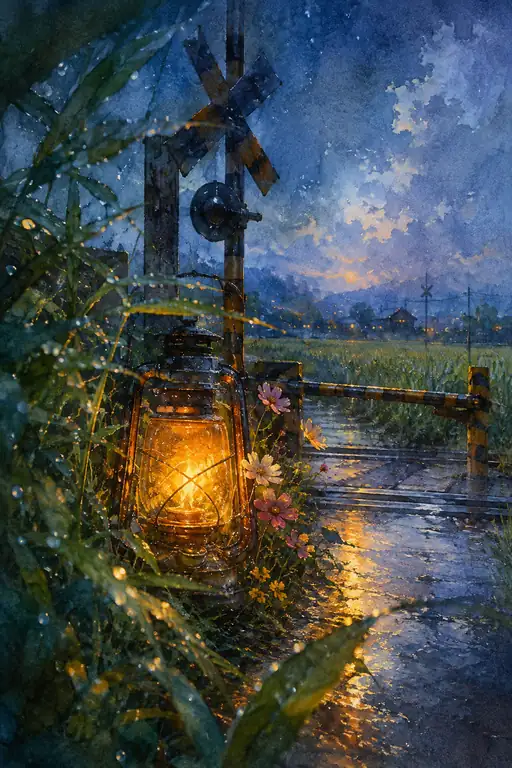 Raindrop Lamp by the Evening Railway
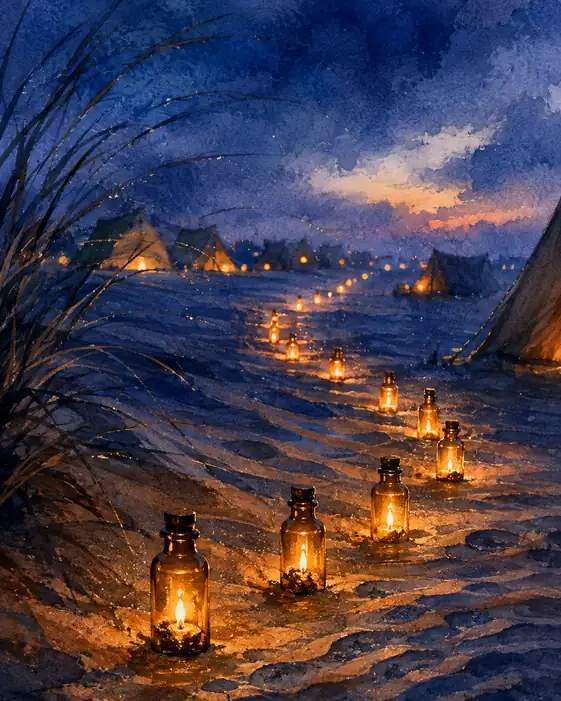 Trail of Amber Candles Along the Sandy Shore
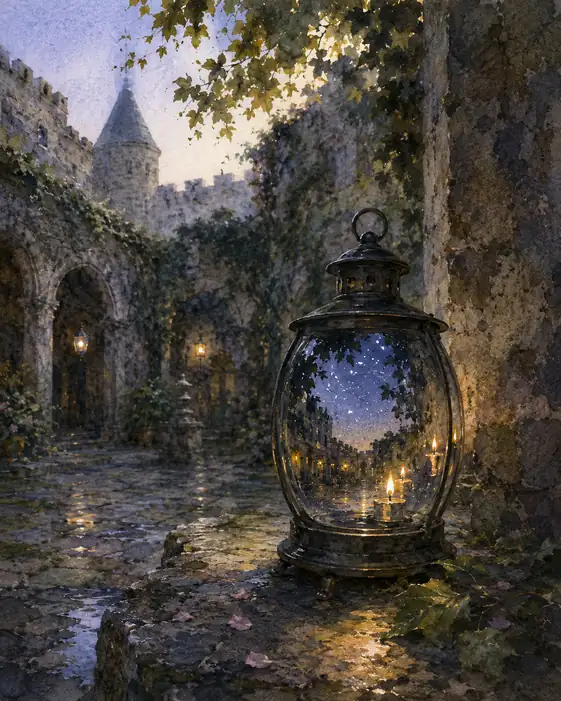 Starry Realm Within the Cloister Lantern