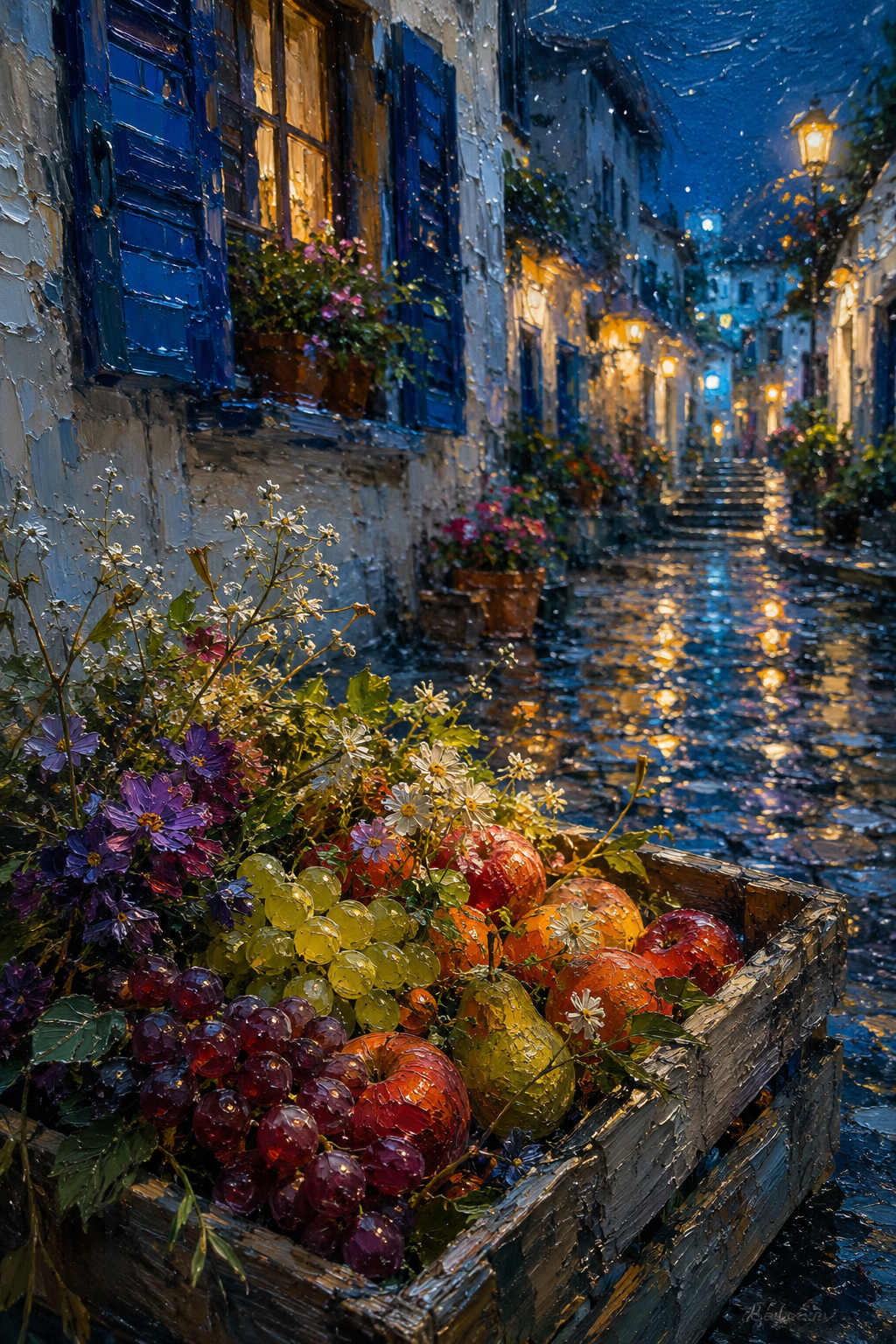
Crates of Abundance at the Lane's Foot
Critique
Introduction This rain-dark streetscape places a wooden crate of fruit and flowers in the immediate foreground of a climbing blue village lane. Harvest abundance confronts wet nocturnal distance. The image connects produce gathered from elsewhere with the illuminated route along which it may be carried. Description A rough crate fills the lower half with green and purple grapes, red apples, pears, and smaller fruit. Violet and white flowers weave among broad leaves. Water beads on skins and splintered boards. Above left, a warm window glows between cobalt shutters and a flower box. The stone lane rises rightward through pots, white façades, steps, and repeated amber lamps beneath deep blue cloud and fine rain. Analysis The crate creates a heavy horizontal base, while the road climbs diagonally beyond it. Rounded fruit generates a clustered rhythm against angular boards and architecture. Amber highlights on wet produce echo streetlamps; saturated blue unifies night, shutters, and pavement. Sharp foreground textures soften rapidly into the lane, establishing depth. The rich crate nearly overwhelms the street, but the bright rising path provides strong directional counterweight. Interpretation and Evaluation Fruit represents arrival, ripeness, and labor completed, while the road implies distribution and further movement. Rain exposes both harvest and route to change, giving the abundance vulnerability. Flowers turn cargo toward offering or celebration. The arrangement is lavish and risks decorative excess, yet bruised surfaces, wet timber, and irregular stacking retain physical weight. Plenty feels earned and perishable. Conclusion The painting binds still life to journey. The crate is not isolated display; its colors and highlights continue into the street. Gathered abundance rests briefly at the edge of a route, ready to become nourishment, gift, or memory.
Same Subcategory
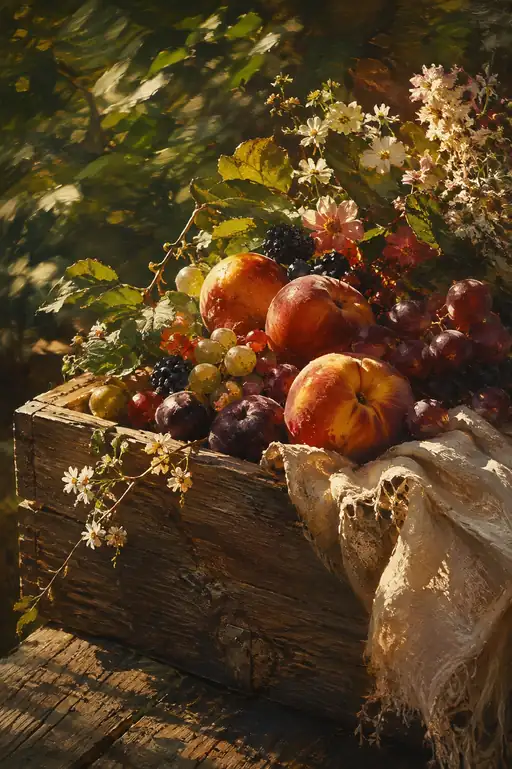 Rustic Wooden Box of Autumn Blessings
Similar Artworks
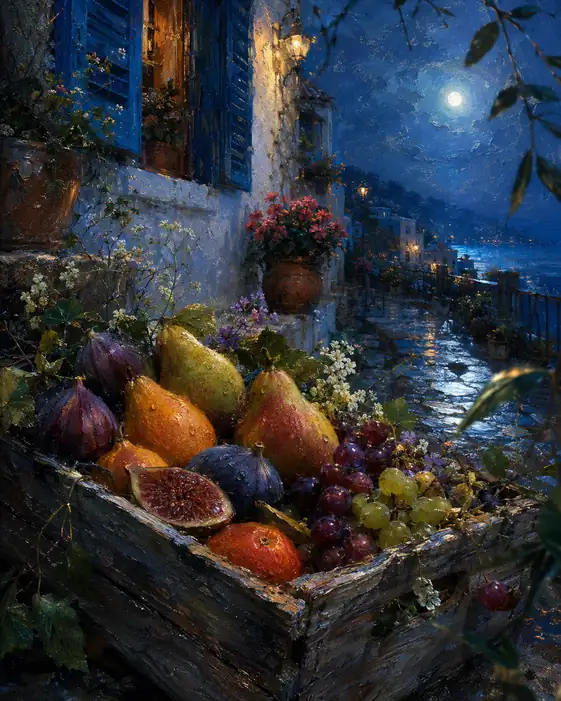 Moonlit Still Life Above the Coast
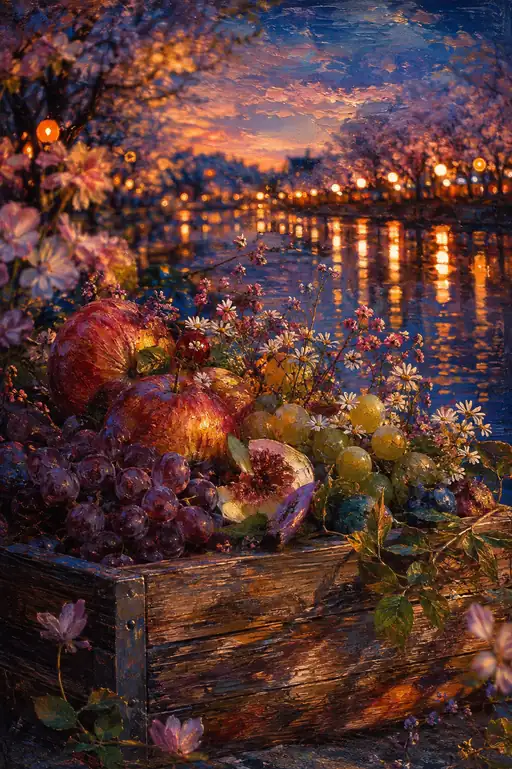 Twilight Harvest by the Blossomed Riverside
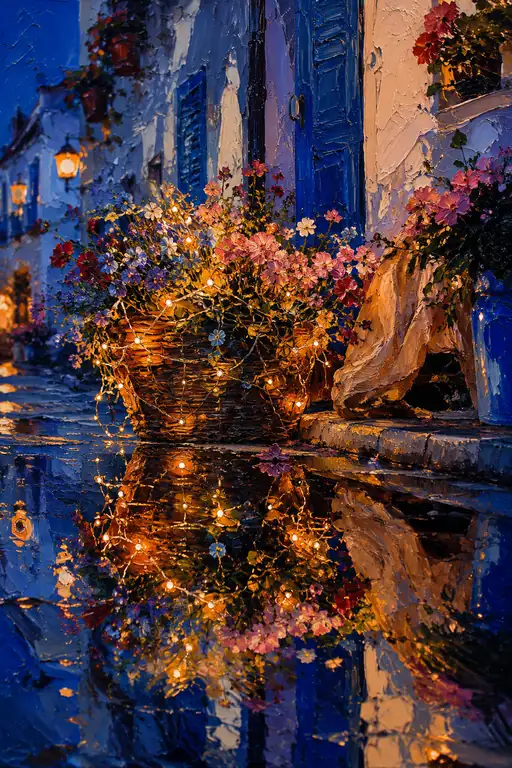 Sparkling Night Blooms Mirrored in the Rain
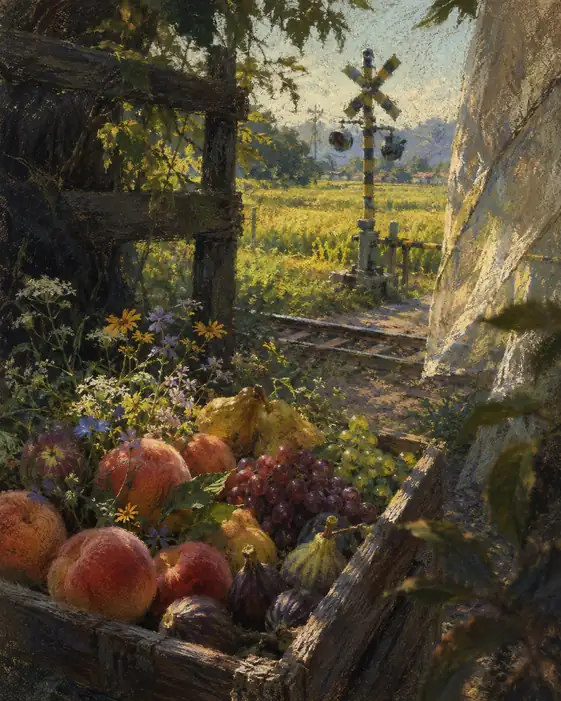 Autumn Harvest Beside the Rural Crossing
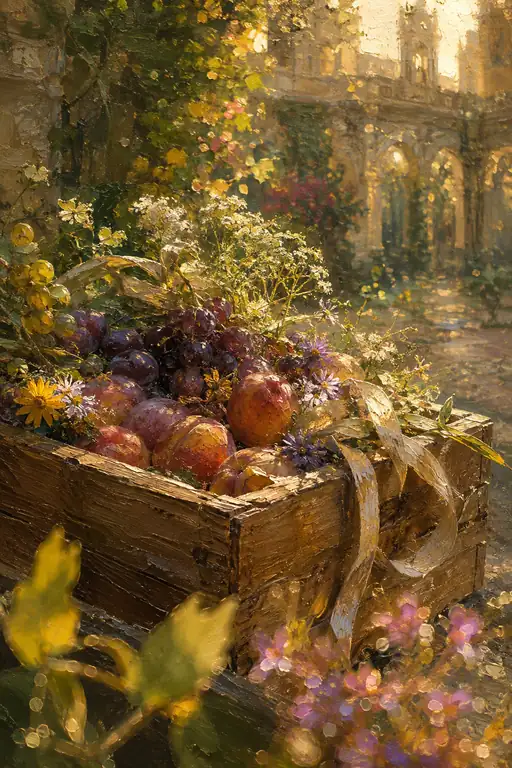 Sun-Drenched Harvest of the Abbey Garden
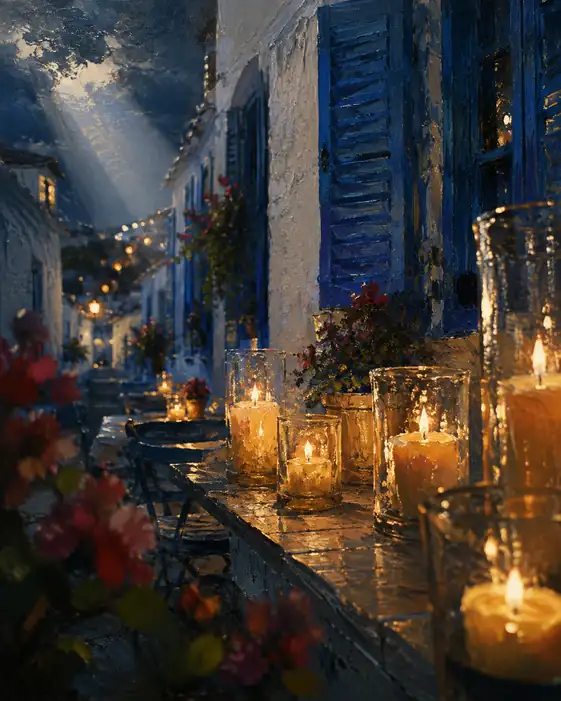 Tender Flame Kept from the Storm
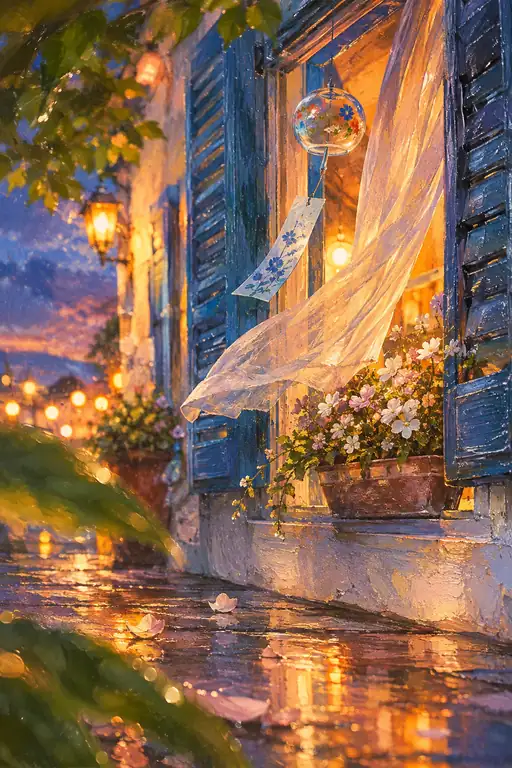 Evening Air Carried on Chimes
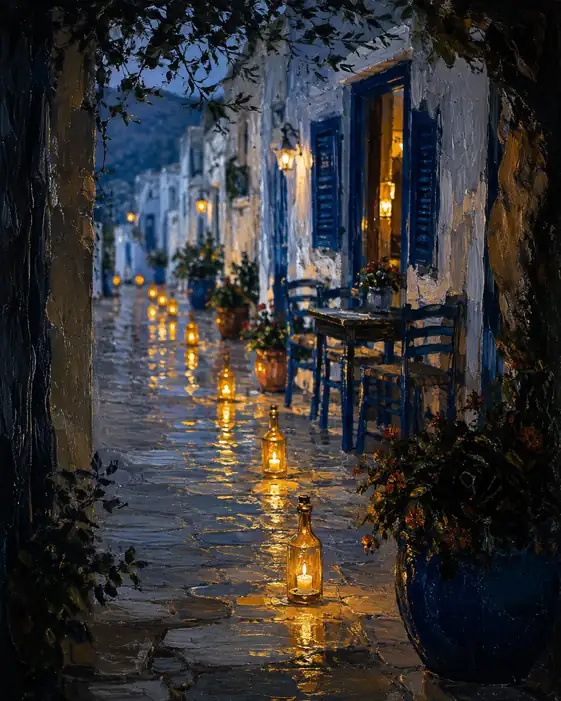 Trail of Small Flames Guided Home
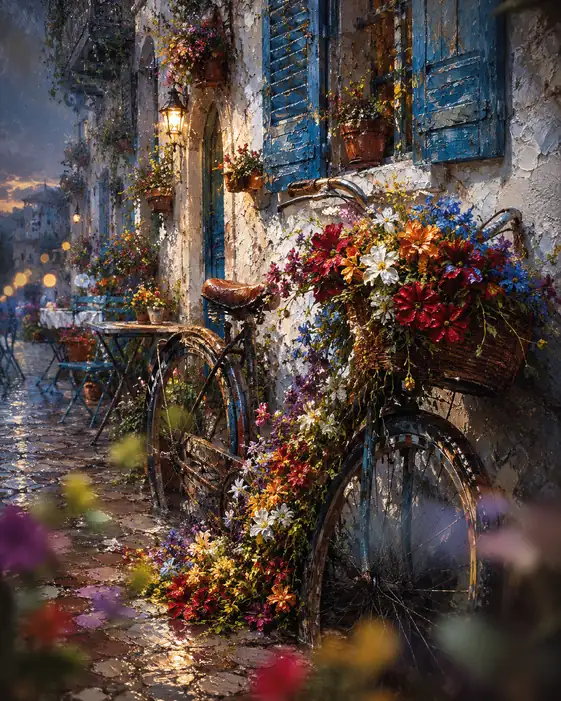 Flower-Laden Bicycle by the Twilight Shutter
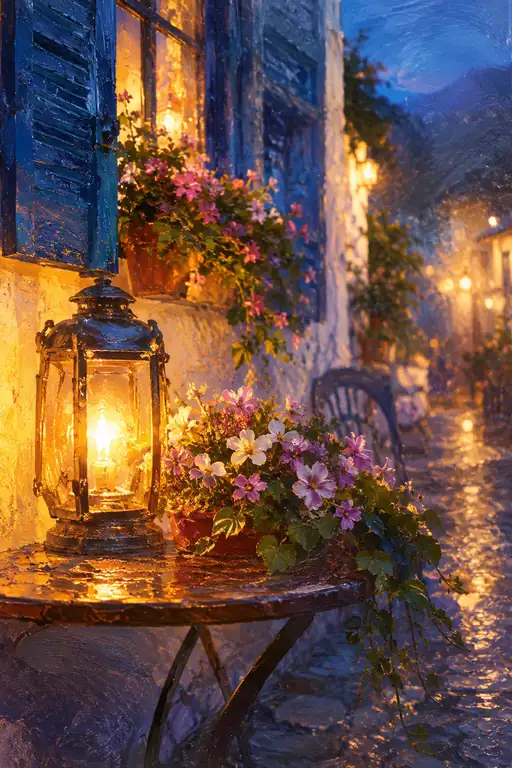 Evening Terrace Glow in the Old Quarter