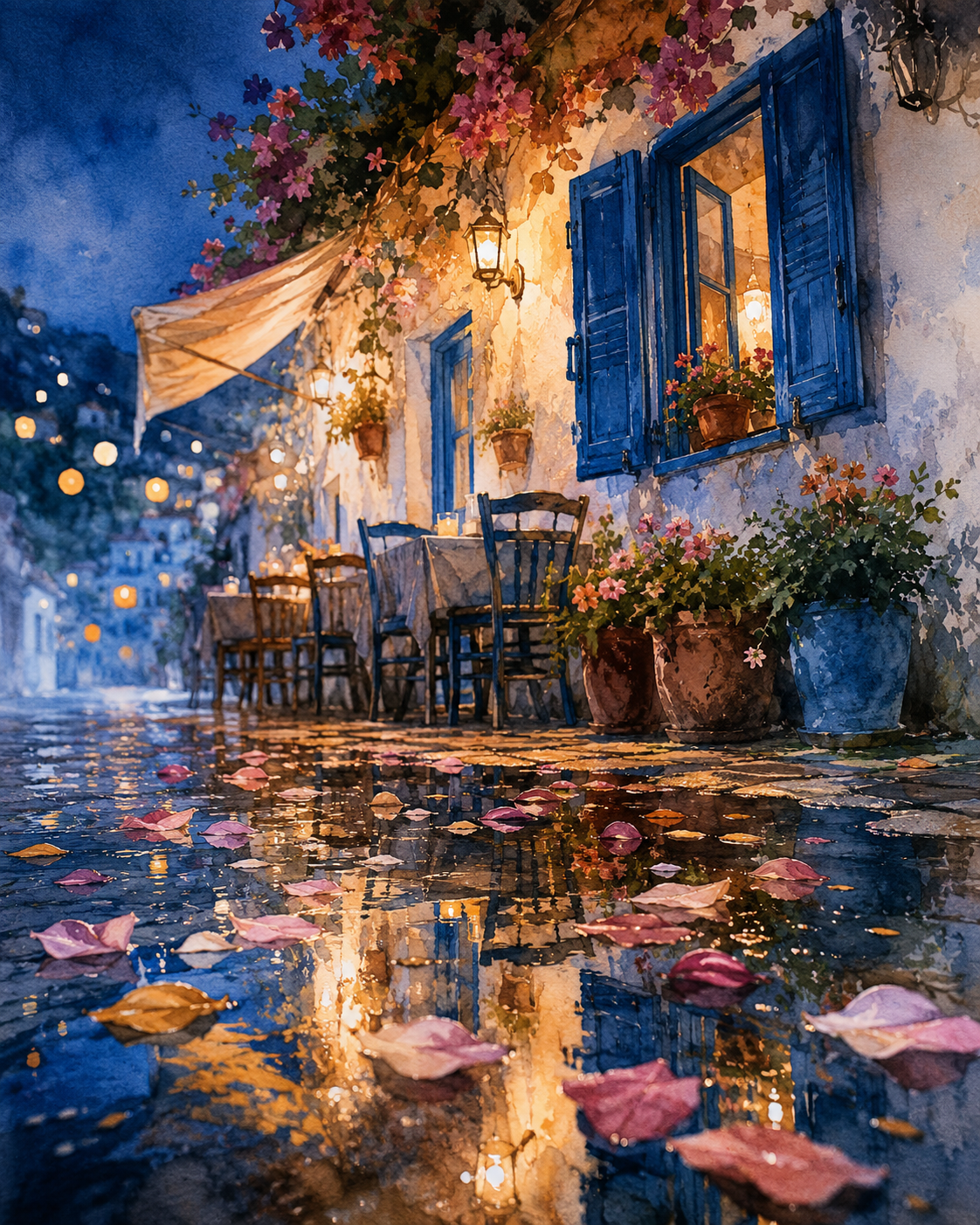
Luminous Steps Along the Midnight Cobblestones
Critique
Introduction This watercolor turns a rain puddle before a flower-covered café into the dominant subject. Pink petals drift across mirrored windows and lamps while empty tables line the wall above. The painting treats aftermath—not rainfall itself—as a moment when architecture, flowers, and light become newly entangled. Description Blue-black water fills most of the foreground, scattered with pink, violet, tan, and white petals. It reflects cobalt shutters, a warm open window, wall lamps, pots, chairs, and bougainvillea. Along the upper right, café tables and dark chairs stand beneath a cream awning outside a white building. Terracotta and blue pots hold abundant flowers. At left, the lane narrows toward hillside lights under deep evening sky. Analysis The waterline sits high, granting the reflection more space than the actual architecture. Petals break the mirror into irregular depth markers, growing larger toward the viewer. Blue organizes sky, shutters, and water; amber window light forms a strong complementary core. Vertical reflections counter the lane’s recession, while the low angle emphasizes surface texture. The number of petals approaches decorative excess, but varied scale and overlap keep them spatially active. Interpretation and Evaluation Fallen petals record weather and seasonal change, while their floating condition makes loss appear mobile rather than final. Empty café furniture suggests a gathering interrupted by rain. The reflected building creates a temporary second dwelling that exists only until water dries. Warm illumination may seem overly inviting, yet dark puddles and scattered debris temper the hospitality with transience. Conclusion The ground becomes an archive of evening. Architecture and flowers survive there as broken light and color. Looking downward reveals that aftermath can produce a richer, less stable version of the place above.
Same Subcategory
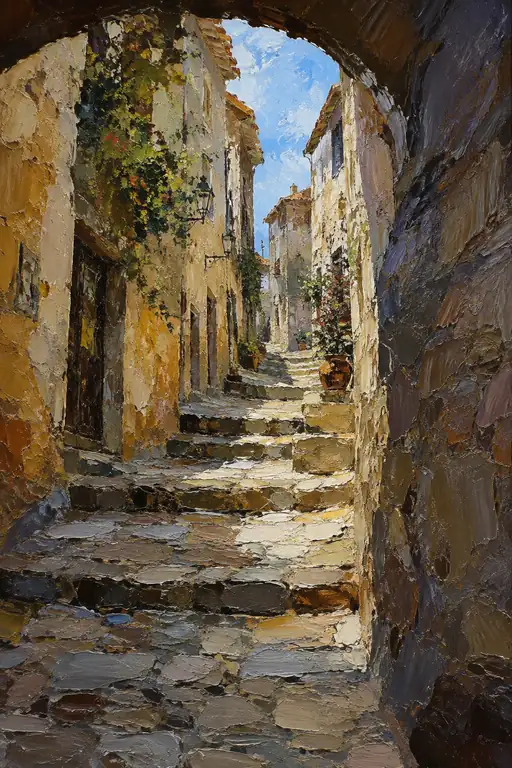 Sunlit Archway Draped in Blooms
Similar Artworks
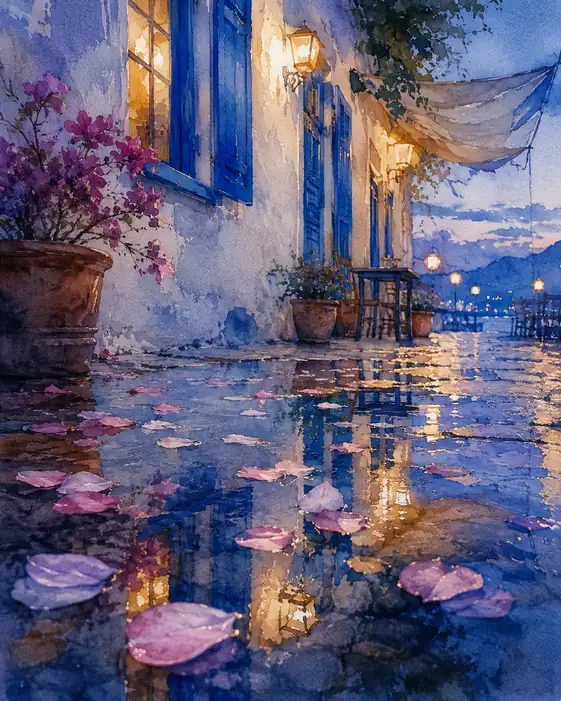 White Watcher at the Bamboo Window
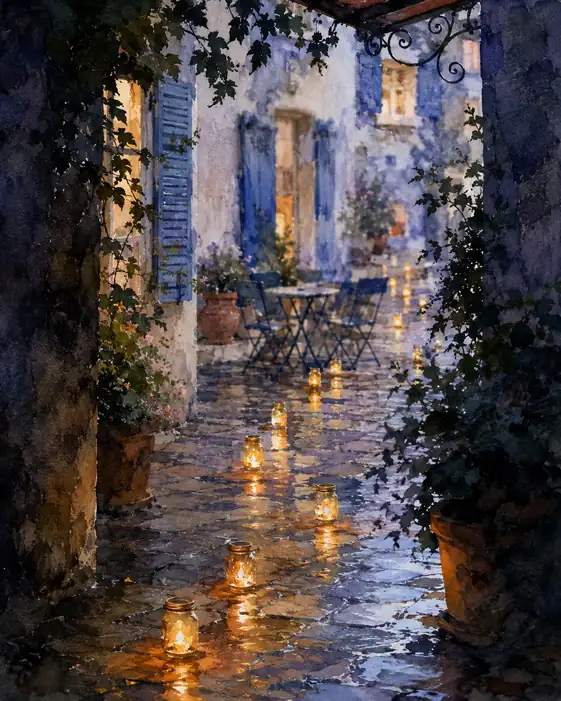 Gentle Step Across Reflected Lanterns
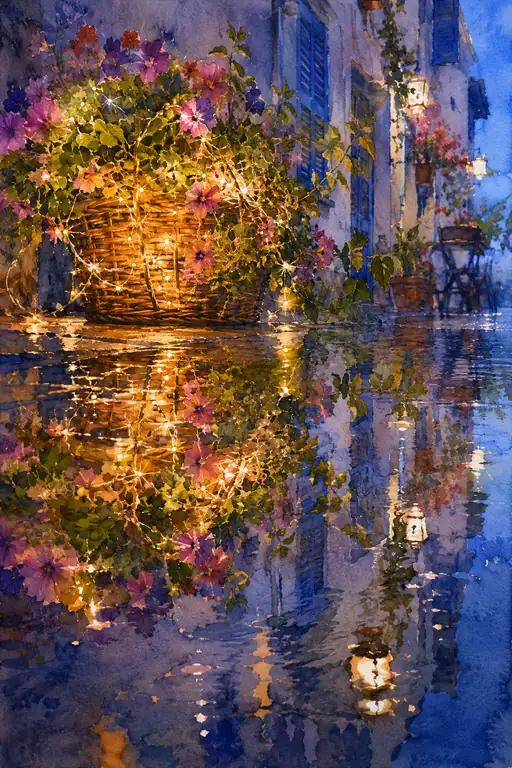 Fairy Lights Mirrored on Wet Cobblestones
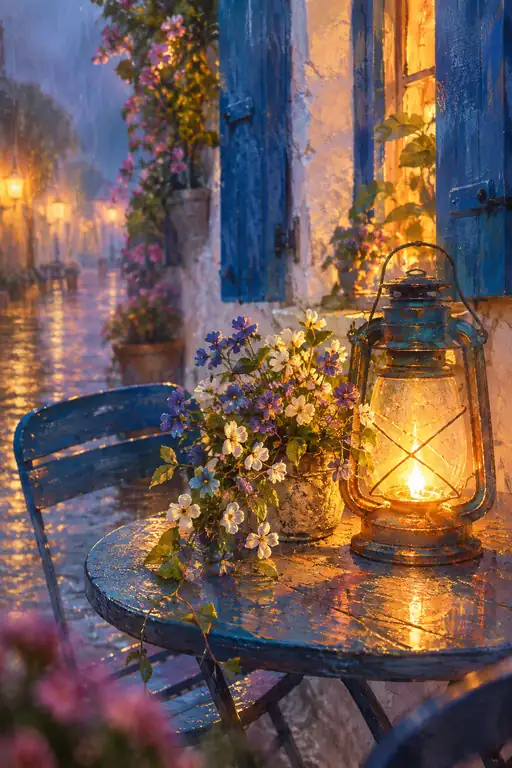 Rain-Kissed Cafe Under the Blue Shutters
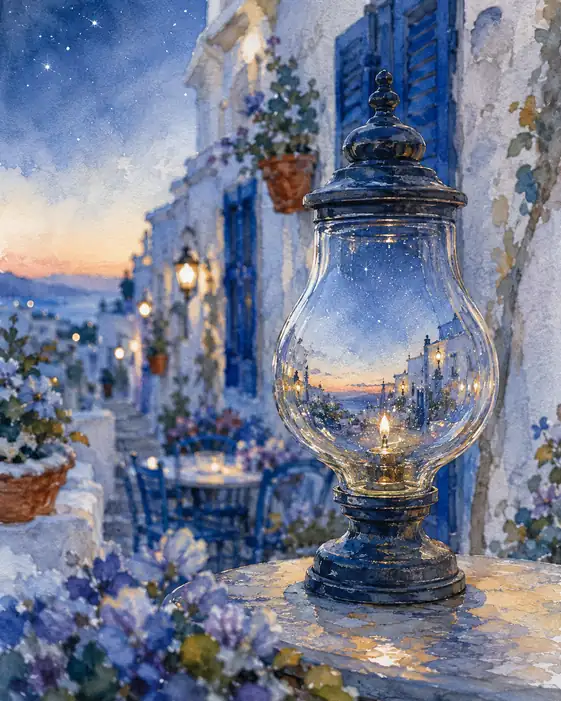 Twilight Captured in a Glass Orb
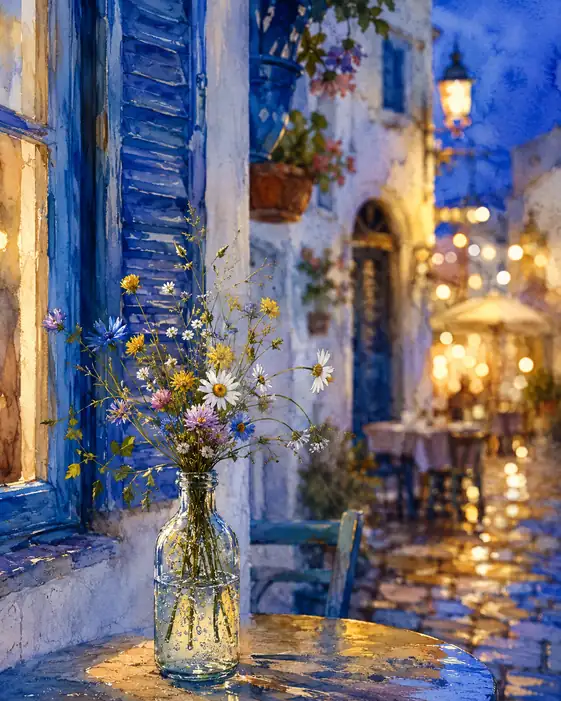 Wild Petals in the Blue Hour
 Journey Paused in Full Bloom
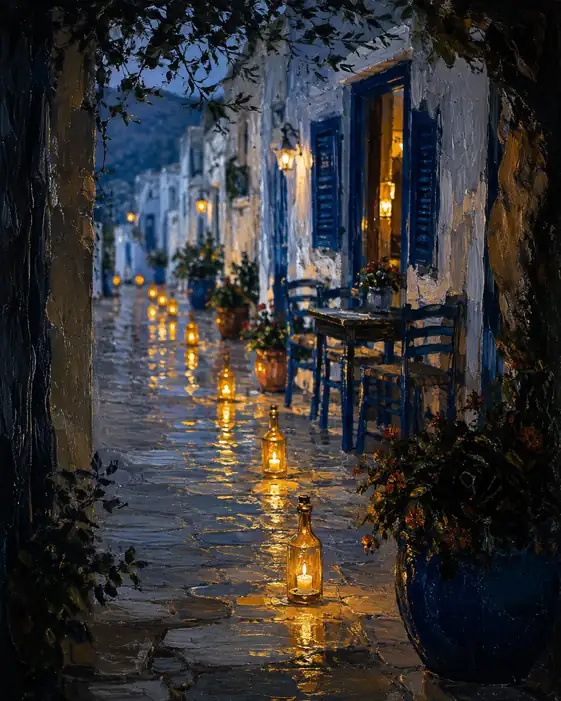 Trail of Small Flames Guided Home
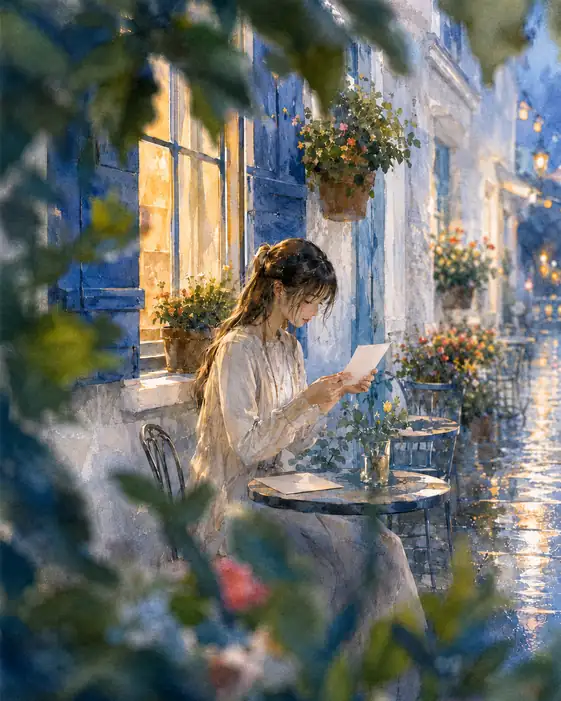 Reading Letters in the Drizzle-Kissed Cafe
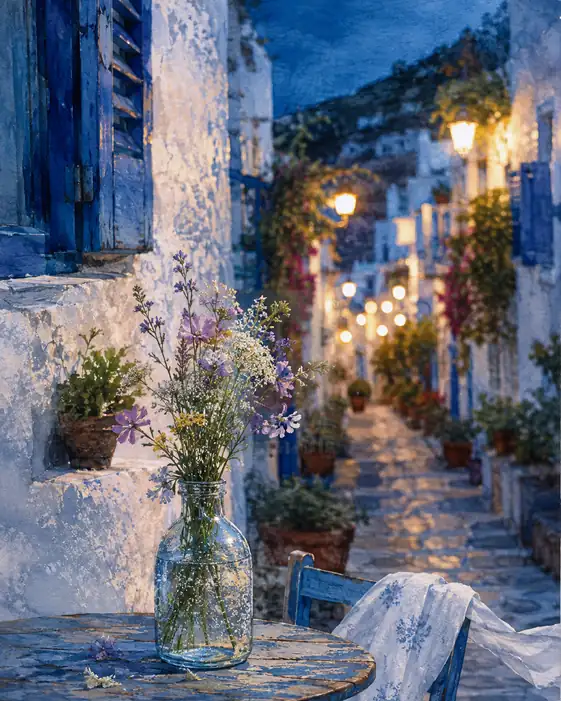 Mediterranean Evening Whispers on the Table