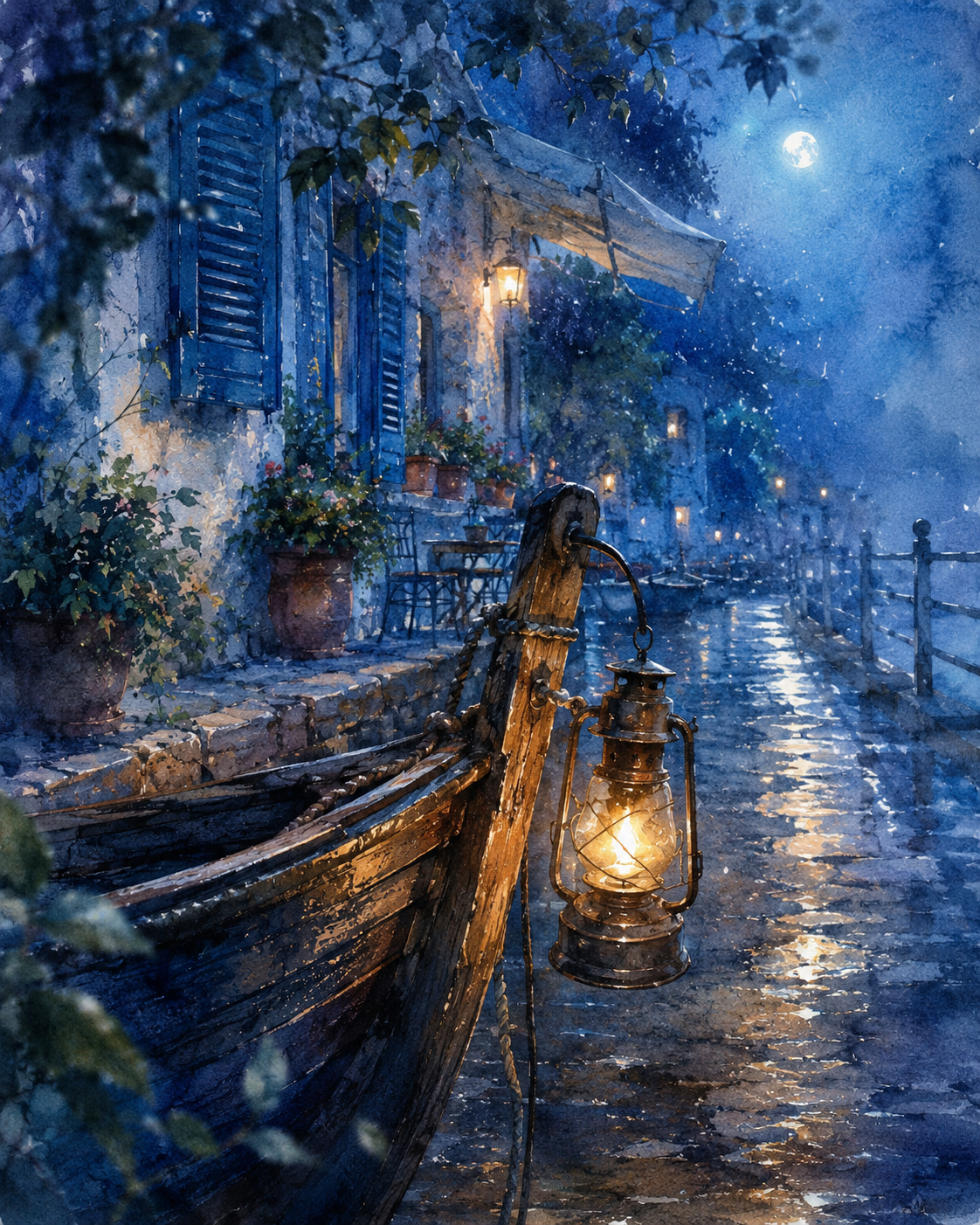
Moored to the Moonlit Tide
Critique
Introduction This moonlit waterfront watercolor places an old boat and hanging oil lantern beside a rain-bright promenade. Blue-shuttered houses and café lamps extend into the distance. The scene joins two forms of guidance—moon and flame—around a vessel that is presently still. Description A dark wooden boat fills the left foreground, its worn bow rising near center. A rope secures it to a rough post from which a metal lantern hangs, glowing above wet stone. White houses with cobalt shutters, awnings, flowerpots, tables, and lamps line the left bank. A railing follows the right edge beside dark water. The path recedes under trees toward small lights, while a full moon shines through blue cloud and fine rain. Analysis The boat’s long diagonal points toward the central lantern and onward along the promenade. Post and lantern create a vertical hinge between vessel and path. Deep cobalt dominates, with amber repeated in flame, wall lamps, and reflections. The moon supplies a cool circular counterpart to the warm lantern. Rough brushwork differentiates timber, stone, metal, and foliage. Heavy foreground framing adds shelter, though it makes the boat visually weighty. Interpretation and Evaluation Boat and walkway represent waterborne and landward travel, both momentarily paused by night and rain. The lantern suggests practical care, readiness, or a keeper’s routine; the moon provides impersonal orientation. Their two lights make stillness feel prepared rather than abandoned. The romantic night setting risks idealization, but rope, worn wood, puddles, and empty tables preserve working reality. Conclusion Clear direction and controlled temperature sustain the painting. The anchored boat is not final rest, because lantern and path imply movement. Human maintenance and natural light share responsibility for passage.
Same Subcategory
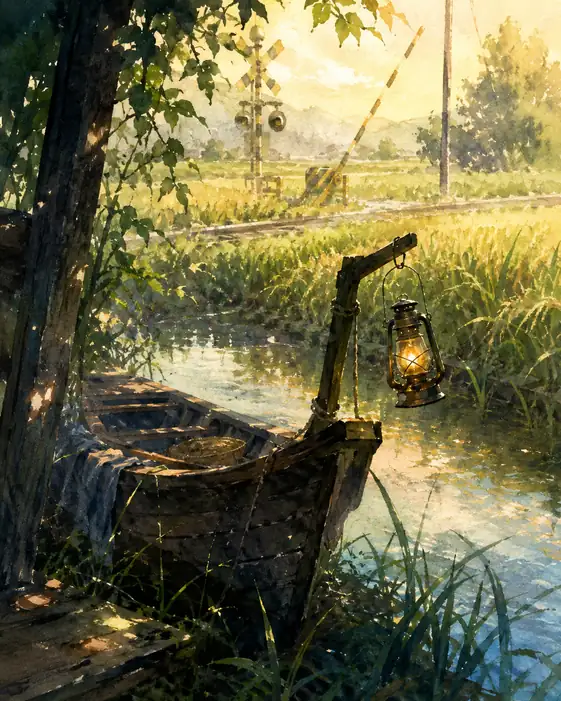 Resting Boat and Straw Hat by the Waterway
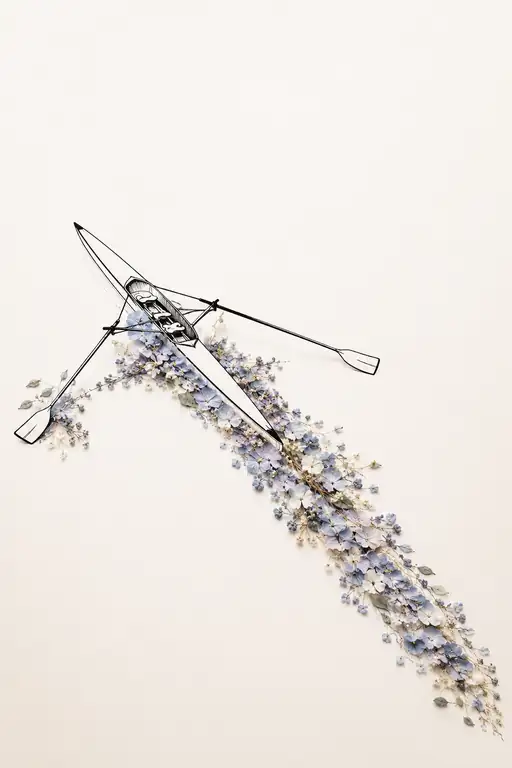 Lone Scull and the Flowing Wake
Similar Artworks
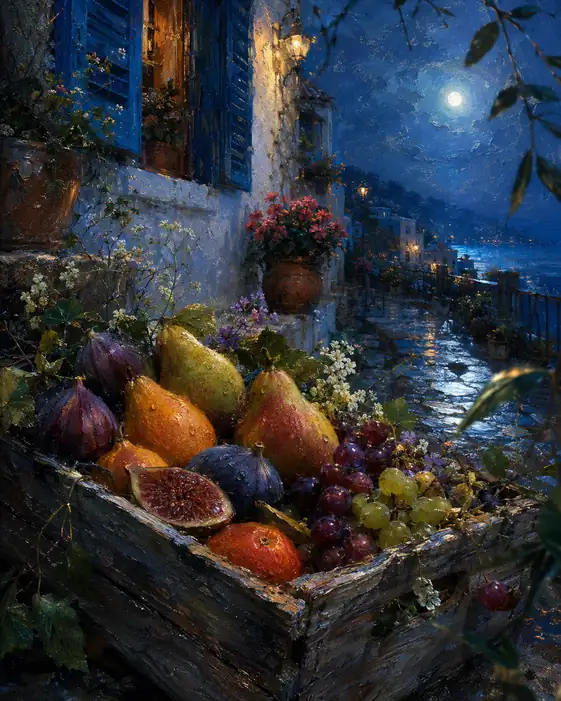 Moonlit Still Life Above the Coast
 White Watcher at the Bamboo Window
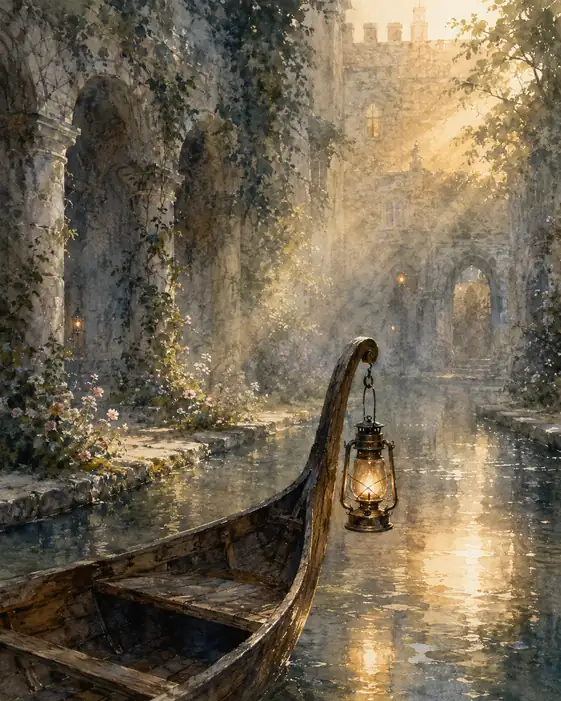 Golden Mist Drifting Through the Canal
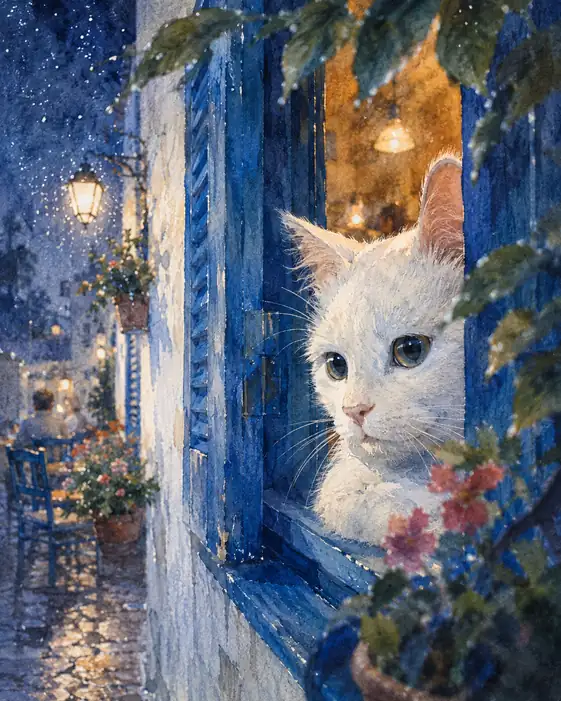 Blue Shutter Curiosity on a Starlit Night
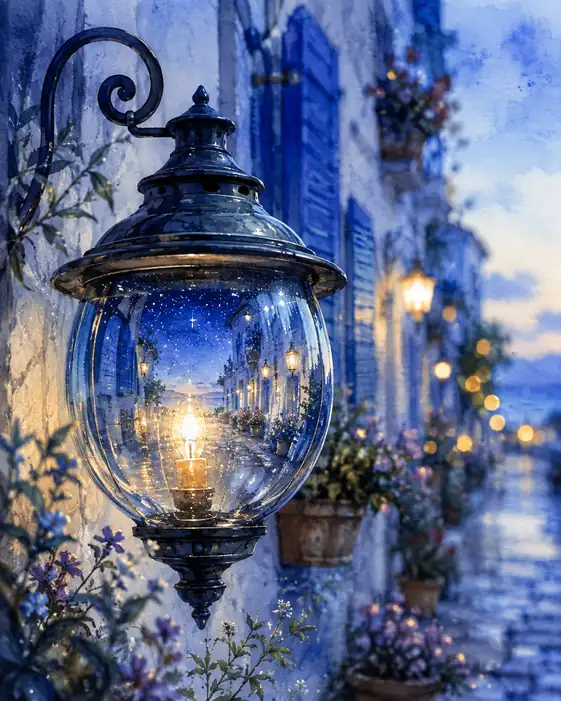 Sanctuary of Starlight in Glass
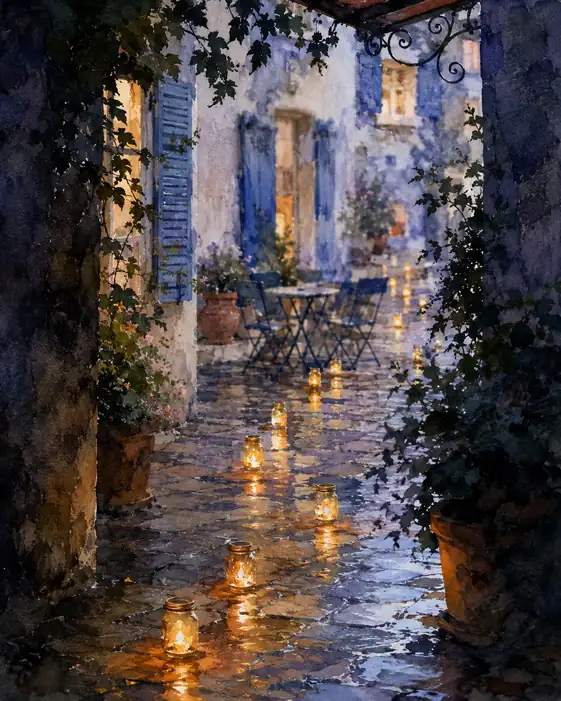 Gentle Step Across Reflected Lanterns
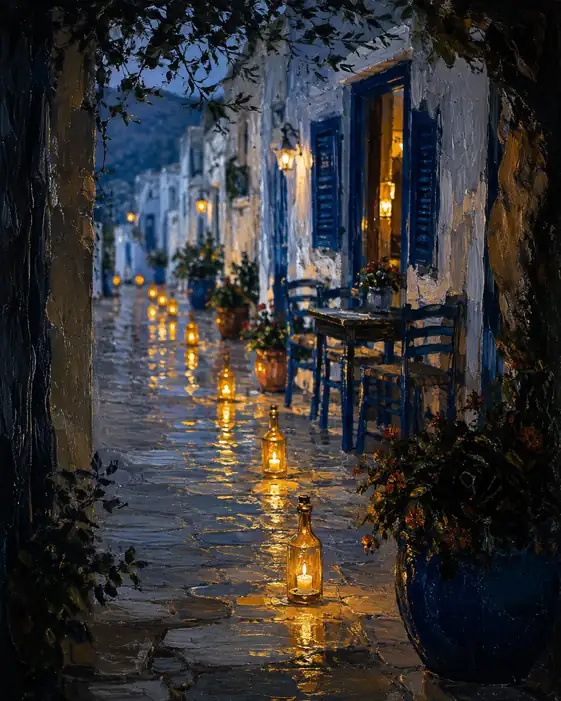 Trail of Small Flames Guided Home
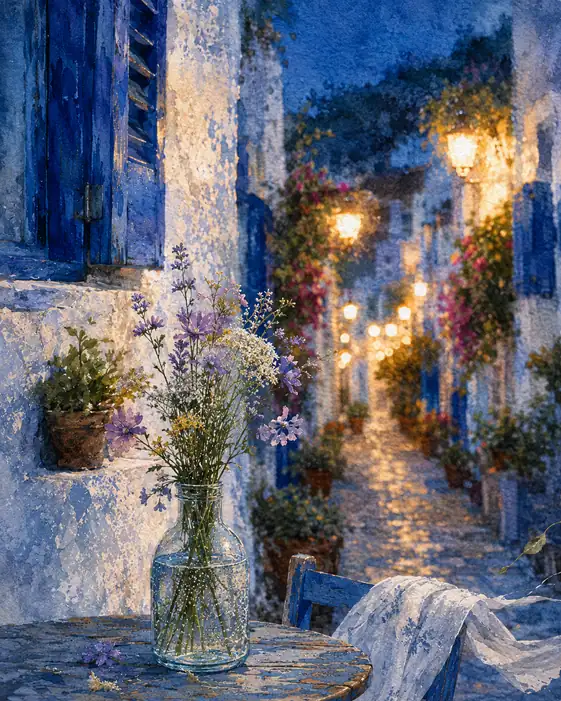 Evening Terrace with Wildflowers and Glowing Lamps
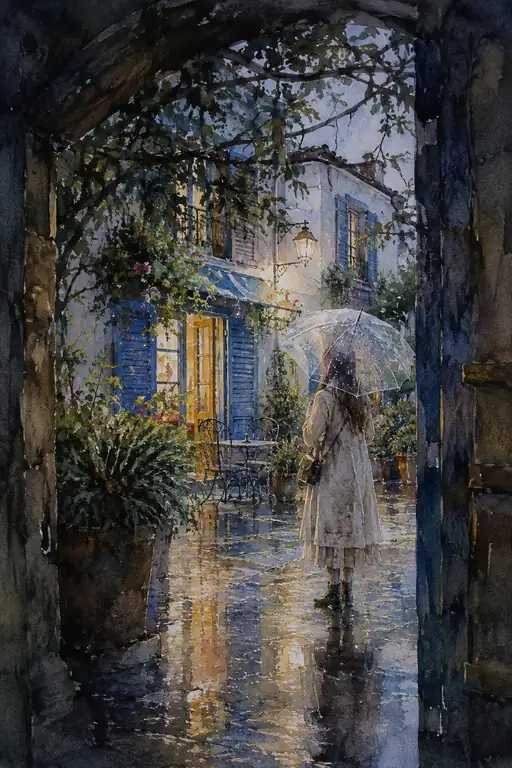 Clear Umbrella Stroll in the Evening Rain
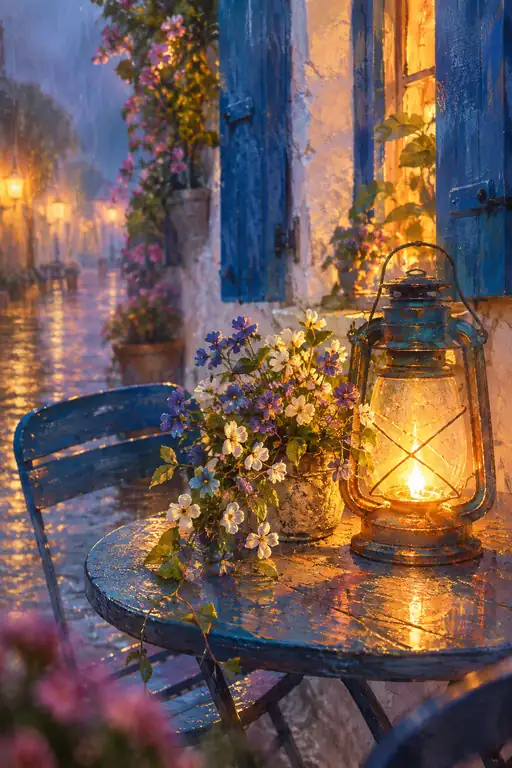 Rain-Kissed Cafe Under the Blue Shutters