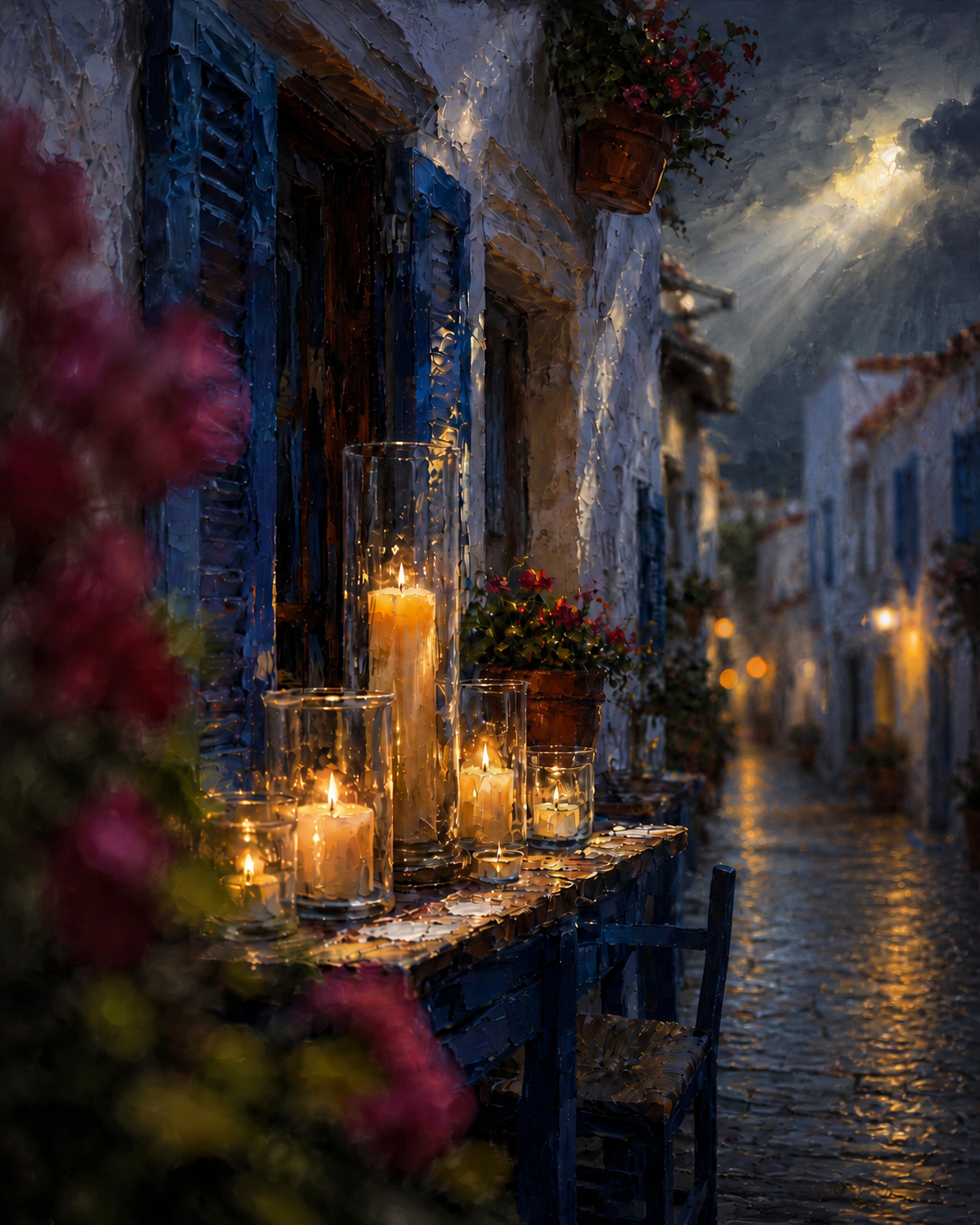
A Quiet Vigil Beneath the Storm
Critique
Introduction This dark streetscape gathers several candles on a narrow table outside a blue-shuttered house. Storm light opens above the lane while distant lamps reflect on wet paving. The work places a private vigil within unsettled weather, balancing concentrated flame against an uncertain public distance. Description Five or more candles burn inside clear cylinders and small glasses along the left foreground table. Melted wax and rain shine on its edge. Dark pink blossoms blur across the lower left; red flowerpots climb the white wall. Blue shutters and an open doorway stand behind the candles, with an empty chair below. The lane recedes rightward through golden lamps toward a bright gap in heavy gray clouds. Analysis Varying cylinder heights create a clustered vertical rhythm, echoed by shutters, chair legs, and distant lamps. Warm flames form the densest brightness against deep cobalt and black. Their reflections lead into the street, while the cloud opening creates a separate, cooler illumination above. Sharp glass rims contrast with softened flowers and distance. The crowded foreground risks visual compression, but the open lane supplies directional release. Interpretation and Evaluation The candles imply remembrance, protection, or welcome maintained through bad weather. Because they occupy ordinary drinking glasses, the ritual feels improvised and personal. The vacant chair suggests an absent participant, while the distant light keeps attention from closing around loss. Multiple flames can seem theatrically sentimental, yet wax, rain, rough timber, and storm clouds give the vigil physical necessity. Conclusion The painting links fragile light to atmospheric transition. Candles do not defeat darkness; they define a place within it. Their glow makes waiting visible, while the lane preserves possible movement.
Same Subcategory
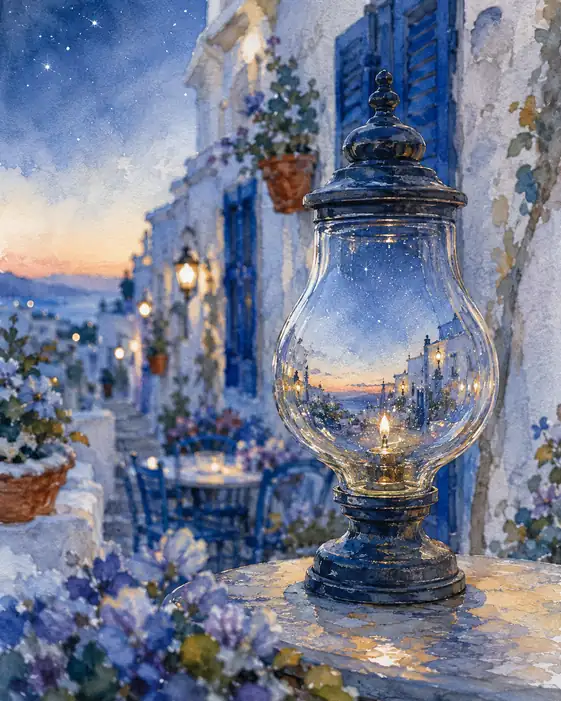 Twilight Captured in a Glass Orb
Similar Artworks
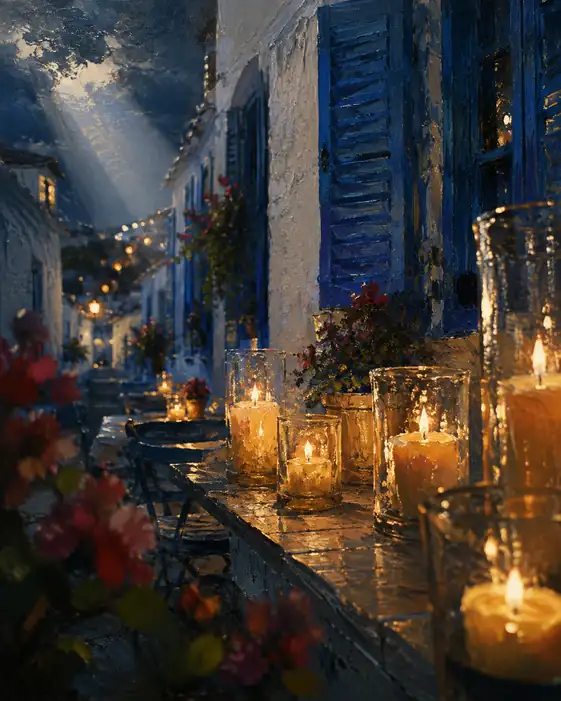 Tender Flame Kept from the Storm
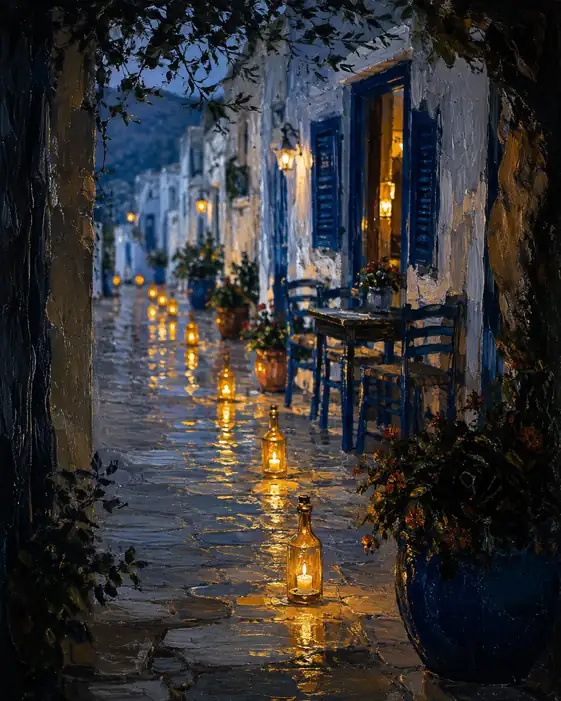 Trail of Small Flames Guided Home
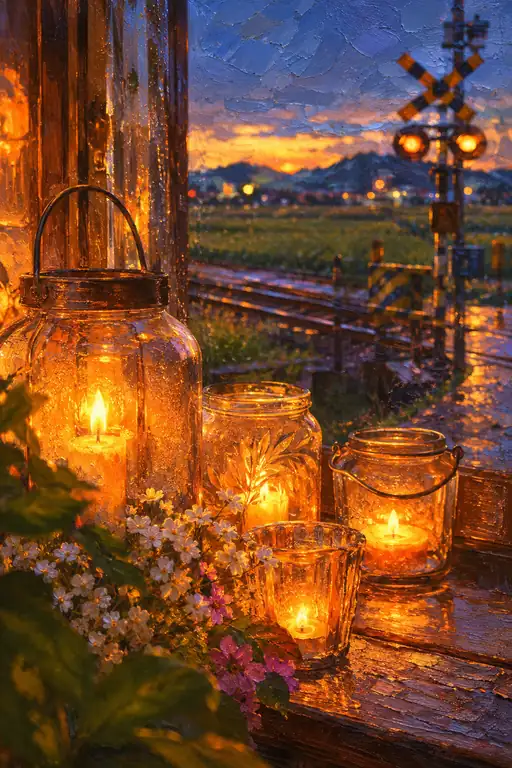 Warm Glow by the Rain-Drenched Crossing
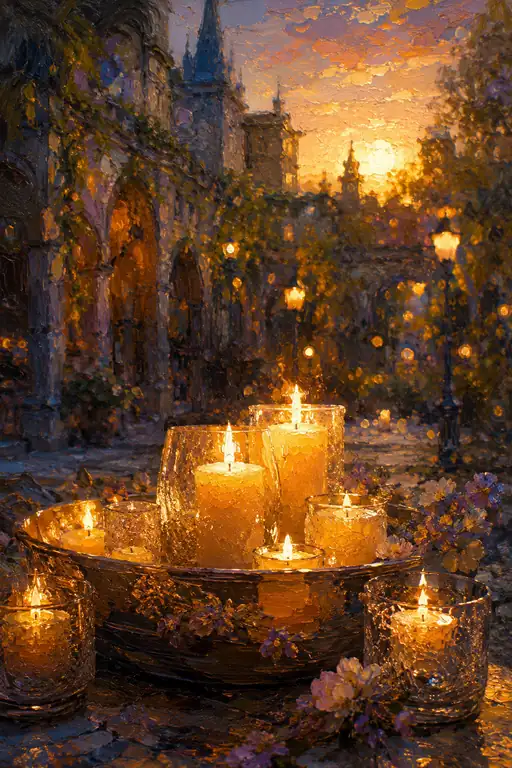 Bowl of Golden Flames in the Twilight Garden
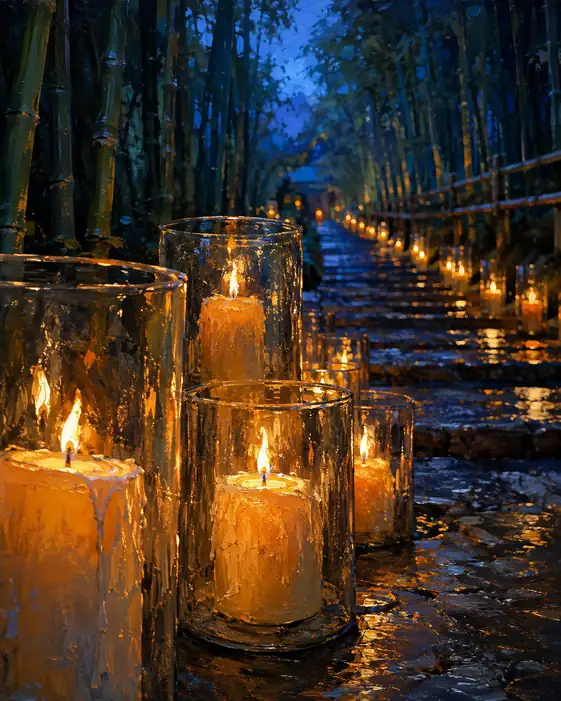 A Constellation of Candles on Forest Steps
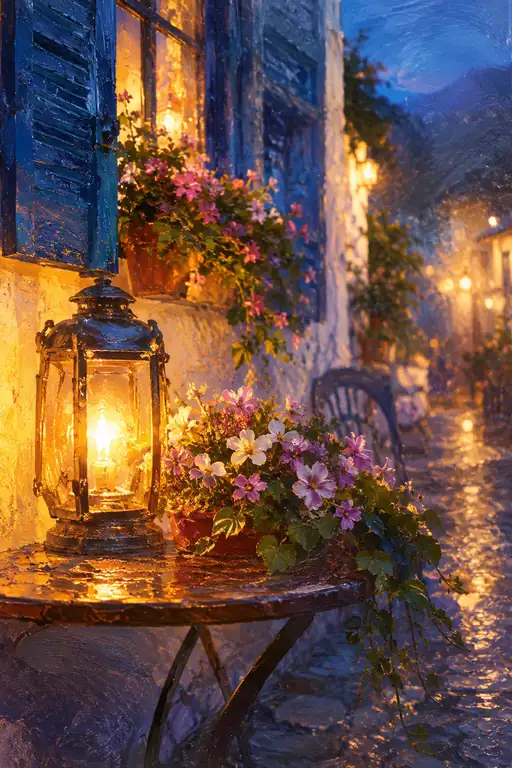 Evening Terrace Glow in the Old Quarter
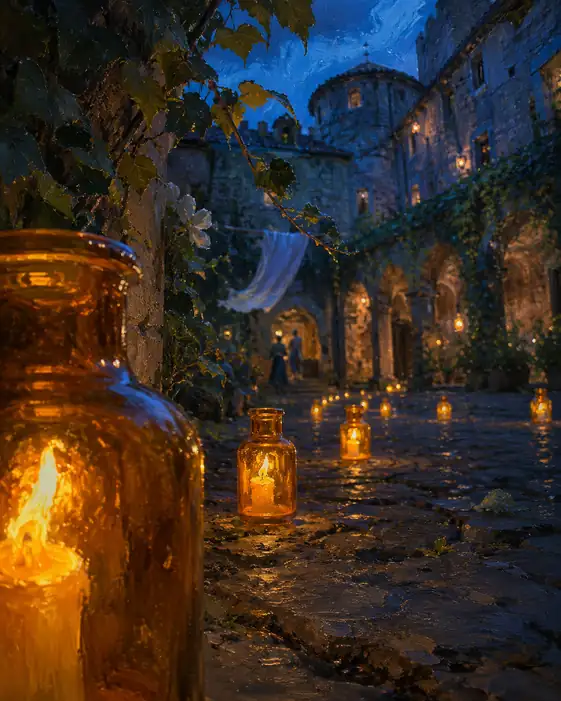 Amber Glow Guiding the Evening Walk
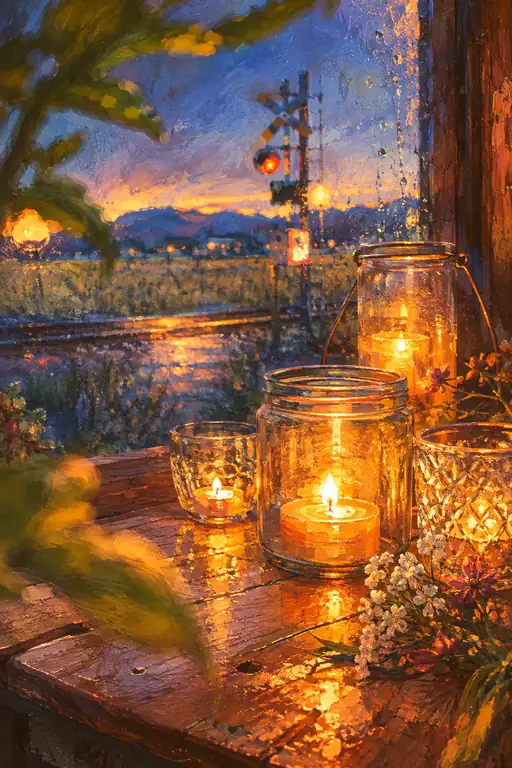 Twilight Candles on the Country Station Sill
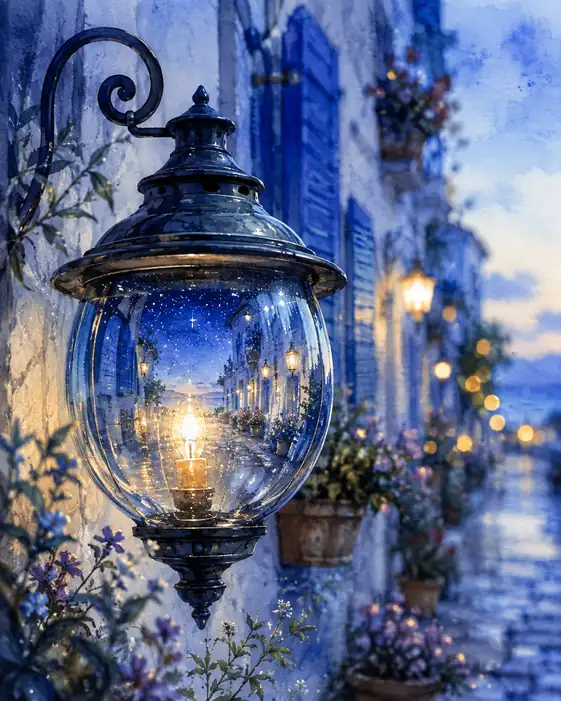 Sanctuary of Starlight in Glass
 Steam Lingering in the Twilight Breeze