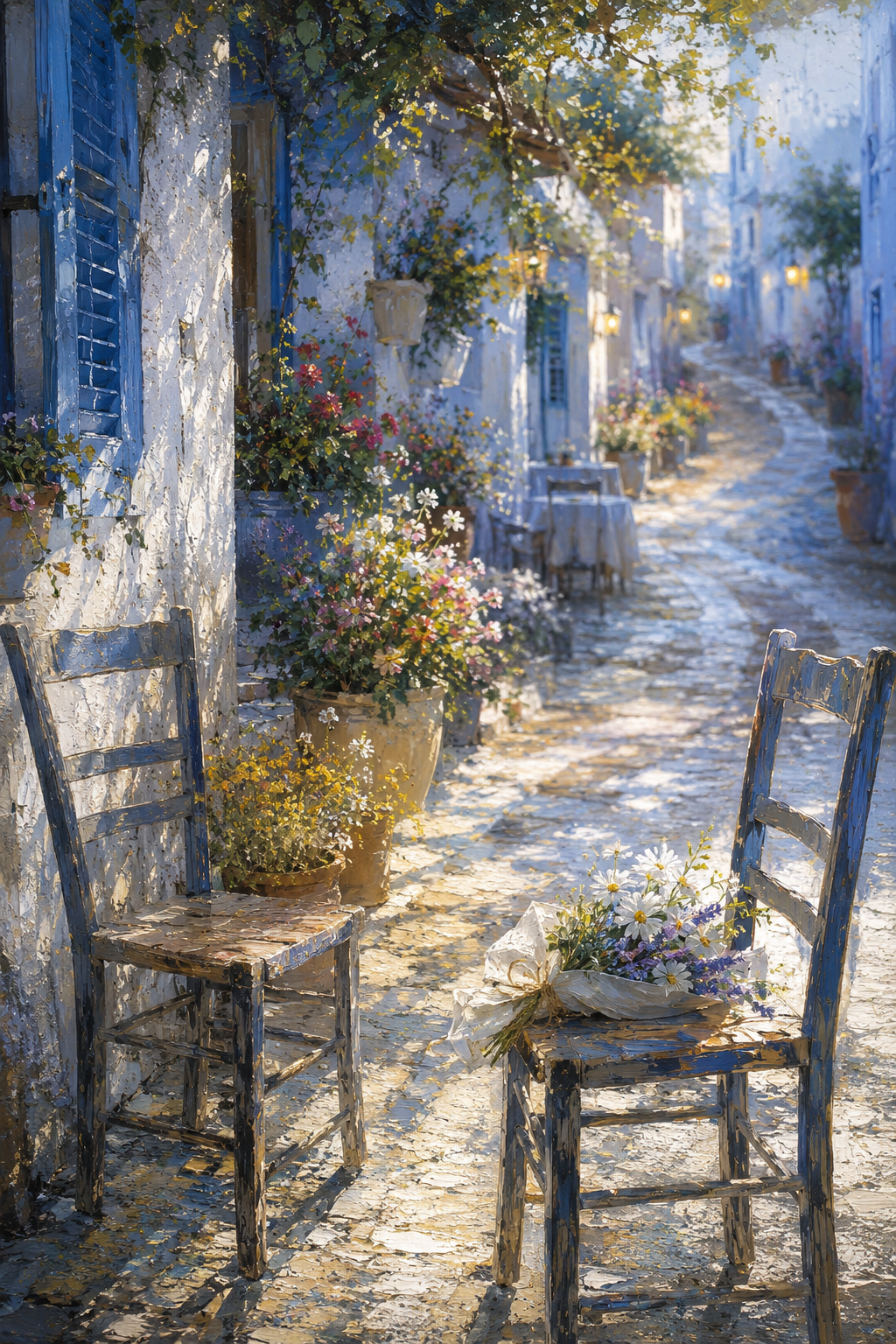
An Unspoken Promise on Cobalt Wood
Critique
Introduction This village scene places two worn blue chairs in front, one holding a bouquet. A white lane climbs between flowers and lamps. Empty seating becomes invitation, balancing anticipation with durability. Description One chair stands beneath blue shutters; the other faces inward. Its straw seat supports daisies and violet sprigs in pale paper. Flowerpots crowd the path beneath leaves. White houses, café tables, amber lamps, and a curving lane recede into blue haze. Chair shadows cross irregular paving. Analysis The chairs frame a central corridor, making their gap the principal route into depth. Dark blue uprights stabilize the high-key white architecture. The bouquet supplies a compact focus, while repeated pots and lamps carry its floral and circular rhythms uphill. Warm straw, stone, and light temper the cool palette. Broken strokes describe chipped paint and masonry. The intense distant glare reduces detail, but strengthens the sense of an open destination. Interpretation and Evaluation Two empty chairs imply relationship even without people. The bouquet may await a recipient, mark a farewell, or preserve an encounter that has passed. Its casual wrapping contrasts with the durable chairs, setting transient gesture against long use. The profusion of flowers and pristine light approach idyllic fantasy, yet scratched wood, uneven stones, and asymmetrical placement keep the welcome grounded. Conclusion The work succeeds by making absence socially meaningful. The empty chairs do not close the scene; they reserve space for arrival. Through clear framing and luminous recession, the lane extends a small offered bouquet into a broader image of hospitality and shared possibility.
Same Subcategory
 Where the Sea Wind Whispers to the Glass
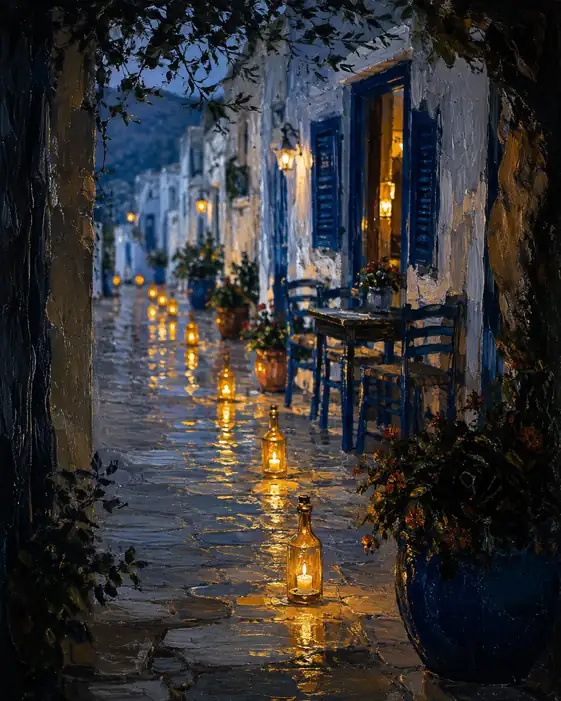 Trail of Small Flames Guided Home
Similar Artworks
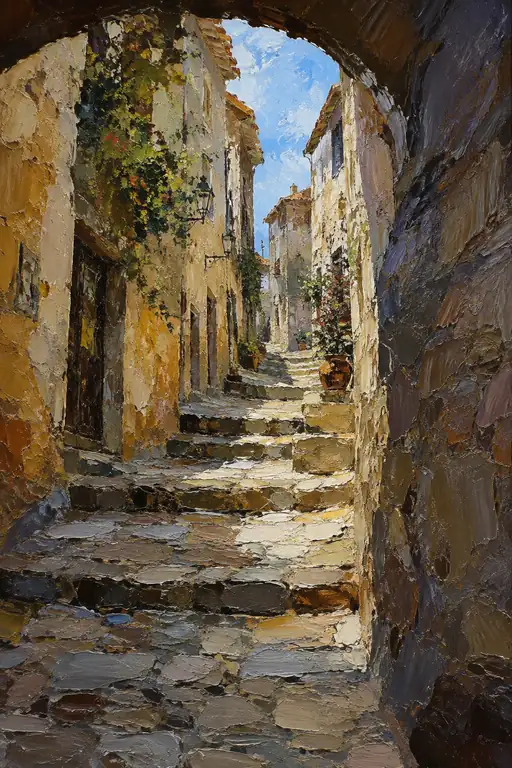 Sunlit Archway Draped in Blooms
 Wildflower Bouquet on the Sunlit Alley Chairs
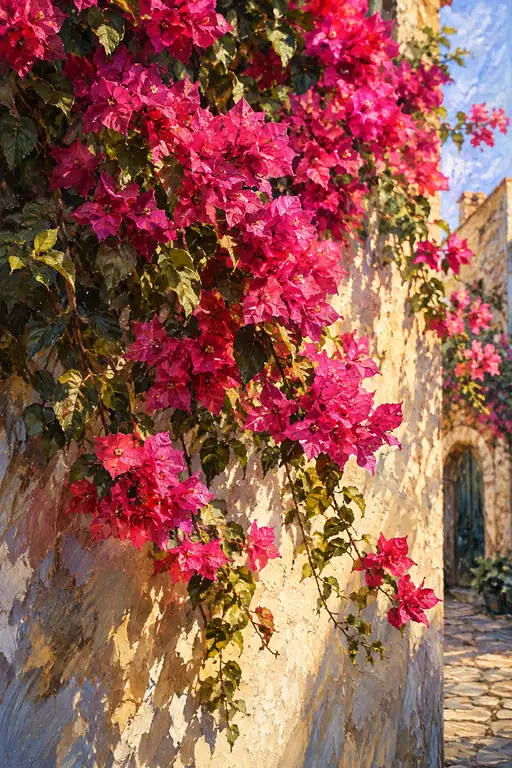 Cascade of Magenta Along the White Alley
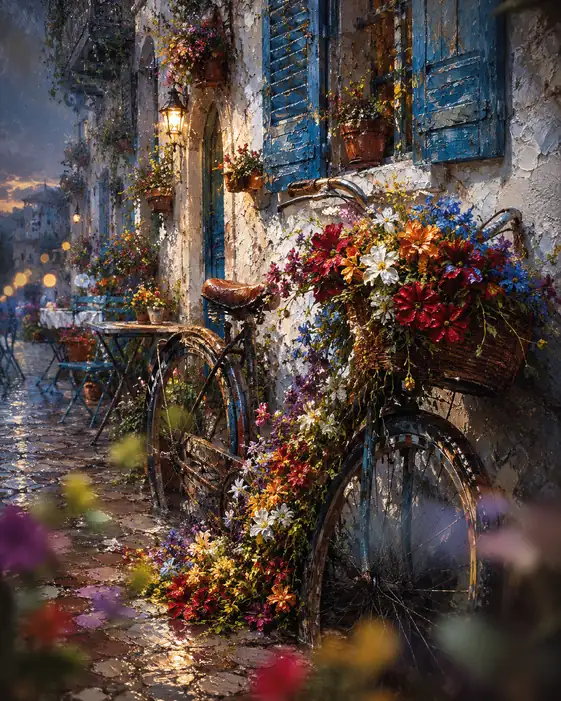 Flower-Laden Bicycle by the Twilight Shutter
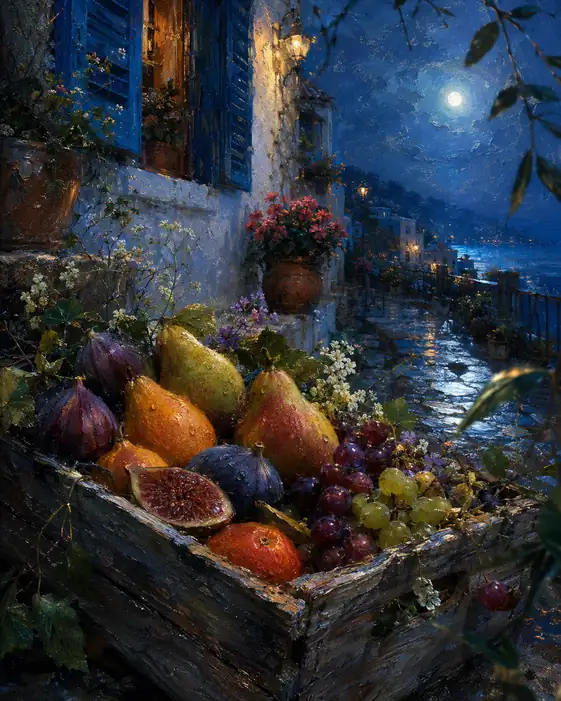 Moonlit Still Life Above the Coast
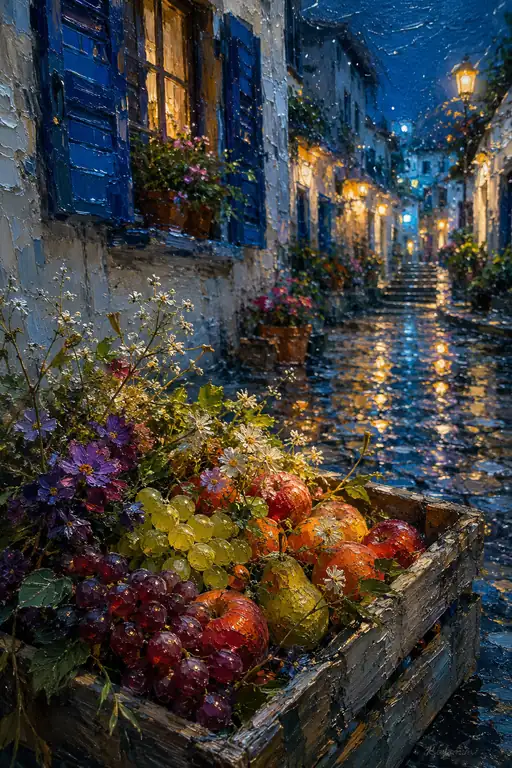 Crates of Abundance at the Lane's Foot
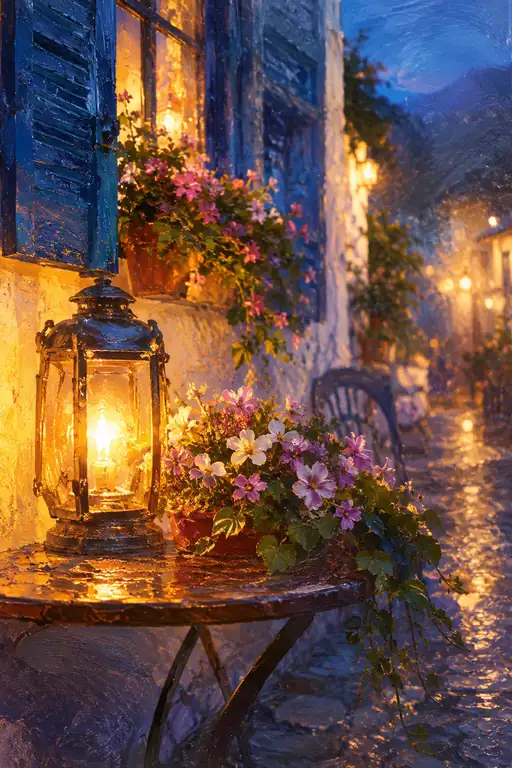 Evening Terrace Glow in the Old Quarter
 Tender Flame Kept from the Storm
 Memory Pressed in Petals and Sky
 Journey Paused in Full Bloom