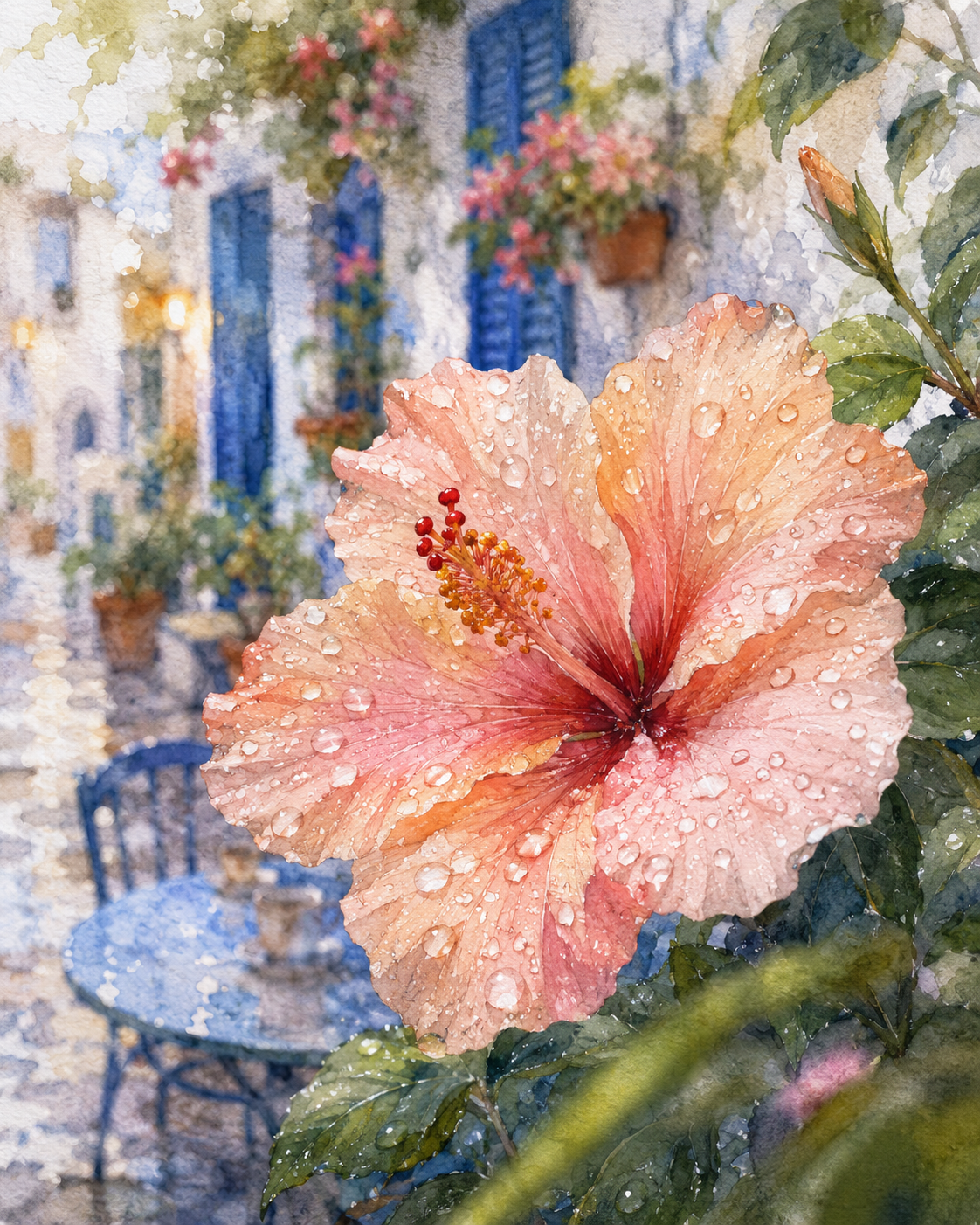
Dew-Kissed Hibiscus in the Mediterranean Morning
Critique
Introduction This watercolor enlarges a wet hibiscus over a village setting. Its intimate detail contrasts with softened architecture. The scale asks viewers to experience the street through a transient bloom. Description A peach-pink hibiscus fills the right and central foreground. Its broad ruffled petals deepen to crimson at the throat, and a projecting stamen carries orange and red tips. Numerous clear droplets sit across veins and folds. Dark green leaves and a closed bud frame the right edge. Behind, white walls, cobalt shutters, terracotta pots, pink flowers, a blue café table, and warm lamps dissolve into luminous blur. Analysis The flower’s radial structure generates movement from dark center to scalloped perimeter. Droplets repeat as bright circles, reinforcing both curvature and surface tension. Peach and coral stand against complementary blue architecture, while green leaves provide a tonal base. Sharp petal veins and beads yield abruptly to lost background edges, producing dramatic depth. The bloom nearly overwhelms context, but glimpsed shutters and furniture prevent it from becoming a botanical study without place. Interpretation and Evaluation The enlarged flower makes a brief post-rain condition monumental. Droplets indicate weather just passed and imply an imminent change as they evaporate or fall. The village becomes memory or atmosphere behind immediate sensation. Meticulous droplets risk decorative virtuosity, yet irregular petal edges and uneven color retain organic vulnerability. The unopened bud adds a quiet temporal counterpoint: one bloom is fully present while another remains potential. Conclusion The work succeeds through scale, complementary color, and disciplined focus. It converts a picturesque street into the habitat of one intensely observed life. The hibiscus appears radiant precisely because water, weather, and maturity make its condition temporary.
Same Subcategory
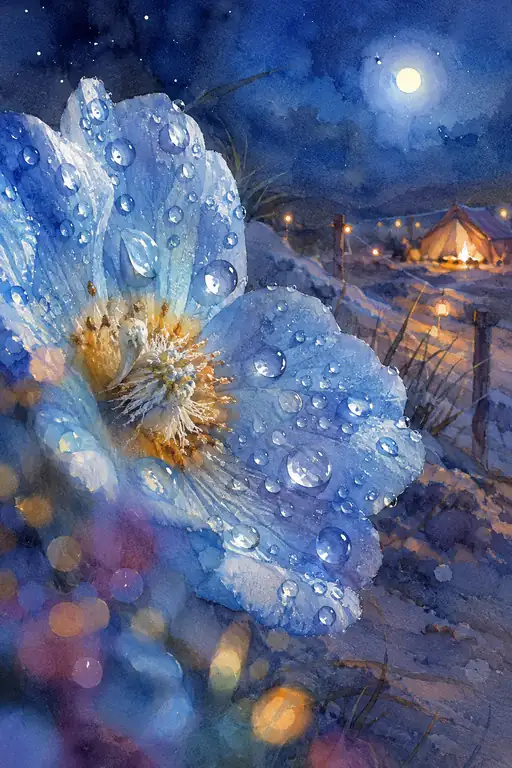 Moonlit Dew on the Azure Petals
Similar Artworks
 Wildflower Bouquet on the Sunlit Alley Chairs
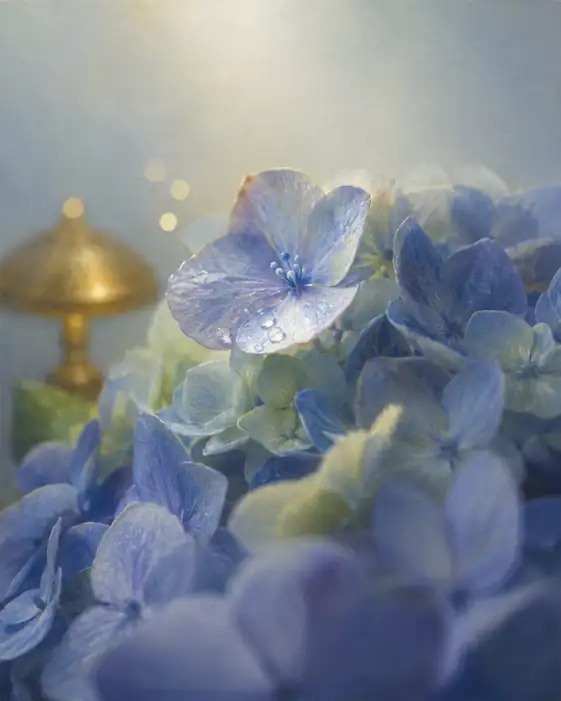 Golden Resonance in Azure Petals
 Journey Paused in Full Bloom
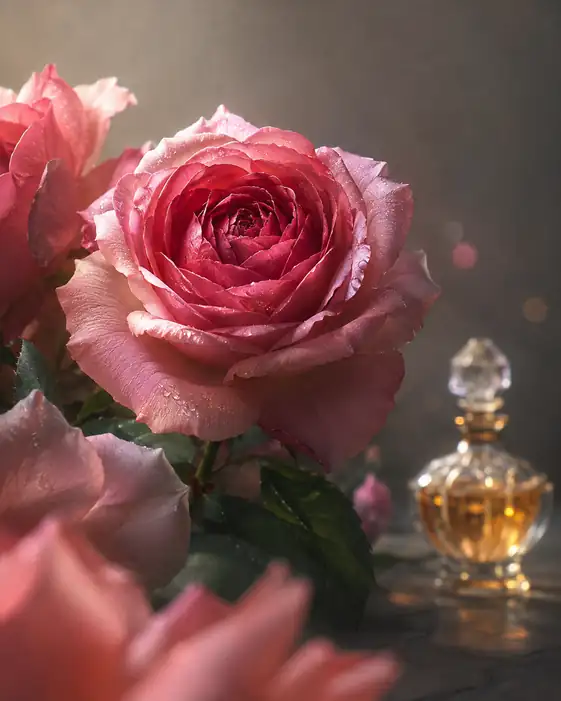 Dew-Kissed Blossom and Crystal Scent
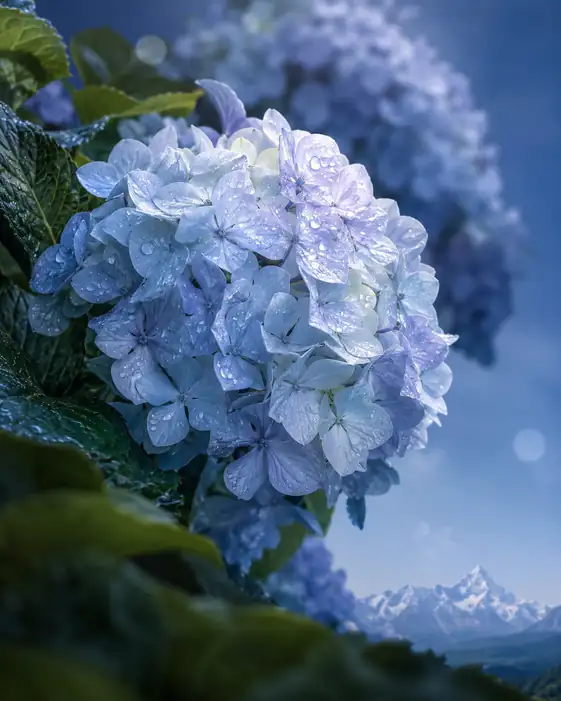 Solitary Summit Framed in Indigo
 Morning Bell and the Waking Bloom
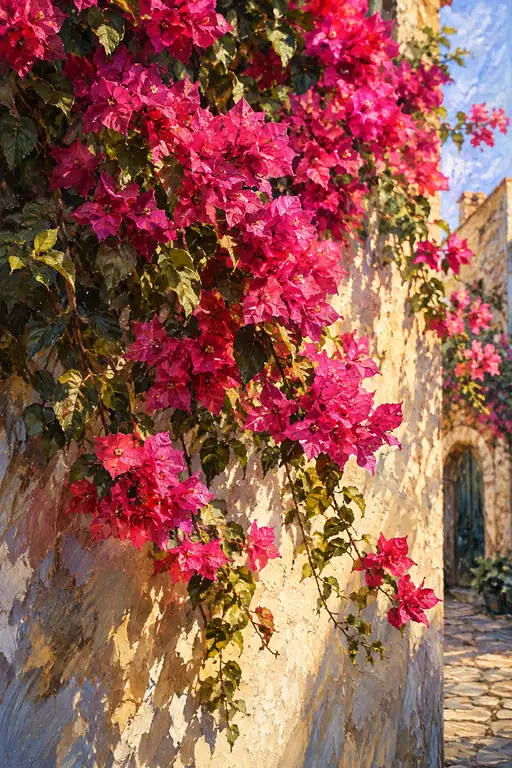 Cascade of Magenta Along the White Alley
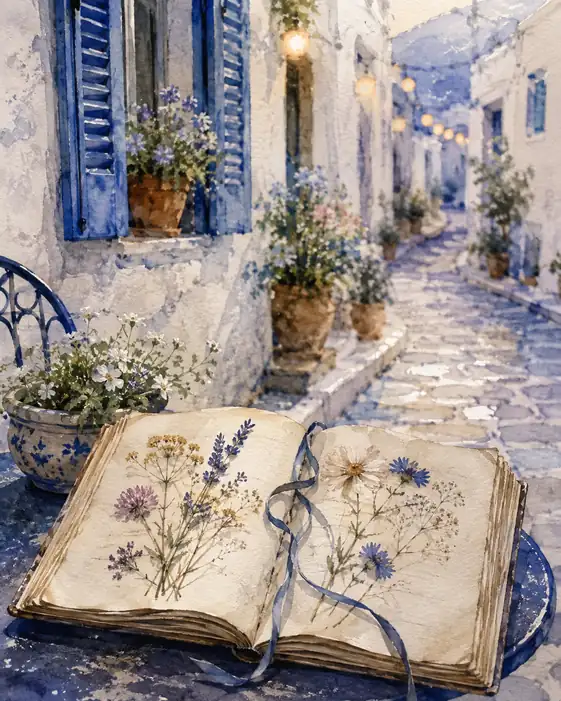 Memory Pressed in Petals and Sky
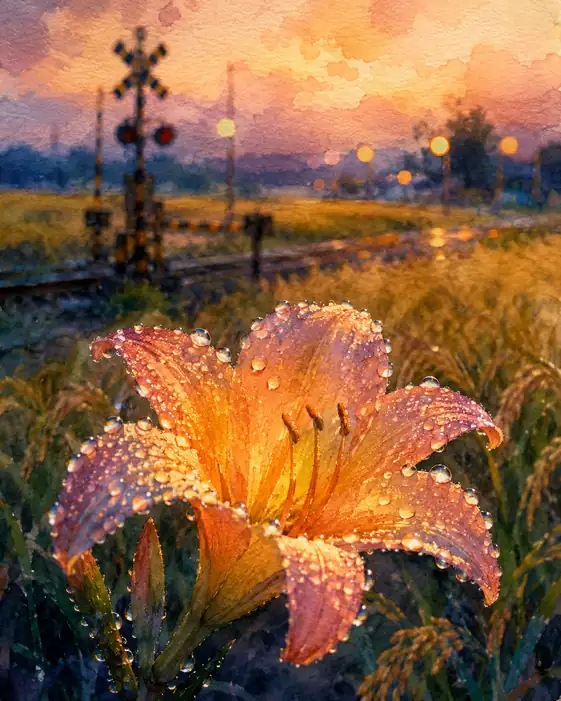 Dewdrop Radiance on the Twilight Lily
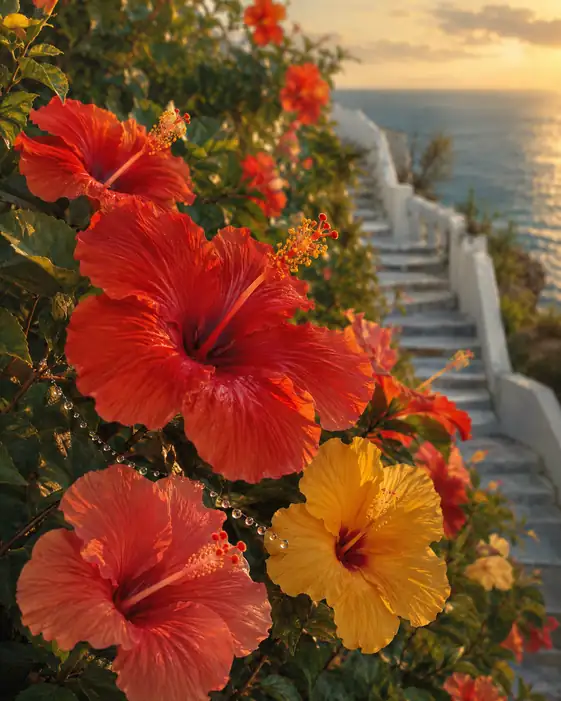 Hibiscus along the Coastal Stairway at Sunset