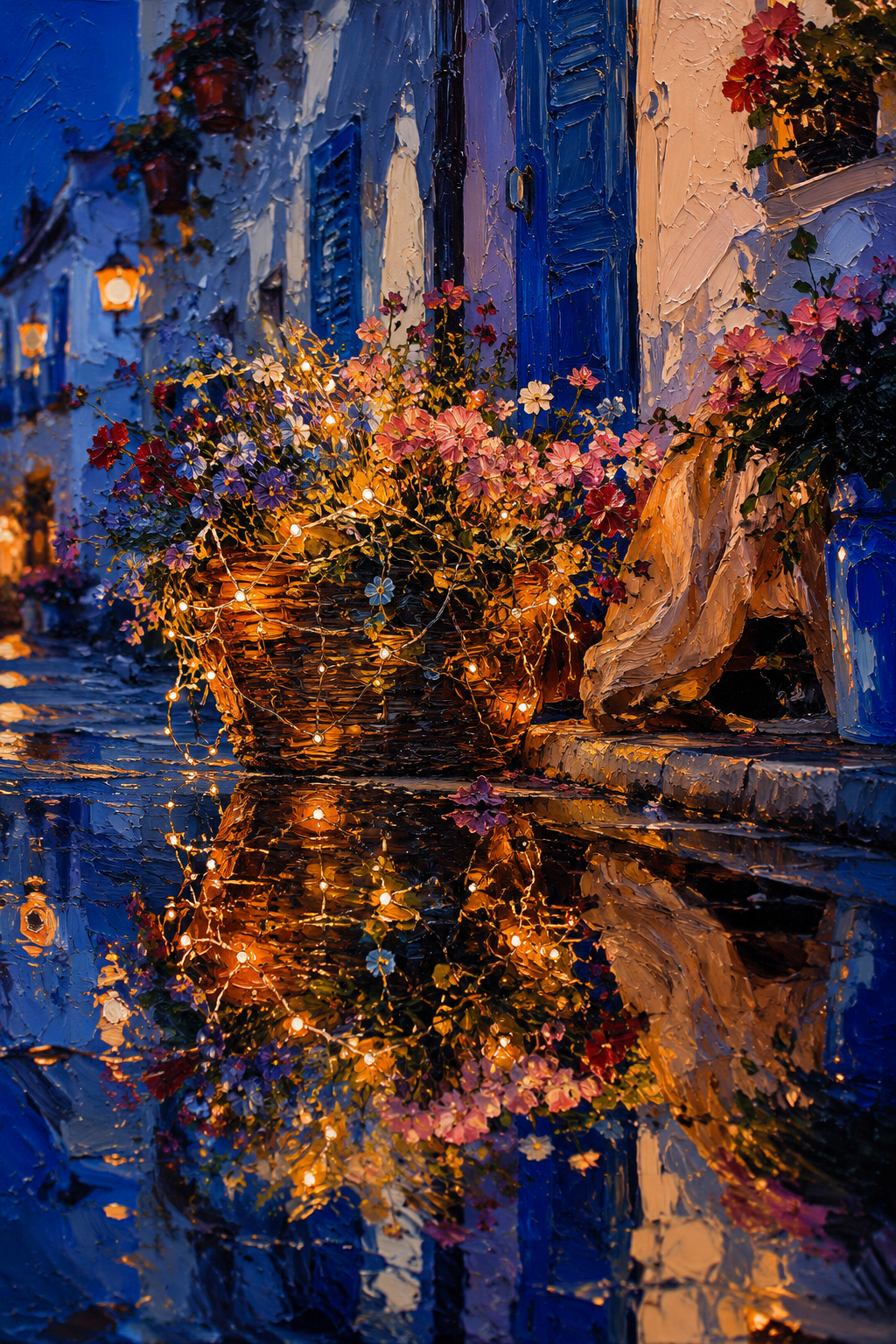
Sparkling Night Blooms Mirrored in the Rain
Critique
Introduction This streetscape gives a flower basket and its rainwater reflection equal weight. Lights among blossoms glow against blue shutters and wet stone. Decorative abundance is tempered by a fragile mirror image. Description A broad dark basket fills the center-left, overflowing with pink, red, violet, and white flowers. A warm string of bulbs loops over wicker and foliage, with loose sections trailing onto the pavement. The lower half reflects basket, lights, doorway, and hanging cloth in rippling black-blue water. At right, a pale fabric drapes from a step beneath blue doors, flowerpots, and a blue vessel. Lamps and façades recede at left. Analysis The waterline divides solid forms from their unstable doubles. The basket’s rounded mass anchors both halves, while repeated bulbs create a circular rhythm across the division. Saturated cobalt opposes orange light; pink flowers mediate the contrast. Thick strokes describe plaster, wicker, and fabric, whereas reflection breaks them into mobile fragments. The foreground density is extreme, but the narrow leftward lane supplies depth and prevents complete closure. Interpretation and Evaluation The illuminated flowers suggest care extended into darkness, as if cultivation itself were being celebrated. Their reflection forms a second garden dependent on rain and stillness, making abundance visibly temporary. Decorative lights risk turning the scene into spectacle, yet fallen petals, pooled water, and rumpled cloth add disorder. The beauty appears maintained but never fully controlled. Conclusion The painting succeeds through the tension between accumulation and dissolution. Above the waterline, flowers and wicker possess weight; below it, the same forms become light and color. This double state transforms a festive basket into an image of pleasure whose intensity is inseparable from impermanence.
Same Subcategory
 Journey Paused in Full Bloom
Similar Artworks
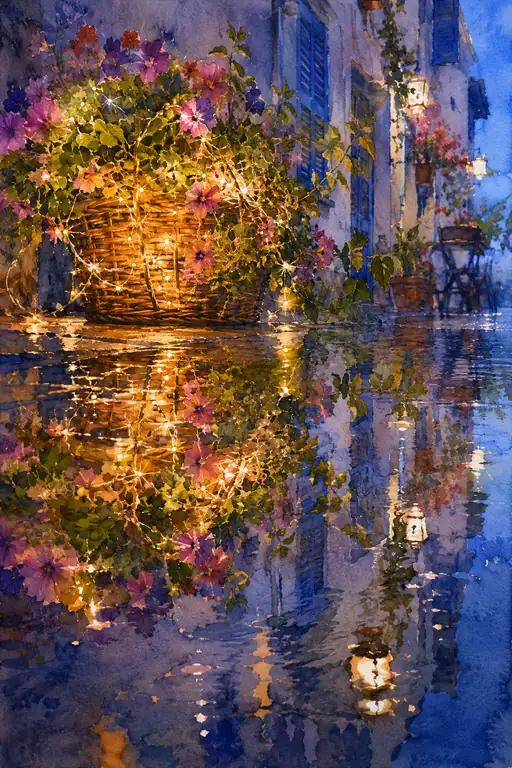 Fairy Lights Mirrored on Wet Cobblestones
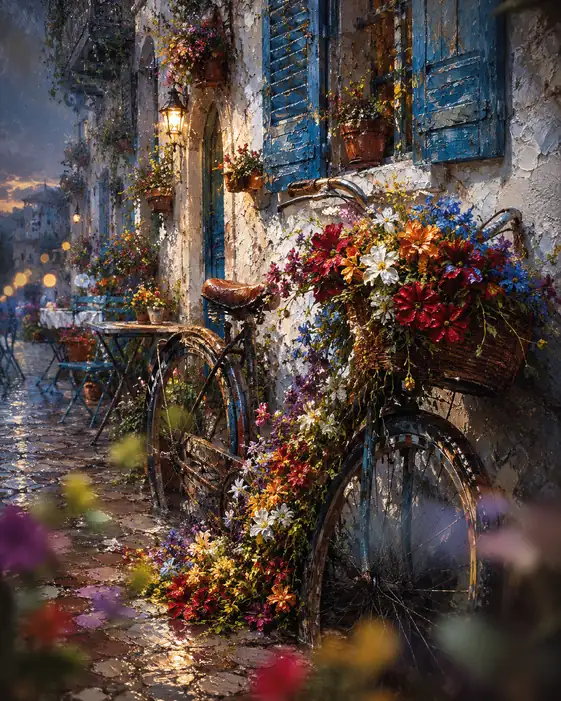 Flower-Laden Bicycle by the Twilight Shutter
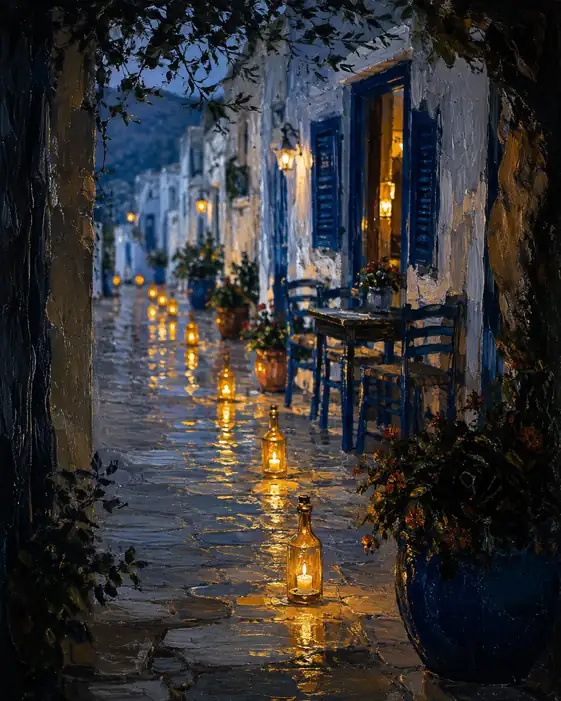 Trail of Small Flames Guided Home
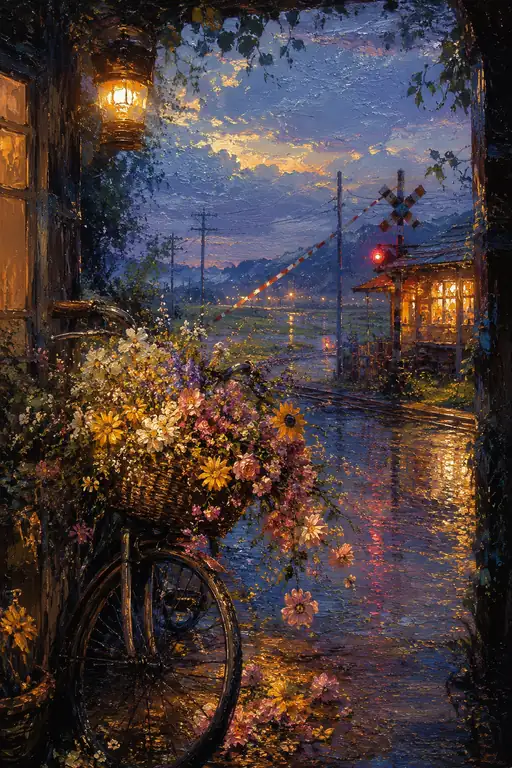 Evening Bell and Blossoming Bicycle by the Station
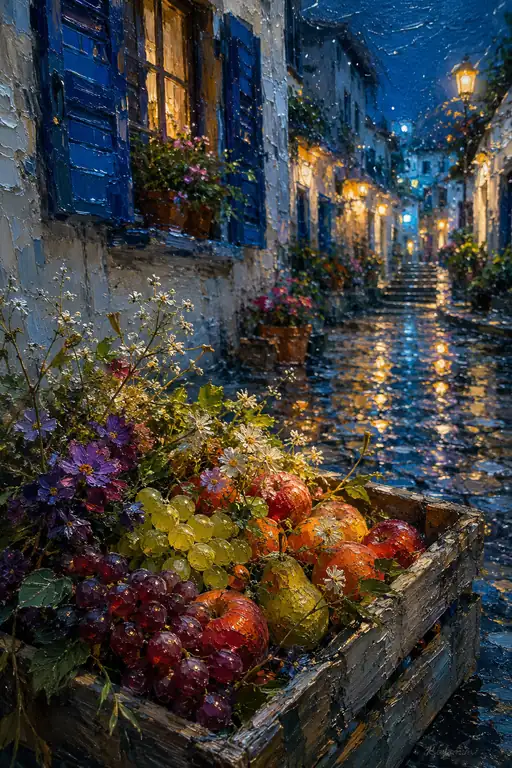 Crates of Abundance at the Lane's Foot
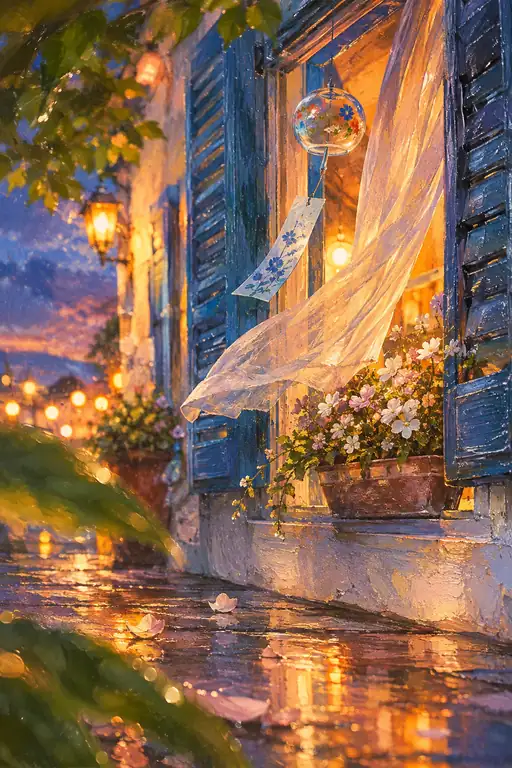 Evening Air Carried on Chimes
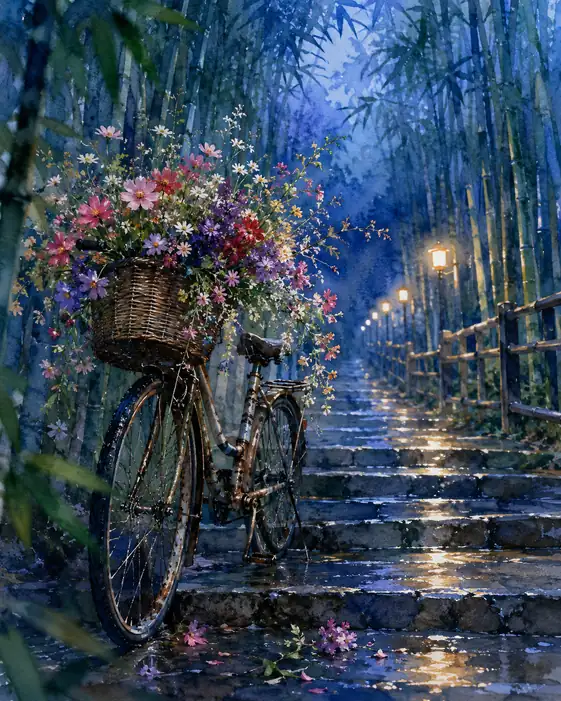 Silence on the Rain-Kissed Bamboo Steps
 Steam Lingering in the Twilight Breeze
 Evening Terrace Glow in the Old Quarter
 Nocturne Delivery Basket by the Station