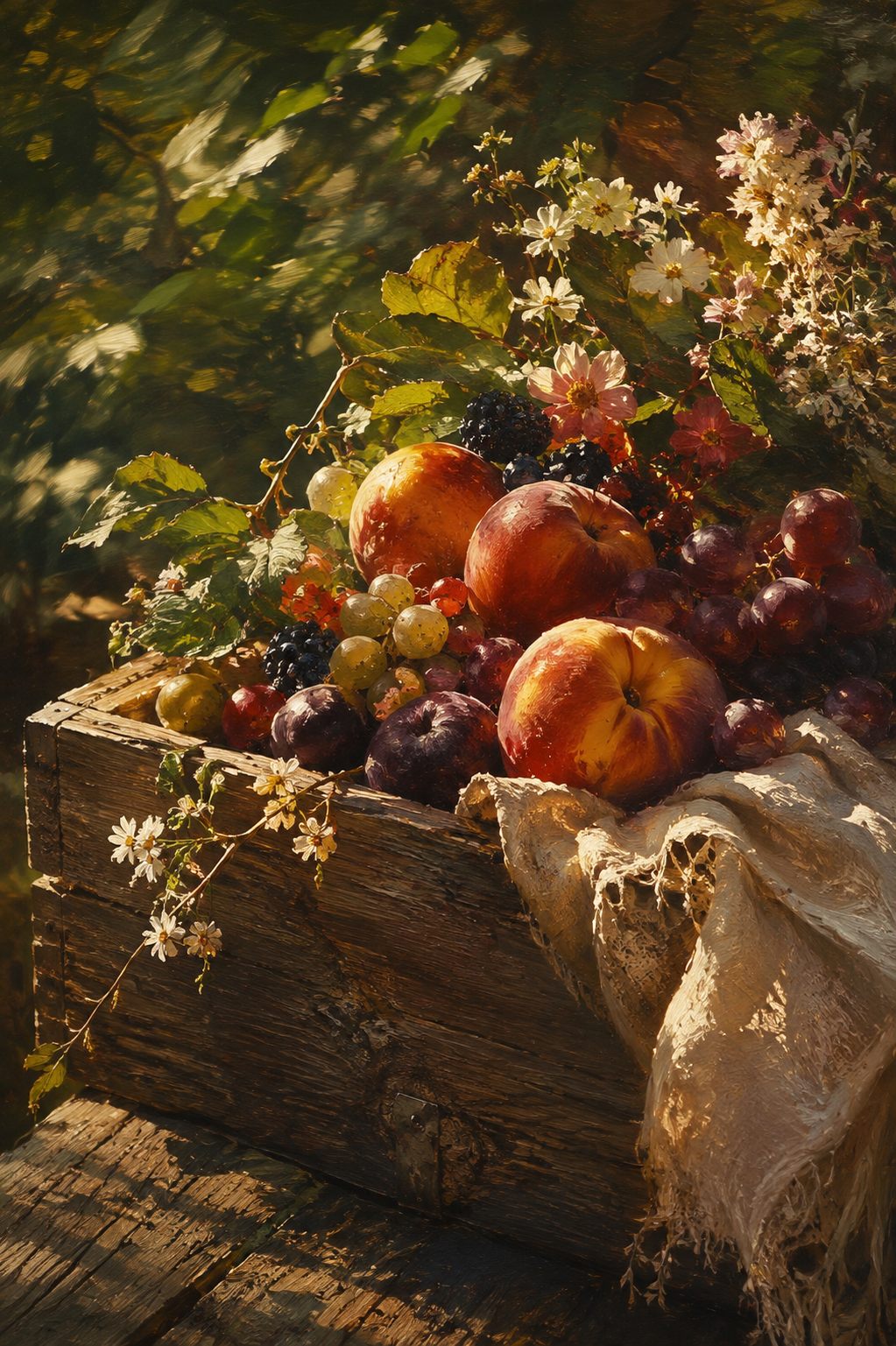
Rustic Wooden Box of Autumn Blessings
Critique
Introduction This still life presents a harvest crate overflowing with fruit and flowers. Strong sidelight creates abundance while dark foliage preserves intimacy. Frayed cloth and weathered timber introduce age, labor, and decline. Description A rough crate fills the lower half. Red and golden apples or peaches sit among plums, grapes, and blackberries. White, pink, and red flowers rise behind broad leaves. A lace-edged cloth spills over the right corner. Sunlight catches skins, petals, veins, and splintered wood while the garden remains dark. Analysis Rounded fruit creates a dense rhythm above the crate’s firm horizontal and vertical boards. The brightest golden fruit anchors the lower right, balanced by illuminated flowers above. Warm orange and red are set against deep olive green and purple, producing richness without complete chromatic uniformity. Thick, directional strokes make wood, cloth, waxy skins, and leaves materially distinct. The high density risks visual congestion, but diagonally falling light establishes a clear hierarchy. Interpretation and Evaluation The arrangement evokes harvest as both reward and temporary culmination. Bruised-looking skins, drooping blossoms, and torn lace imply that fullness already contains decay. The crate suggests transport and work rather than formal display, so abundance appears gathered rather than effortlessly given. Its theatrical beam of light could romanticize rural labor, yet the heavy box and irregular produce retain convincing physical weight. Conclusion The painting succeeds through tactile contrast and disciplined illumination. It converts a crowded collection into a legible movement from dark foliage to radiant fruit and worn cloth. Beauty is presented at peak ripeness, inseparable from handling, time, and the knowledge that such plenty cannot remain.
Same Subcategory
Similar Artworks
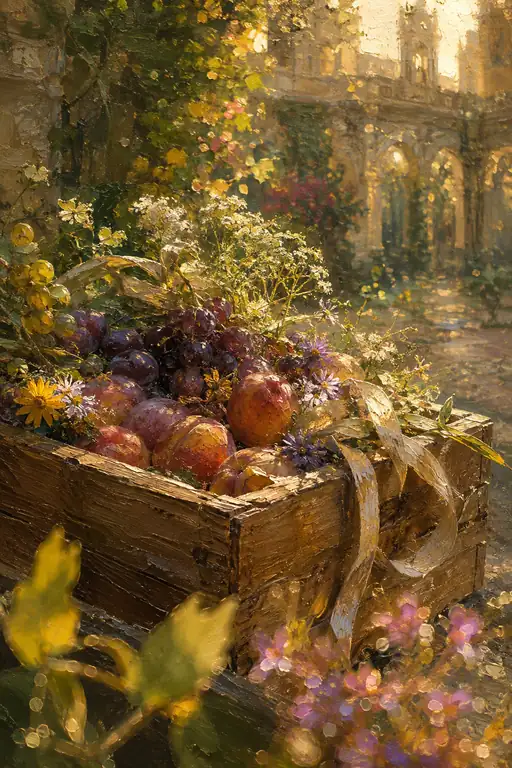 Sun-Drenched Harvest of the Abbey Garden
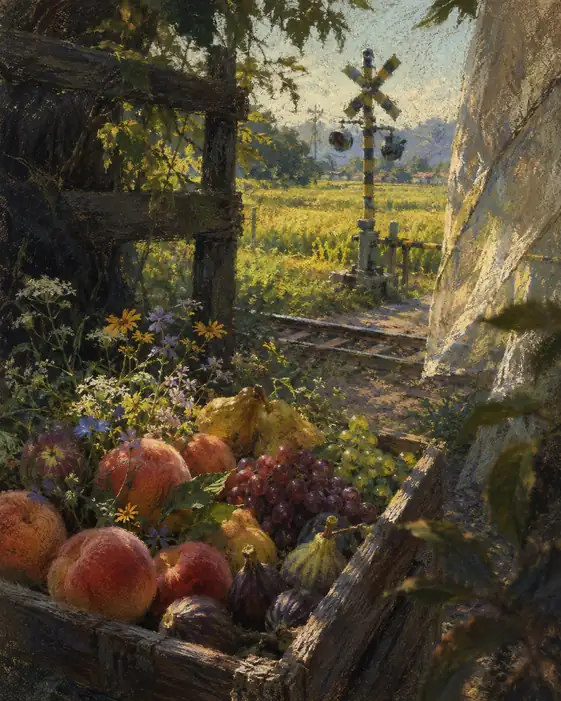 Autumn Harvest Beside the Rural Crossing
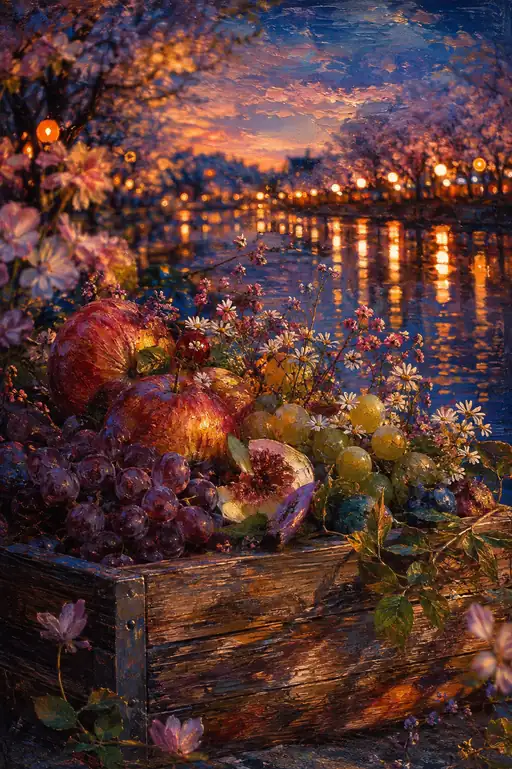 Twilight Harvest by the Blossomed Riverside
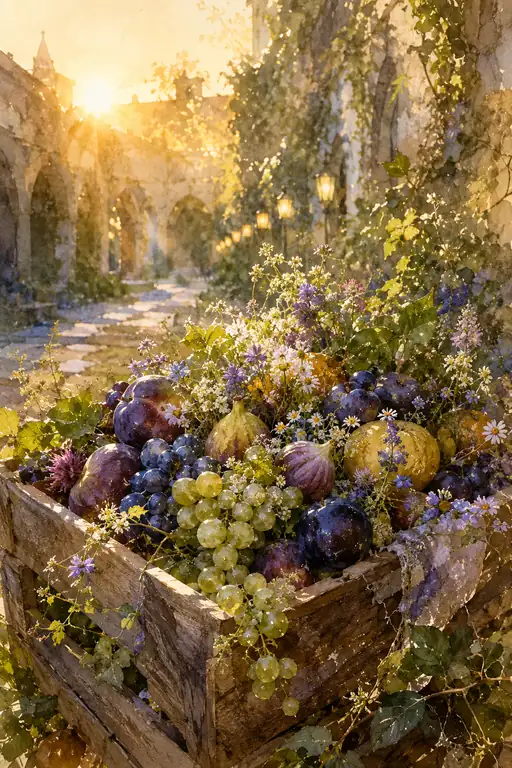 Golden Harvest in the Cloistered Sun
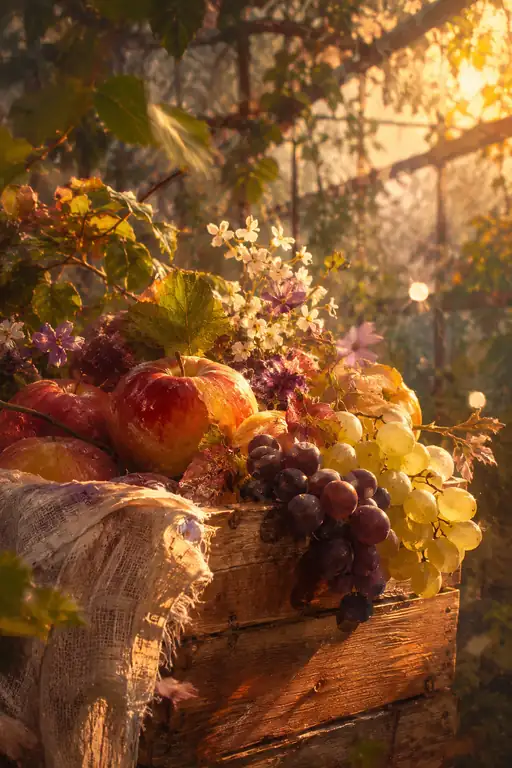 The Harvest Blushes in Greenhouse Gold
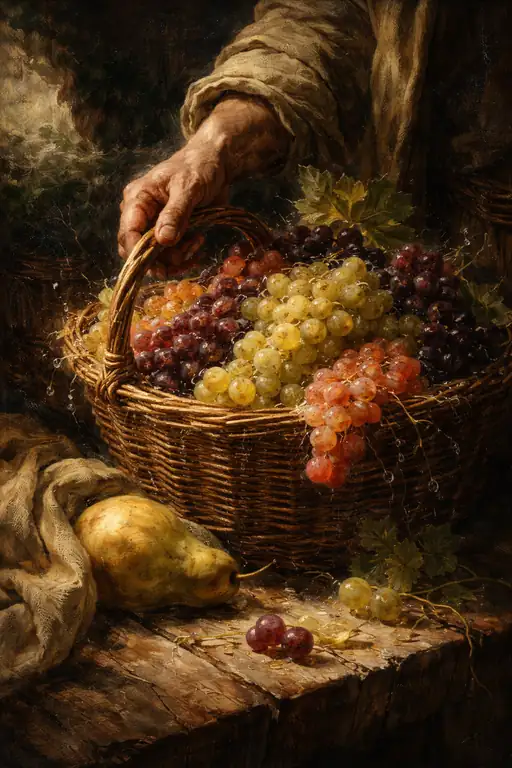 Grasp of the Harvester: The Abundant Yield
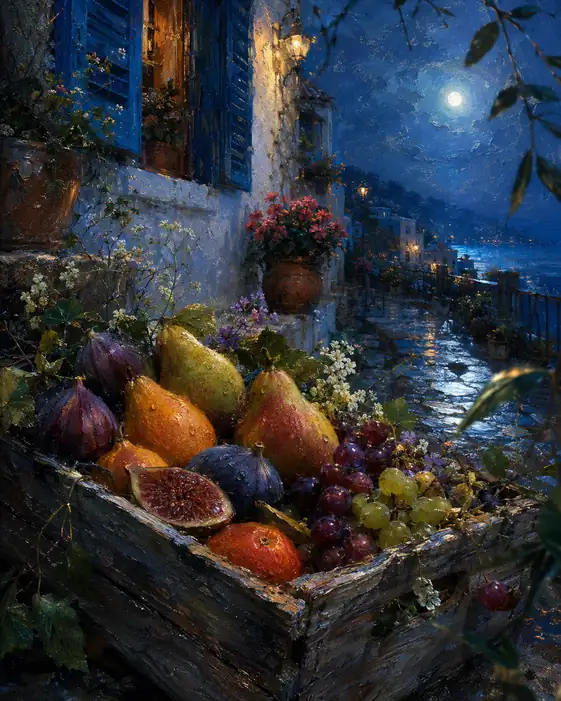 Moonlit Still Life Above the Coast
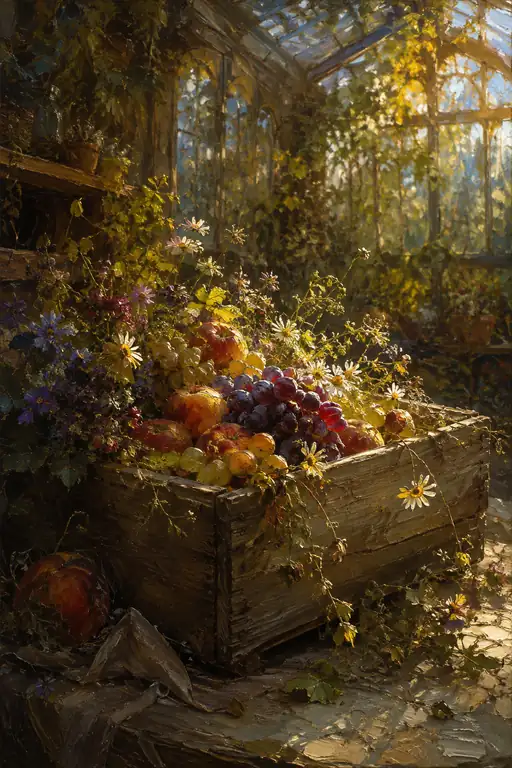 Autumn Overflows the Forgotten Crate
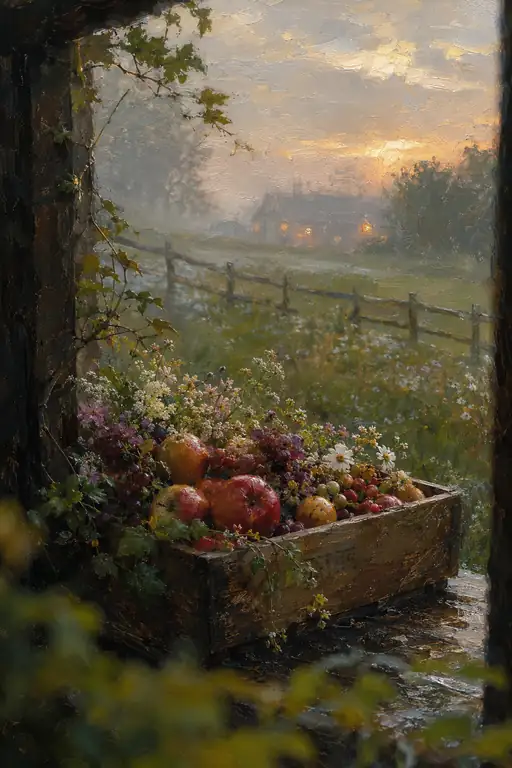 The Harvest Waits at the Threshold of Evening
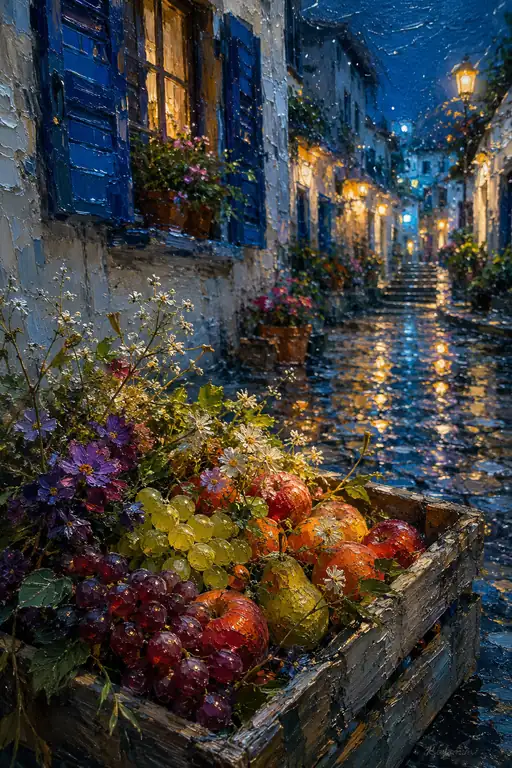 Crates of Abundance at the Lane's Foot