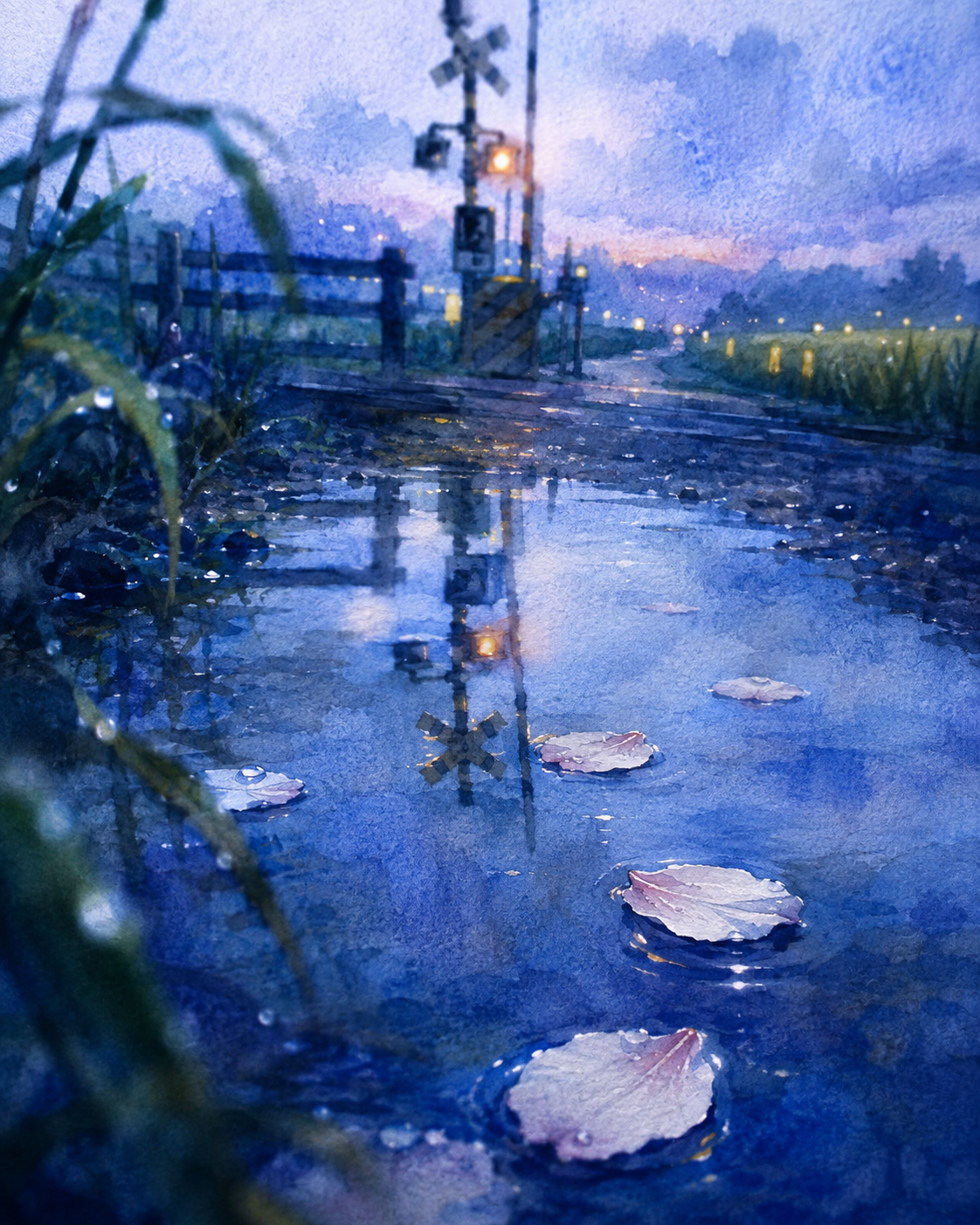
Cherry Petals Drifting in the Evening Mirror
Critique
Introduction This low watercolor depicts a rural crossing through its reflection in a puddle. Petals interrupt the mirrored signal. By centering the inverted image, the painting turns wet ground into an unstable field of attention. Description Blue water occupies most of the format. Four pink petals float toward the distance, ringed by ripples. Dark grasses intrude from the left. Above, rails lead to a blurred crossing mast and amber lamp. Their reflection descends through the puddle beneath blue-violet sky and a peach horizon. Analysis The unusually low viewpoint suppresses the horizon and enlarges the reflective plane. Petals establish depth through diminishing scale while gently breaking the signal’s strict vertical mirror. Cool cobalt washes dominate, with tiny amber lamps providing focal heat. Wet-on-wet transitions convey mist; reserved whites define droplets, petal rims, and ripples. Soft foreground foliage creates a partial frame, though its heavy darkness nearly competes with the more delicate center. Interpretation and Evaluation The crossing controls movement above water, but its reflection has no such authority: petals pass freely through the image of the signal. This visual contradiction gives the scene poetic force. Fallen blossoms imply seasonal passage, while the red-amber light suggests temporary delay. The extreme blueness can feel stylized, yet subtle violet, green, and peach variations keep the atmosphere nuanced rather than monochrome. Conclusion The painting succeeds through inversion and disciplined restraint. It asks viewers to look downward to understand the distant crossing, making reflection a mode of perception rather than ornament. Fragile petals and rigid infrastructure briefly share the same water, offering a lucid image of nature moving through human order.
Same Subcategory
 Scarlet Sanctuary in the Rain
Similar Artworks
 Cherry Blossom Petals on the Evening Puddle
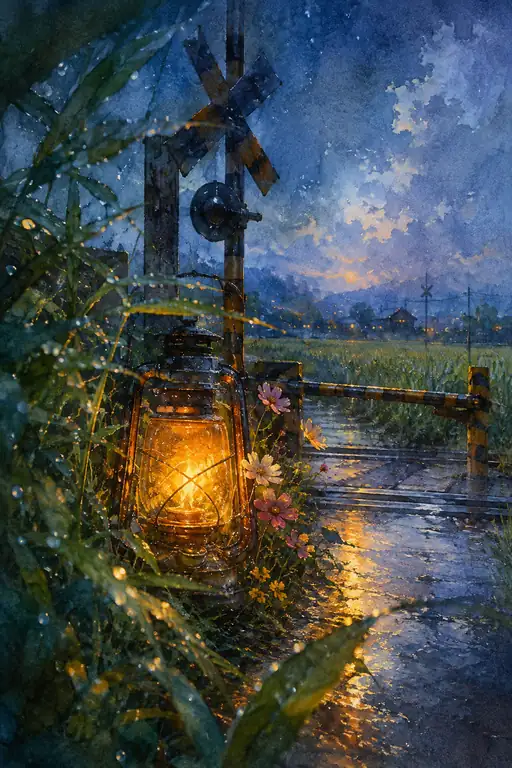 Raindrop Lamp by the Evening Railway
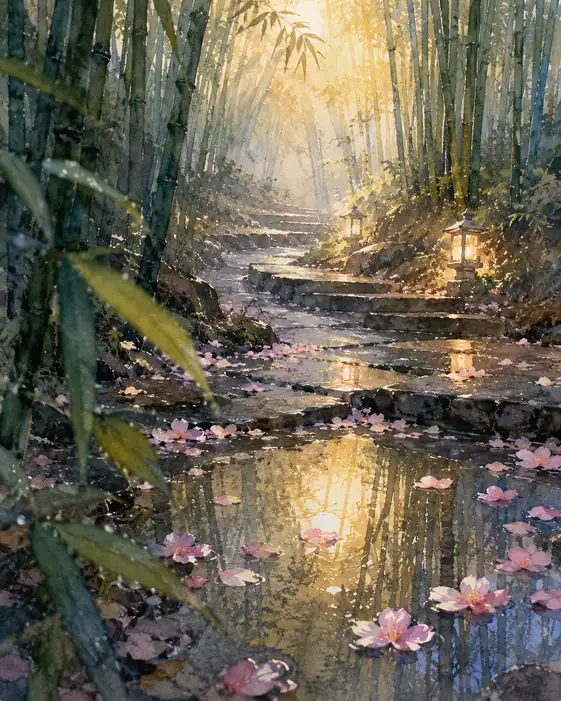 Petals Drifting on a Forest Mirror
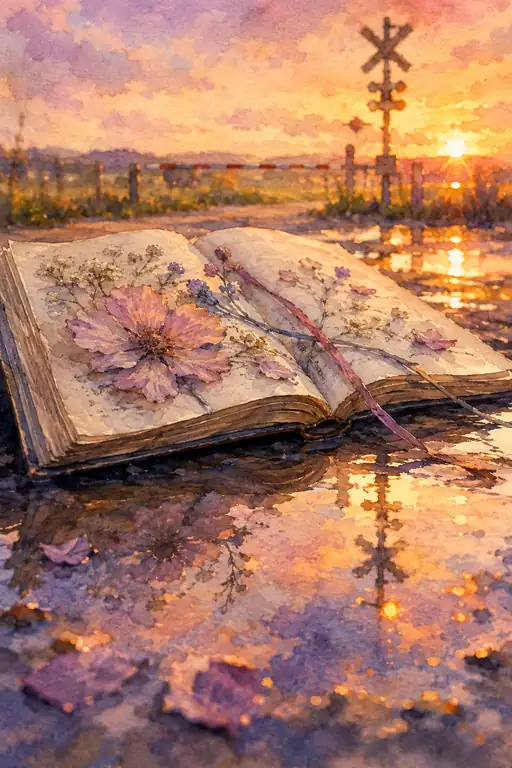 Autumn Blossom Book Beside the Sunlit Track
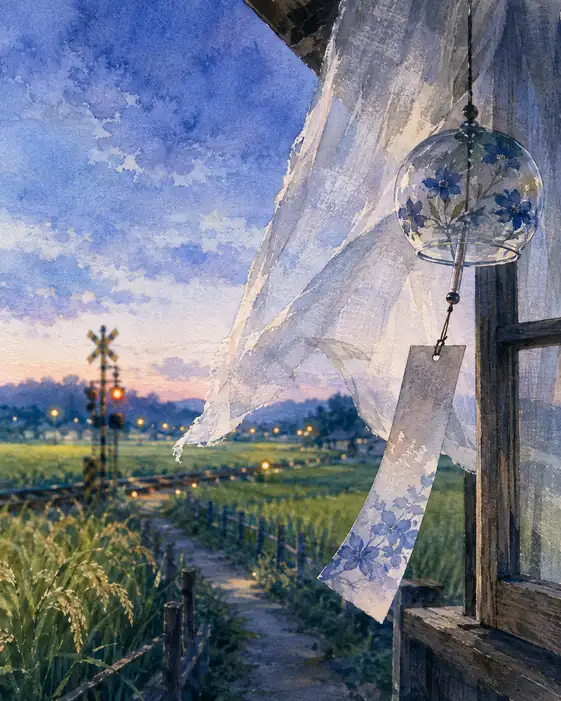 Twilight Breeze and the Clear Wind Chime
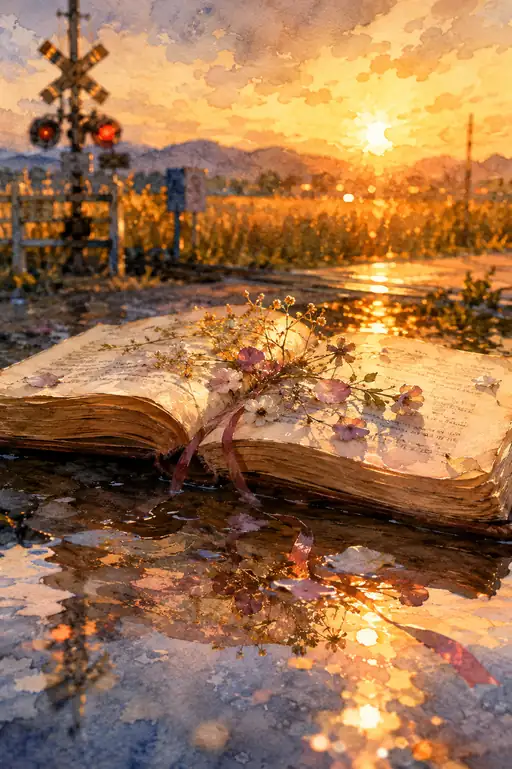 Forgotten Verses on the Sunlit Railway Water
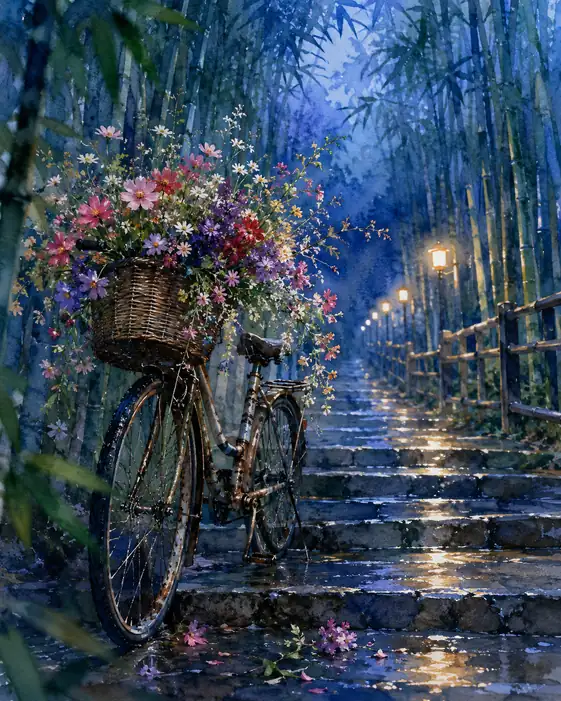 Silence on the Rain-Kissed Bamboo Steps
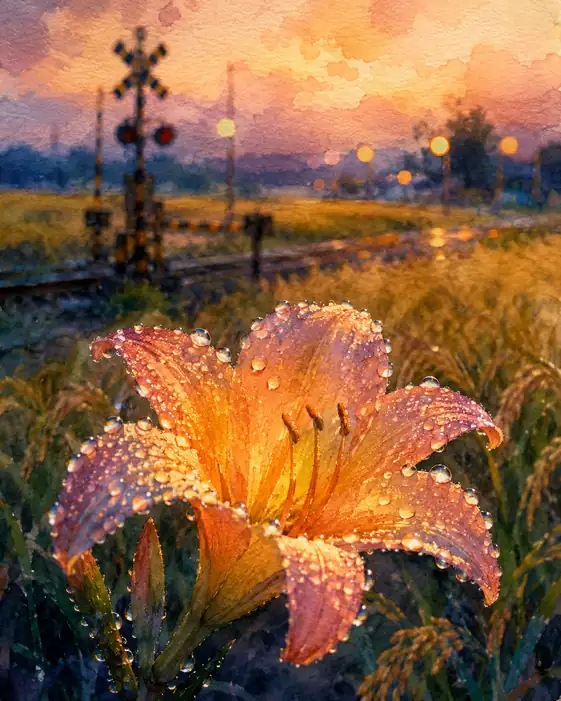 Dewdrop Radiance on the Twilight Lily
 Fairy Lights in the Twilight Grass
 Wild Daisies by the Twilight Crossing