
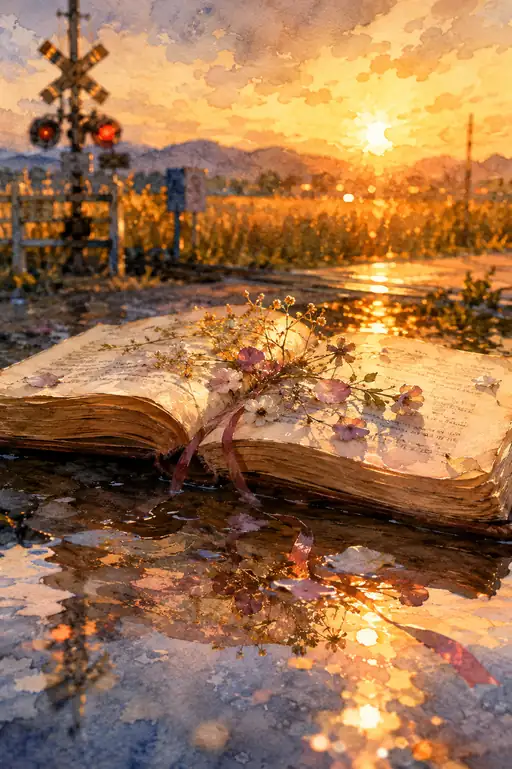
Autumn Blossom Book Beside the Sunlit Track
Critique
Introduction This watercolor places a weathered book beside a railway crossing at sunset. Flowers across its pages join written memory to seasonal remains. The low viewpoint makes this private object monumental yet vulnerable. Description The book spans the foreground on wet ground, its thick pages curled and stained. A large mauve flower rests on the left page among white sprigs, blue blossoms, loose petals, and two narrow ribbons. Behind it, a lowered barrier crosses the field. A blurred signal rises at right beside the low sun, while orange reflections flicker through puddles beneath peach and violet clouds. Analysis The book’s gutter creates a central V that draws sight toward the crossing. Its broad horizontal weight answers the barrier, while stems and ribbons introduce diagonal movement. Pale paper mediates between cool violet shadows and the intensely warm horizon. Sharp page edges and flower veins establish the foreground; softer signal and mountains create depth. Reflected gold links sky and ground, enclosing the still life within the larger weather. Interpretation and Evaluation The open volume suggests a story interrupted and left exposed. Flowers may mark a remembered passage, yet their scattering also evokes loss and time’s disorder. The closed crossing makes delay literal, while the low sun signals another ending. These symbols risk becoming overly emphatic when combined, but the damaged paper, mud, and irregular petals supply material resistance to sentimentality. The image remains elegiac rather than merely decorative. Conclusion The painting unites book, landscape, and transit through clear directional echoes. Its strongest idea is that memory is not protected from weather: it absorbs light, water, and damage. The crossing beyond extends this insight, presenting every pause as part of an onward passage.
Same Subcategory
 Memory Pressed in Petals and Sky
Similar Artworks
 Forgotten Verses on the Sunlit Railway Water
 Wild Daisies by the Twilight Crossing
 Sunset Bouquet on the Crossing Chairs
 Reading Letters at the Golden Crossing
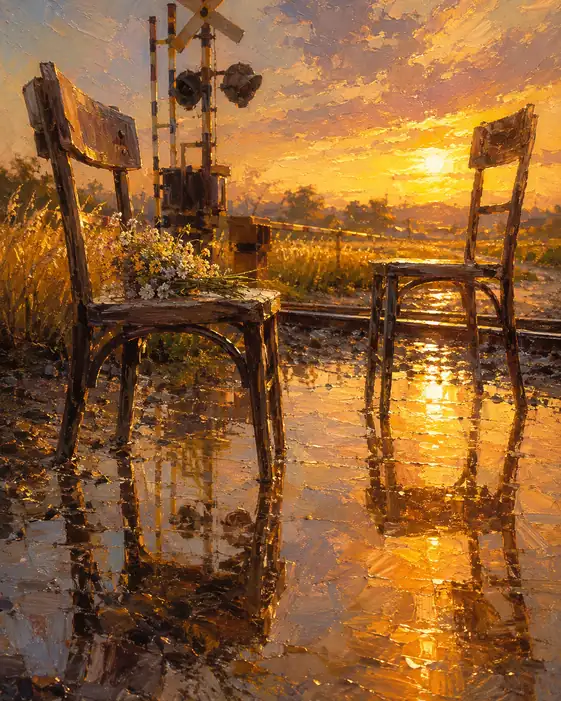 Sunset Soliloquy at the Rural Crossing
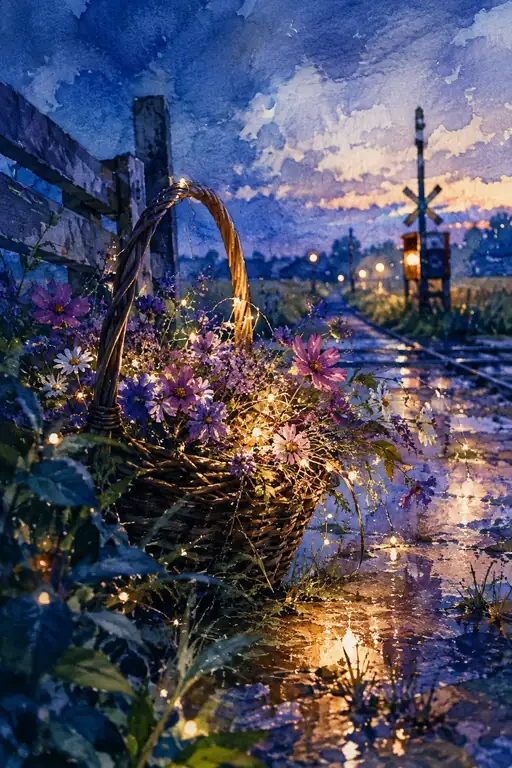 Twinkling Cosmos by the Railroad Track
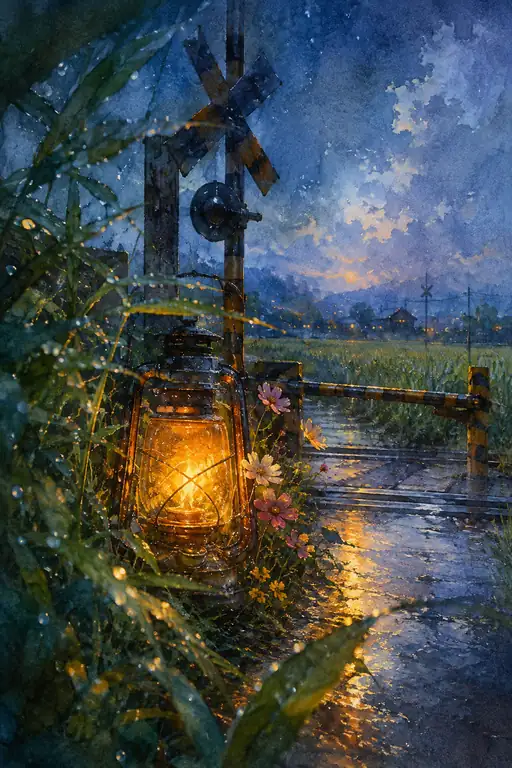 Raindrop Lamp by the Evening Railway
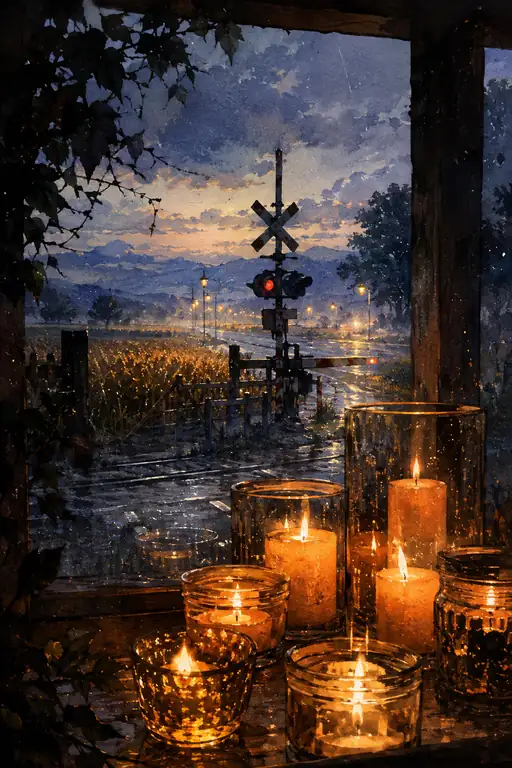 Candles by the Window Overlooking the Track
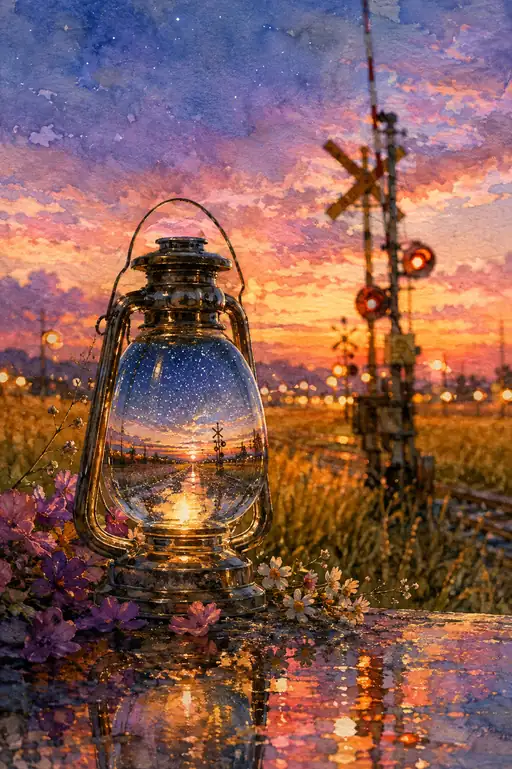 Sunset Train Path Captured in Glass
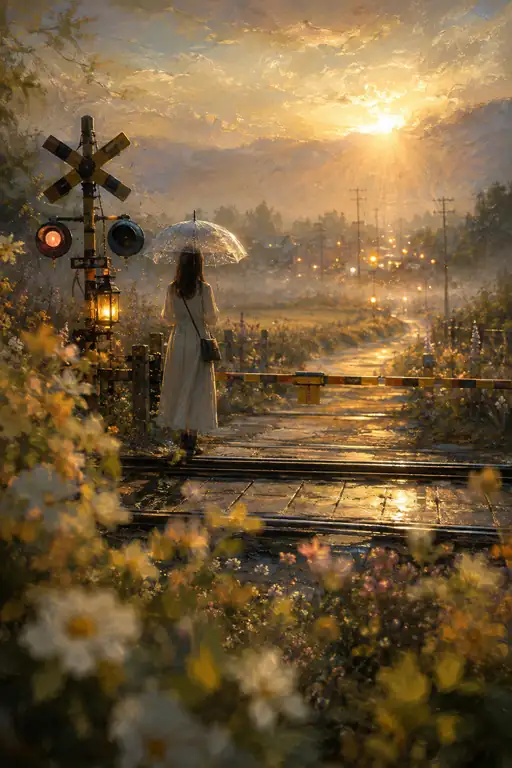 Clear Umbrella Beneath the Sunlit Crossing