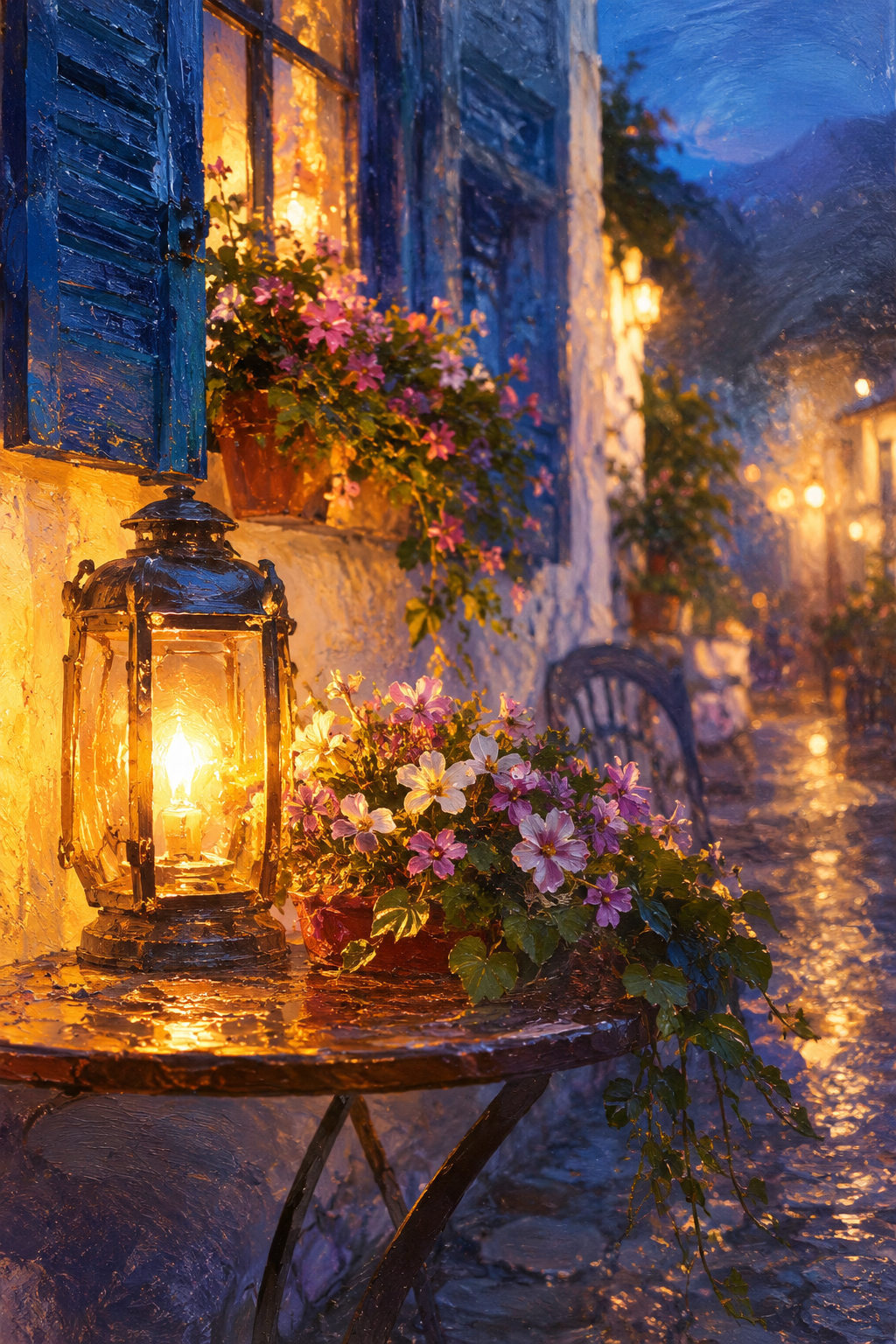
Evening Terrace Glow in the Old Quarter
Critique
Introduction This streetscape centers on a lantern and flowers outside a blue-shuttered house. Repeated lamps lead into a narrow lane. Warmth against blue masonry creates an inviting, dreamlike vision of evening hospitality. Description A black lantern burns on a weathered table at left. Pink and white flowers spill beside it. Above, open shutters reveal interior light and more blossoms. The lane narrows rightward between pale walls, chairs, plants, and lamps. Wet paving reflects amber marks beneath a cobalt sky and dark mountain. Analysis The foreground table projects diagonally into the lane, directing the eye from the large flame toward successively smaller lamps. Strong perspective and selective blur create depth while preserving a sense of enclosure. Complementary blue and orange organize nearly every surface; pink flowers mediate between them. Thick, directional strokes describe shutters and stucco, whereas softened highlights make the distant street shimmer. The foreground is densely packed, but the open lane at right provides essential breathing space. Interpretation and Evaluation The prominent lantern operates as a welcome placed at the threshold between private dwelling and communal street. Repeated lights imply that hospitality extends beyond one house, turning the lane into a shared chain of refuge. No figure appears, so presence is conveyed through tended flowers, open shutters, and arranged chairs. The glow is highly idealized and risks excessive sweetness, yet wet pavement and shadowed mountains introduce coolness, distance, and a slight sense of solitude. Conclusion The painting’s appeal rests on spatial invitation and tactile color. It leads viewers from one threshold toward many others without requiring a literal narrative. Flowers and lamps transform architecture into evidence of human attention, making the empty lane feel inhabited, safe, and expectant.
Same Subcategory
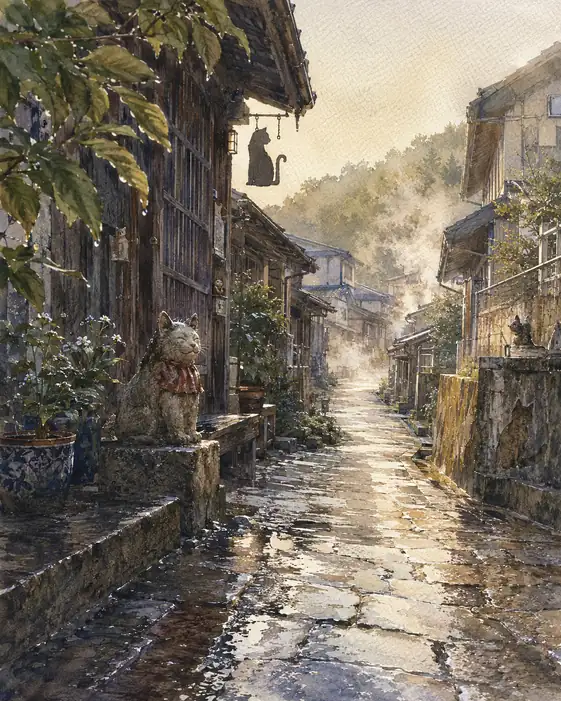 The Alley Where Cats Keep the Morning
Similar Artworks
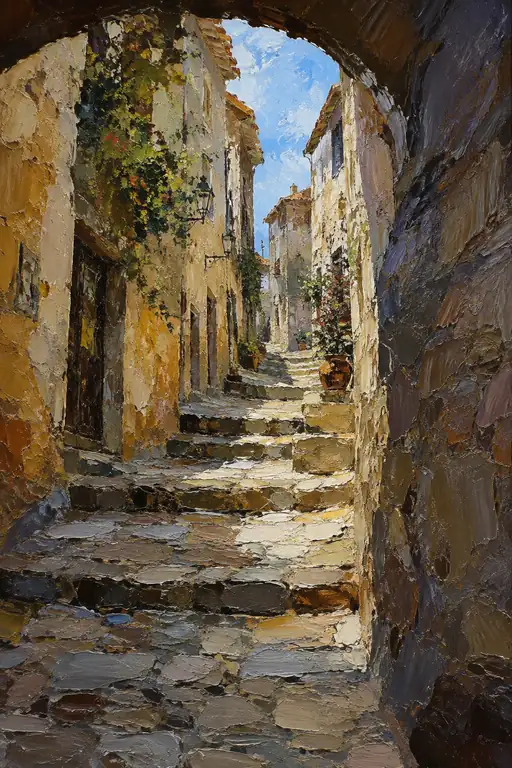 Sunlit Archway Draped in Blooms
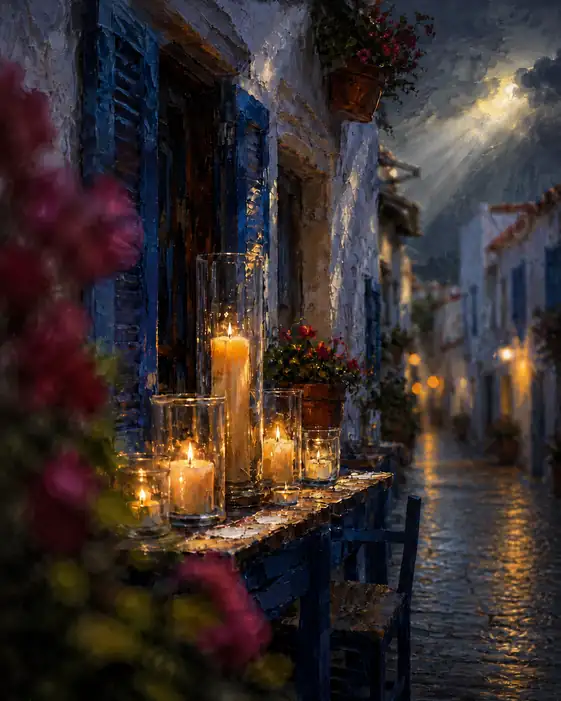 A Quiet Vigil Beneath the Storm
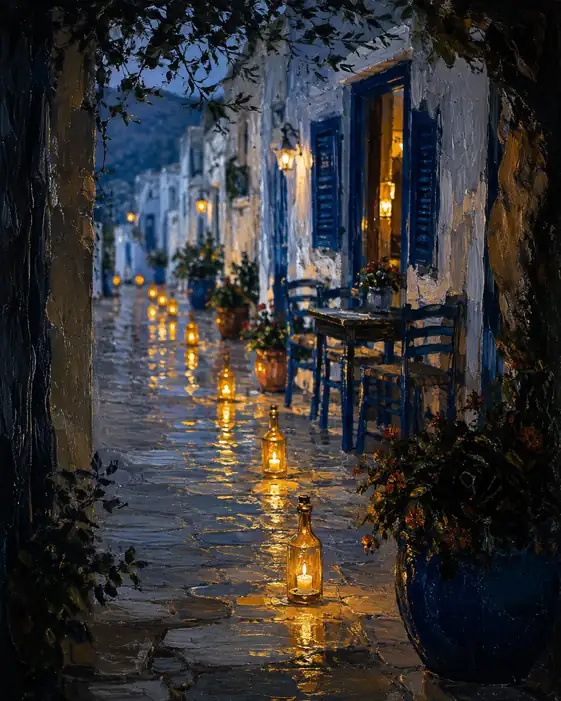 Trail of Small Flames Guided Home
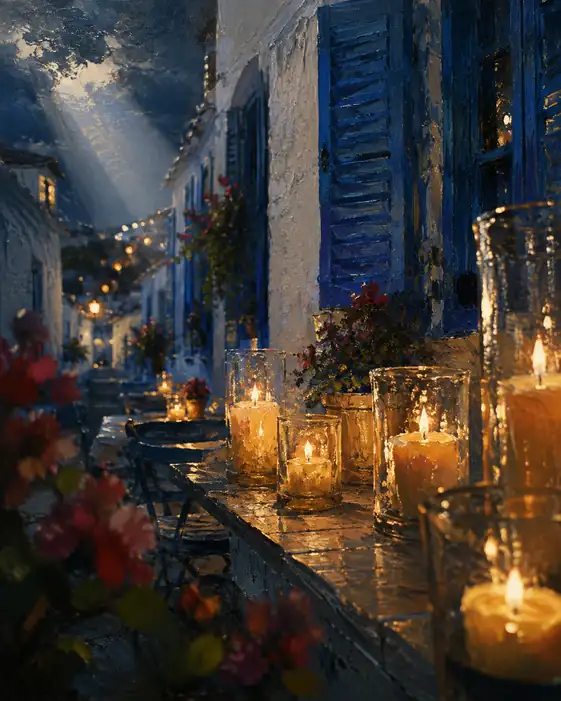 Tender Flame Kept from the Storm
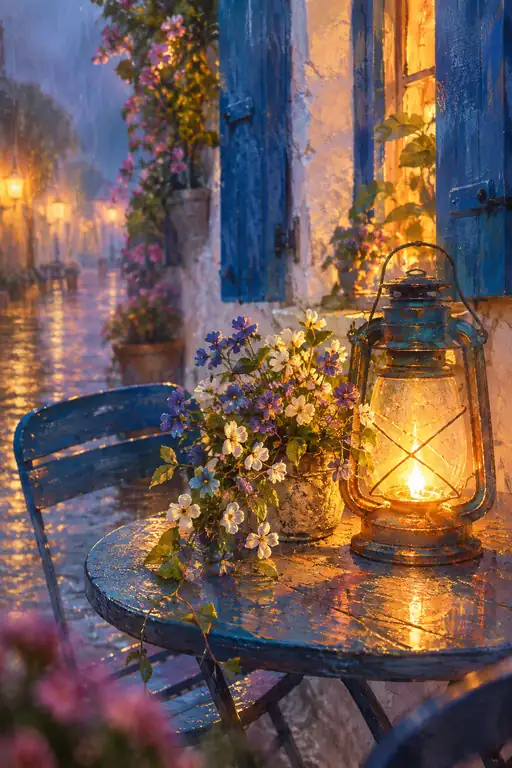 Rain-Kissed Cafe Under the Blue Shutters
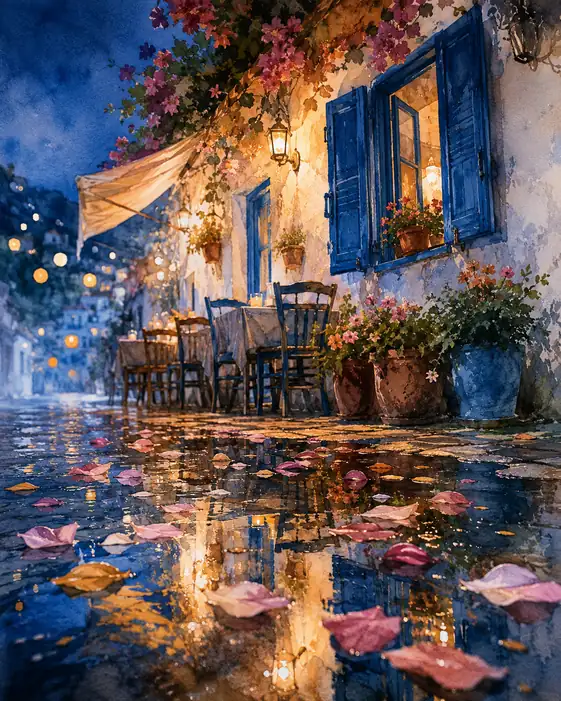 Luminous Steps Along the Midnight Cobblestones
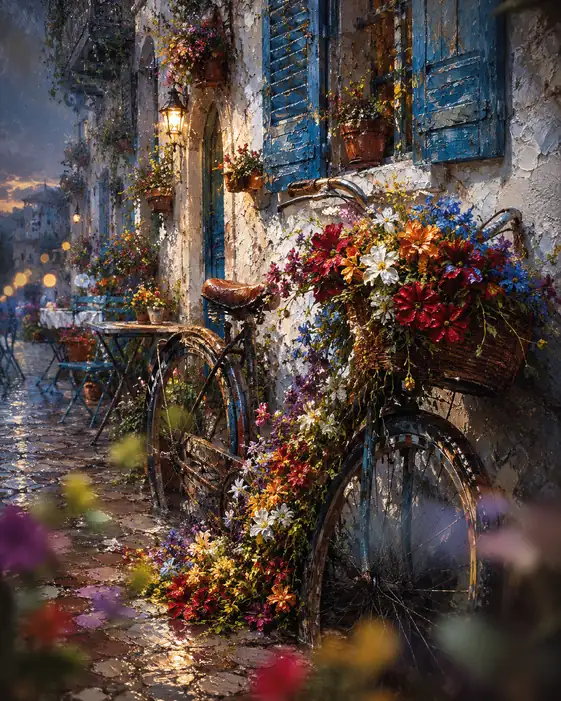 Flower-Laden Bicycle by the Twilight Shutter
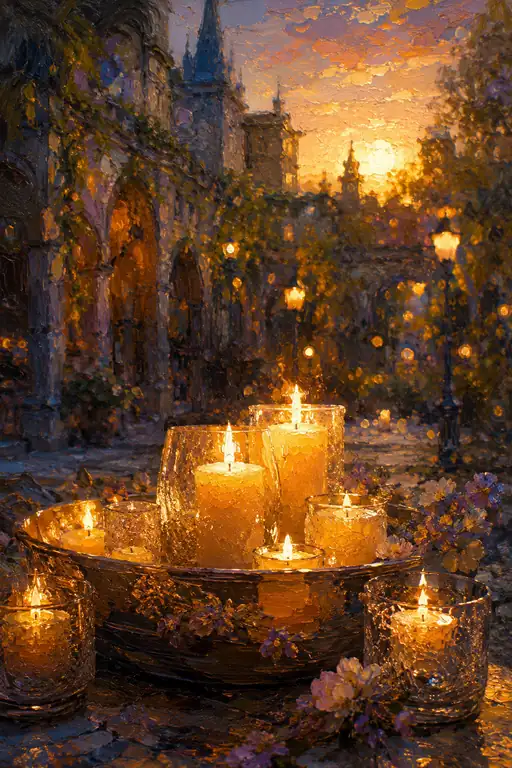 Bowl of Golden Flames in the Twilight Garden
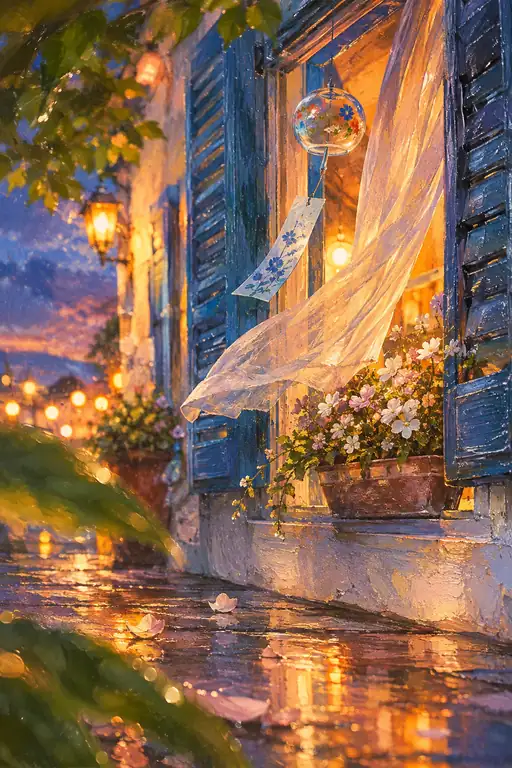 Evening Air Carried on Chimes
 Steam Lingering in the Twilight Breeze