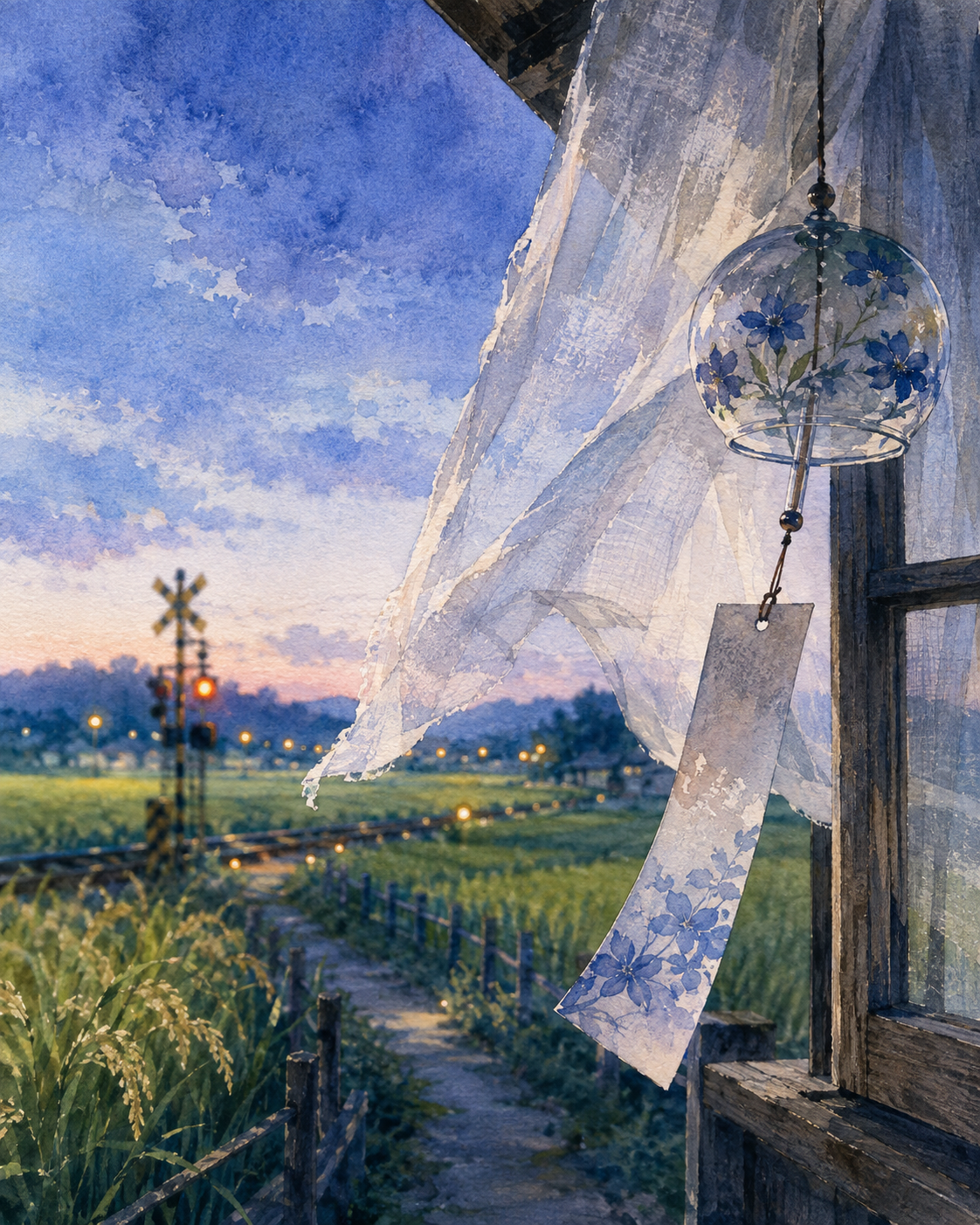
Twilight Breeze and the Clear Wind Chime
Critique
Introduction This watercolor frames a rural railway with a glass wind chime and white curtain. The crossing is distant while the chime is near. The pairing evokes summer through imagined sound and breeze. Description A transparent chime hangs from a dark eave. Blue flowers decorate its bowl, and a paper strip descends. A translucent curtain sweeps across the sky. Below, a path runs between rice fields toward tracks and a blurred crossing. Amber lamps dot the horizon under cobalt and peach clouds. Analysis The curtain’s large diagonal supplies movement and divides near space from landscape without becoming opaque. Its pale folds echo cloud shapes, while the chime’s circle contrasts with the angular window frame and crossing. Cool blues unify glass, fabric, and sky; green fields and amber lights provide measured relief. Crisp contours on the chime yield gradually to softer distance. The dangling strip creates a vertical axis that is slightly off-center, keeping the otherwise serene composition alive. Interpretation and Evaluation The work suggests a pause at an open window, where the unseen breeze connects sheltered interior and cultivated exterior. Wind chime and crossing signal both announce events: one through delicate sound, the other through warning. This analogy is subtle and productive. The curtain’s dramatic sweep risks seeming staged, yet its translucent layers are sufficiently varied to feel responsive rather than frozen. The tiny signal remains legible as an emotional destination without competing with the foreground. Conclusion The painting succeeds through restraint, layering, and sensory suggestion. It asks viewers to imagine motion and sound within a silent image. The suspended chime measures passing air, while the distant railway measures passing time, together forming a portrait of summer evening.
Same Subcategory
Similar Artworks
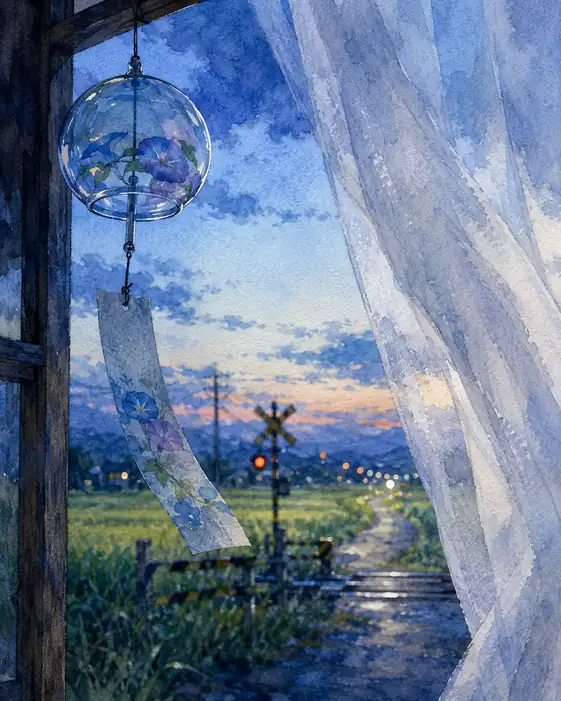 Morning Glory Wind Chime at Dusk
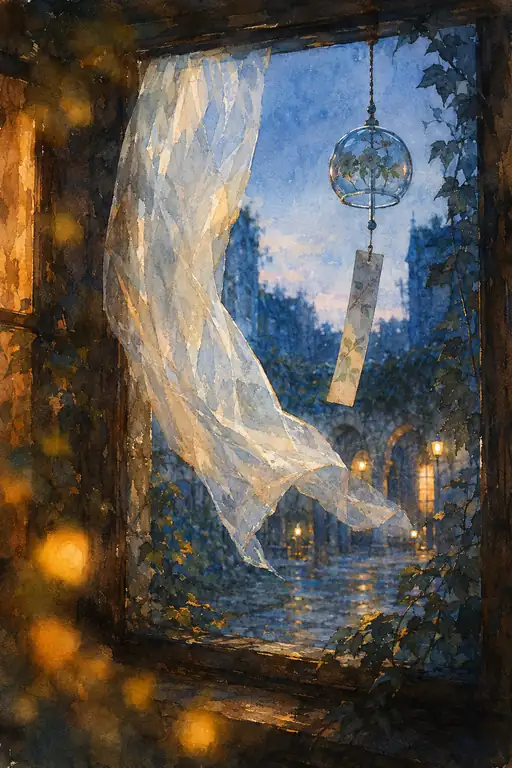 Summer Wind Chime Whispering by the Cloister
 Where the Sea Wind Whispers to the Glass
 Evening Air Carried on Chimes
 Whispering Curtain and Morning Breeze
 Morning Breeze Between Chime and Bamboo
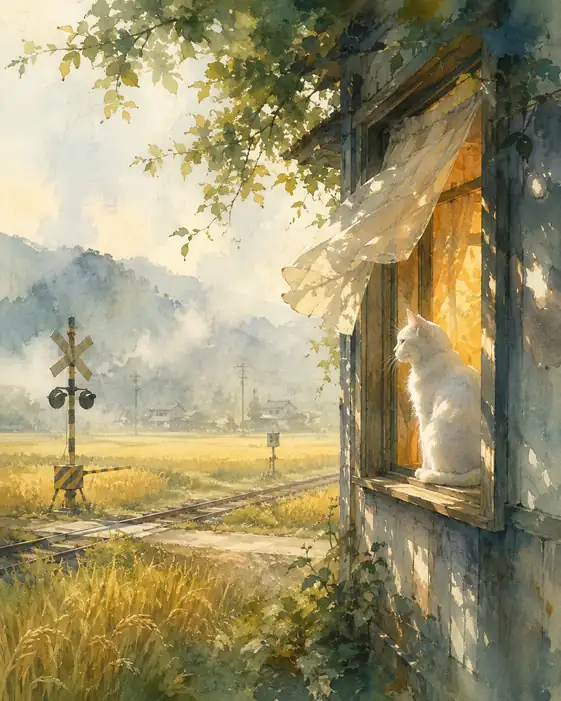 White Cat Watching the Morning Train Pass
 Candles by the Window Overlooking the Track
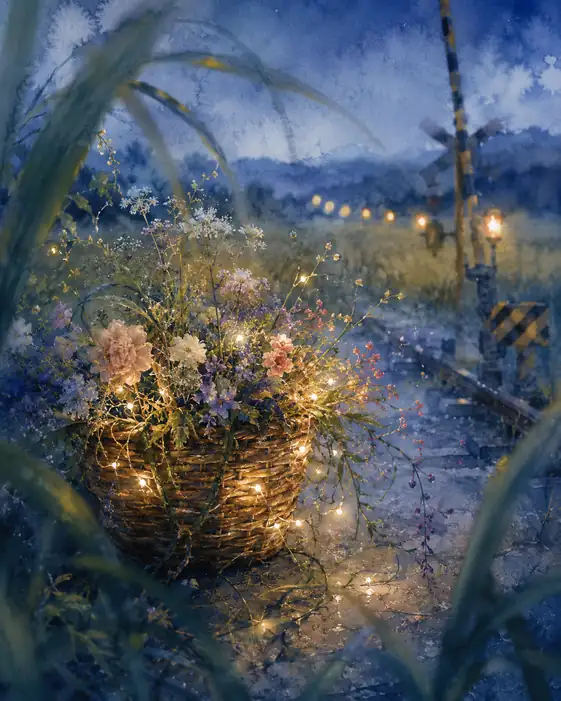 Fairy Lights in the Twilight Grass
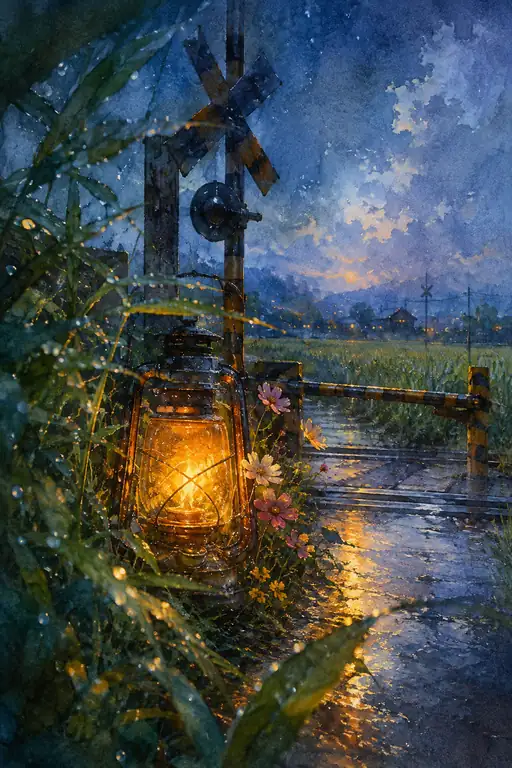 Raindrop Lamp by the Evening Railway