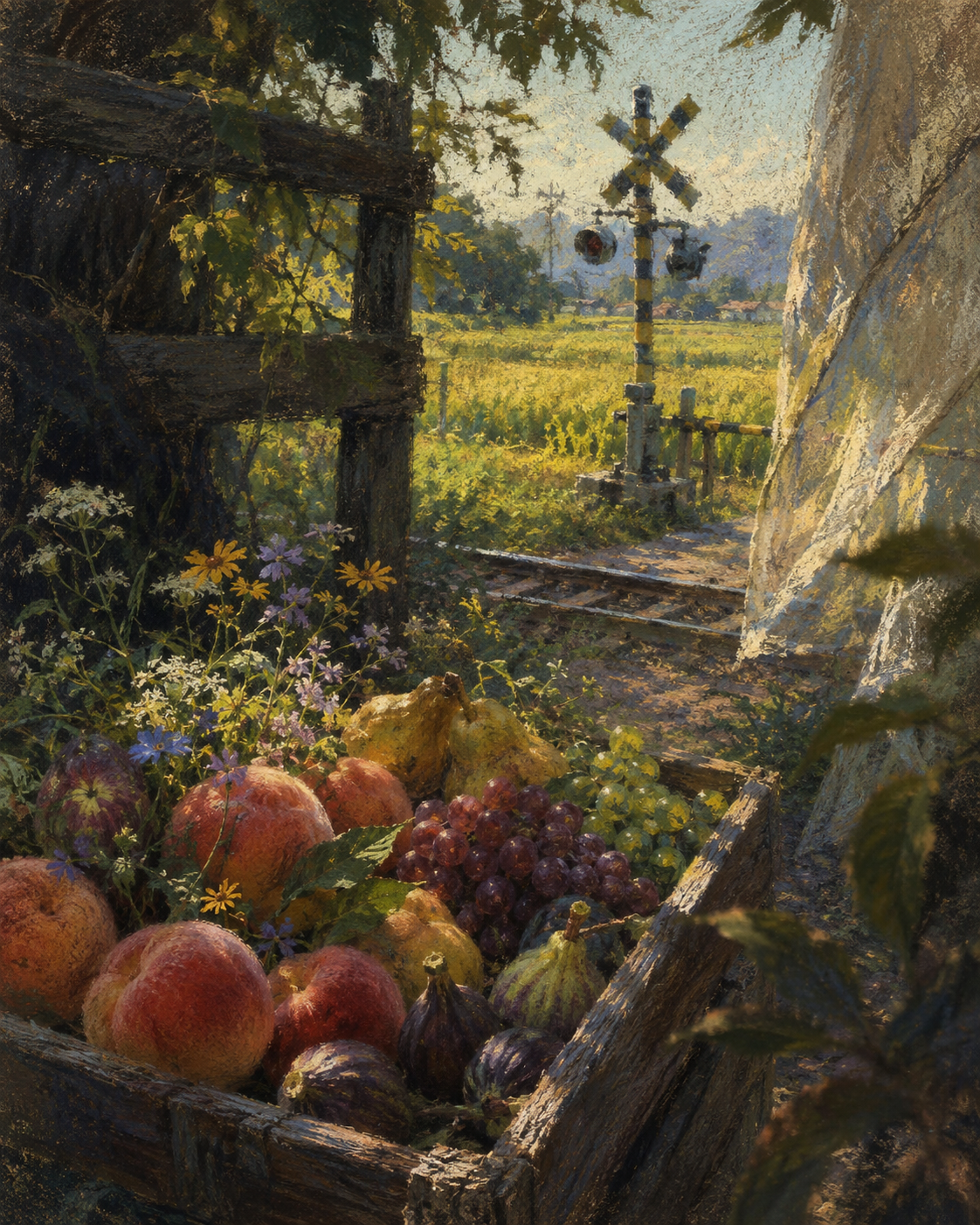
Autumn Harvest Beside the Rural Crossing
Critique
Introduction This textured painting sets harvested fruit in a rustic shadow, with a railway crossing opening onto sunlit fields. The produce belongs to the land beyond, making the image a meditation on abundance, labor, and rural continuity. Description A wooden crate fills the foreground with red fruit, grapes, pears, and dark figs. Multicolored wildflowers weave among them. Beams and foliage darken the left, while pale cloth catches light at right. Between them, rails pass a striped signal and lead toward green-gold fields and hazy hills. Analysis The composition operates like a proscenium: dark timber and cloth frame the bright landscape, while the crate forms a substantial base. Rounded fruit creates a clustered rhythm against the crossing’s thin vertical and diagonal geometry. Golden light unifies foreground harvest and distant crops, but cooler blues and purples prevent monotony. Thick, broken strokes give skins, bark, and fabric tactile weight. The narrow opening concentrates depth effectively, though the foreground’s high detail nearly overwhelms the small railway motif. Interpretation and Evaluation The crossing marks circulation and change, whereas the gathered produce embodies arrival, ripeness, and temporary plenty. Their relationship suggests that rural life depends on repeated passages between field, home, and market. The torn-looking cloth and aged wood temper any idealization of abundance with signs of use. Although the arrangement is improbably lavish, its irregular stacking and interspersed weeds keep it grounded in an earthy rather than formal elegance. Conclusion The work’s strength joins sensory richness to a clear spatial threshold. Fruit, flowers, tracks, and fields form a cycle from cultivation to gathering and onward movement. The painting celebrates plenty while acknowledging that harvest is a brief, labor-shaped moment within a larger seasonal rhythm.
Same Subcategory
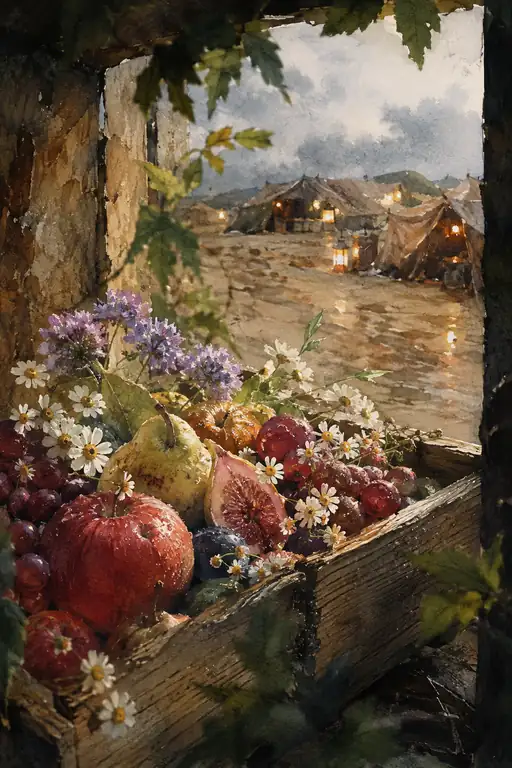 Window Still Life Before the Nomad Village
Similar Artworks
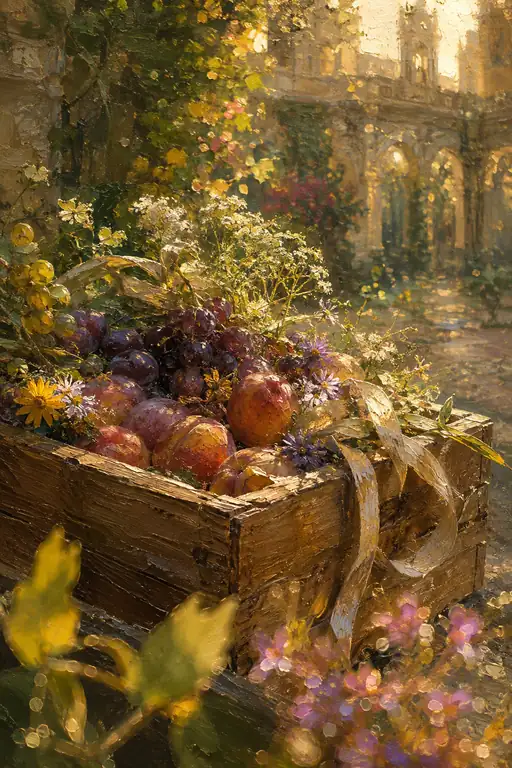 Sun-Drenched Harvest of the Abbey Garden
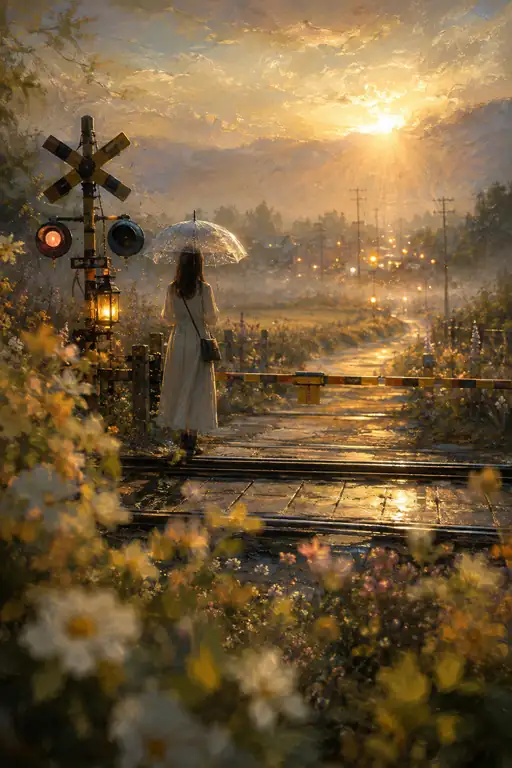 Clear Umbrella Beneath the Sunlit Crossing
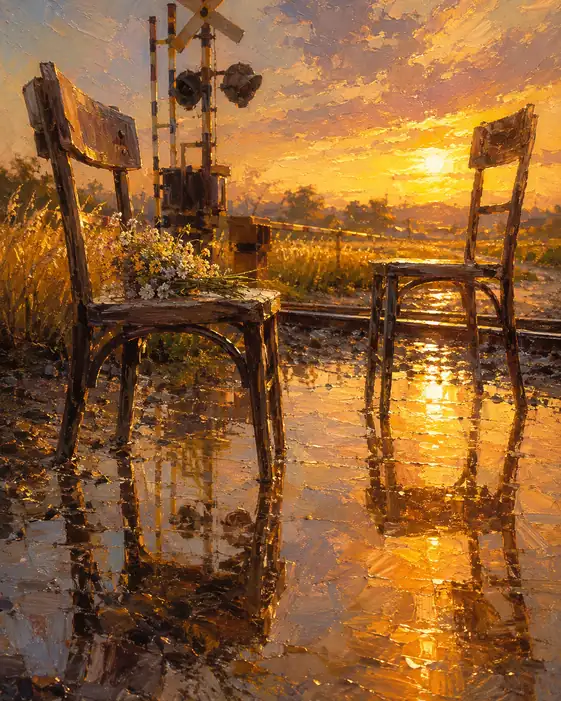 Sunset Soliloquy at the Rural Crossing
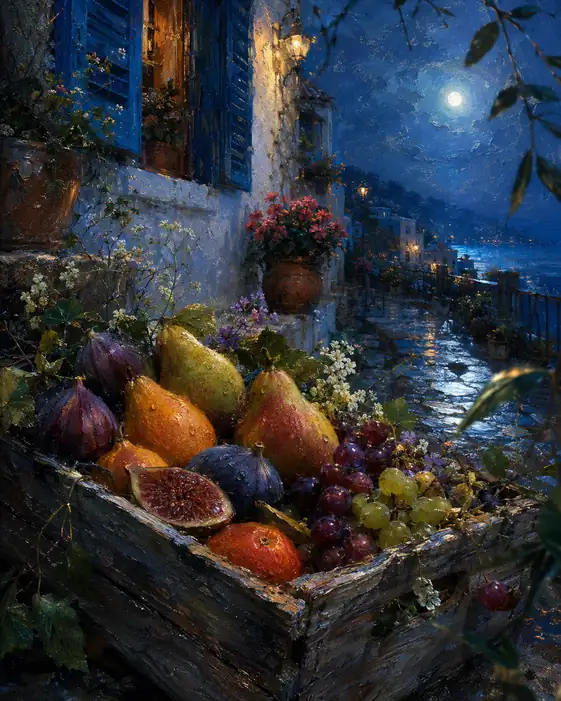 Moonlit Still Life Above the Coast
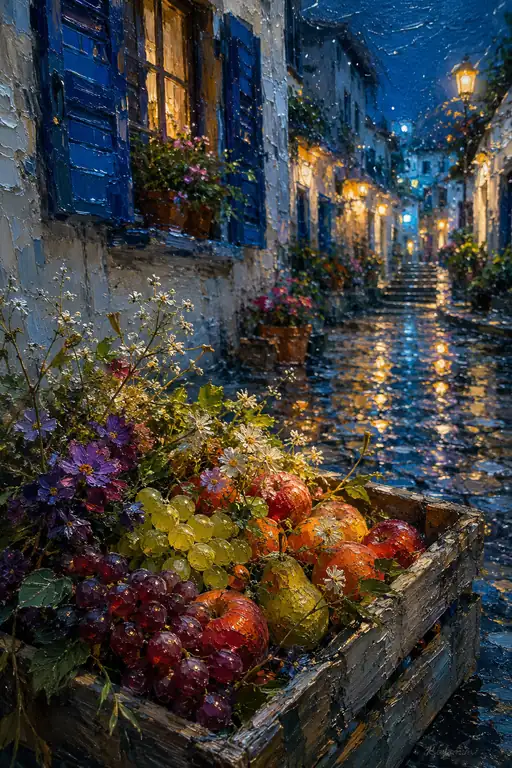 Crates of Abundance at the Lane's Foot
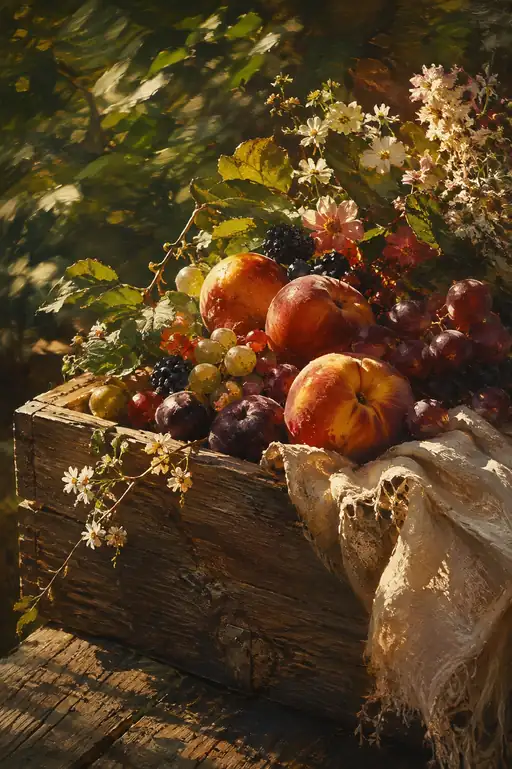 Rustic Wooden Box of Autumn Blessings
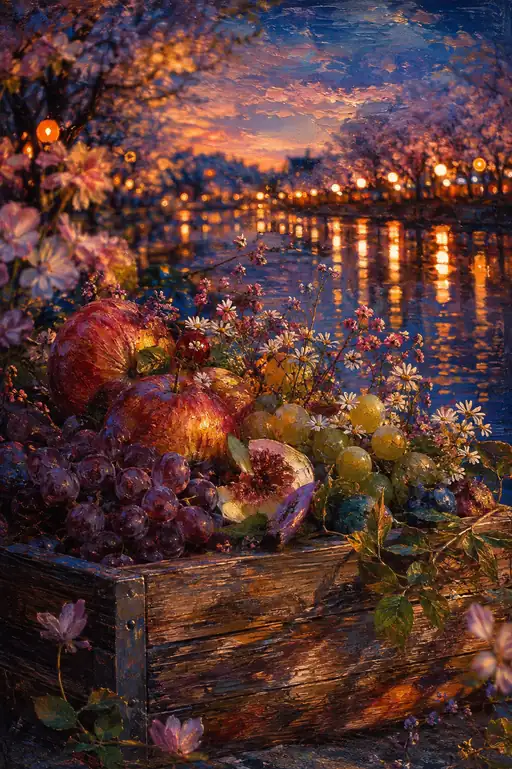 Twilight Harvest by the Blossomed Riverside
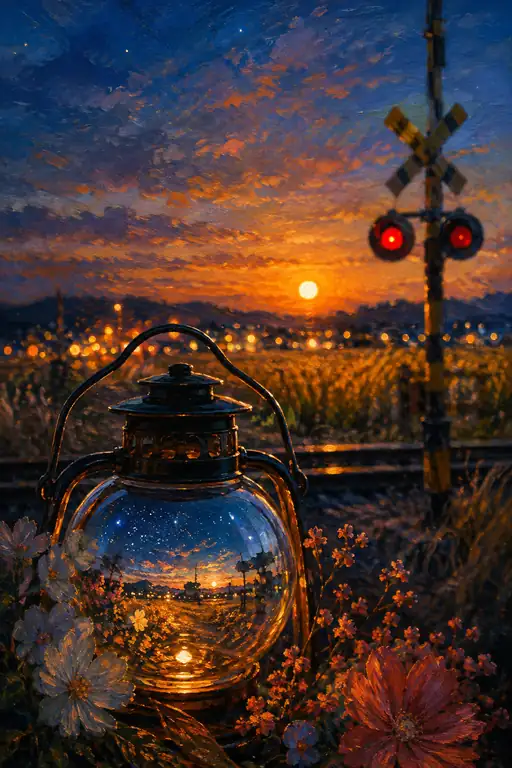 Sunset Cosmos Reflected in the Railroad Lantern
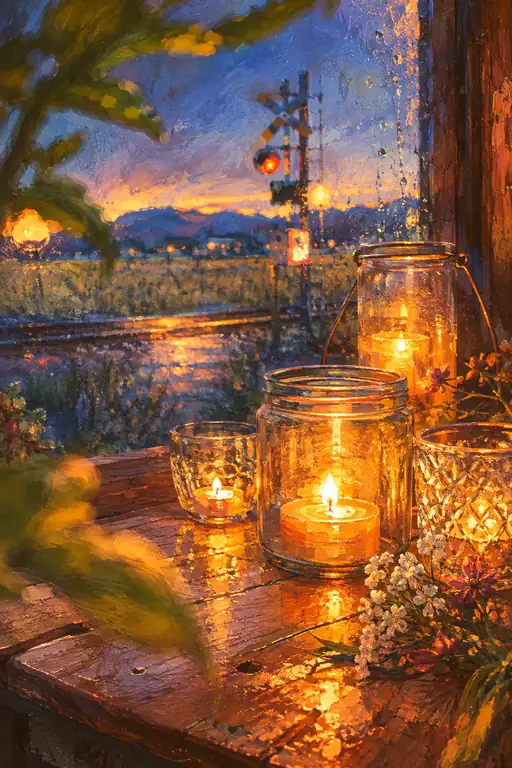 Twilight Candles on the Country Station Sill
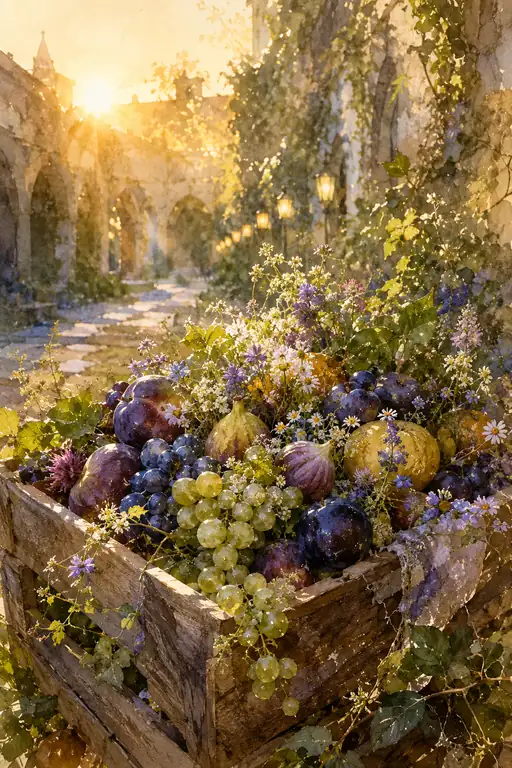 Golden Harvest in the Cloistered Sun