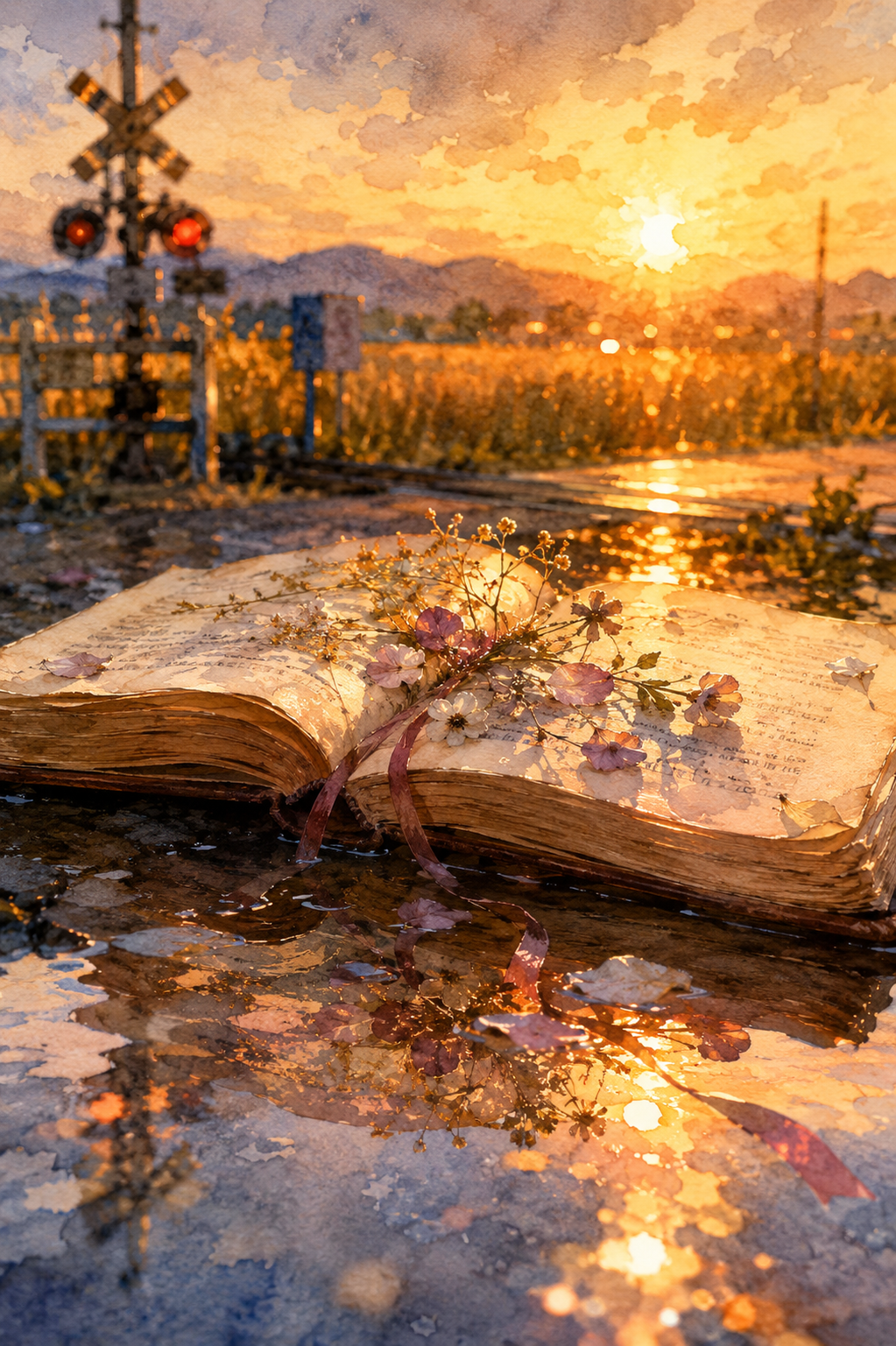
Forgotten Verses on the Sunlit Railway Water
Critique
Introduction This image presents an open book and flowers beside a railway crossing at sunset, combining literary still life with a radiant rural vista. Gold suggests nostalgia, but soaked pages, fallen petals, and the low sun introduce vulnerability. The scene meditates on how memory survives weather and time. Description An aged book lies open on a wet surface. Pink and white blossoms, fine stems, and mauve ribbons cross its printed pages. Beyond it, rails cut horizontally through a glowing field. A dark signal stands at upper left while the sun burns above violet hills. Reflections approach the viewer in broken orange bands. Analysis The low viewpoint gives the book monumental weight and makes its gutter a path into the landscape. Horizontal rails stabilize the composition; ribbons, stems, and reflected light create diagonals. Warm orange is balanced by blue-violet shadows. Soft focus separates distance from foreground, yet recurring highlights connect wet pages, rails, and lamps. Varied edges keep the intense illumination from appearing mechanically polished. Interpretation and Evaluation The open volume suggests an interrupted narrative, while flowers and ribbons imply commemoration or a cherished passage. The crossing becomes a metaphor for transition: stories, trains, seasons, and relationships pass through fixed points. The radiance approaches sentimentality, and the print is atmospheric rather than legible. Yet damaged page edges and pooled water prevent pure prettiness; beauty appears exposed and impermanent. Conclusion Through perspective, reflection, and complementary color, the painting joins private remembrance to landscape. Its book not only contains a story; it physically bears the evening’s light and rain. That fusion gives the work generous, elegiac resonance and turns a familiar sunset into an image of vulnerable remembrance.
Same Subcategory
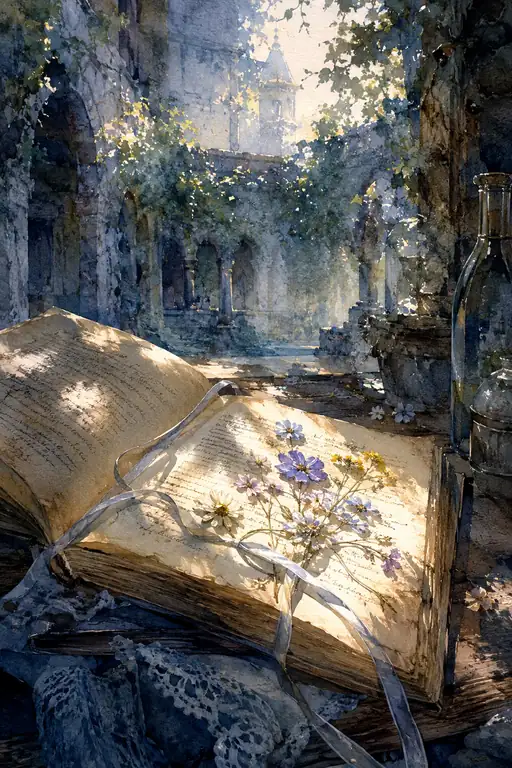 Forgotten Verses and Dried Wildflowers
Similar Artworks
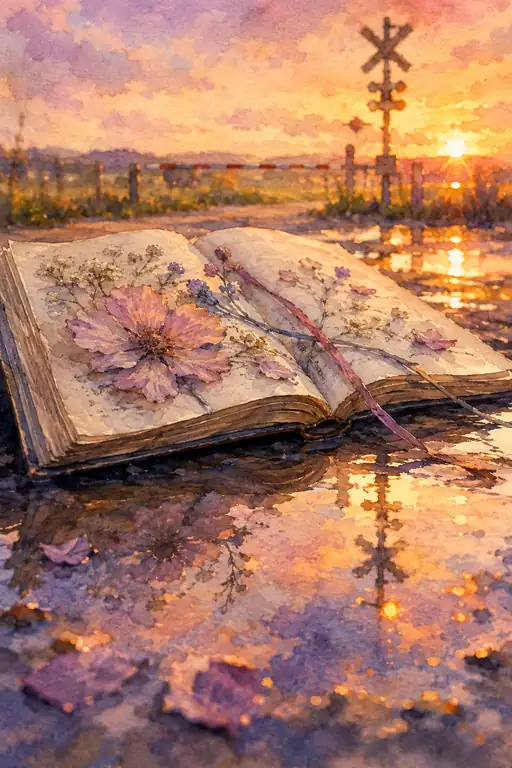 Autumn Blossom Book Beside the Sunlit Track
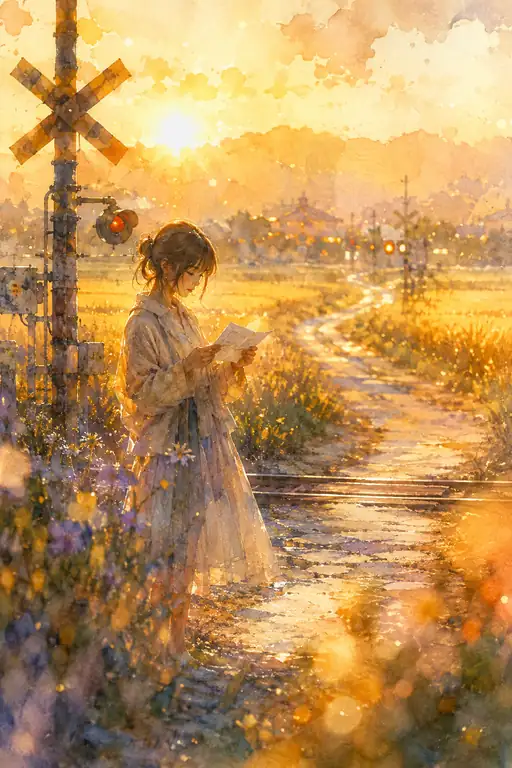 Reading Letters at the Golden Crossing
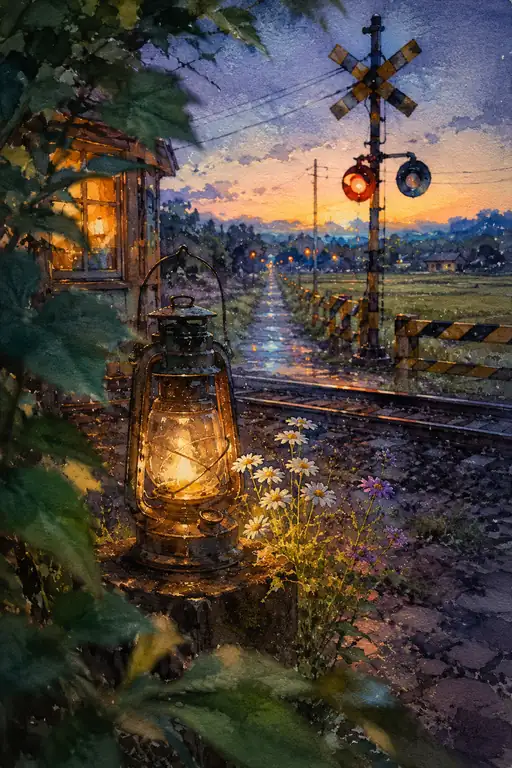 Wild Daisies by the Twilight Crossing
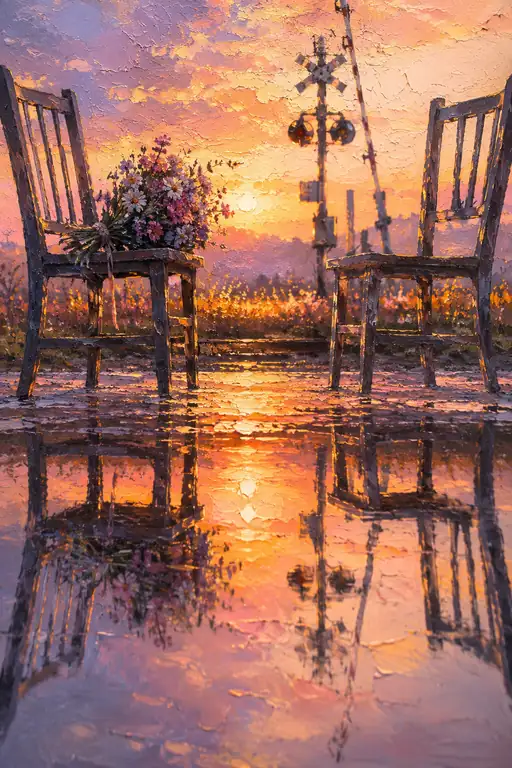 Sunset Bouquet on the Crossing Chairs
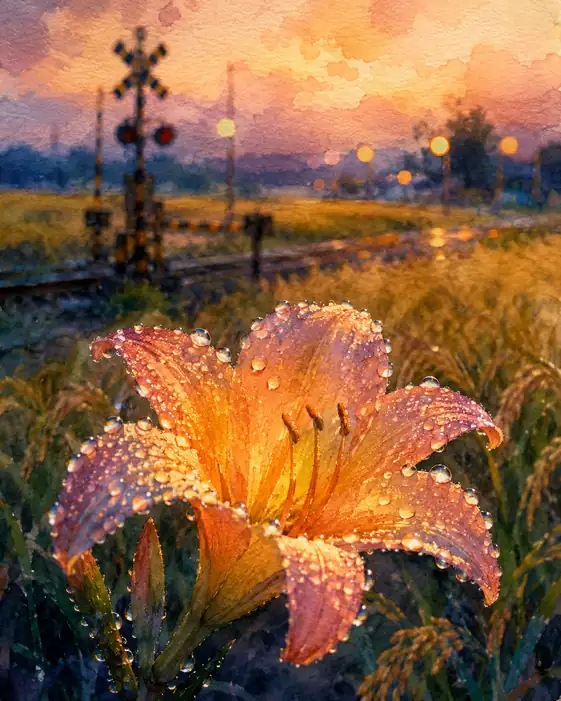 Dewdrop Radiance on the Twilight Lily
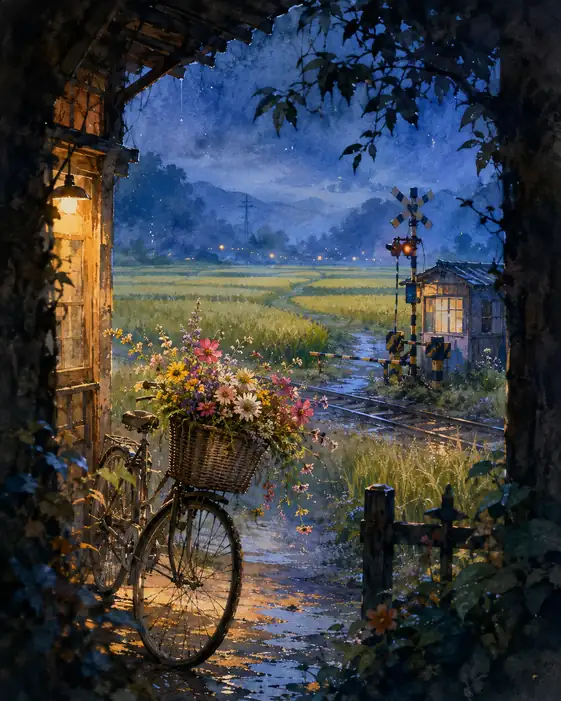 Nocturne Delivery Basket by the Station
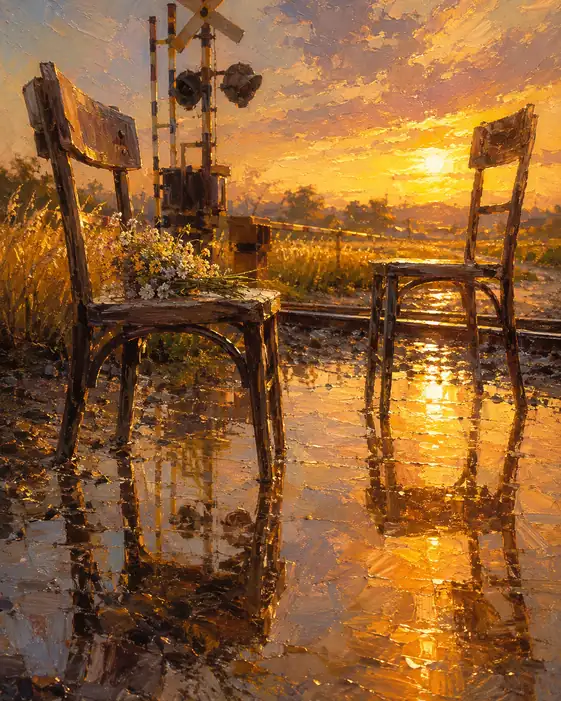 Sunset Soliloquy at the Rural Crossing
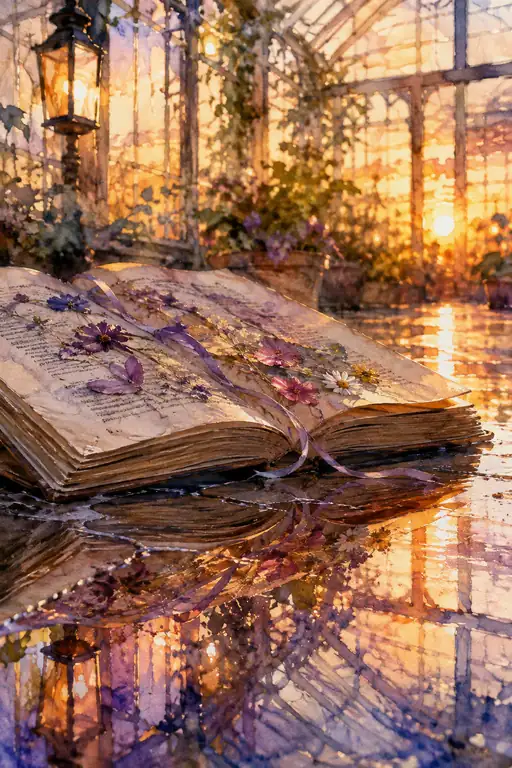 Sunset Reads the Greenhouse Book of Flowers
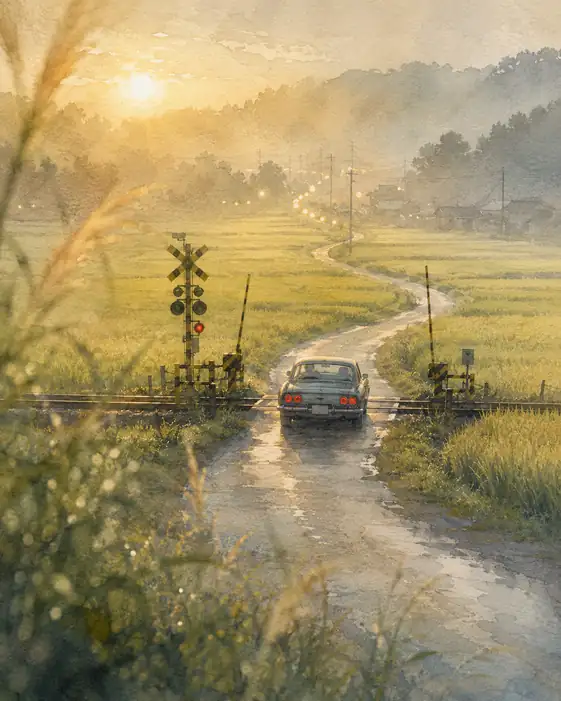 Country Crossing Journey in the Golden Mist
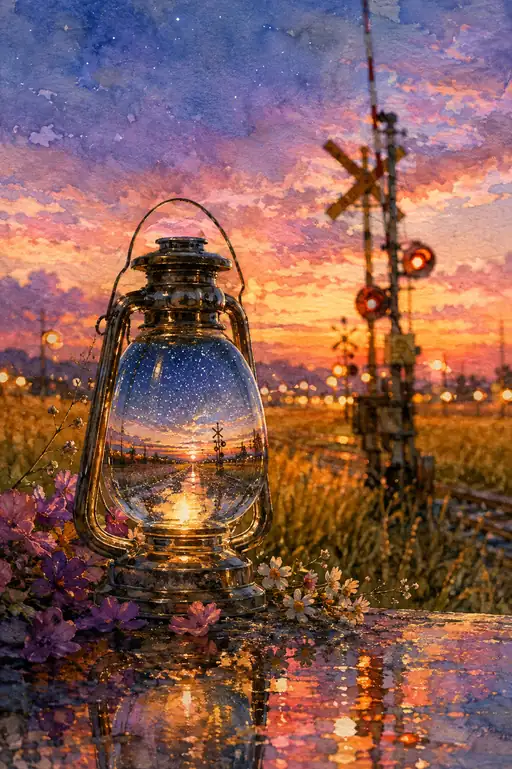 Sunset Train Path Captured in Glass