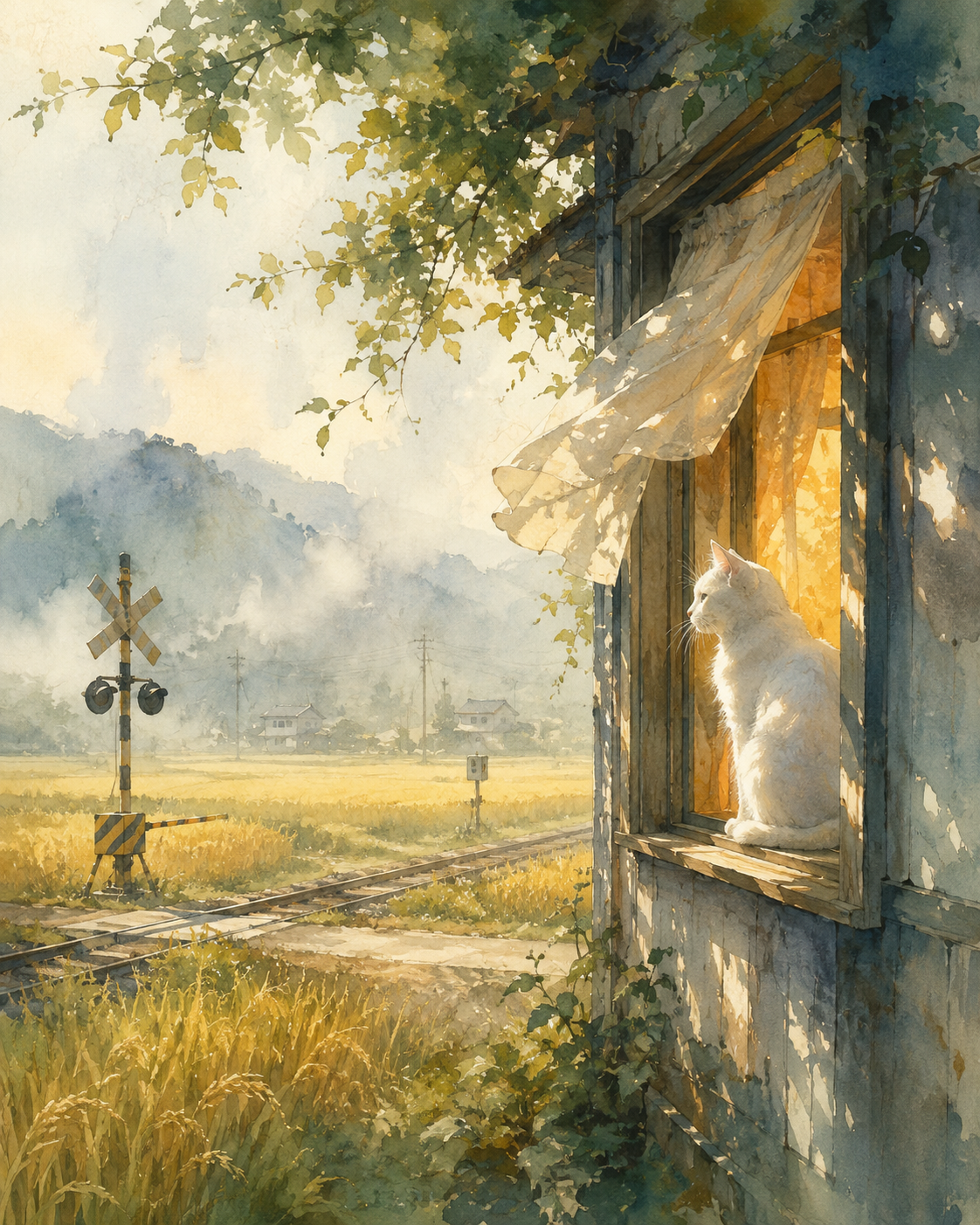
White Cat Watching the Morning Train Pass
Critique
Introduction A white cat sits in a sunlit rural window, watching a railway crossing and ripened fields. The painting combines domestic intimacy with open agricultural distance, using curtain, foliage, and animal attention to animate an otherwise quiet midday. Description The cat occupies the right window ledge in profile, its pale coat outlined by warm interior light. A translucent cream curtain billows outward above it. Ivy and leafy branches climb around the weathered blue-gray wall. Outside, tracks curve past a striped signal mast through golden grain toward small houses, utility poles, misty mountains, and a pale sky. No people or train appear. Analysis The cat’s upright body echoes the window jamb and distant signal, while its forward gaze follows the rail’s diagonal. The curtain introduces a broad curve that links interior air to the field. Warm cream and gold model cat, fabric, and grain; cool gray-blue describes wall, mountain, and shadow. Dappled leaf marks break the architecture into changing light. The sharply observed animal contrasts with softened village distance. Interpretation and Evaluation The window is a threshold between shelter and seasonal labor. The cat becomes the scene’s consciousness, alert to a route whose event remains absent. Billowing cloth suggests that outdoor weather enters the home, while the cat stays securely poised inside. Sentimental charm is restrained by peeling wall, practical signal equipment, and the animal’s concentrated profile rather than a performed expression. Conclusion The work succeeds through quiet correspondence: cat, signal, and window stand watch; curtain, rail, and branches carry movement. Domestic warmth does not close off the landscape but creates a position from which it can be attentively received.
Same Subcategory
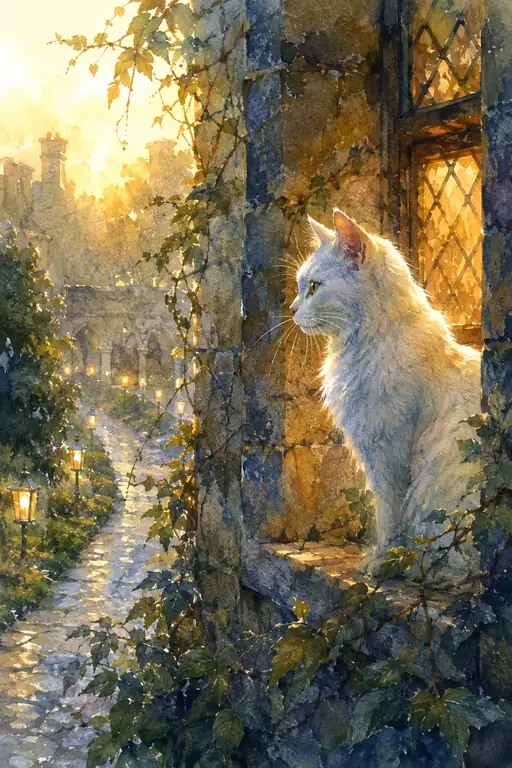 Morning Sunlight on the Castle Ledge
Similar Artworks
 Flower Crown Pup in the Dappled Railway Light
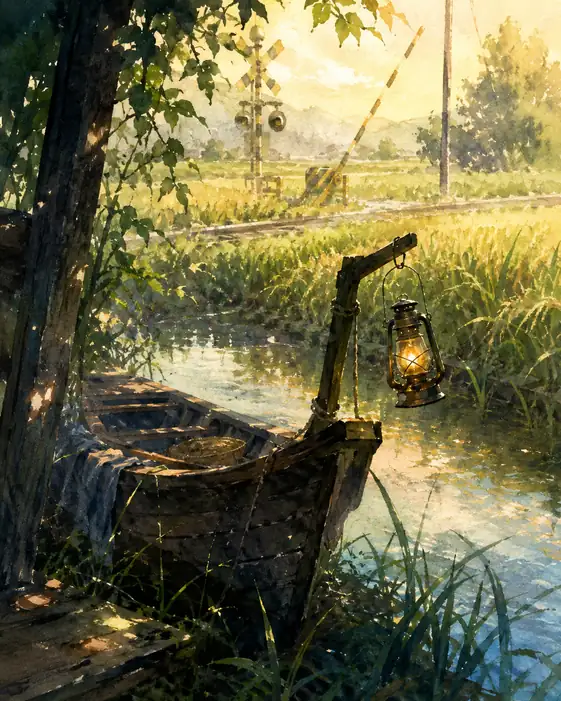 Resting Boat and Straw Hat by the Waterway
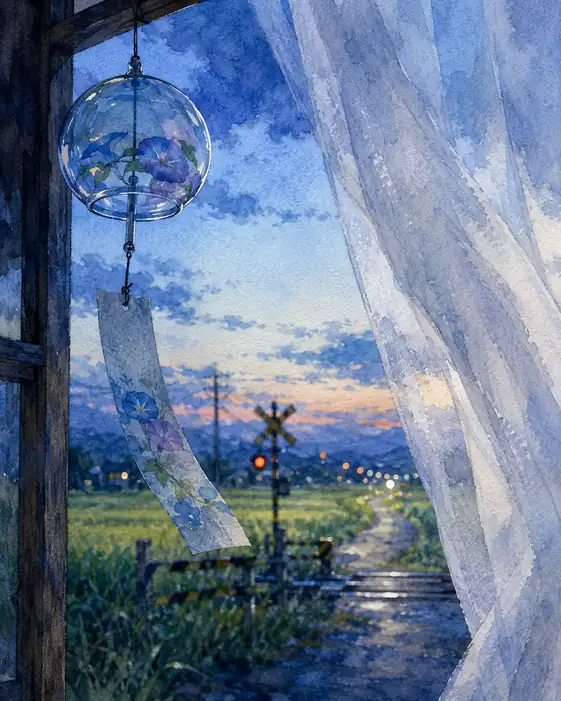 Morning Glory Wind Chime at Dusk
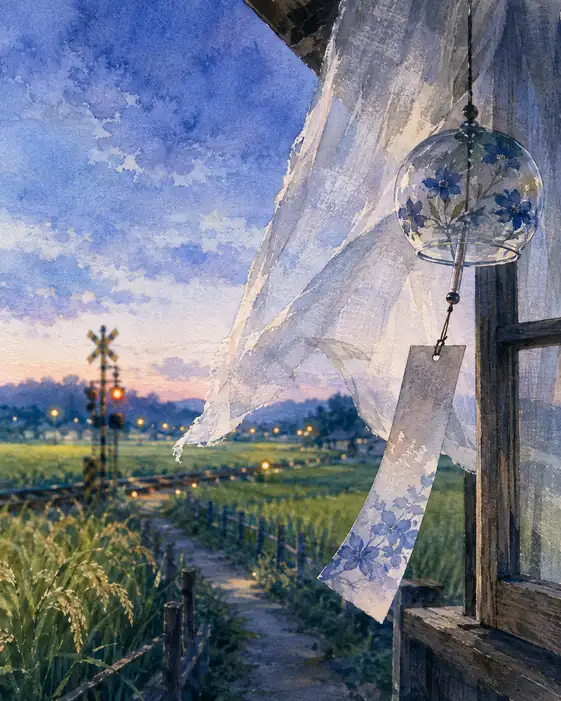 Twilight Breeze and the Clear Wind Chime
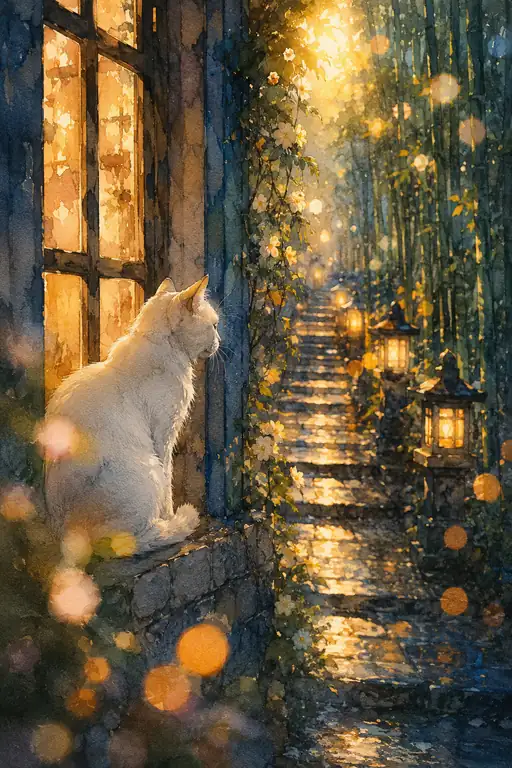 Silent Gaze Beyond the Bamboo Lanterns
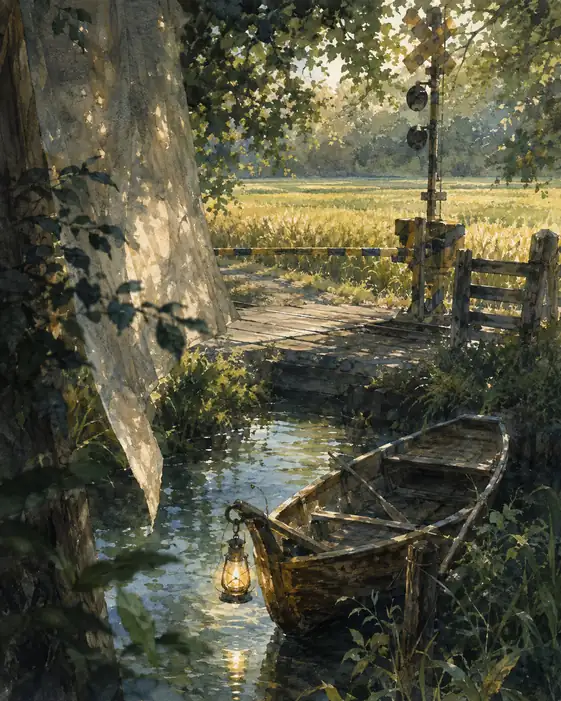 Shaded Mooring by the Railway Creek
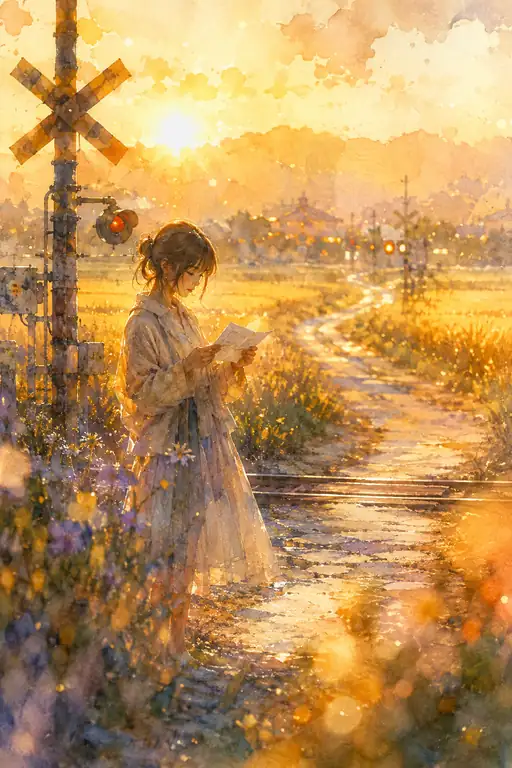 Reading Letters at the Golden Crossing
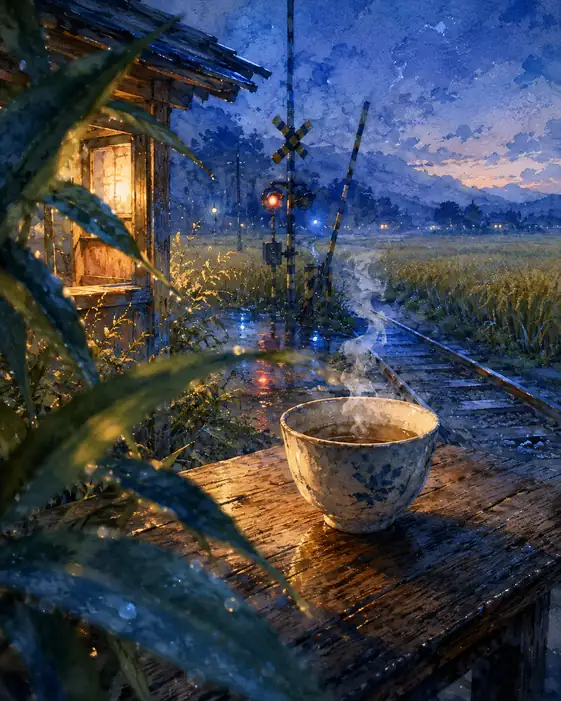 Steam Rising by the Quiet Country Station
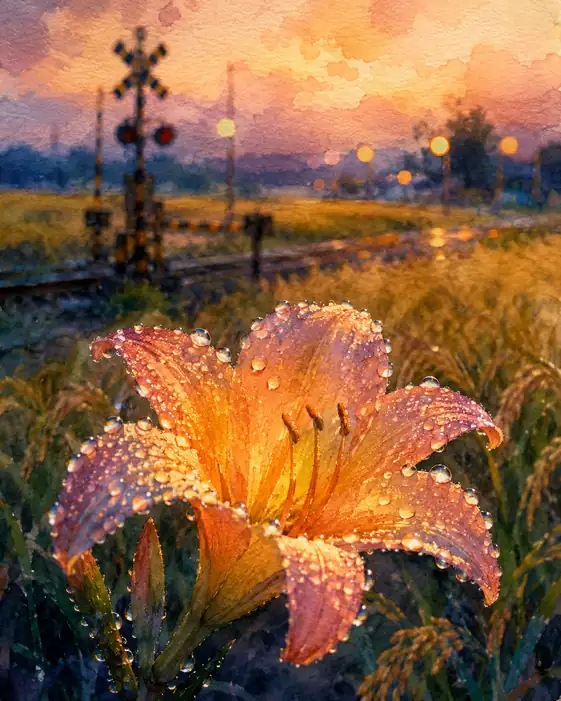 Dewdrop Radiance on the Twilight Lily
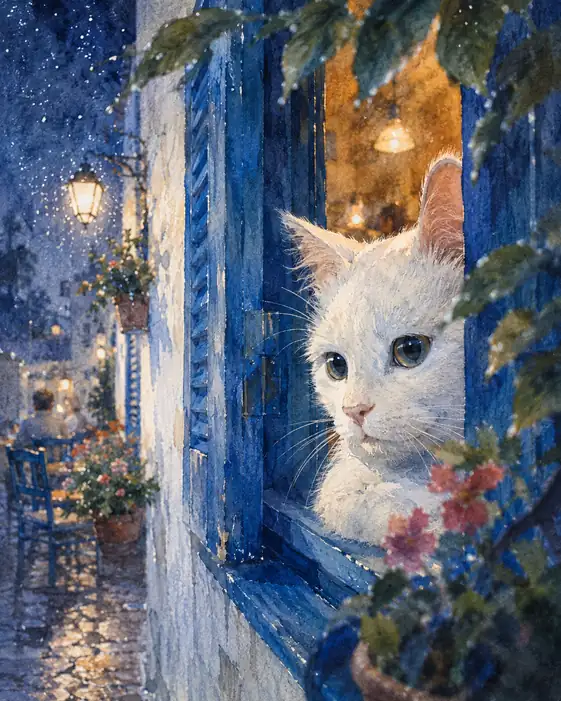 Blue Shutter Curiosity on a Starlit Night