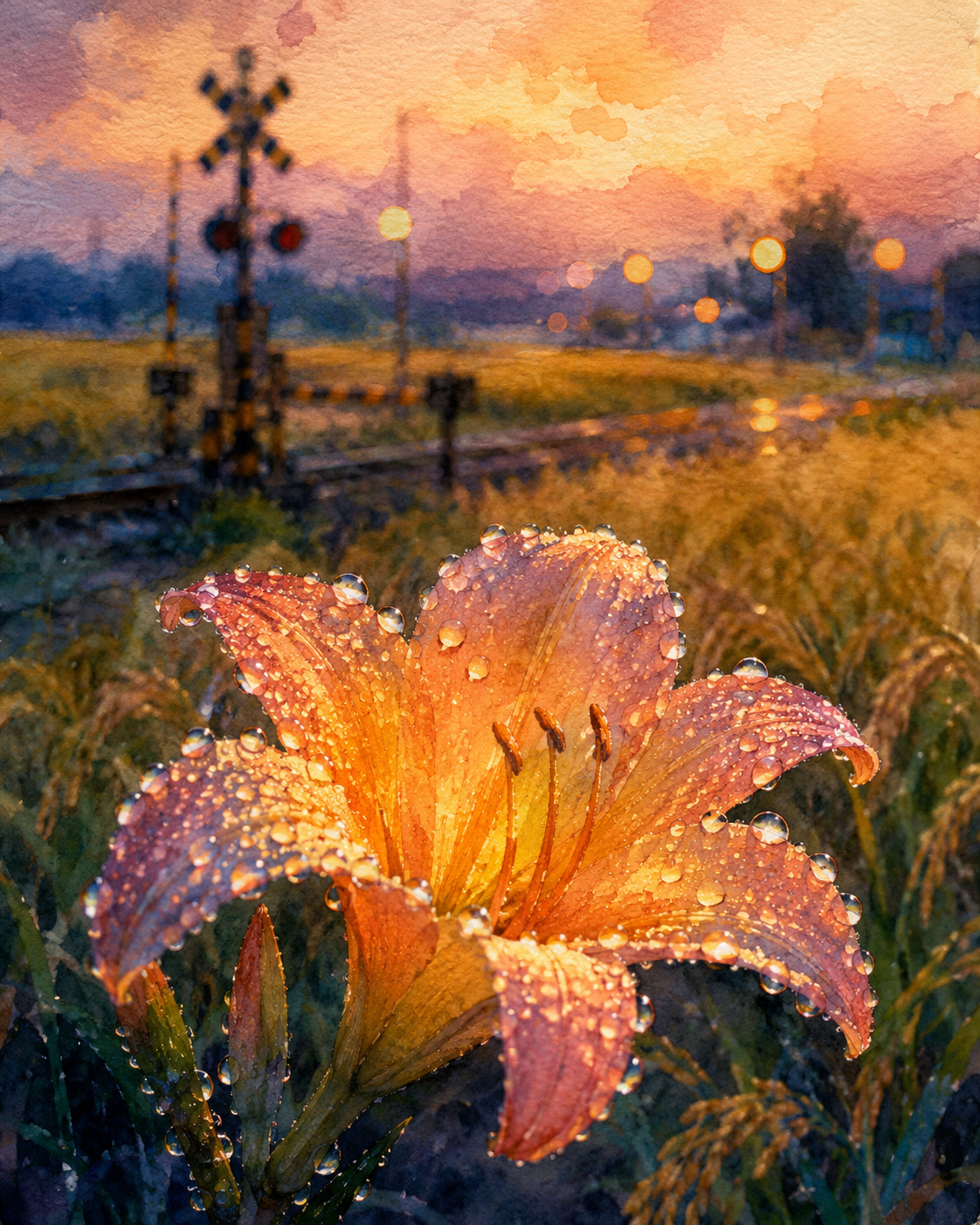
Dewdrop Radiance on the Twilight Lily
Critique
Introduction An enormous rain-beaded orange lily rises before a softly blurred railway landscape at sunset. The painting uses extreme scale and focus to make a single flower equal in visual importance to signals, fields, mountains, and the fading sky. Description The lily fills the lower half, its six curling peach-orange petals covered with droplets and centered on dark stamens. Closed buds and wet leaves cluster at lower left. Behind, grain fields, rails, a crossing mast, round lamps, distant trees, and violet mountains dissolve into warm haze. Peach, cream, and lavender clouds stretch across the upper sky. Analysis The flower’s radial structure anchors the foreground, while petal curves open outward toward the landscape. Droplets repeat distant lamps as luminous circles, linking botanical surface to infrastructure. Orange light moves from the lily’s throat into sky and bokeh; blue-violet shadows define petal edges and mountains. Sharp veins, water spheres, and stamens contrast dramatically with the softened crossing. The low horizon permits the flower to read almost as terrain. Interpretation and Evaluation Magnification elevates a transient bloom above systems designed for repeated movement. Rain makes beauty vulnerable but also optically richer, each droplet storing light. The crossing suggests travel continuing beyond the flower’s short season. Intense color could become decorative, yet curled edges, uneven droplets, dark anthers, and nearby buds preserve botanical specificity. Conclusion The work succeeds by changing the viewer’s scale. Signal lights become distant droplets, and droplets become miniature sunsets. Through this reversal, the lily is not an ornament beside the railway but a temporary world through which the wider landscape is understood.
Same Subcategory
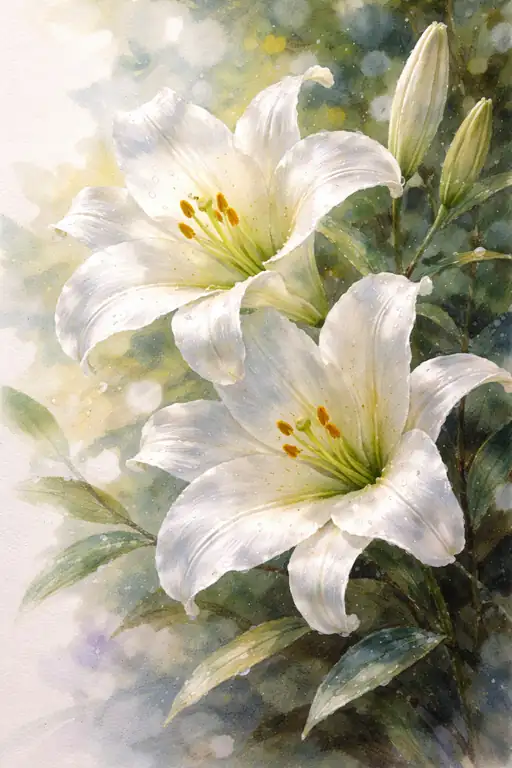 Tears of Purity on White Petals
 White Lily Reaching for the Light
Similar Artworks
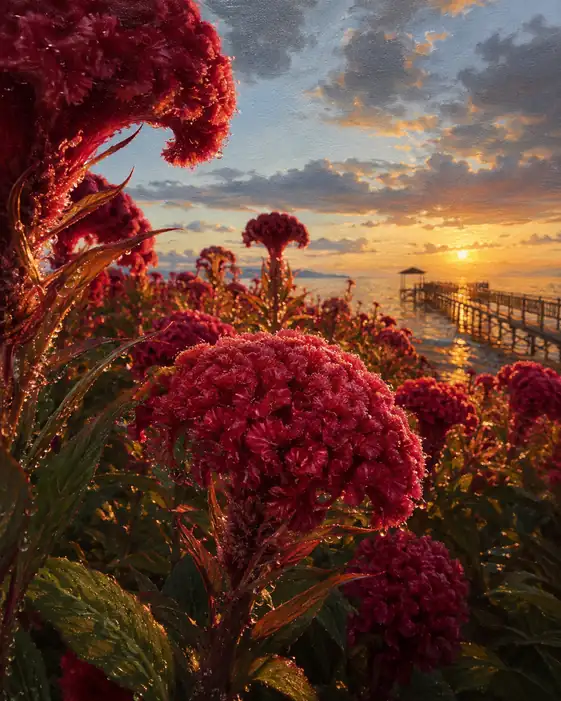 Crimson Cockscomb by the Sunset Pier
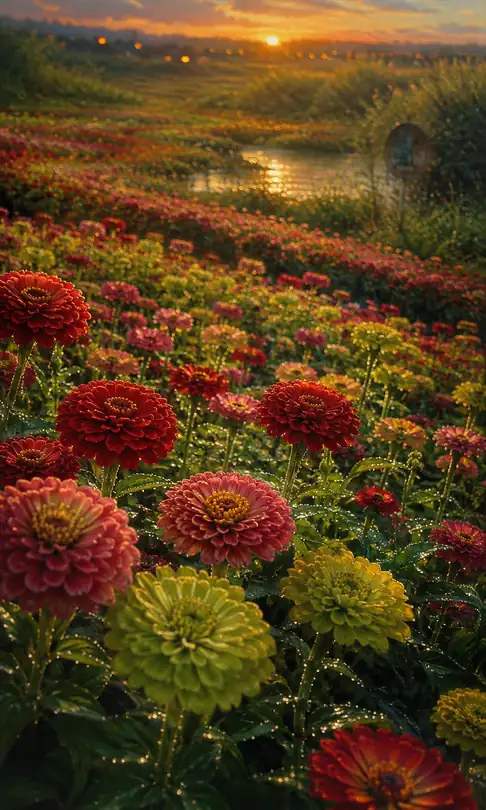 Sunset Glow across the Zinnia Meadow
 Twilight Glow on Spider Lily
 Reading Letters at the Golden Crossing
 Hibiscus Glowing against the Sunset Harbor
 Crimson Slopes of Cockscomb at Sunset
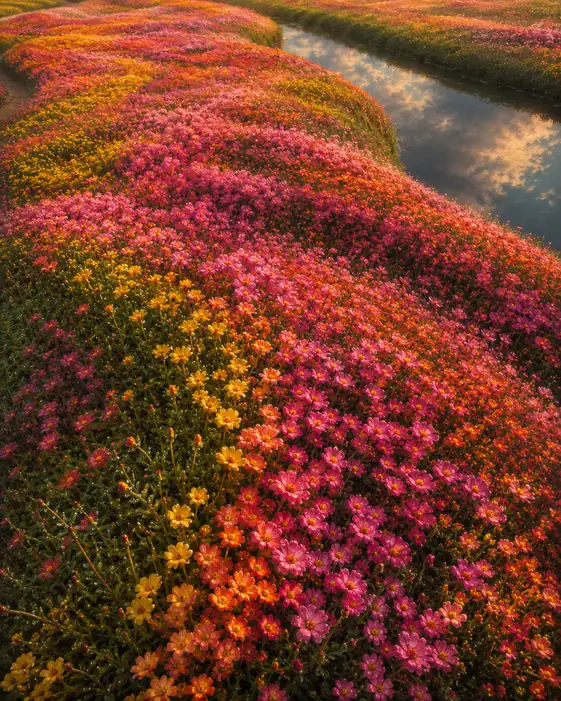 Woven Petals along the Sunset Stream
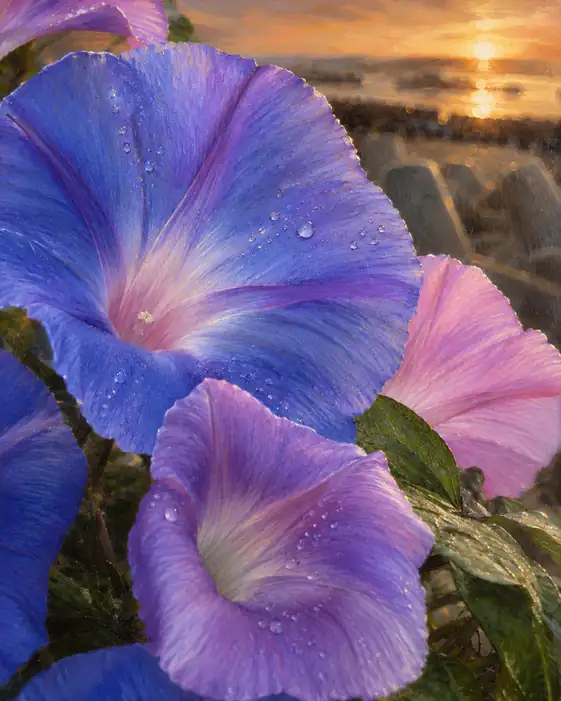 Evening Glory by the Sunlit Coast
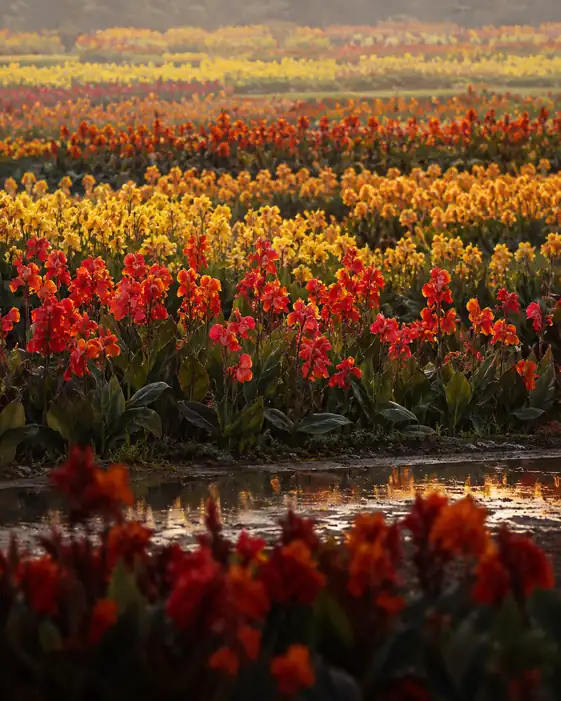 Golden Bands across the Canna Field
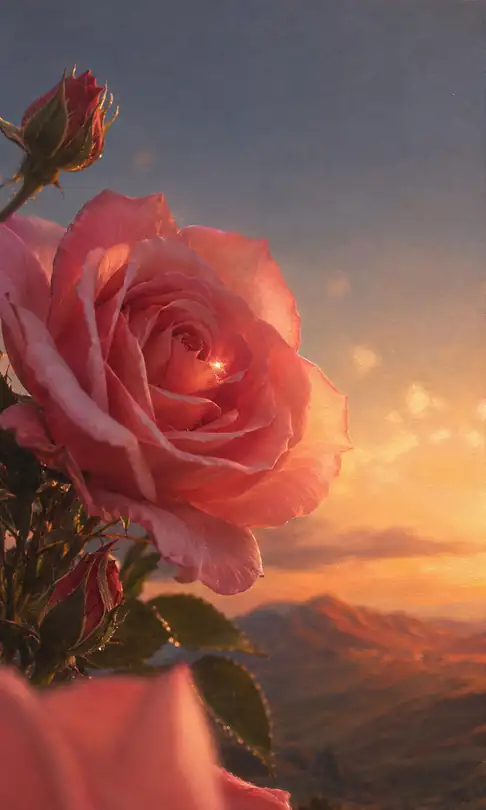 Rose Petals in the Golden Horizon