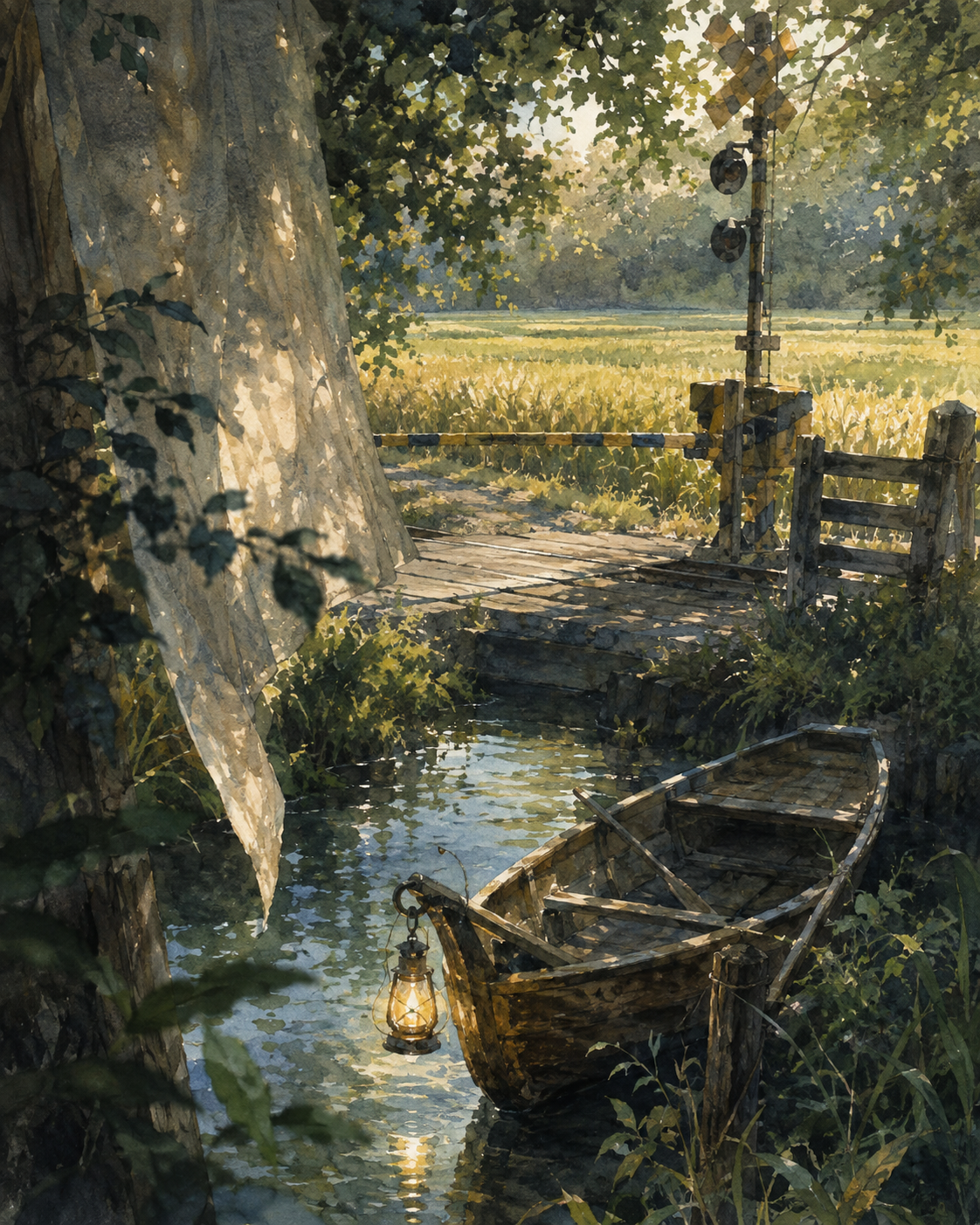
Shaded Mooring by the Railway Creek
Critique
Introduction A small wooden boat carrying a hanging lantern rests in a narrow canal immediately below a rural railway crossing. The painting unites water travel and rail infrastructure within a shaded green refuge, making two transport systems feel unexpectedly intimate. Description The weathered boat occupies the lower right, tied beside a post and fitted with crosswise seats and loose oars. A glowing lantern hangs from its curved prow and reflects in green-blue water. At left, a pale cloth descends from a massive tree. Stone steps and a plank crossing lead upward to rails, striped barrier, fence, signal mast, and golden fields. Dense leaves form a canopy overhead. Analysis The boat’s diagonal hull directs the eye from dark foreground water toward the bright crossing and fields. Its curved prow and lantern contrast with horizontal barrier, rails, and bridge planks. Dappled light breaks across cloth, bark, water, and crops, linking unlike materials. Olive and gray-green dominate; selective amber in lantern and field provides warmth. Soft foreground leaves deepen enclosure, while increasingly pale distance opens the scene. Interpretation and Evaluation The boat waits below a crossing designed for another kind of journey, suggesting parallel routes with different rhythms. Its lit lantern implies readiness despite daylight, turning the craft into an invitation rather than abandoned equipment. The hanging cloth introduces domestic presence without a figure. Picturesque nostalgia is checked by cracked boards, weeds, mooring rope, and blunt signal machinery. Conclusion The work succeeds through layered thresholds: water to steps, steps to rail, shade to field. The small lantern links these transitions with human care. Movement is temporarily suspended, but every line—from hull to barrier—keeps another departure imaginable.
Same Subcategory
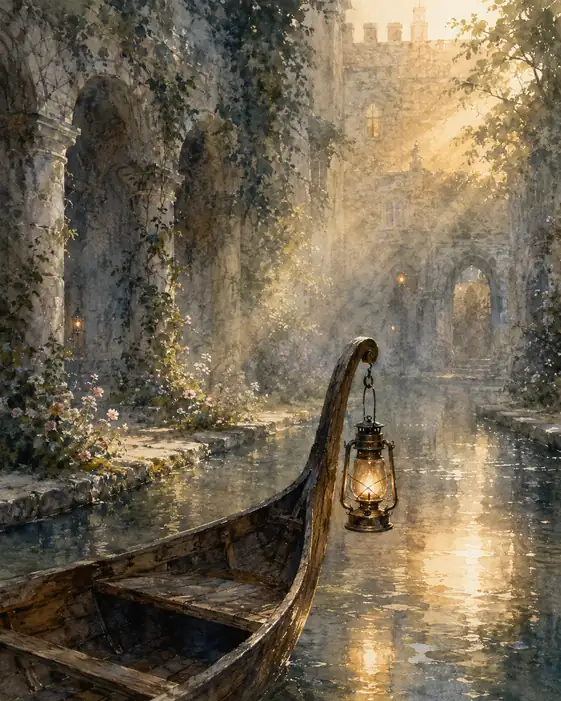 Golden Mist Drifting Through the Canal
Similar Artworks
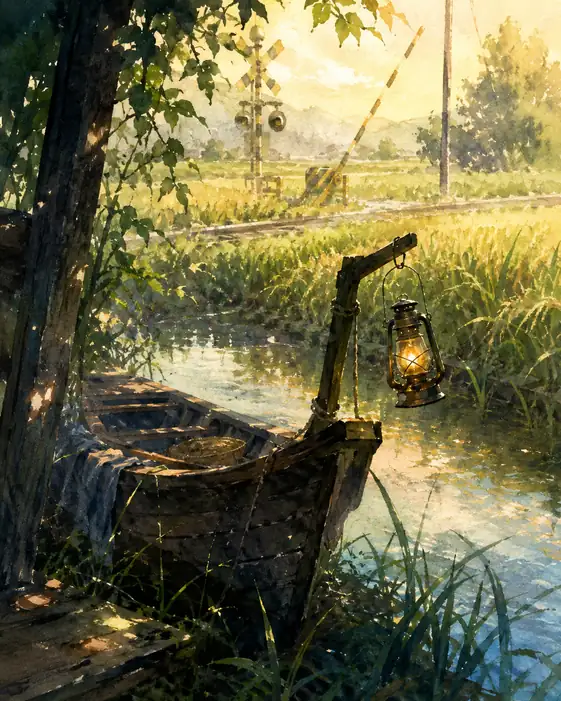 Resting Boat and Straw Hat by the Waterway
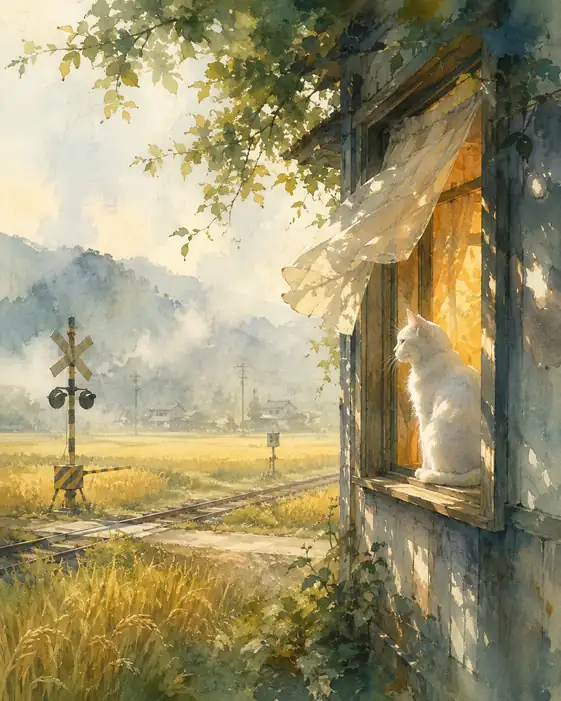 White Cat Watching the Morning Train Pass
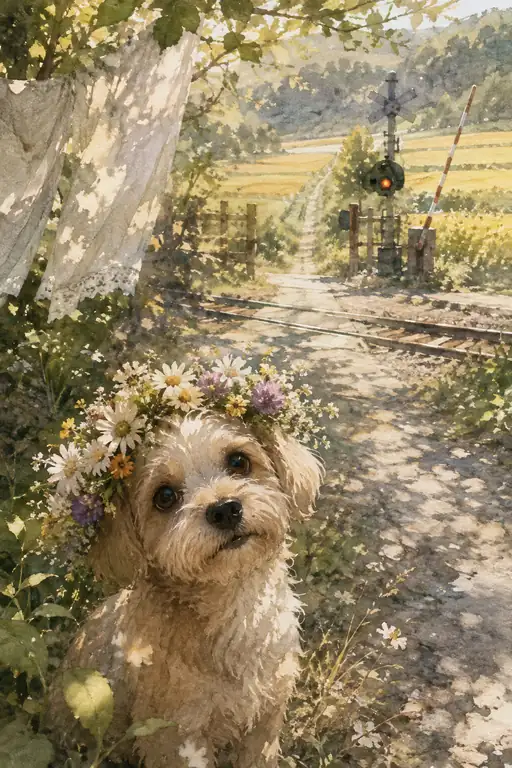 Flower Crown Pup in the Dappled Railway Light
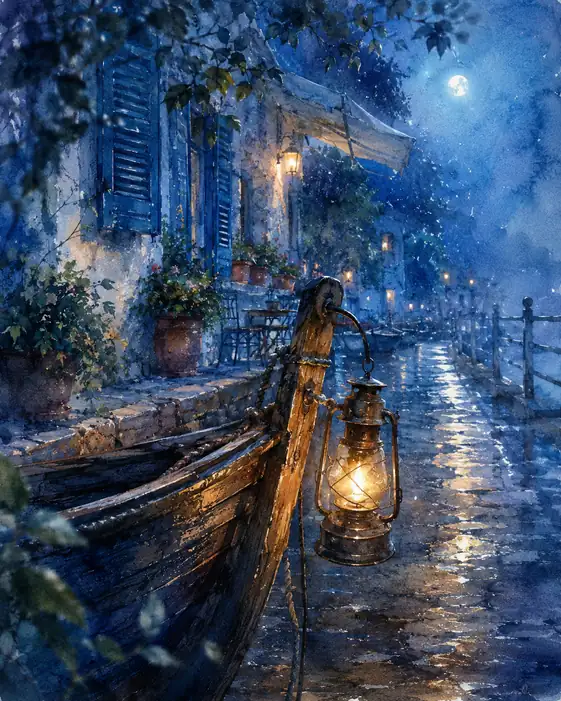 Moored to the Moonlit Tide
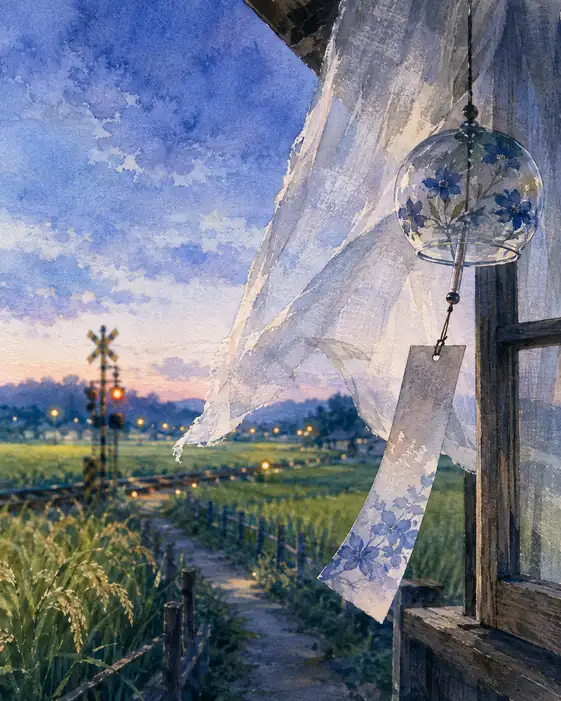 Twilight Breeze and the Clear Wind Chime
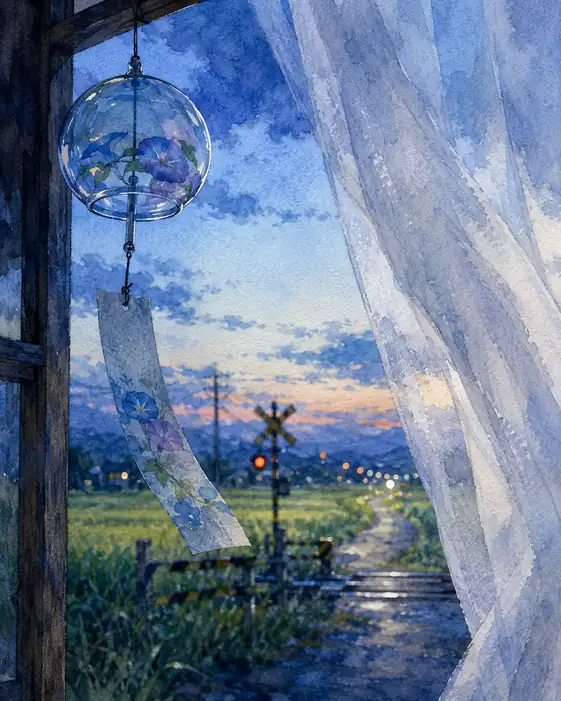 Morning Glory Wind Chime at Dusk
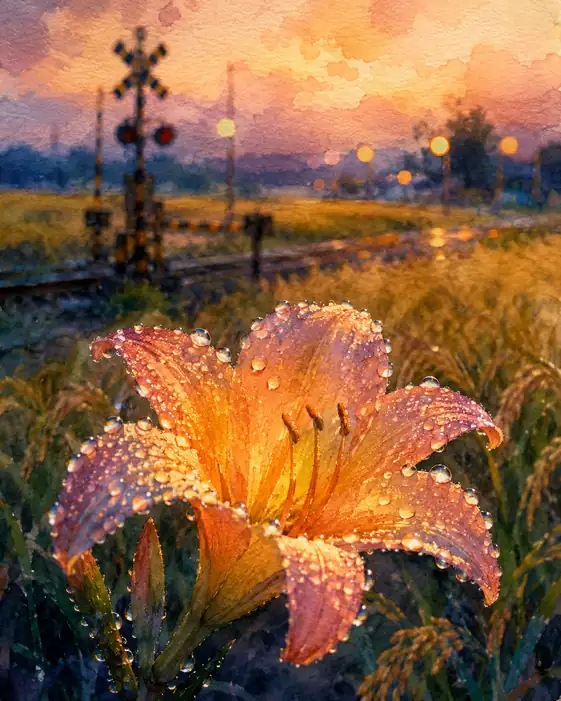 Dewdrop Radiance on the Twilight Lily
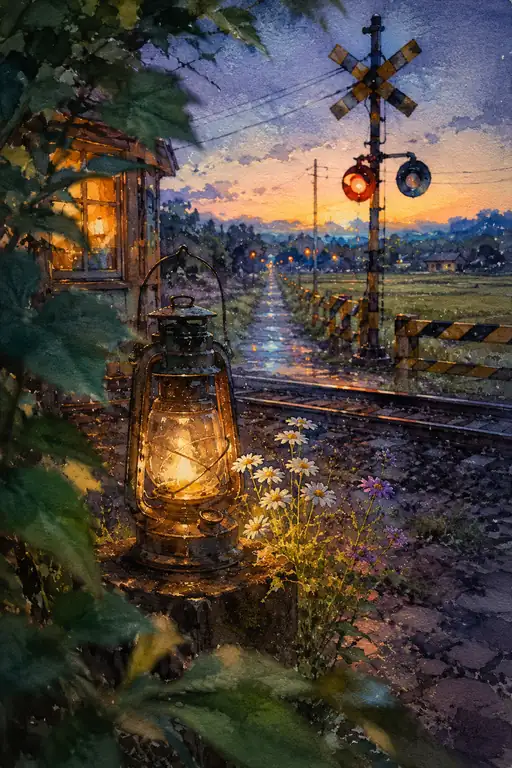 Wild Daisies by the Twilight Crossing
 Forest Voyage Across a Mirror of Rain
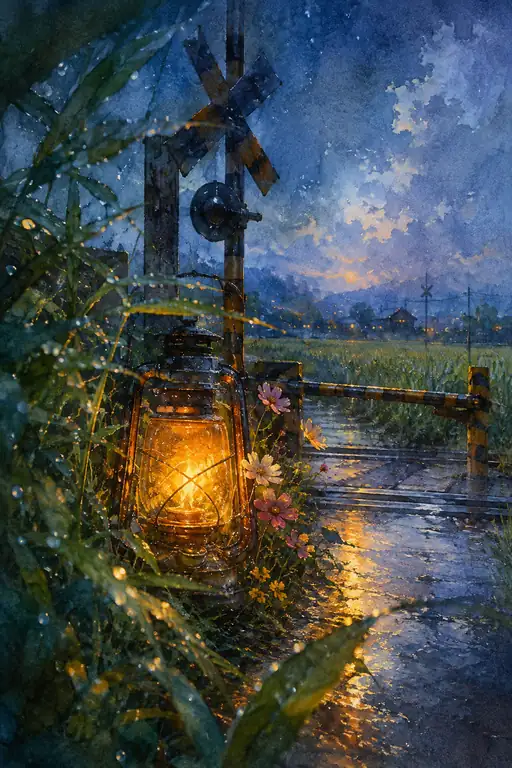 Raindrop Lamp by the Evening Railway