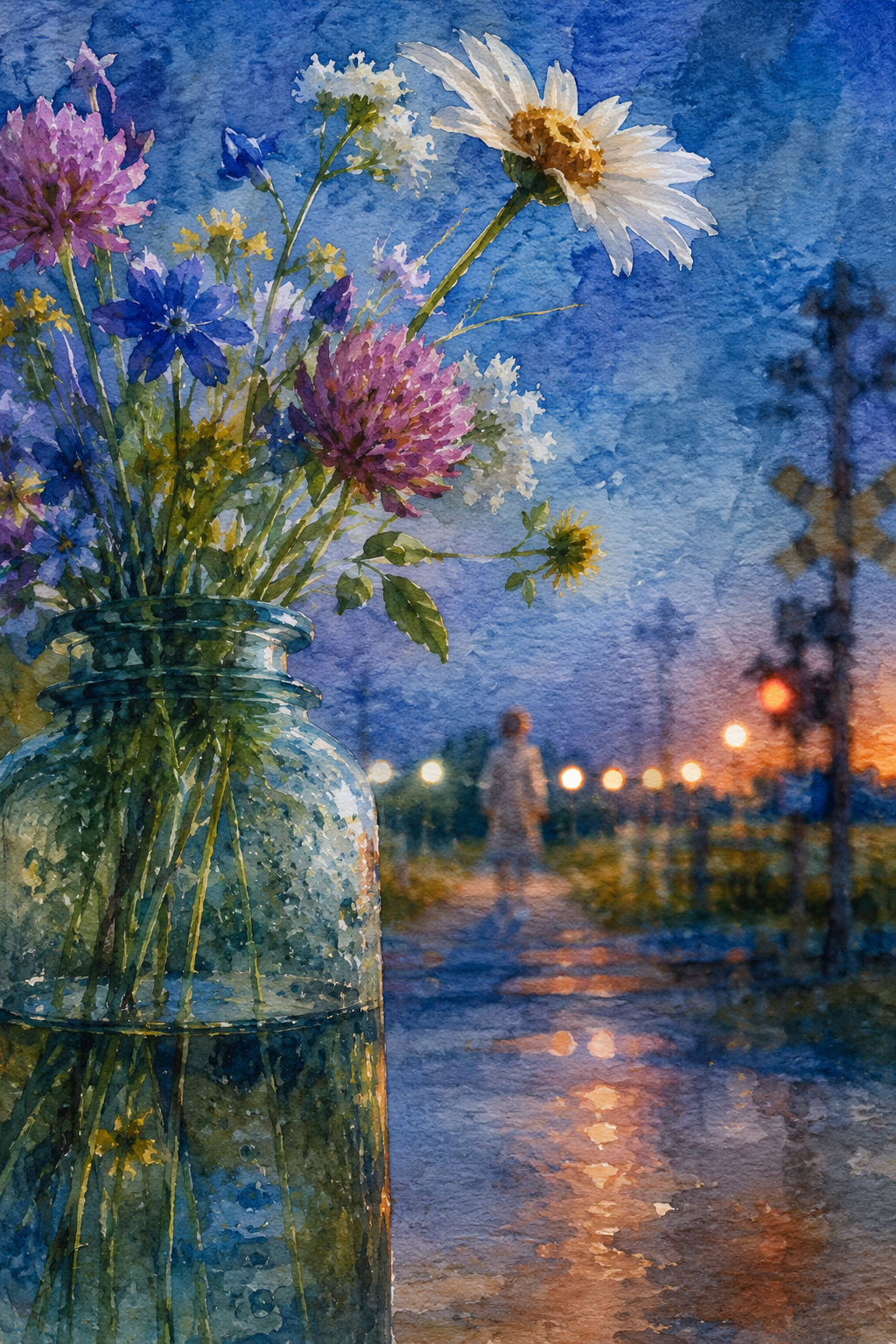
Wildflower Glass and Departing Steps in the Dusk
Critique
Introduction A glass jar of wildflowers dominates the foreground of a blue-hour railway path, while a solitary figure and red signal blur in the distance. The painting turns a modest bouquet into a lens for considering waiting, passage, and human separation. Description The large transparent jar fills the left half, its water line, submerged green stems, bubbles, and reflective rim clearly visible. White daisies, pink clover-like blooms, blue flowers, and fine yellow-white sprays rise against the sky. Behind, a wet path leads toward an indistinct standing person. Round lamps recede beside it, and a crossing post with red signal occupies the right beneath a peach horizon. Analysis Radical focus contrast makes the jar tangible and the human story uncertain. The tallest daisy arcs toward the upper center, balancing the dark signal at right. Vertical stems continue through water as refracted lines, while path reflections repeat their downward movement. Cool blue governs jar, sky, and road; flower colors mediate between blue and distant orange lamps. The vessel’s firm contour stabilizes the bouquet’s irregular spread. Interpretation and Evaluation Flowers traditionally offered to another person remain in the foreground, separated from the distant figure by space and uncertain passage. The red signal reinforces suspension, yet receding lights keep connection imaginable. The jar may represent a prepared gift, memorial, or simply gathered beauty. Sentiment is restrained by optical specificity: water, distorted stems, imperfect petals, and the blurred person resist a fixed anecdote. Conclusion The work succeeds by making proximity and distance emotionally visible. We can inspect every mark on glass yet cannot know the person beyond it. The bouquet’s fragile clarity becomes a compelling counterweight to the unresolved route and fading light.
Same Subcategory
 Meadow Blooms in the Abbey Light
Similar Artworks
 Wildflower Bouquet in the Twilight Lane
 Wild Petals in the Blue Hour
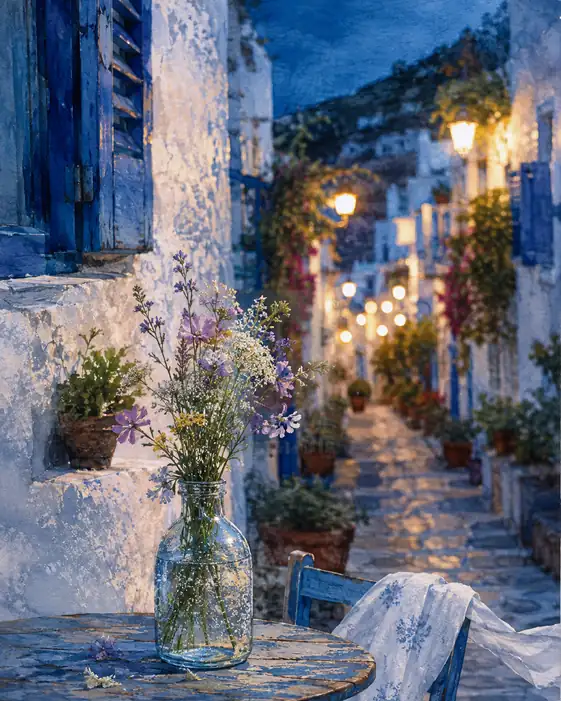 Mediterranean Evening Whispers on the Table
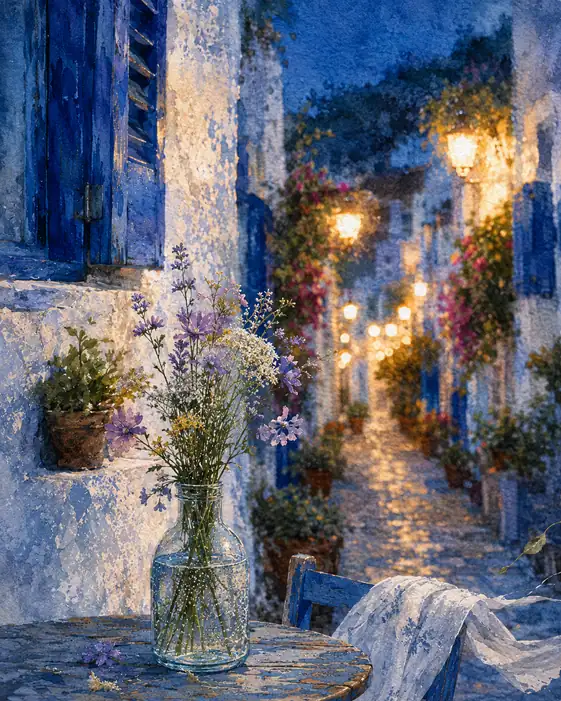 Evening Terrace with Wildflowers and Glowing Lamps
 Cherry Blossom Petals on the Evening Puddle
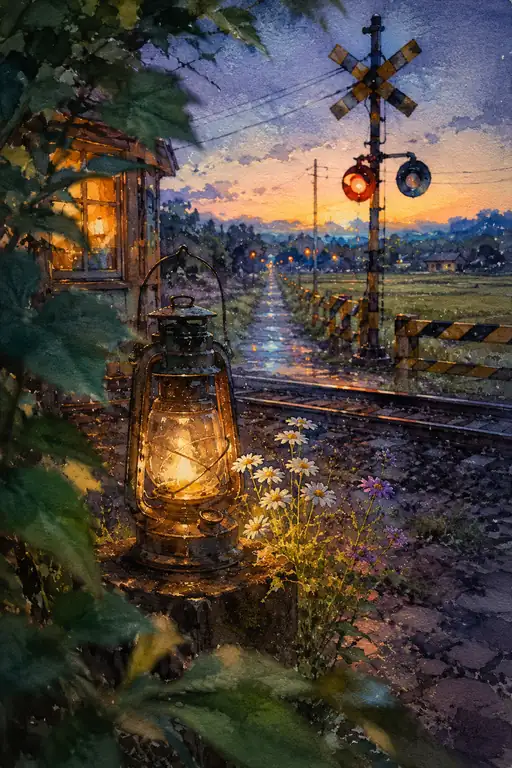 Wild Daisies by the Twilight Crossing
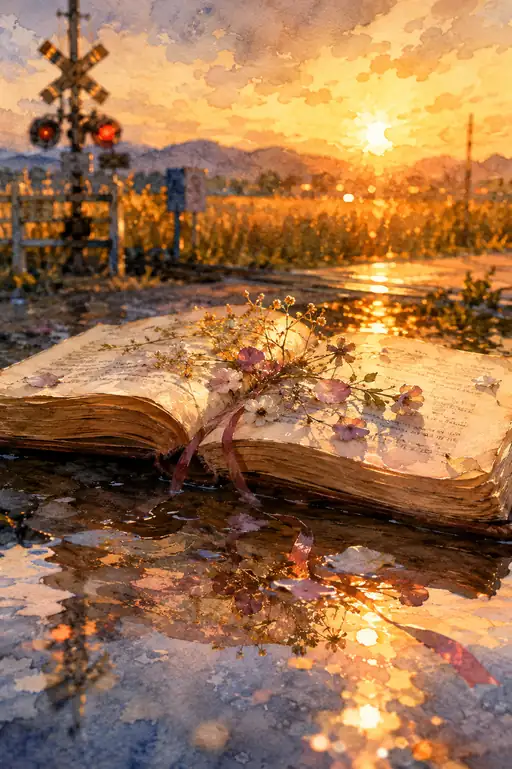 Forgotten Verses on the Sunlit Railway Water
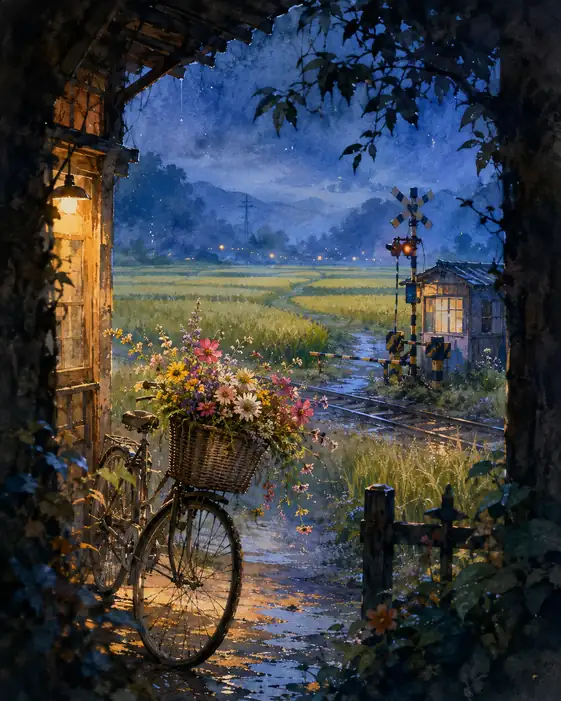 Nocturne Delivery Basket by the Station
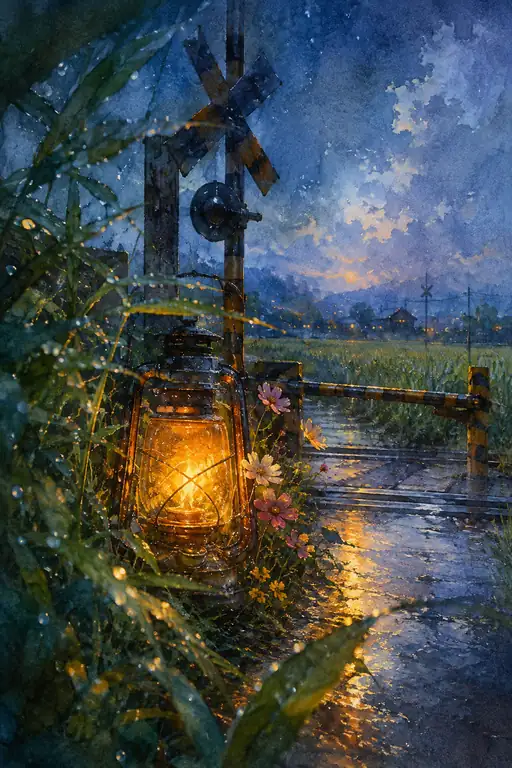 Raindrop Lamp by the Evening Railway
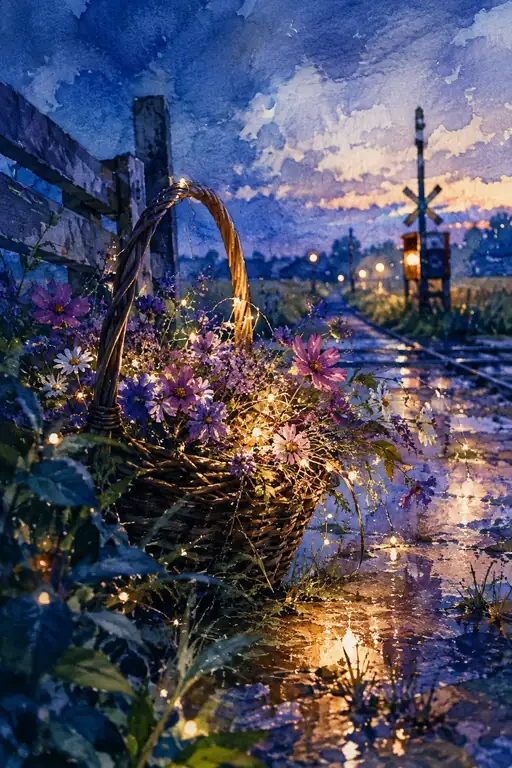 Twinkling Cosmos by the Railroad Track