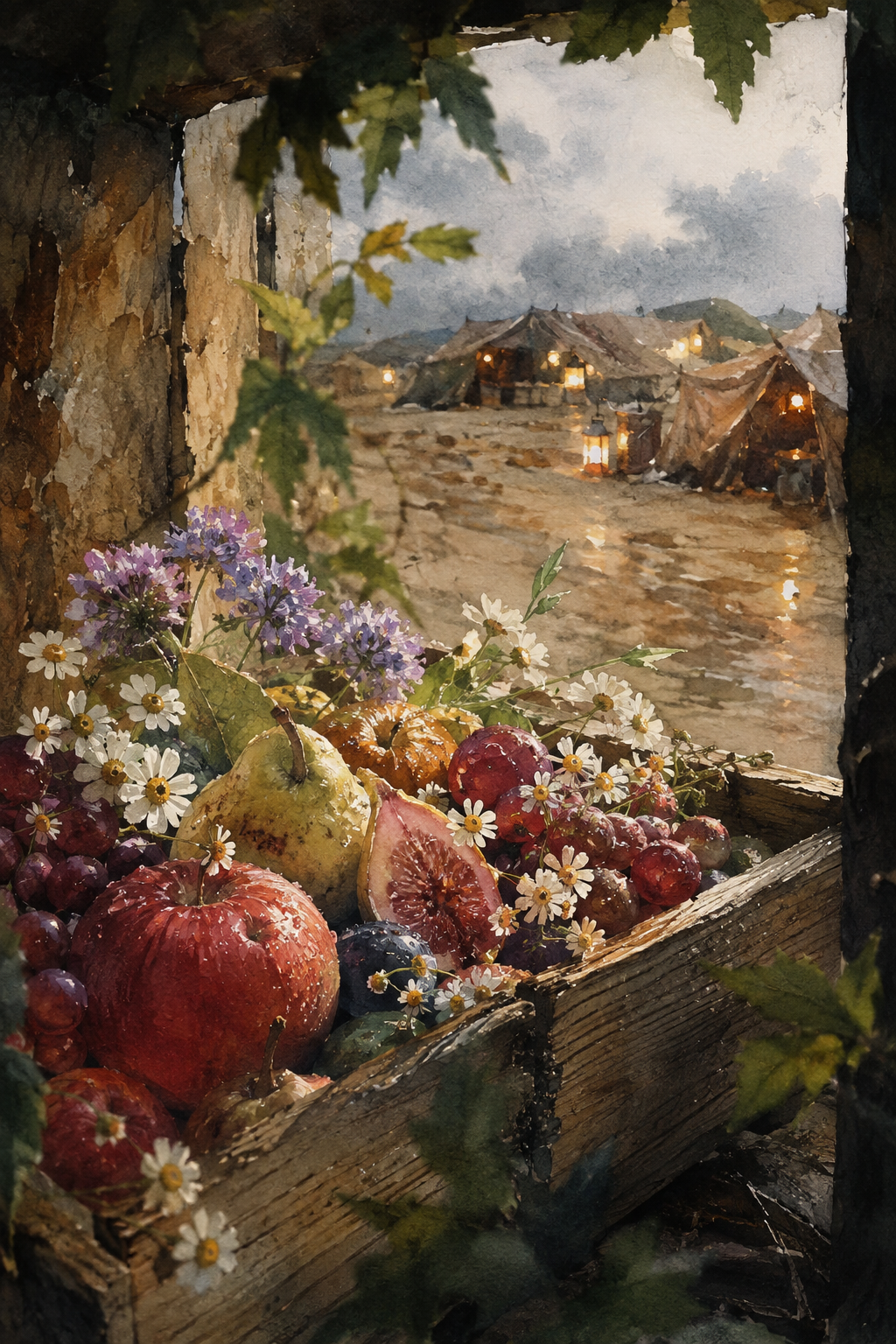
Window Still Life Before the Nomad Village
Critique
Introduction A crate of rain-bright fruit and wildflowers fills a rough window opening onto a temporary camp. The painting brings harvest abundance into dialogue with canvas shelters and muddy ground, making nourishment feel both sensuous and socially necessary. Description The wooden crate occupies the lower foreground, packed with red apples, purple grapes, a mottled pear, figs, other fruit, white daisies, and lavender flower clusters. Damp leaves frame the opening above and below. Beyond lies a muddy lane lined with brown-gray tents and scattered lanterns beneath heavy pale clouds and low hills. The stone or timber jambs are dark and weathered. Analysis The crate’s rectangle repeats the window opening but tilts forward, offering its contents toward the viewer. Rounded fruit forms make a dense foreground rhythm against the angular tents. White daisies bridge near harvest and distant lamps through repeated bright points. Warm reds and browns concentrate below; muted gray, olive, and cream govern the camp. Sharp droplets, seeds, and wood grain contrast with softened shelters, creating depth through focus. Interpretation and Evaluation The fruit may be provisions, gift, or communal offering, and its position at the threshold connects private storage to collective need. A cut fig reveals interior richness while the muddy camp shows exposure and scarcity. Abundance is romanticized, yet bruised skins, cracked wood, rain, and tangled flowers prevent sterile display. The unseen giver or recipient keeps the social exchange open. Conclusion The work succeeds by making still life and landscape mutually explanatory. The camp gives the fruit ethical weight; the fruit gives the camp warmth and sustenance. Framed between shelter and open weather, the crate becomes a promise that beauty can also be useful.
Same Subcategory
Similar Artworks
 Golden Harvest in the Cloistered Sun
 Moonlit Still Life Above the Coast
 Sun-Drenched Harvest of the Abbey Garden
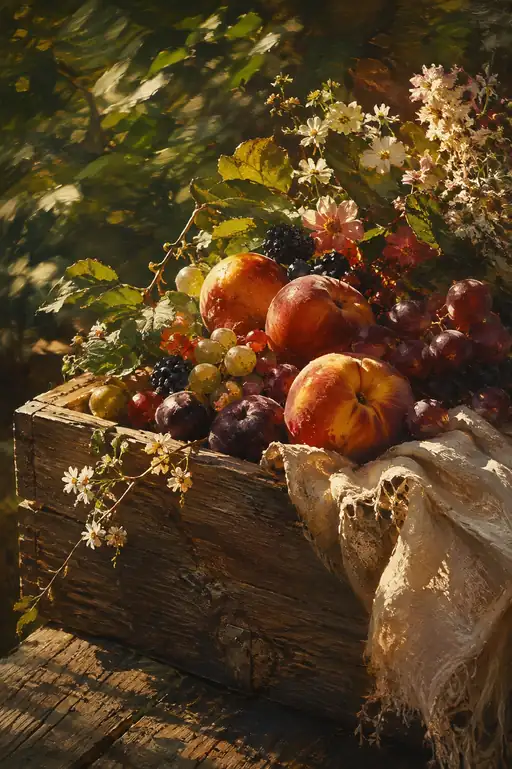 Rustic Wooden Box of Autumn Blessings
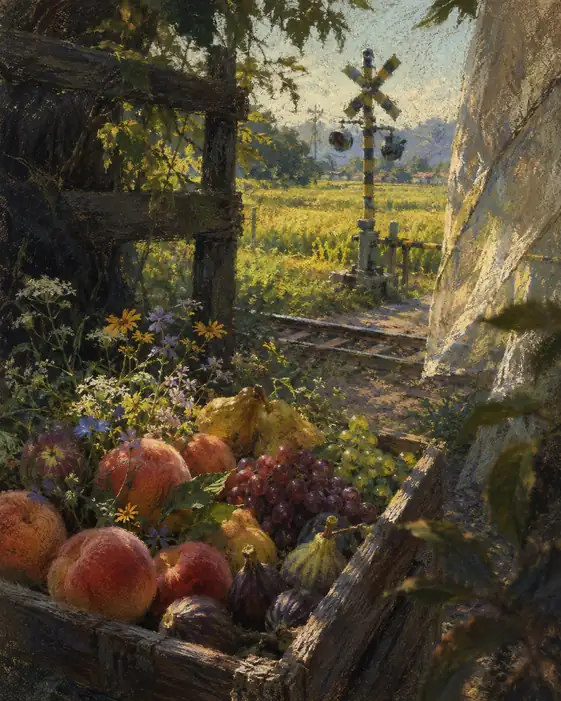 Autumn Harvest Beside the Rural Crossing
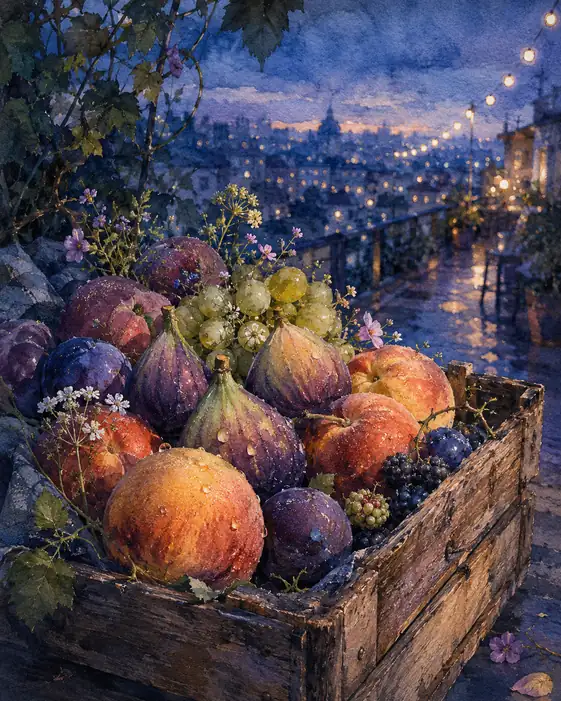 Night View from the Rain-Washed Terrace and a Fruit Box Filled with Figs
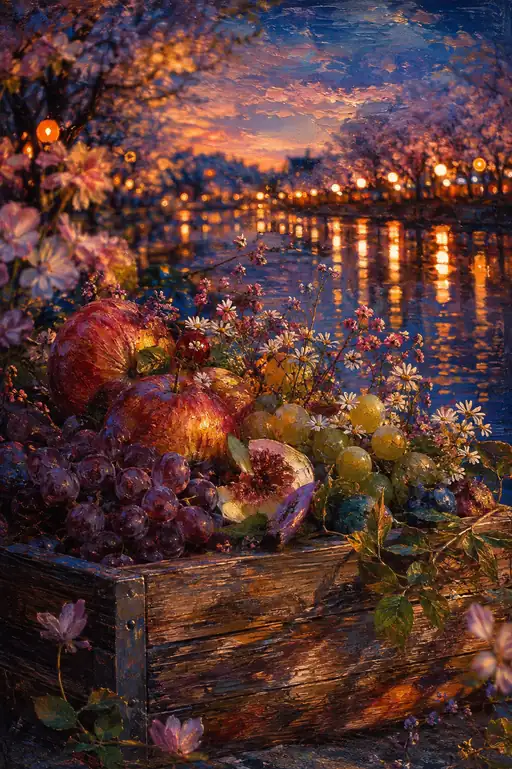 Twilight Harvest by the Blossomed Riverside
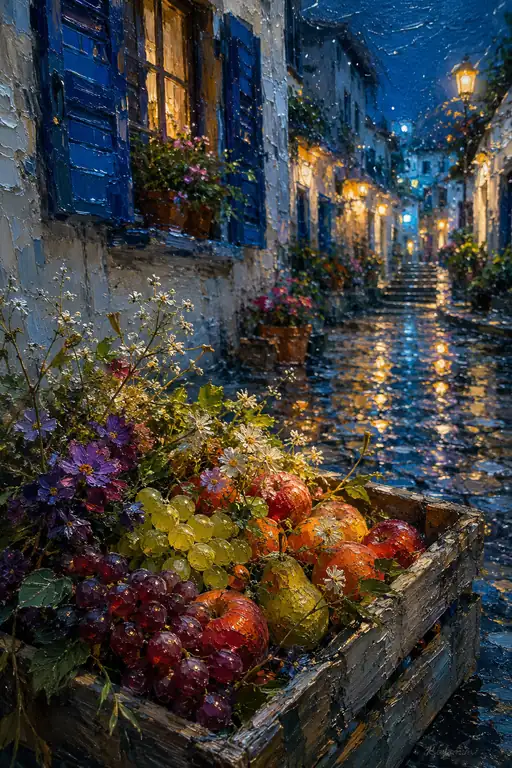 Crates of Abundance at the Lane's Foot
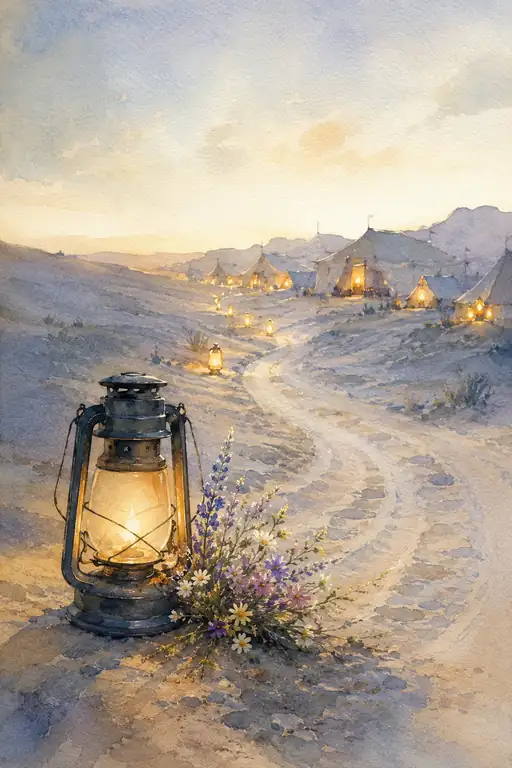 Trail of Golden Lanterns Across the Dunes
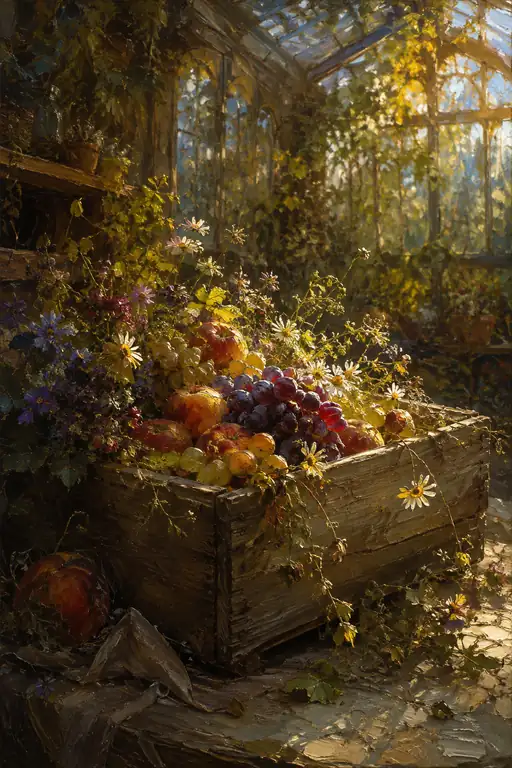 Autumn Overflows the Forgotten Crate