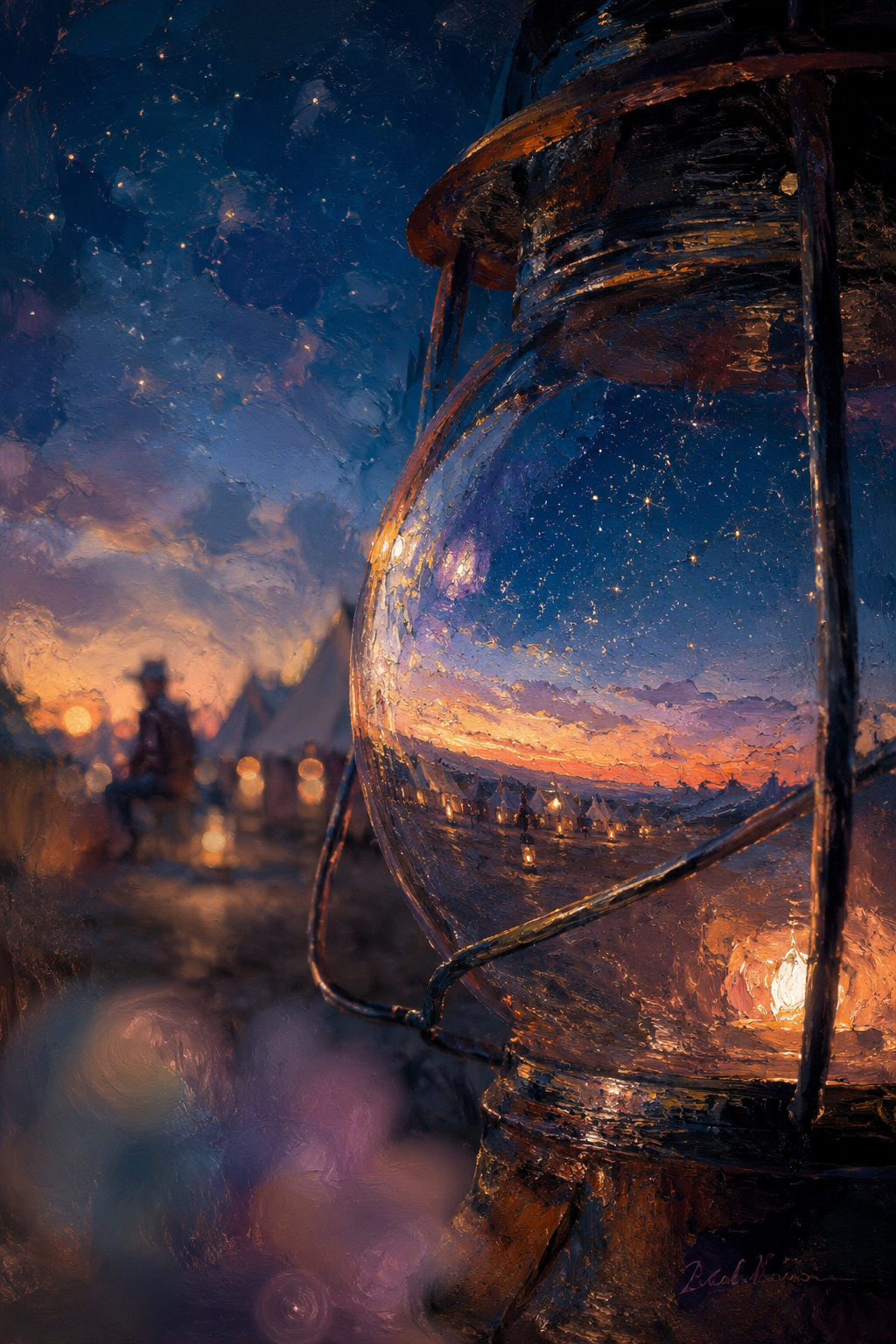
Sunset Horizon Sealed in the Traveler's Lantern
Critique
Introduction An enormous weathered lantern fills the right half of a twilight camp, its curved globe reflecting tents, lights, horizon, and stars. A blurred figure beyond the glass adds human scale and turns the object into a vessel of place and memory. Description The lantern is cropped at top, right, and bottom, revealing a soot-dark cap, vertical metal supports, rounded glass, and a flame at lower right. Across the globe stretches a miniature encampment beneath an orange-purple horizon and starry blue. At left, outside the reflection, an indistinct standing figure in a hat occupies a field of tents and bokeh lights. Violet and amber circles blur along the bottom. Analysis The globe’s bulging contour dominates, bending the reflected horizon and compressing the camp into a luminous band. Metal bars cut strong diagonals and verticals across this curved optical space. Sharp stars and tiny tents inside the glass contrast with the softened person and camp beyond, reversing expected depth hierarchy. Indigo, violet, and orange circulate between reflection and world. Scraped highlights and dark abrasion make the lantern materially heavy despite its transparent center. Interpretation and Evaluation The lamp seems to preserve the settlement it serves, transforming illumination into recollection. The blurred figure may be approaching, departing, or watching; lack of detail makes the person a measure of distance rather than a fixed character. A universe-like reflection risks decorative fantasy, yet soot, rust, thick framing, and the low practical flame retain credibility. Conclusion The painting makes seeing through glass inseparable from remembering through it. Its lantern is tool, mirror, and portable archive. By rendering the reflection sharper than the surrounding world, the image persuasively suggests that held impressions can outlast immediate presence.
Same Subcategory
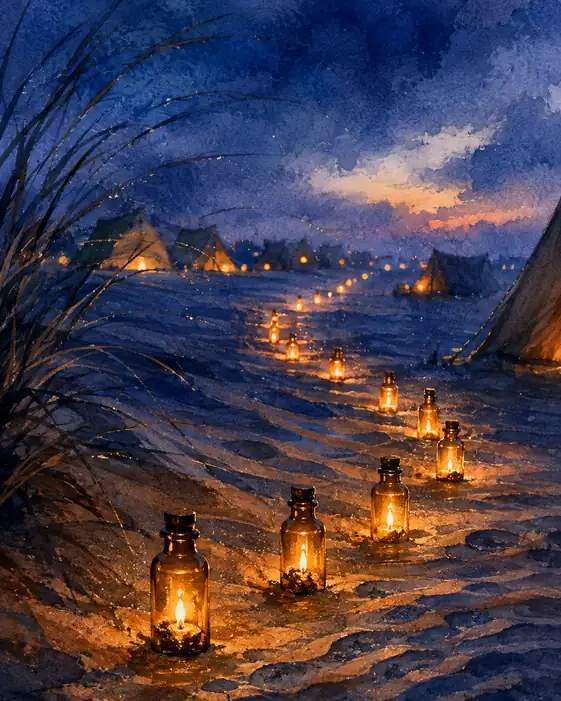 Trail of Amber Candles Along the Sandy Shore
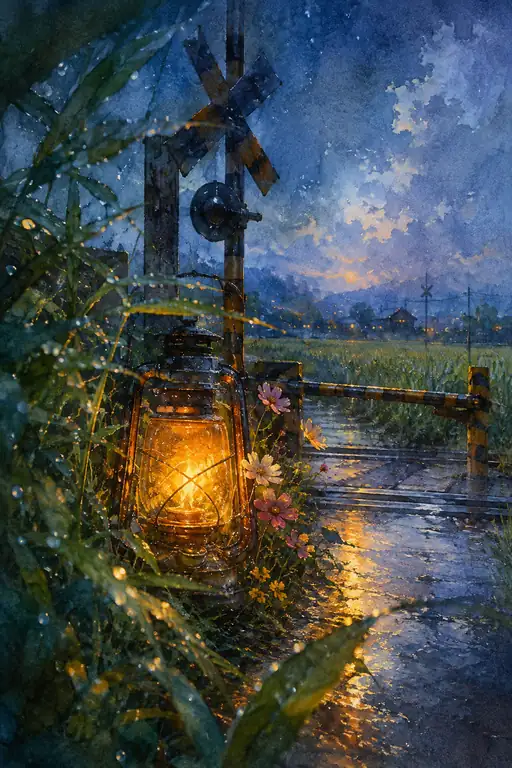 Raindrop Lamp by the Evening Railway
Similar Artworks
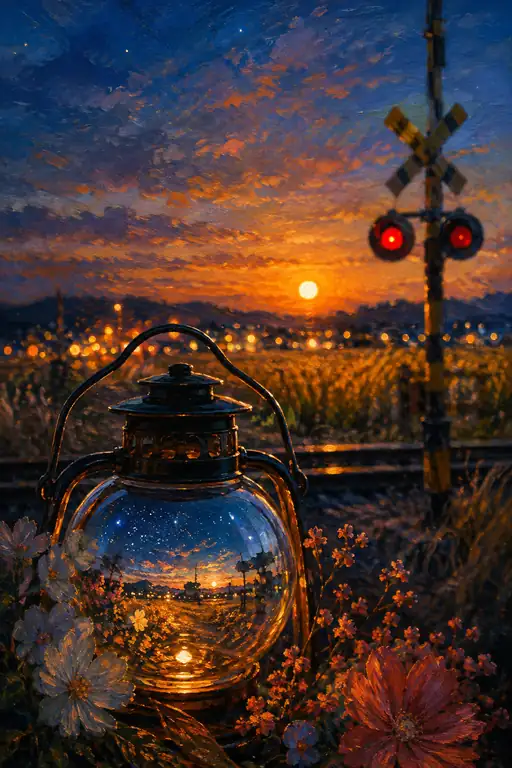 Sunset Cosmos Reflected in the Railroad Lantern
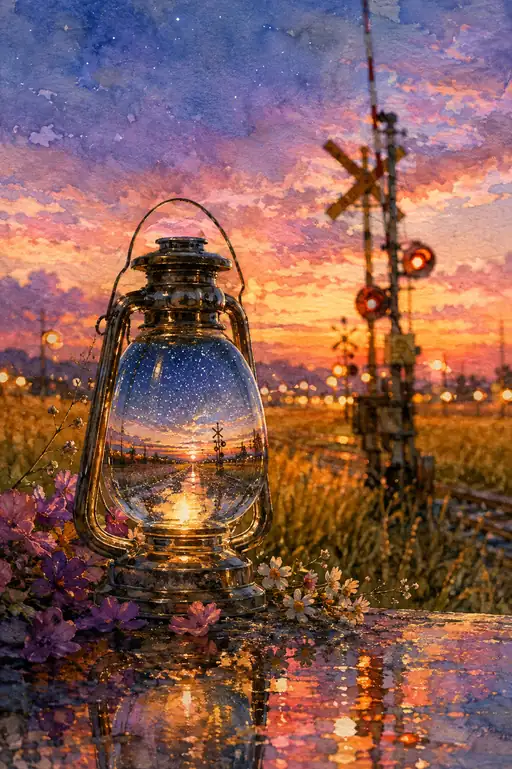 Sunset Train Path Captured in Glass
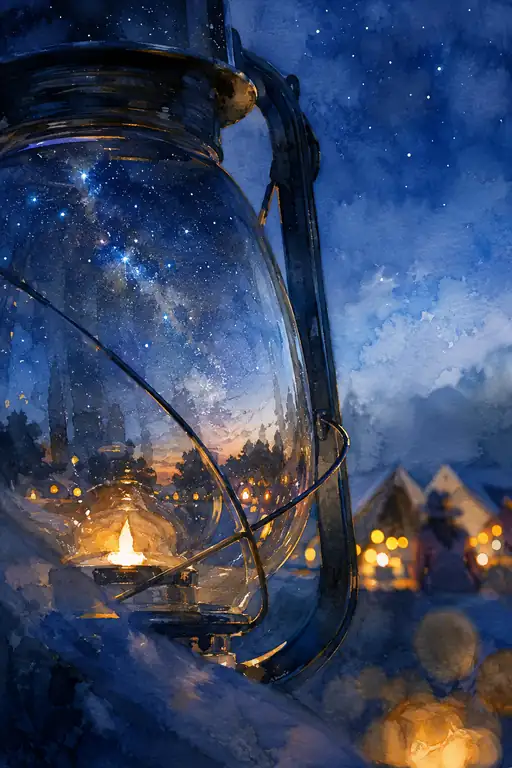 Galaxy Captured in the Traveler's Lamp
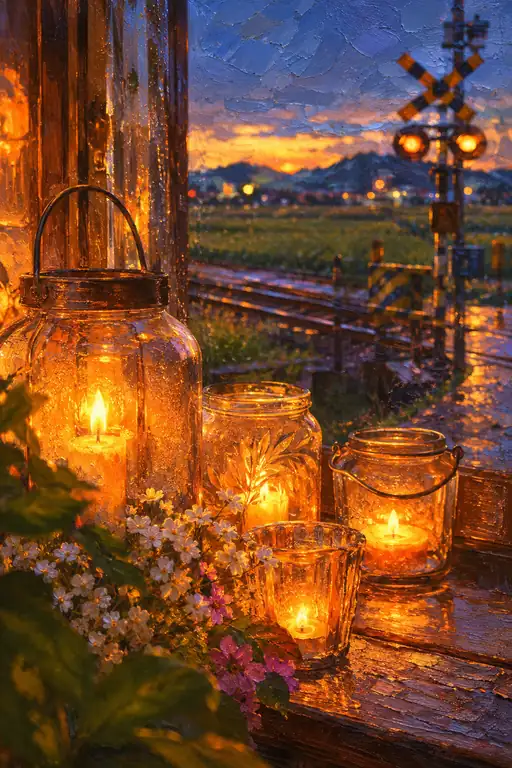 Warm Glow by the Rain-Drenched Crossing
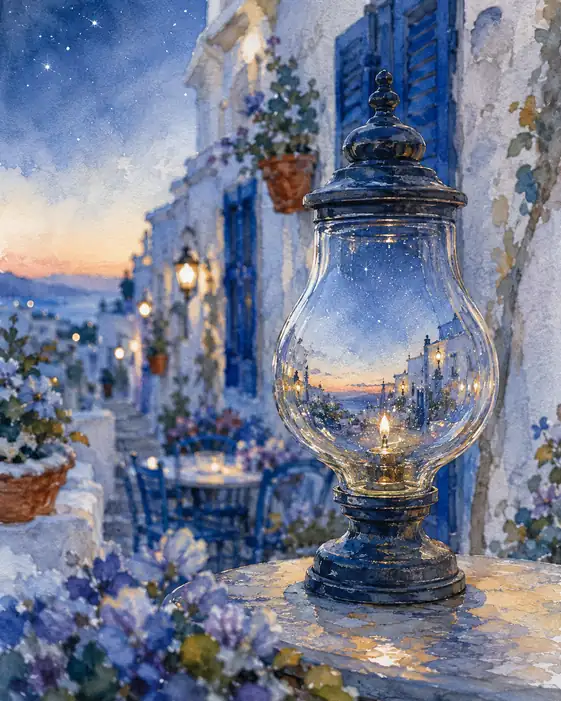 Twilight Captured in a Glass Orb
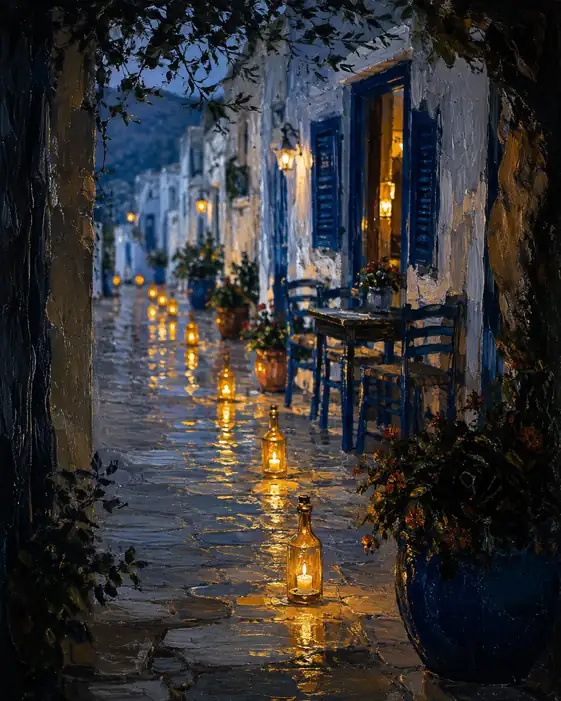 Trail of Small Flames Guided Home
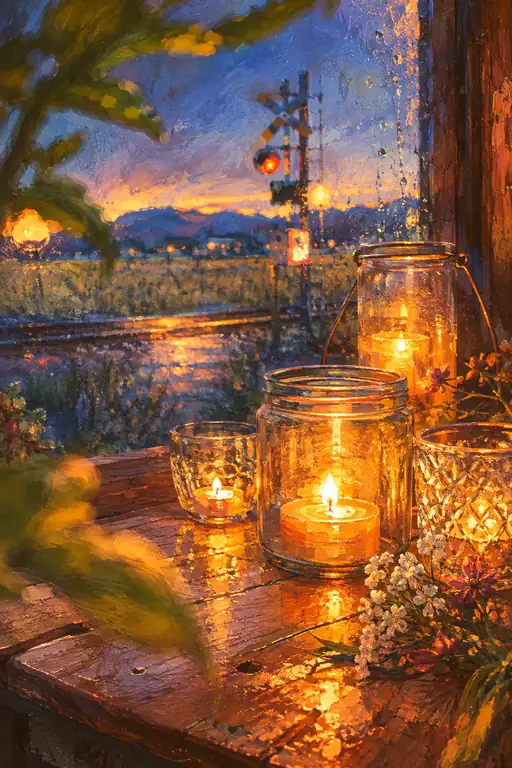 Twilight Candles on the Country Station Sill
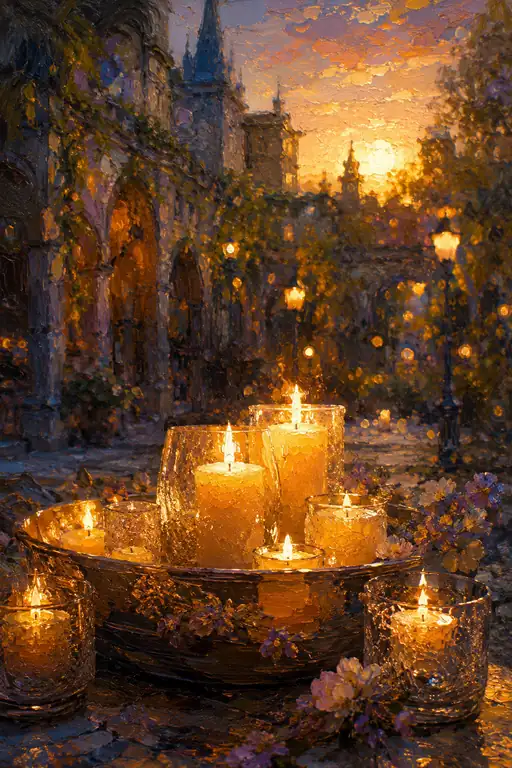 Bowl of Golden Flames in the Twilight Garden
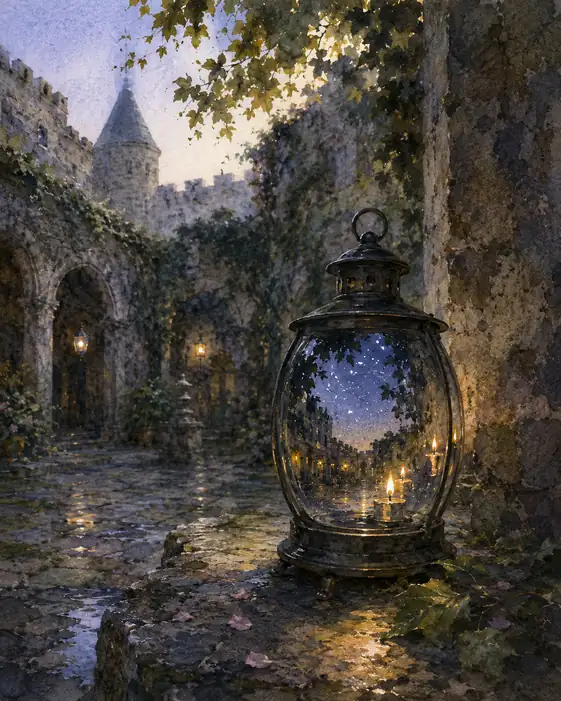 Starry Realm Within the Cloister Lantern
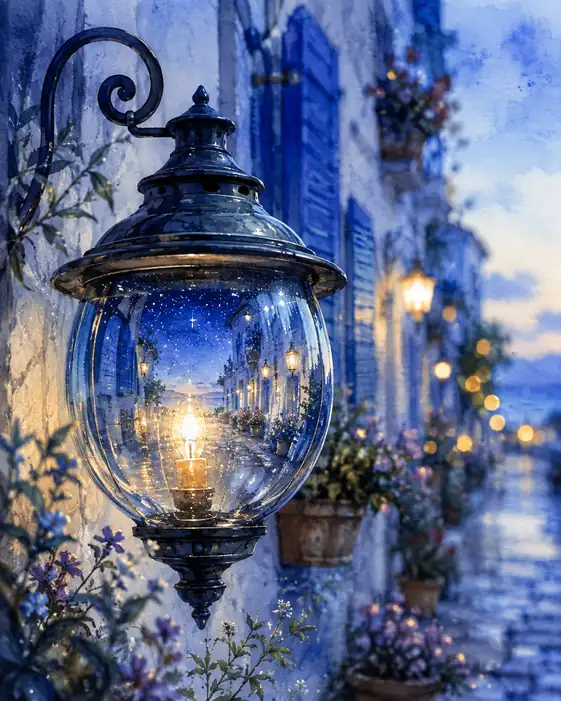 Sanctuary of Starlight in Glass