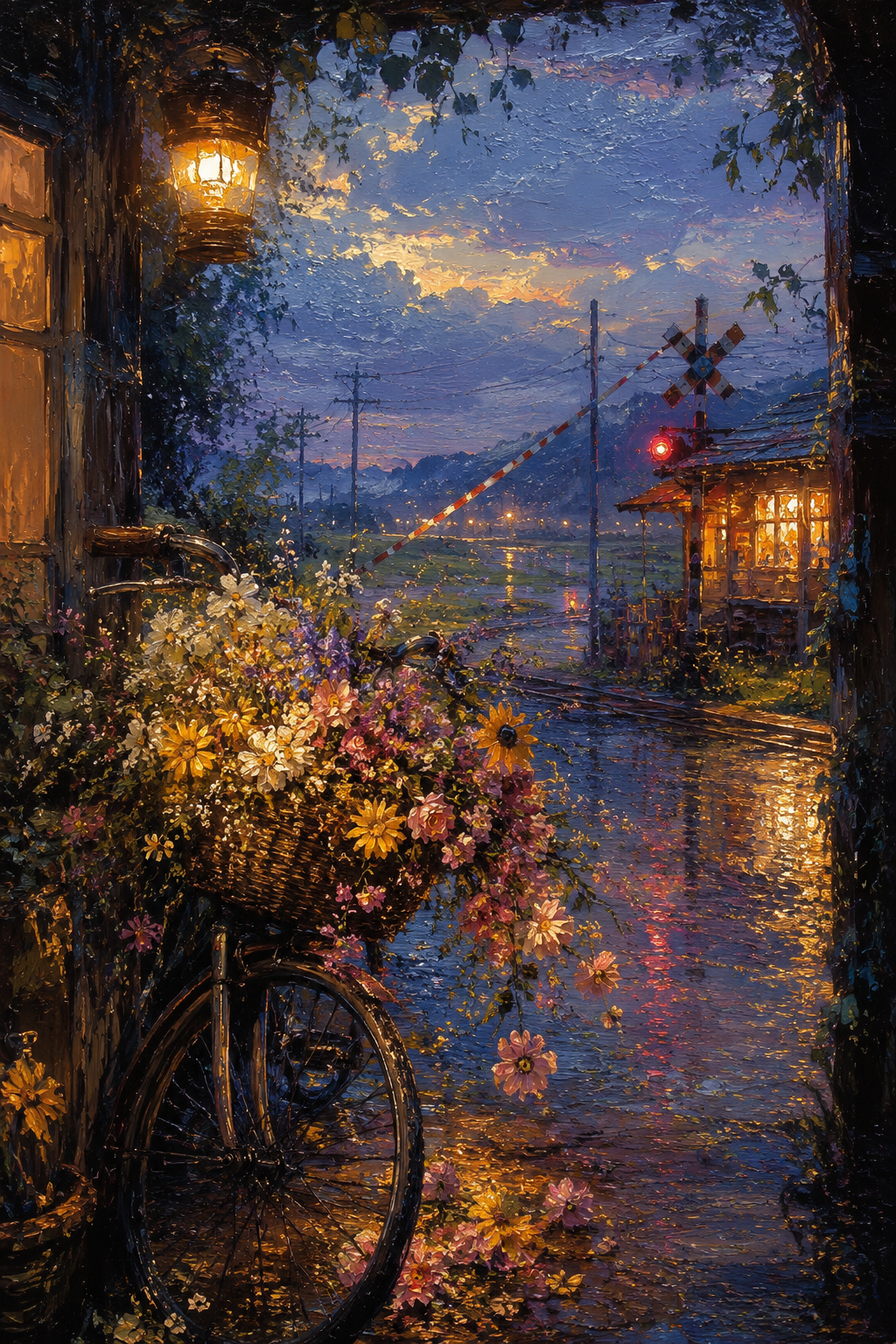
Evening Bell and Blossoming Bicycle by the Station
Critique
Introduction A flower-laden bicycle waits in a doorway beside a wet railway crossing. The painting joins rural transit, shelter, and bloom, using the threshold view to make departure and return equally present. Description The bicycle fills the lower left, its front wheel, handlebars, and wicker basket partly hidden in shadow. White, yellow, pink, and purple flowers overflow the basket and trail onto the ground. A large hanging lantern glows above; a lit window frames the left edge. Outside, wet rails cross the path beneath a raised barrier and red signal. A small signal hut shines at right against violet mountains and evening sky. Analysis The dark arch around the scene acts as a deep frame, intensifying the blue-orange exterior. The bicycle wheel supplies a strong circle against signal posts and barrier diagonals. Flowers bridge interior shadow and open path through both color and physical spill. Amber repeats from lantern to hut, track reflections, and distant lamps; blue governs sky, road, and foliage. Thick reflective strokes lengthen light across the wet ground, while the bicycle remains a crisp foreground anchor. Interpretation and Evaluation The parked bicycle suggests a journey paused at the boundary. Its excessive flowers could signify delivery, welcome, or remembrance, and fallen blossoms imply time already passing. The raised barrier permits movement, but the red signal complicates that permission, sustaining anticipation. Romantic richness is grounded by mud, soaked metal, worn wood, and the wheel’s practical weight. Conclusion The work succeeds by making a transport crossing emotionally habitable. Machine, flowers, and shelter are not opposites: each carries or protects something. The doorway positions the viewer at the moment before choosing whether to remain inside or follow the glistening route outward.
Same Subcategory
Similar Artworks
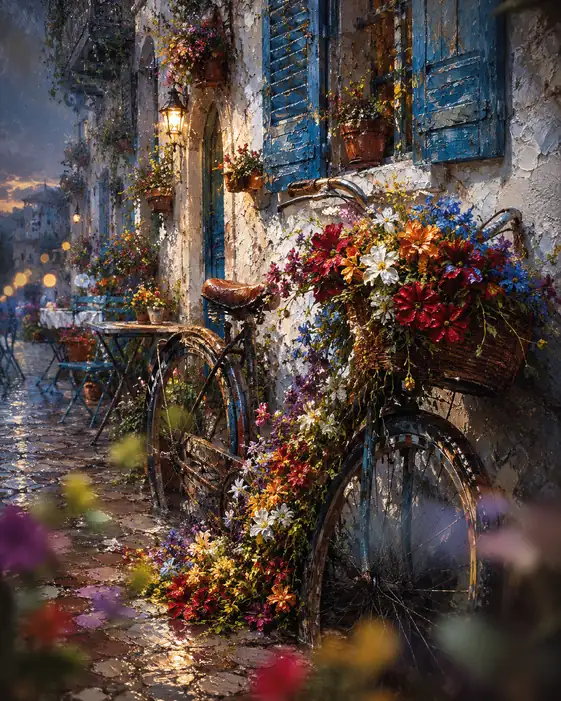 Flower-Laden Bicycle by the Twilight Shutter
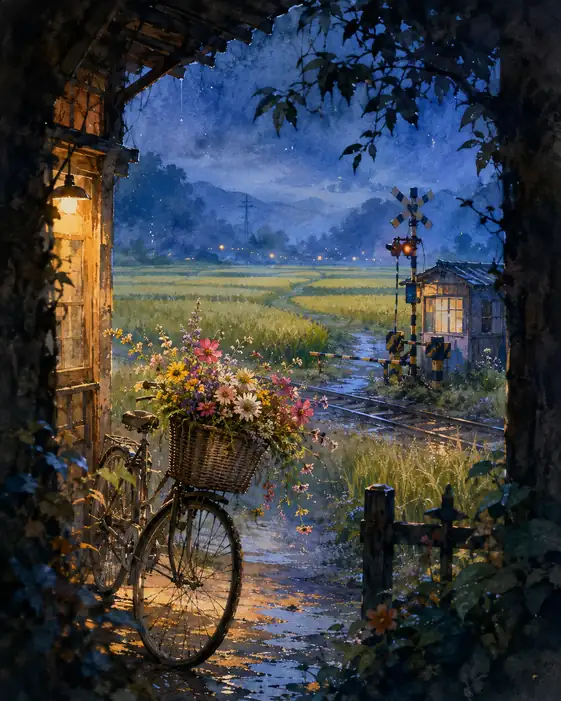 Nocturne Delivery Basket by the Station
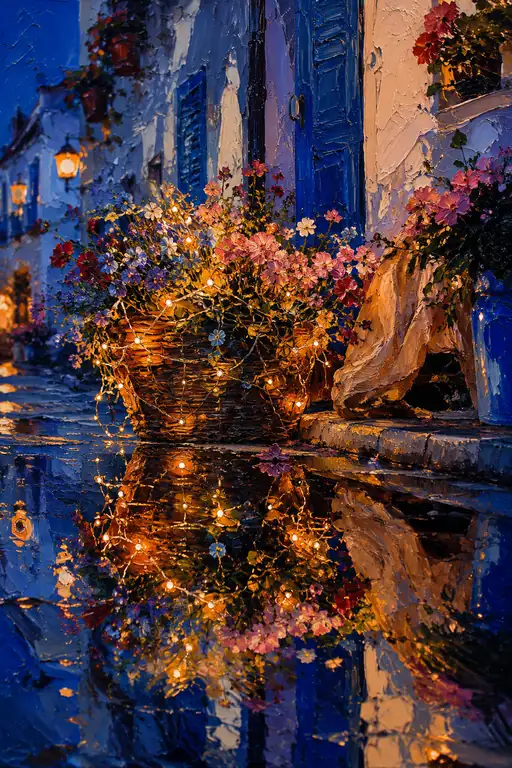 Sparkling Night Blooms Mirrored in the Rain
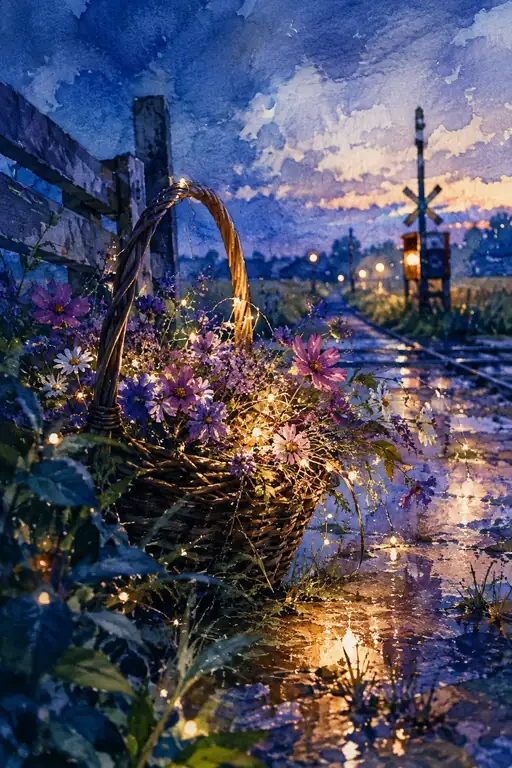 Twinkling Cosmos by the Railroad Track
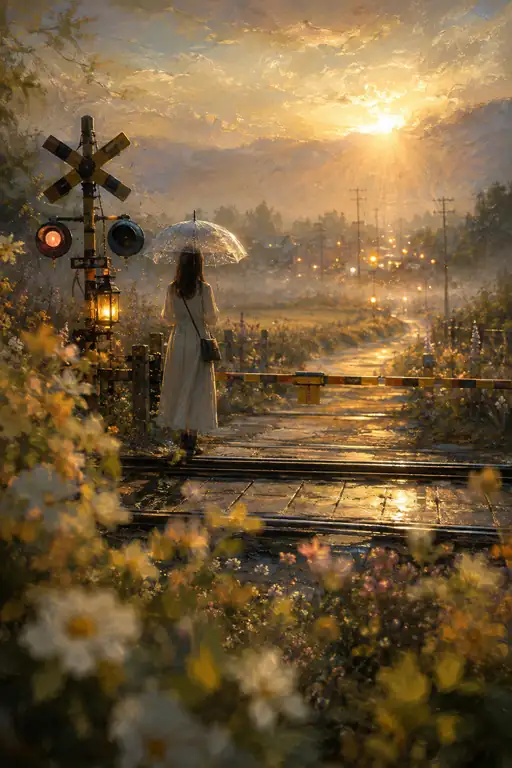 Clear Umbrella Beneath the Sunlit Crossing
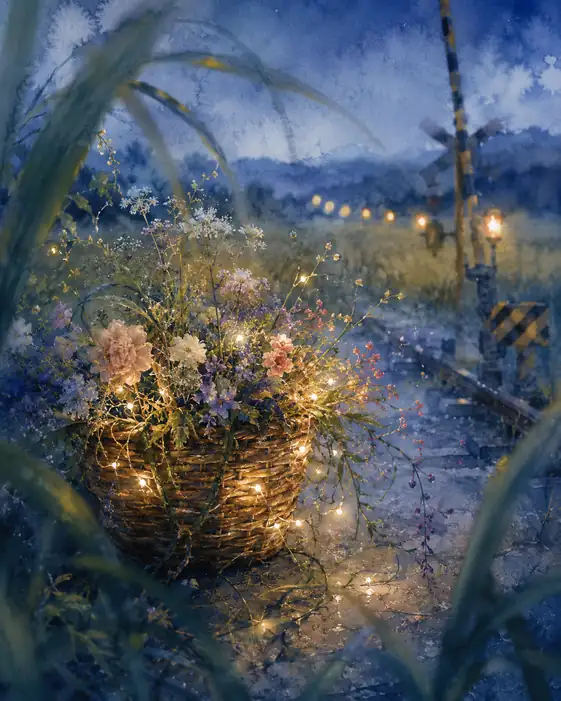 Fairy Lights in the Twilight Grass
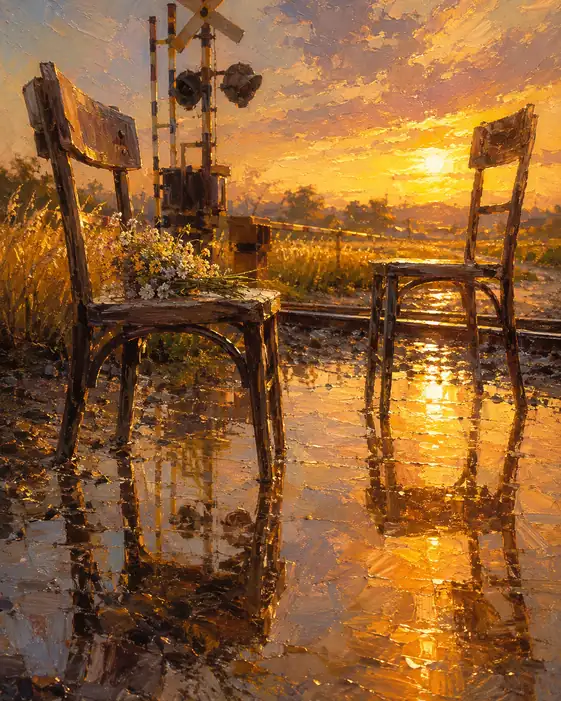 Sunset Soliloquy at the Rural Crossing
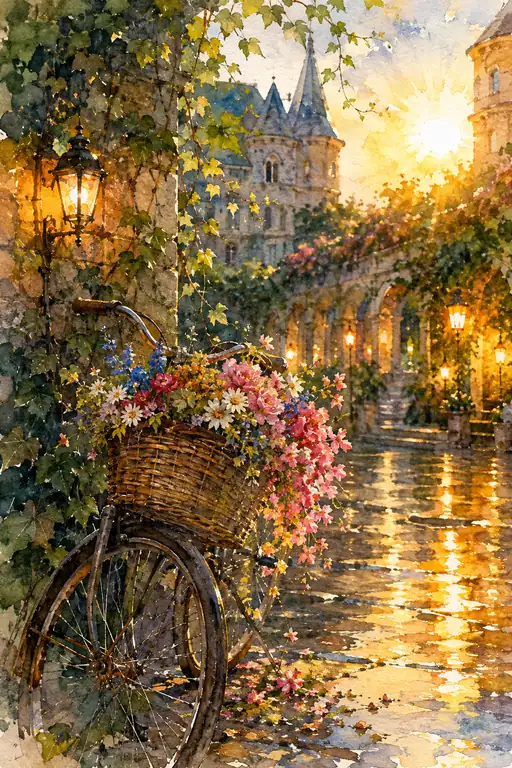 Morning Delivery Through the Golden Courtyard
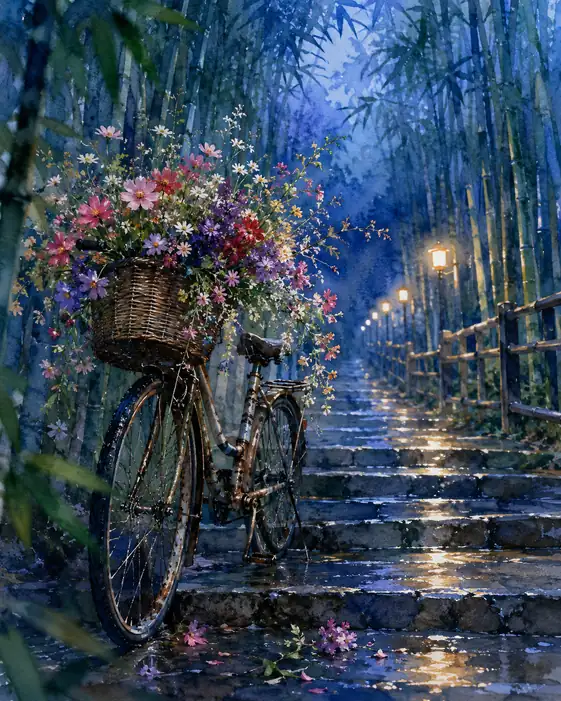 Silence on the Rain-Kissed Bamboo Steps
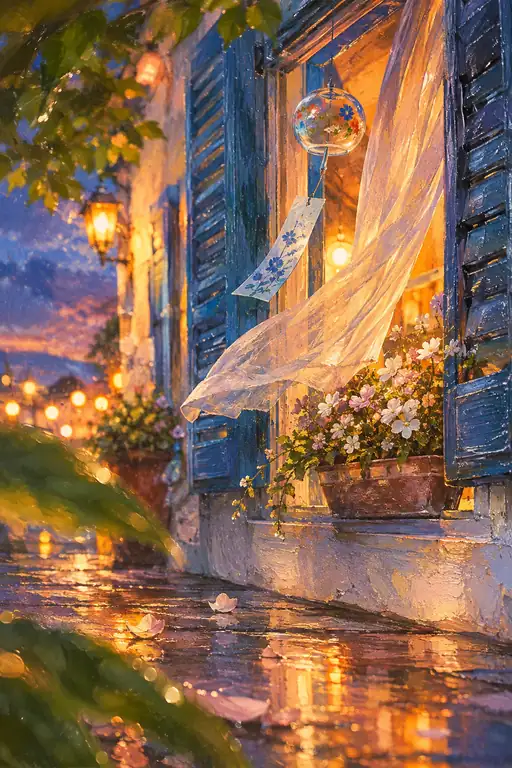 Evening Air Carried on Chimes