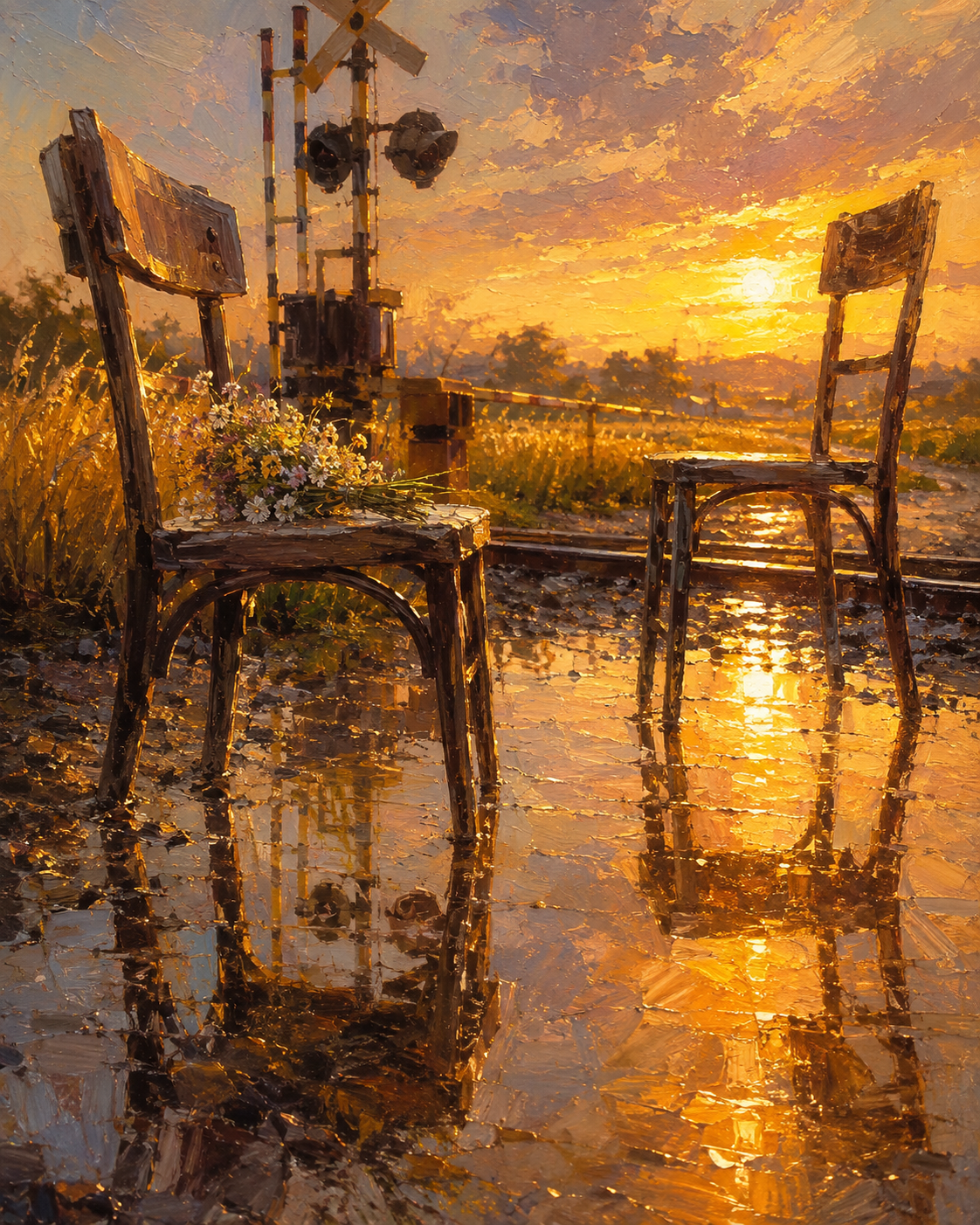
Sunset Soliloquy at the Rural Crossing
Critique
Introduction Two worn wooden chairs stand beside a railway crossing at sunset, one bearing a freshly gathered bouquet. The painting converts a utilitarian boundary into a quiet theater of waiting, absence, and possible reunion. Description The left chair sits close and slightly angled, with daisies, purple flowers, and long green stems laid across its seat. A second bare chair stands farther right. Rails pass behind them beneath a crossing mast with paired round signals and raised crossbuck. Wet ground mirrors chair legs and blazing gold sky. Fields, grasses, trees, and a distant vehicle-like shape recede toward the sun. Analysis The unequal chairs form a conversational pair across an open gap. Their rectangular backs and curved lower braces echo signal geometry while remaining visibly handmade. Low sun aligns near the right chair and stretches reflections downward, doubling both absence and presence. Gold dominates sky and water; dark brown silhouettes supply structure, and small violet blossoms introduce cool contrast. Thick directional strokes unify cloud, wood, grass, and puddle without erasing their forms. Interpretation and Evaluation The bouquet assigns a personal history to one seat, while the empty partner leaves the encounter unresolved. A crossing is designed for delay, so the chairs amplify waiting from seconds into emotional duration. The raised barrier permits passage, yet no one moves. Intense sunset could become sentimental, but splintered wood, signal hardware, wet mud, and asymmetry preserve tension. Conclusion The work succeeds by placing human-scale furniture against systems of travel. Flowers suggest care, rails imply departure, and the second chair keeps return imaginable. Reflection enlarges this modest arrangement into a compelling meditation on who has arrived and who remains awaited.
Same Subcategory
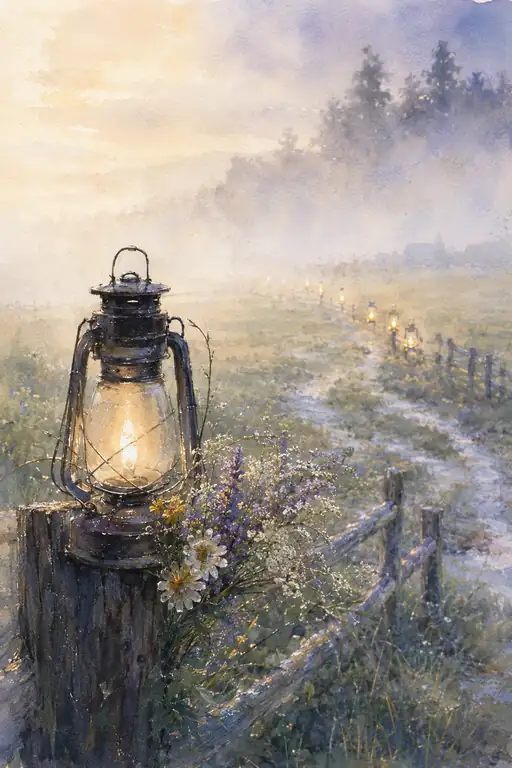 The Lanterns Know the Way Through Morning Mist
Similar Artworks
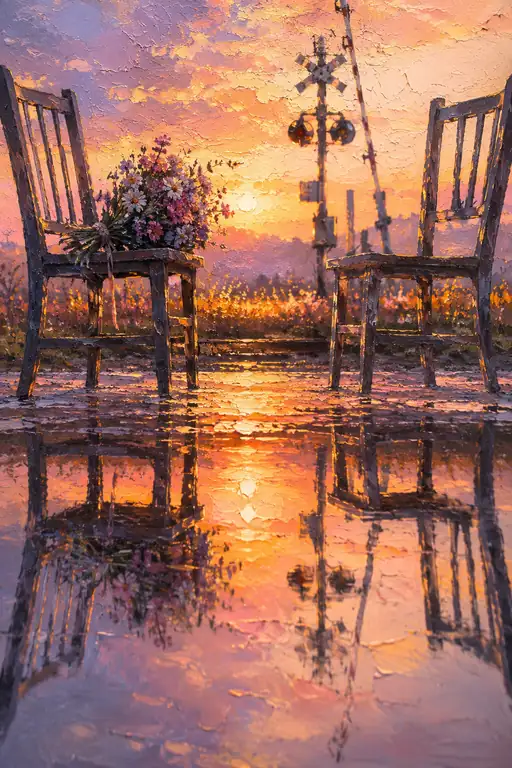 Sunset Bouquet on the Crossing Chairs
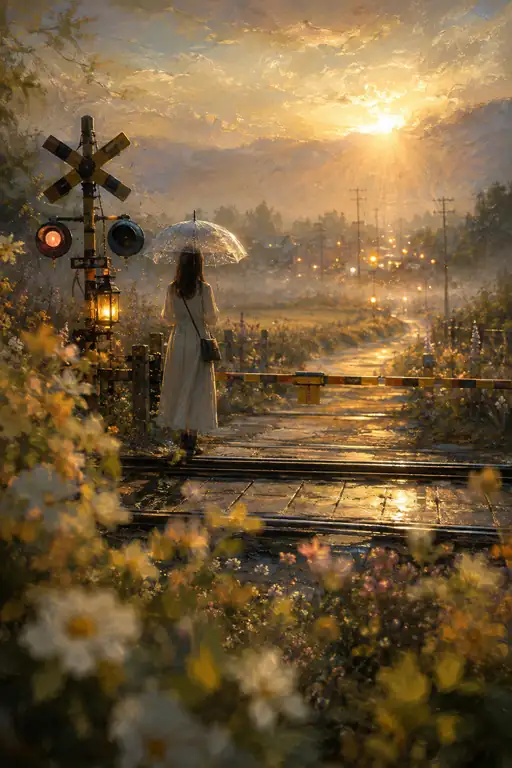 Clear Umbrella Beneath the Sunlit Crossing
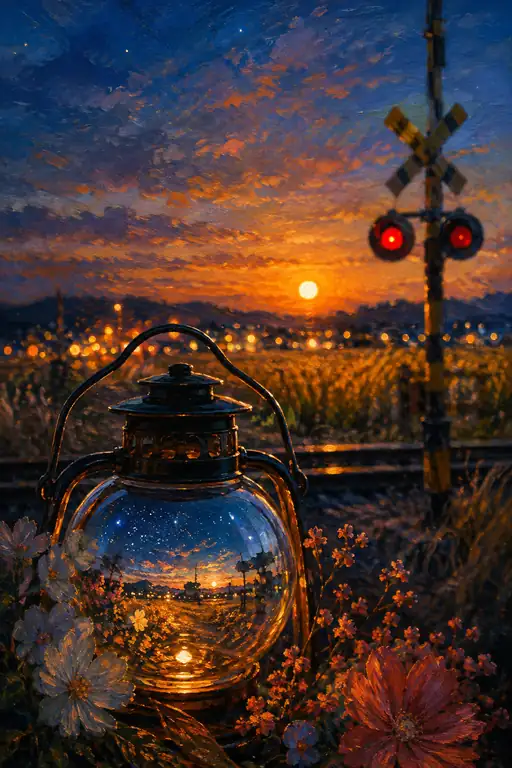 Sunset Cosmos Reflected in the Railroad Lantern
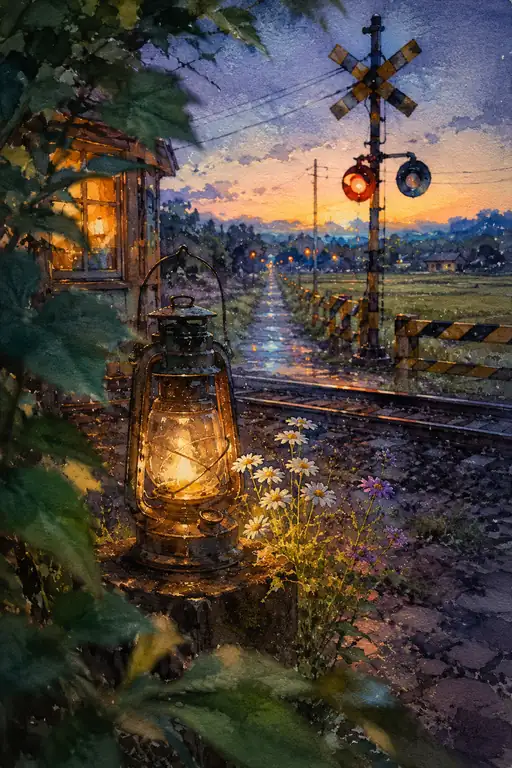 Wild Daisies by the Twilight Crossing
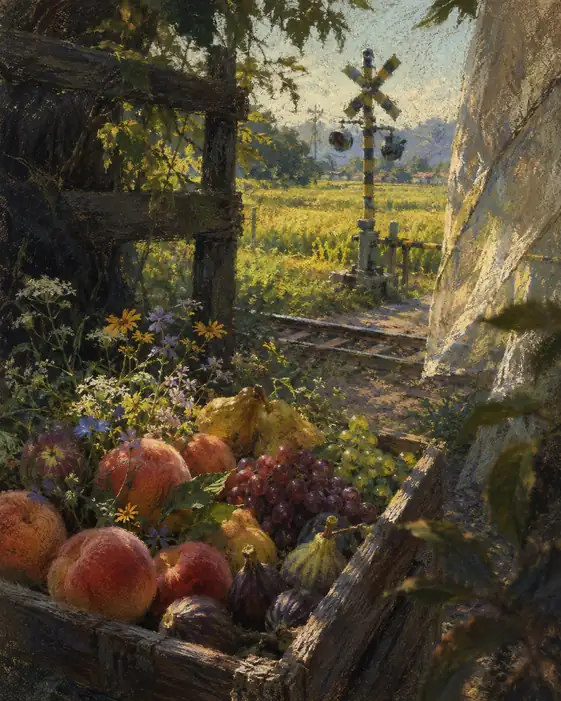 Autumn Harvest Beside the Rural Crossing
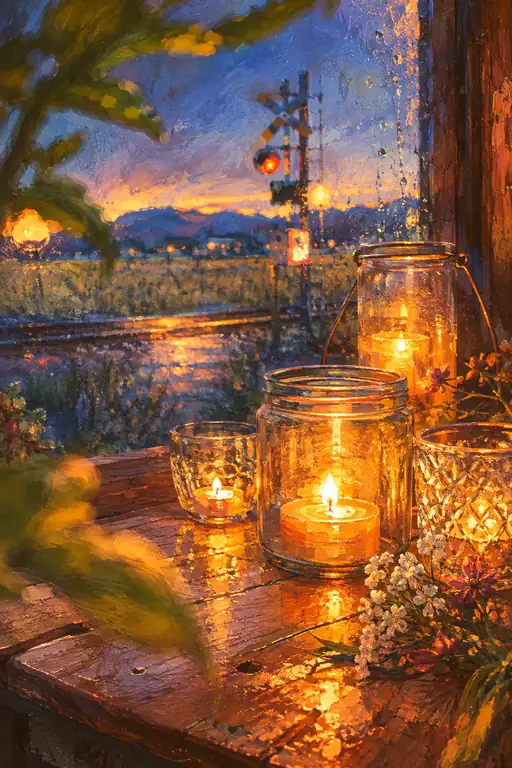 Twilight Candles on the Country Station Sill
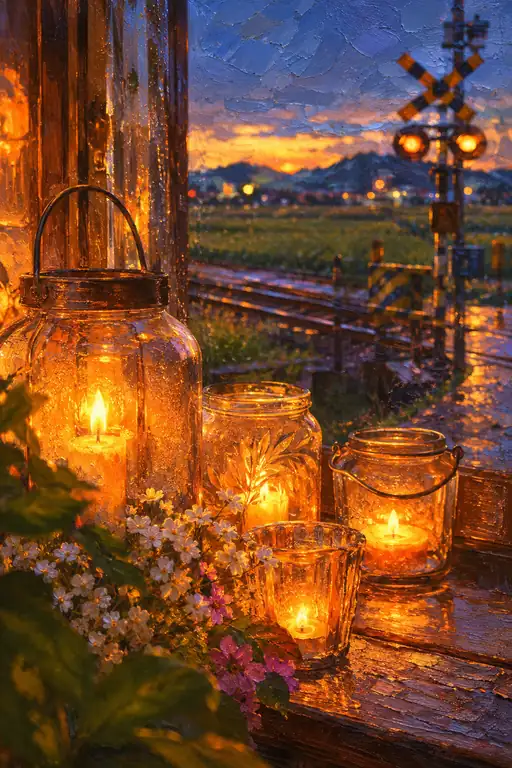 Warm Glow by the Rain-Drenched Crossing
 An Unspoken Promise on Cobalt Wood
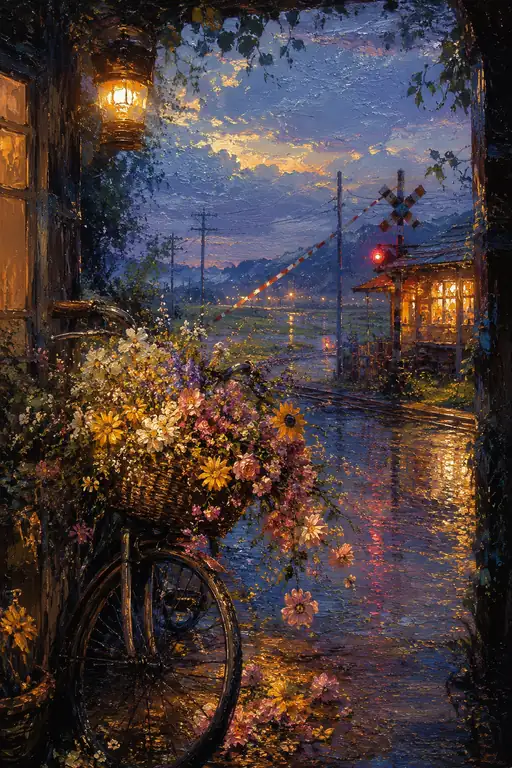 Evening Bell and Blossoming Bicycle by the Station
 Golden Dusk Aboard the Flower Boat