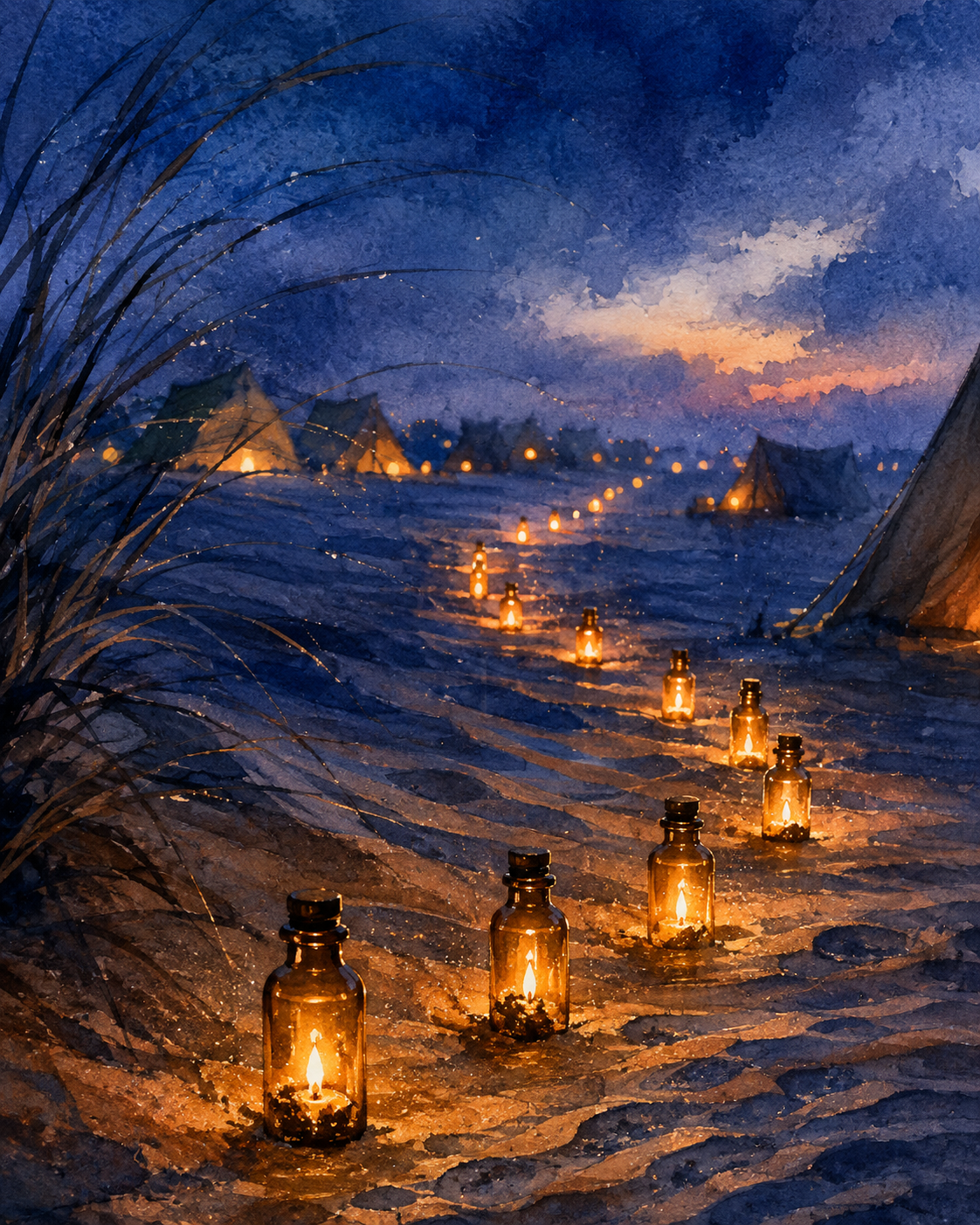
Trail of Amber Candles Along the Sandy Shore
Critique
Introduction A winding procession of candlelit bottles leads through a blue night toward scattered tents. The watercolor turns repeated humble containers into a social pathway, balancing enchantment with the rough exposure of an open encampment. Description Three large corked bottles occupy the lower foreground, each holding a bright flame above dark material at its base. More bottles diminish in a loose S-curve toward tents on both sides and a cluster of shelters at the horizon. Tall grasses arc inward from the left, and a tent edge enters at right. Heavy indigo clouds open to a narrow peach band. Analysis Scale reduction and alternating placement make the lights function as stepping-stones in depth. Their S-curve counters the diagonal sweep of windblown grasses and the broad horizontal sky. Amber is concentrated within glass and nearby ground, while blue-violet dominates everything else. Sharp bottle necks and highlights in front become soft points far away. Granulating washes roughen the terrain; clear glass rims and repeated black corks give the sequence material consistency. Interpretation and Evaluation Each bottle protects a vulnerable flame, making the route an image of care distributed through darkness. Because the path connects separate tents, light becomes communal infrastructure rather than isolated decoration. The absence of figures allows viewers to imagine themselves following it. Numerous glowing vessels risk picturesque excess, yet uneven spacing, exposed ground, and heavy weather preserve effort and uncertainty. Conclusion The painting makes guidance cumulative: no single flame masters the night, but together the bottles create passage. Its strongest effect is ethical as well as visual, presenting safety as a chain of small, maintained gestures leading toward shared shelter.
Same Subcategory
Similar Artworks
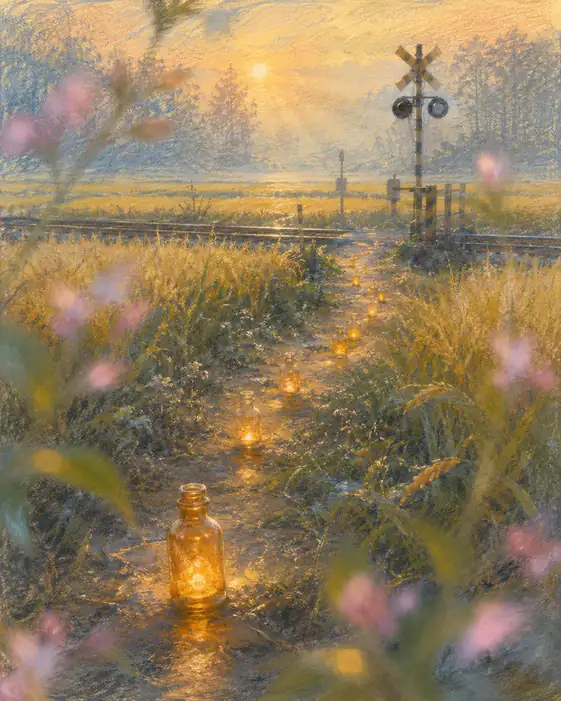 Path of Morning Glow Bottles Across the Field
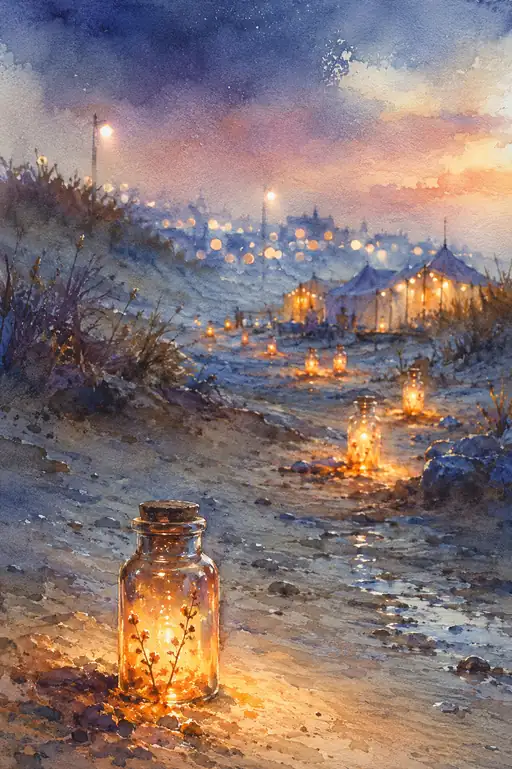 Guiding Firefly Bottles along the Twilight Trail
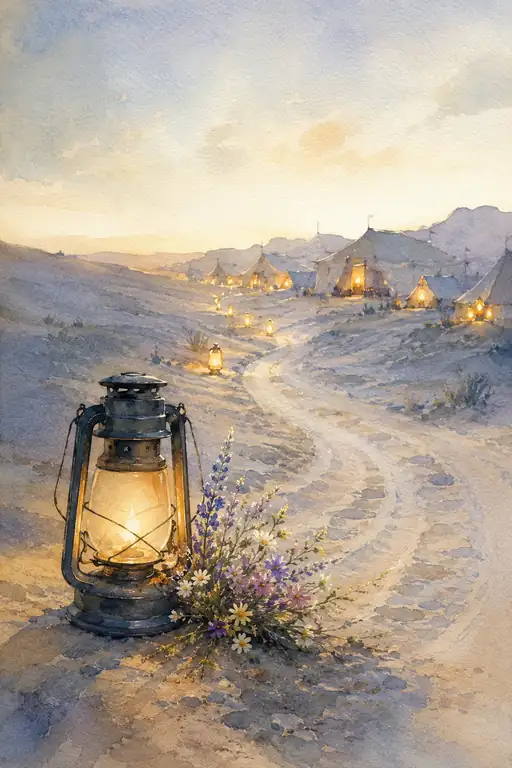 Trail of Golden Lanterns Across the Dunes
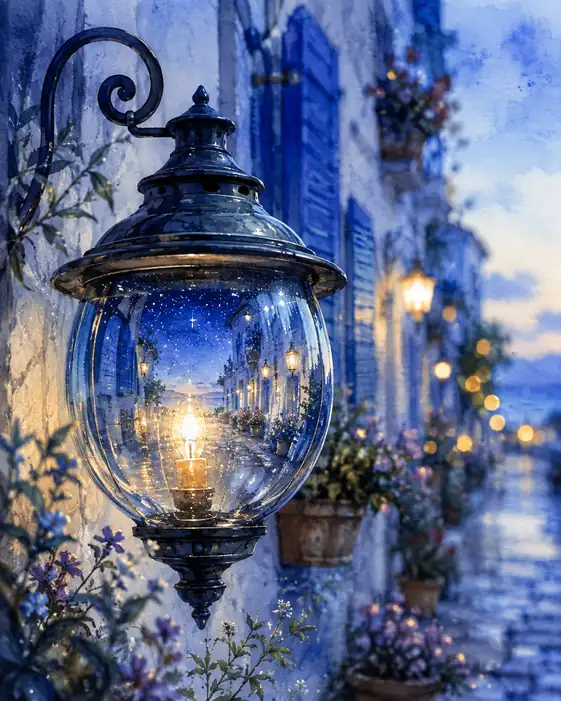 Sanctuary of Starlight in Glass
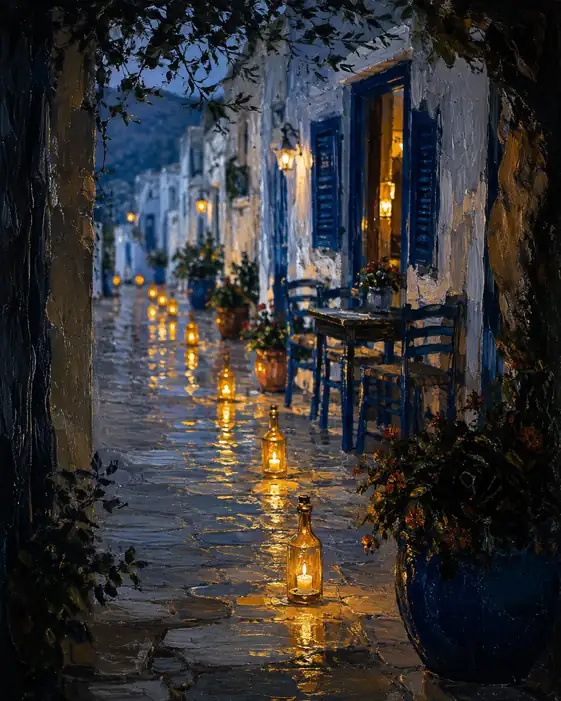 Trail of Small Flames Guided Home
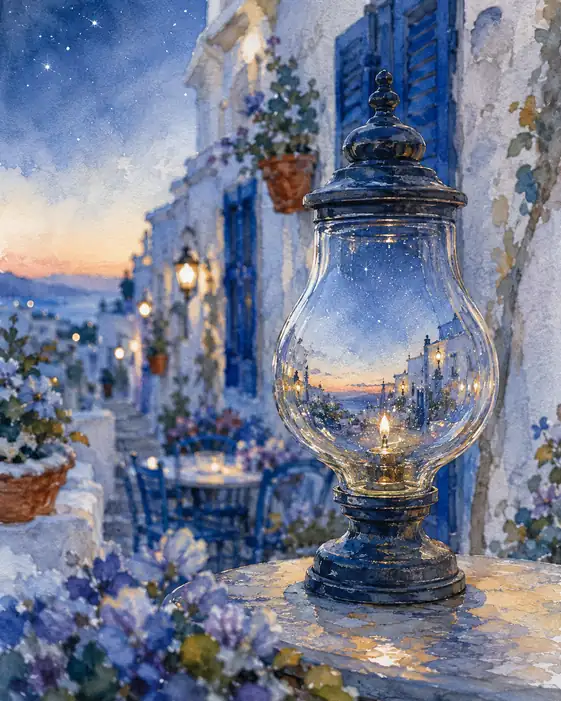 Twilight Captured in a Glass Orb
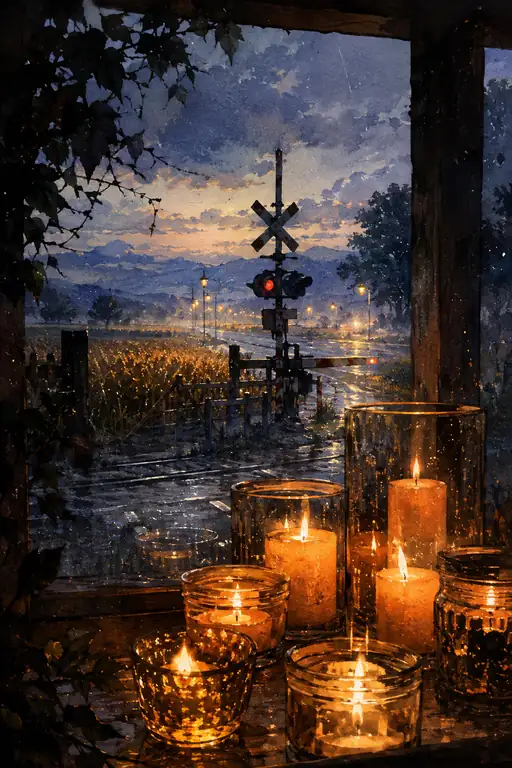 Candles by the Window Overlooking the Track
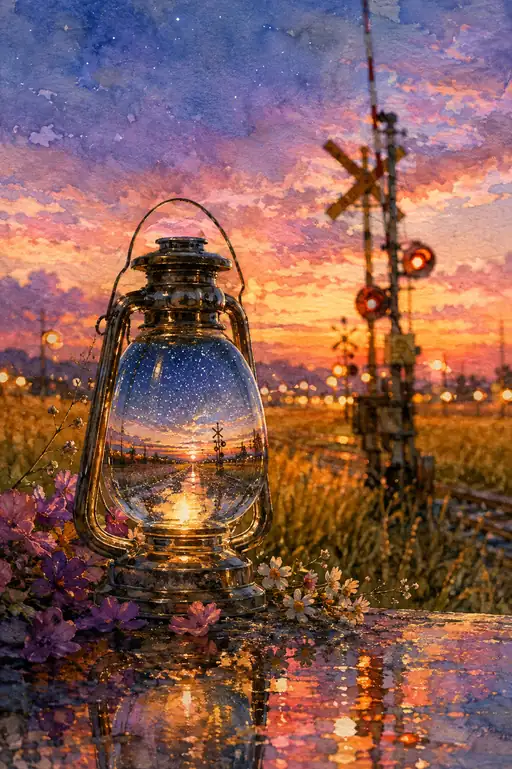 Sunset Train Path Captured in Glass
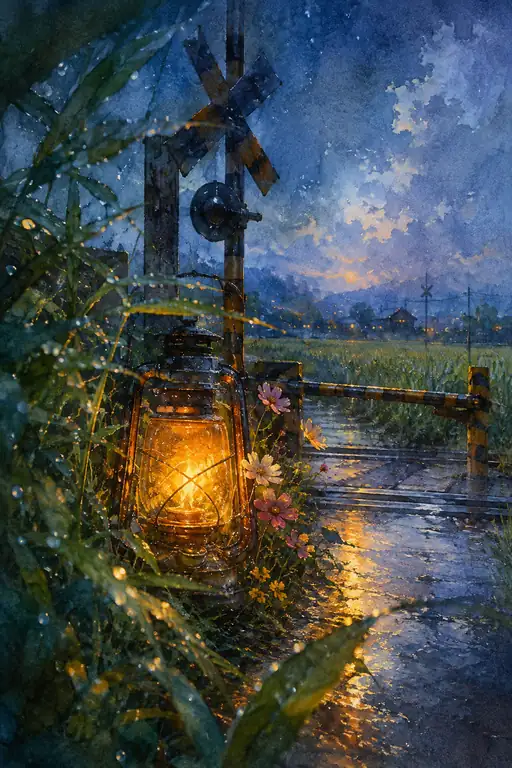 Raindrop Lamp by the Evening Railway
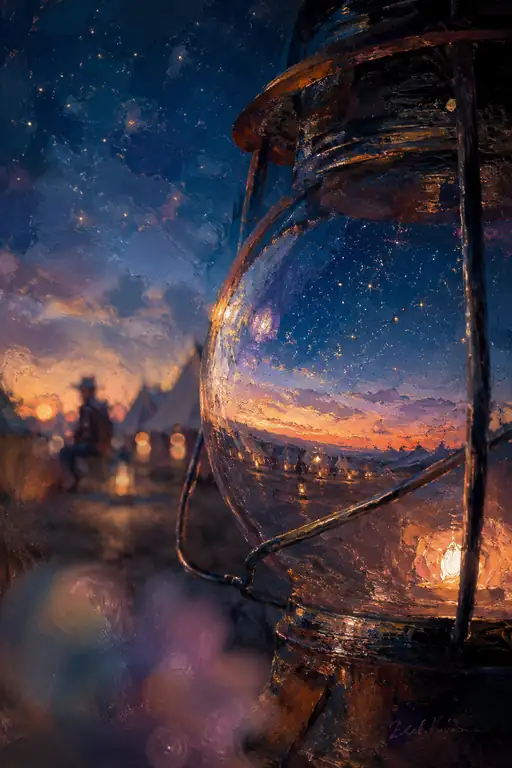 Sunset Horizon Sealed in the Traveler's Lantern