
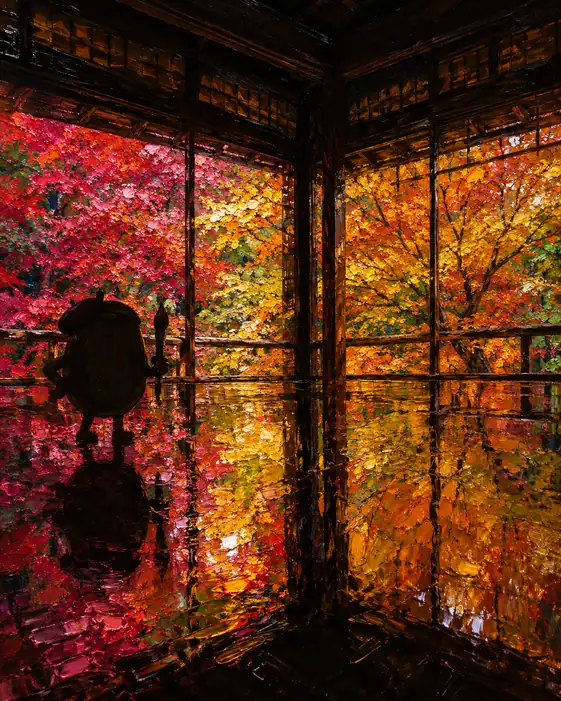
Crimson Harmony on the Polished Floor
Critique
Introduction An empty pavilion corner opens evenly toward red and golden autumn trees, with a glossy floor doubling both views. Compared with a frontal vista, this low, intimate angle emphasizes the meeting line between two walls and two chromatic climates. Description Dark beams and amber clerestory panes crown a central corner post. Crimson foliage fills the left bay; orange and yellow leaves, crossed by fine branches, fill the right. Low railings define the open perimeter. The lower half is a continuous dark floor reflecting both gardens, their colors meeting around the post’s black mirrored line. No object interrupts the surface. Analysis The central corner creates a shallow V whose two sides receive nearly equal visual weight. Broad horizontal rails stabilize the inward pull, while slanting branch lines keep the exterior active. Red reflection is cooler and more magenta than its source; gold reflection becomes coppery and broken. These shifts prevent mechanical symmetry. Near-black architecture acts as a contour system around thick leaf marks. The low floor edge makes the reflected field feel close enough to enter. Interpretation and Evaluation The scene proposes coexistence rather than selection: neither red nor gold becomes the privileged view. Their images join on one floor, implying that the interior can hold difference without erasing it. Emptiness is receptive, though it also introduces a slight solemnity. Saturation approaches excess, but the unlit timber and lower black wedge create an effective visual silence. Conclusion The painting makes a corner expansive. By granting equal space to two color worlds and combining them below, it turns architectural division into relationship. The viewer is invited to occupy the precise point where distinction and reflection become a shared experience.
Same Subcategory
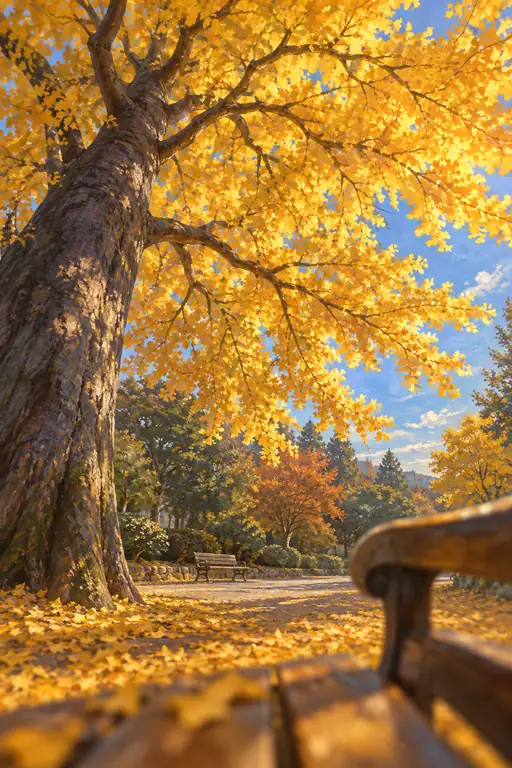 Under the Golden Ginkgo Canopy
Similar Artworks
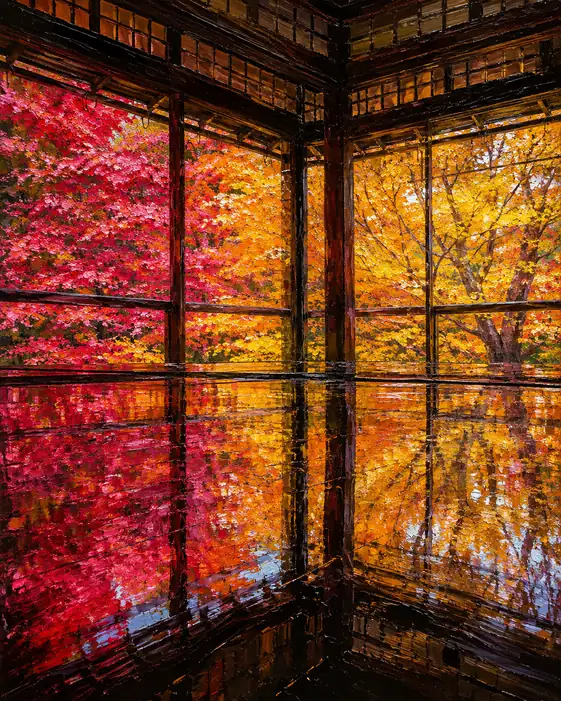 Vermilion and Gold Reflected in the Temple Chamber
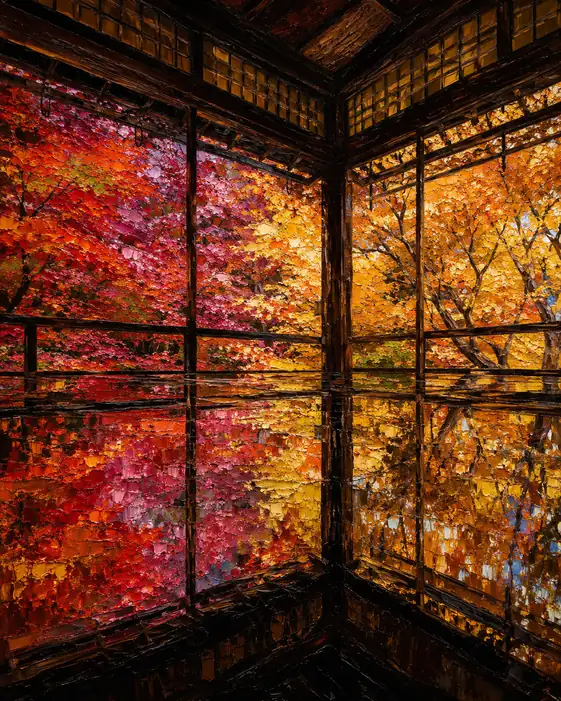 Autumn Splendor Mirrored on the Chamber Floor
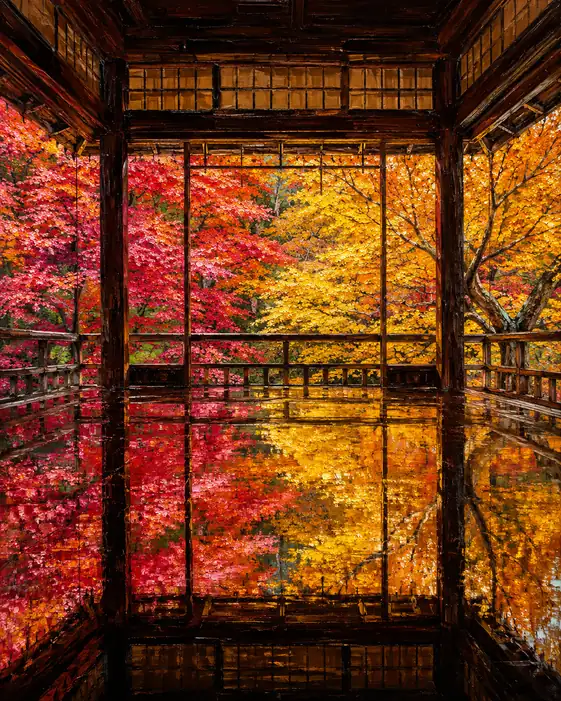 Crimson and Gold Merging into Lacquered Floors
 Autumn Returns in the Lapis Pure Land
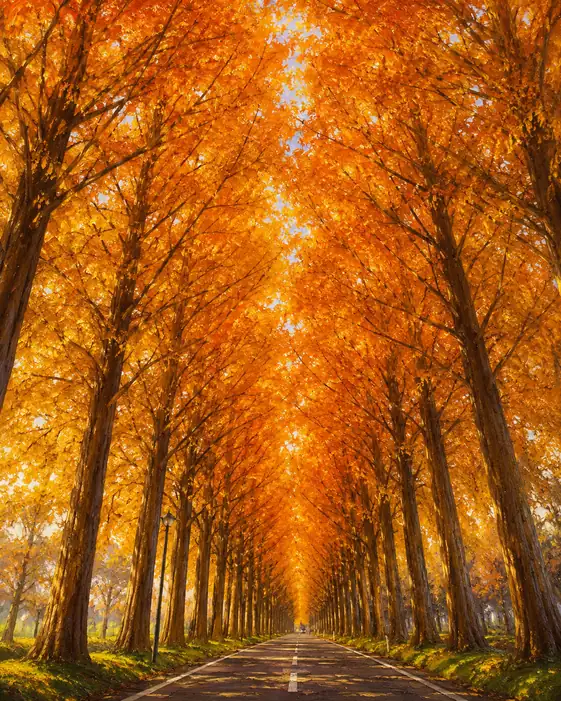 The Golden Road That Lights the Wind's Memory
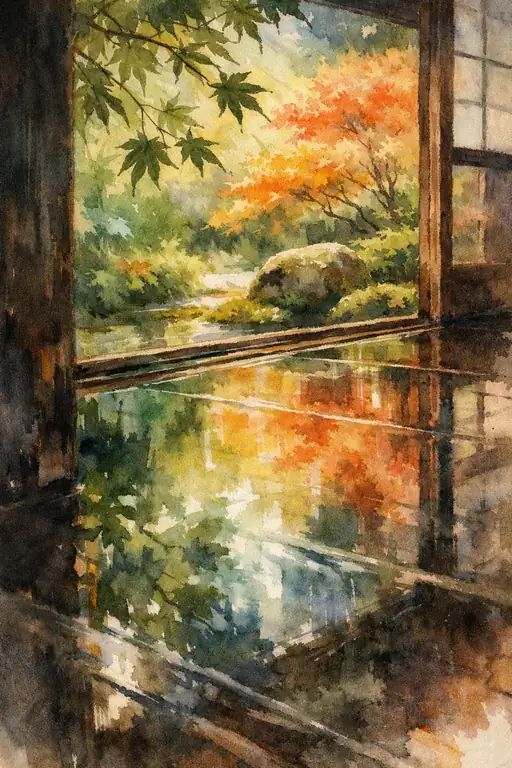 Whispers of Autumn on the Polished Floor
 Glistening Embers of Fall
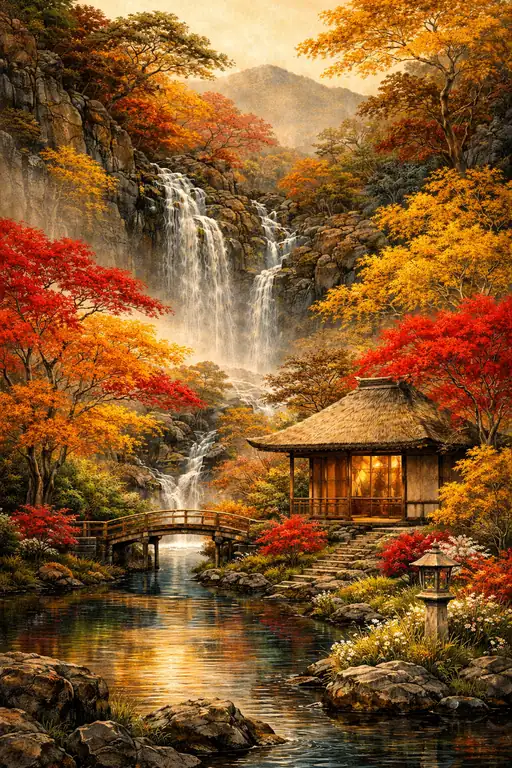 Crimson Waterfall and the Golden Bridge
 Golden Sighs of the Autumn Lake
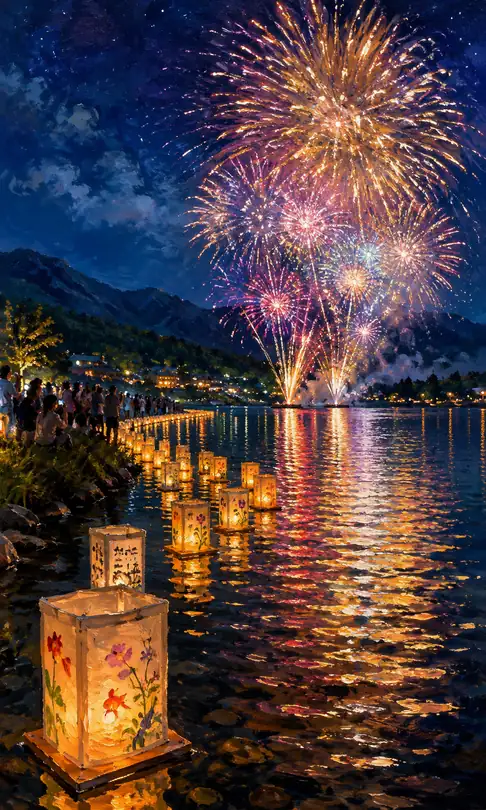 Dreams of Goldfish Lights on the Lake