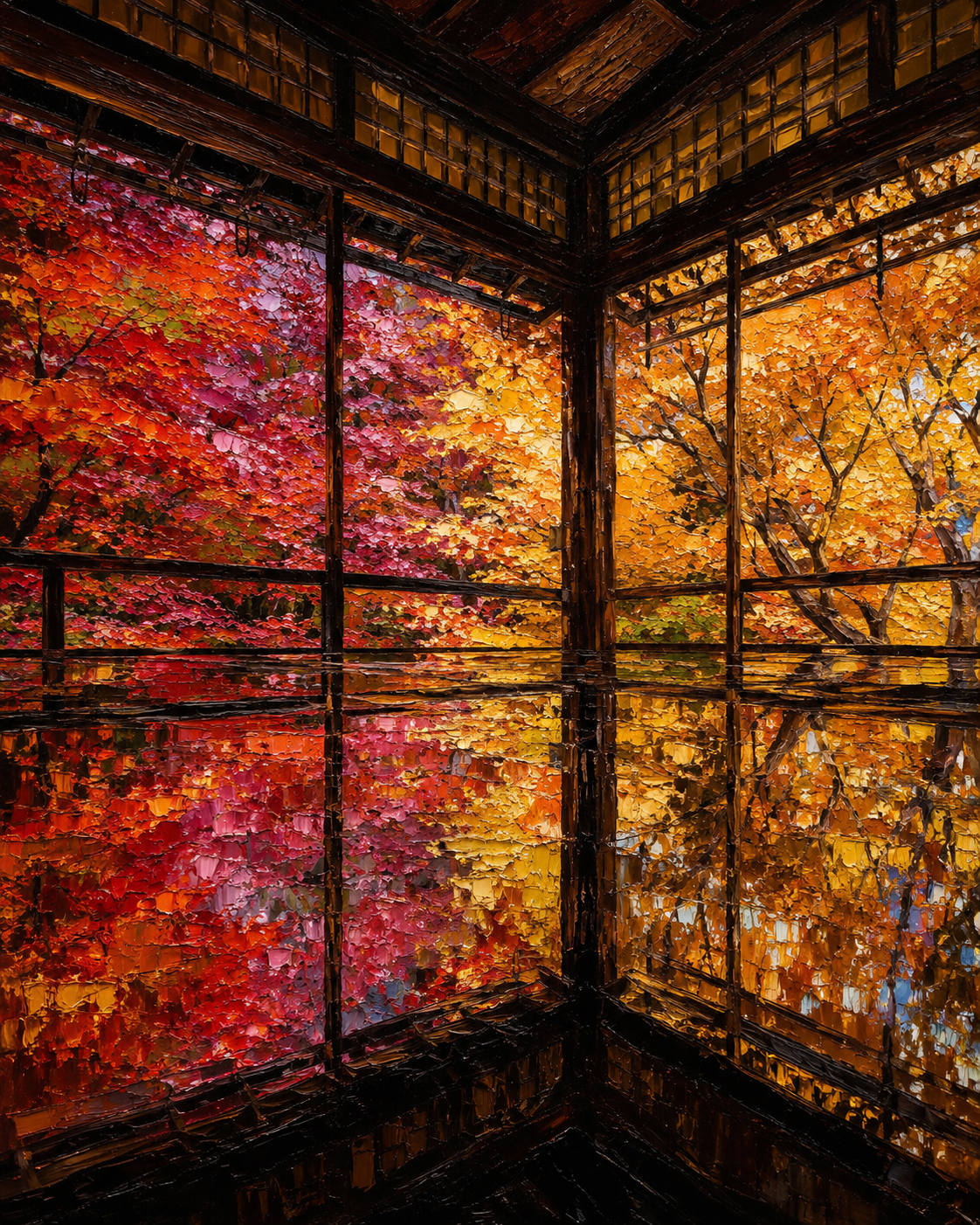
Autumn Splendor Mirrored on the Chamber Floor
Critique
Introduction This view of a wooden corner pavilion surrounds the viewer with crimson and gold foliage, then doubles it on a reflective floor. The high roof and corner structure make immersion feel architectural rather than decorative. Description Heavy posts meet at the upper central corner beneath amber transom windows and a visible patch of roof. Open bays show layered red maples to the left and luminous orange trees with branching trunks to the right. Railings cross the middle. Below, the polished floor mirrors leaves and posts, becoming nearly black at the lower edge. The room is entirely empty. Analysis The raised viewpoint gives unusual weight to ceiling beams and makes the central corner descend like a structural spine. Left red and right gold meet in a bright wedge behind it. Reflection repeats this division but compresses and darkens the foliage into thick horizontal strokes. The right-hand branches introduce legible organic lines, while the left remains a denser chromatic mass. Black timber provides intervals between saturated panels and prevents the warm palette from flattening. Interpretation and Evaluation Architecture appears to gather two forms of autumn—red intensity and golden radiance—without forcing them into uniformity. The empty floor offers no prescribed ritual, leaving contemplation itself as the implied activity. A nearly perfect chromatic spectacle could become remote, but visible roof texture, worn beams, and irregular reflected edges restore material presence. The upward emphasis makes the viewer feel sheltered beneath the seasonal canopy. Conclusion The painting succeeds by balancing enclosure with visual expansion. Its pavilion is dark and finite, yet every opening and reflection multiplies the garden. The central corner does not divide the experience so much as hold its contrasting colors in suspension.
Same Subcategory
Similar Artworks
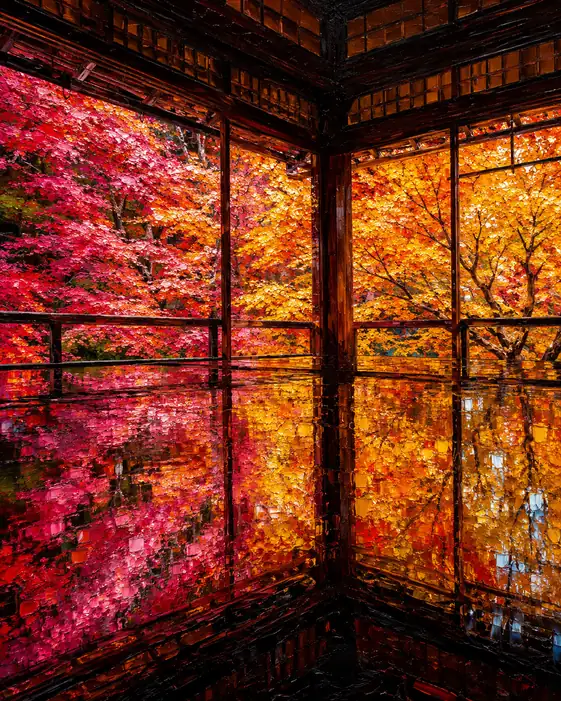 Crimson Harmony on the Polished Floor
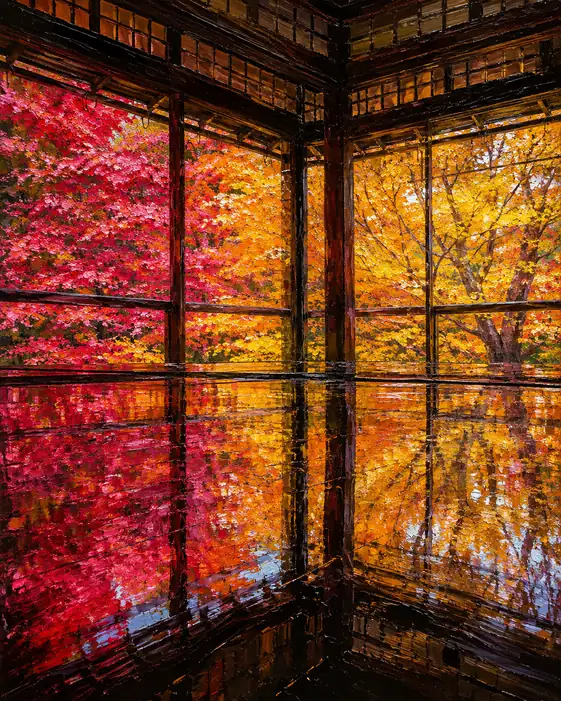 Vermilion and Gold Reflected in the Temple Chamber
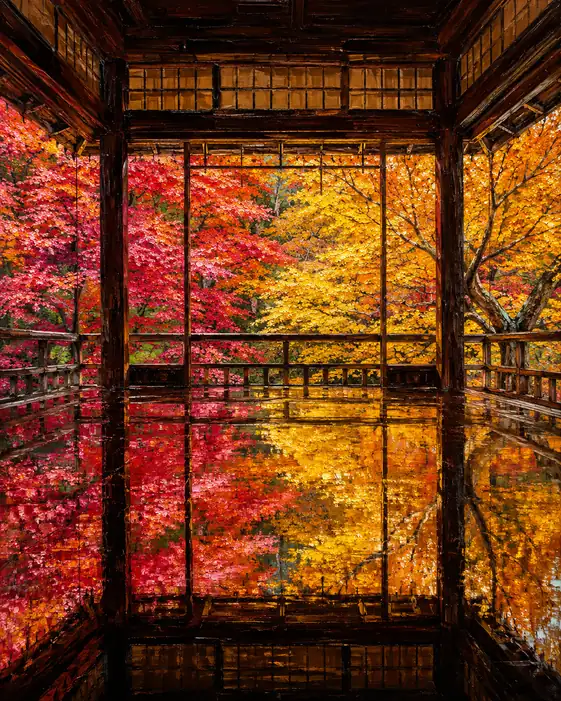 Crimson and Gold Merging into Lacquered Floors
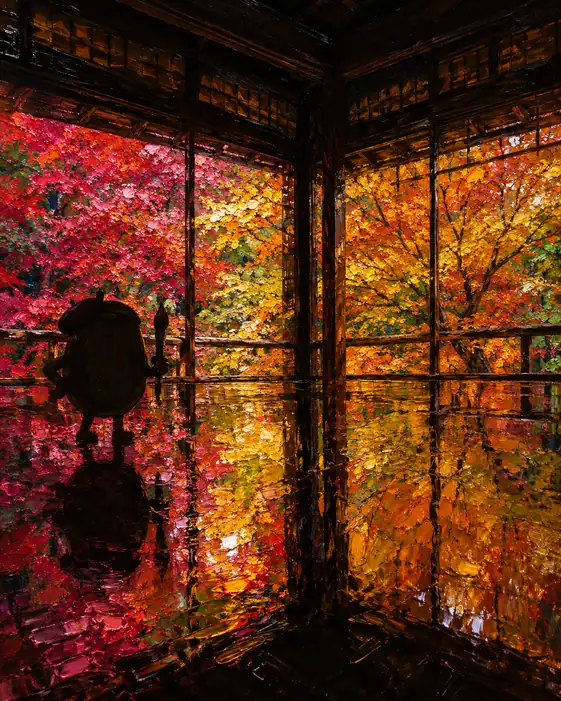 Autumn Returns in the Lapis Pure Land
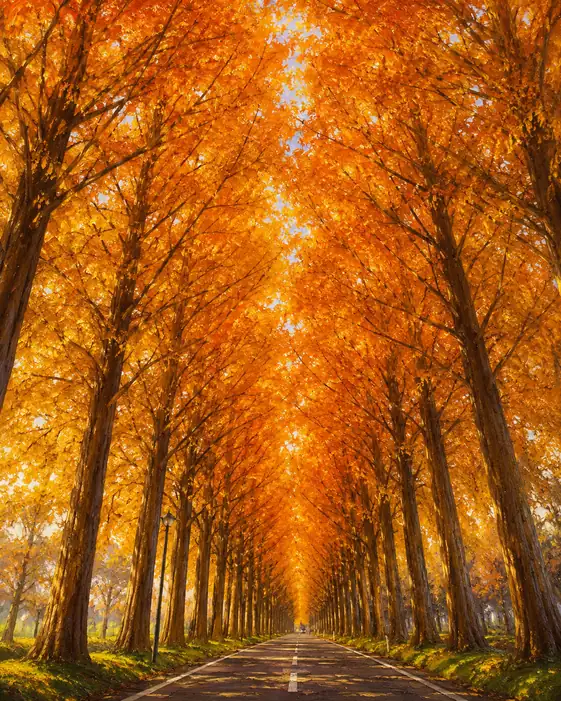 The Golden Road That Lights the Wind's Memory
 Dreams of Goldfish Lights on the Lake
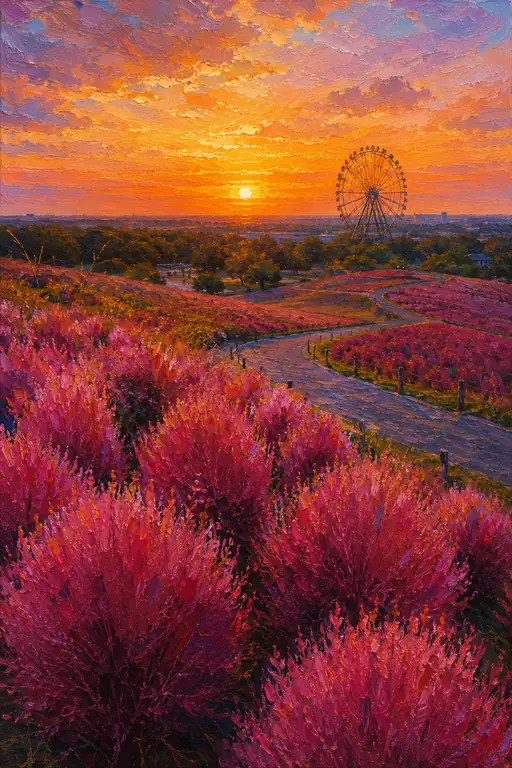 The Ferris Wheel Gathers the Last Fire
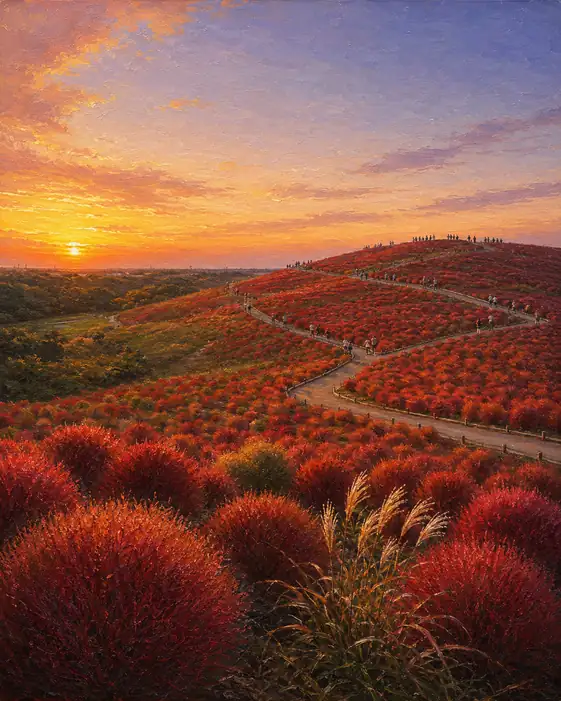 Everyone Walks Inside Autumn's Fire
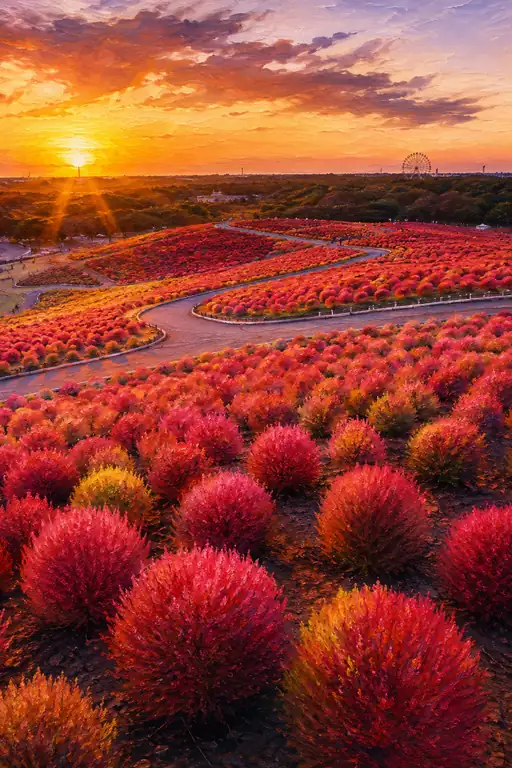 Autumn Rolls Its Red Carpet to the Horizon
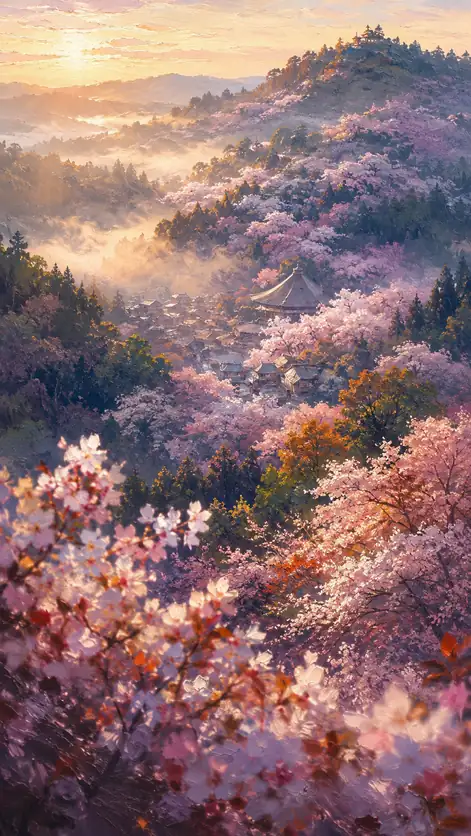 A Thousand Blossoms Carry the Morning