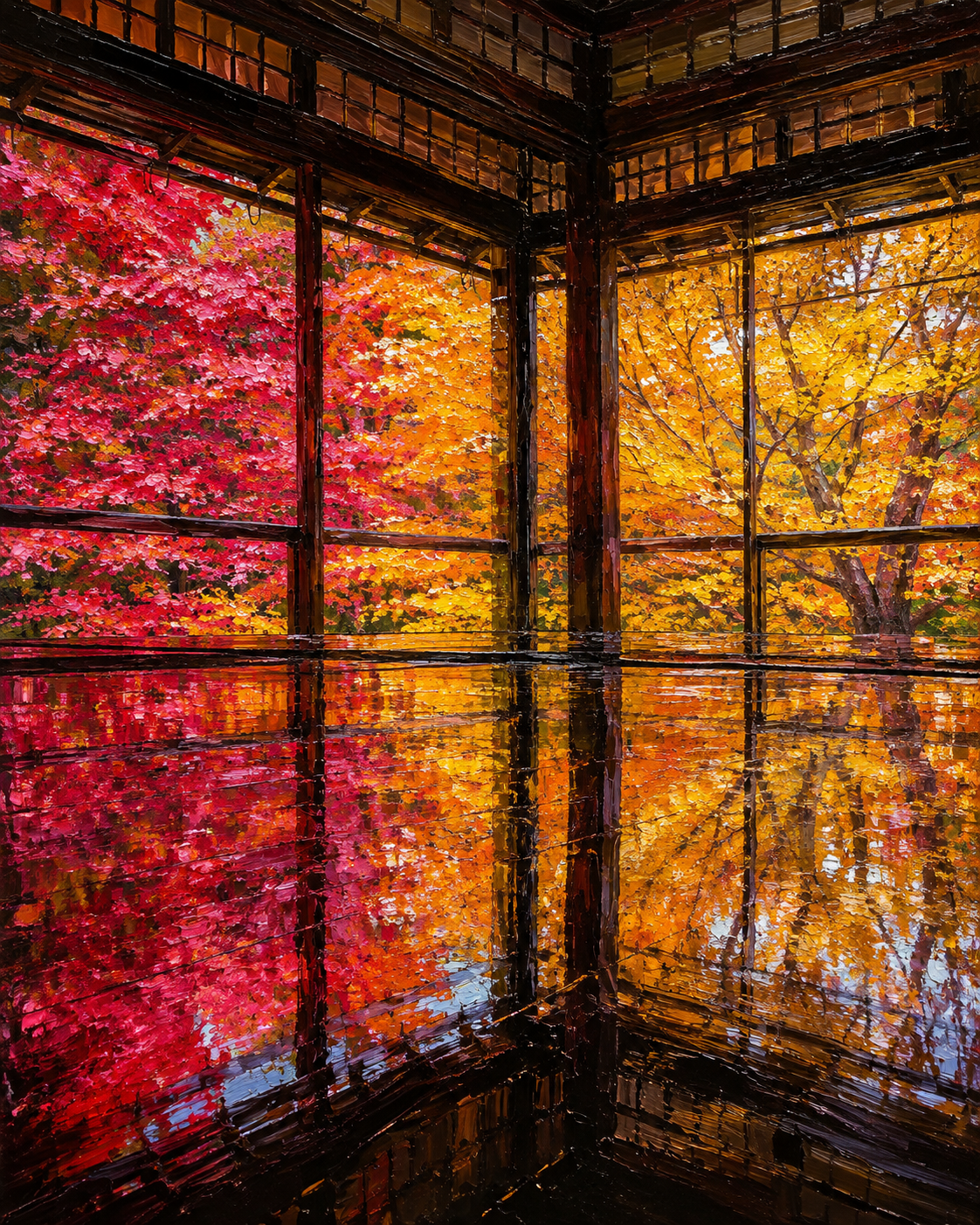
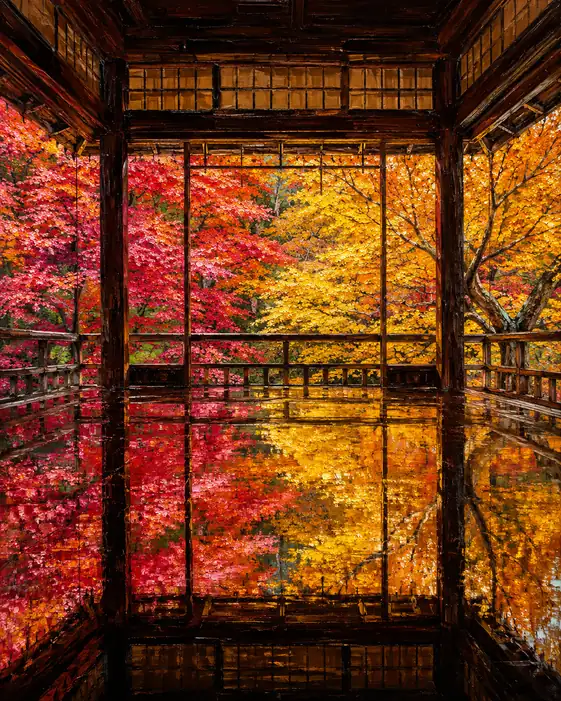
Vermilion and Gold Reflected in the Temple Chamber
Critique
Introduction An empty corner pavilion opens onto crimson and golden autumn trees, their colors doubled across a mirrorlike floor. The oblique viewpoint makes architecture feel less like a frame than a hinge joining two distinct seasonal chambers. Description Dark wooden posts meet at a heavy central corner beneath bands of amber transom windows. Open bays reveal red foliage on the left and yellow-orange trees on the right. Railings run across both sides. The polished floor occupies the lower half, reflecting leaves, trunks, beams, and windows in darker, broken color. No object or figure enters the room. Analysis The central post anchors two receding wall planes, producing a shallow V-shaped space. Horizontal rails and transoms stabilize this perspective, while tree branches introduce diagonals beyond it. Red and gold are separated but overlap near the corner, with black-brown timber acting as a strong neutral. Reflection repeats the division below, then fragments it through elongated strokes and dark gaps. Highlights on floorboards reveal their horizontal grain beneath the apparent mirror. Interpretation and Evaluation The corner implies a choice of outlook: one may turn toward crimson density or golden openness. Yet the reflective floor reunites both views, suggesting that separation is architectural rather than absolute. Emptiness makes the room receptive and assigns human scale to the viewer’s imagined body. Saturation is intense, but the large dark post, ceiling, and lower shadows provide necessary quiet. Conclusion The painting uses a simple corner to organize abundance without diminishing it. Architecture divides, reflection recombines, and vacancy invites contemplation. Its strongest effect is spatial: the viewer seems to stand where two autumns meet and share one dark, luminous floor.
Same Subcategory
Similar Artworks
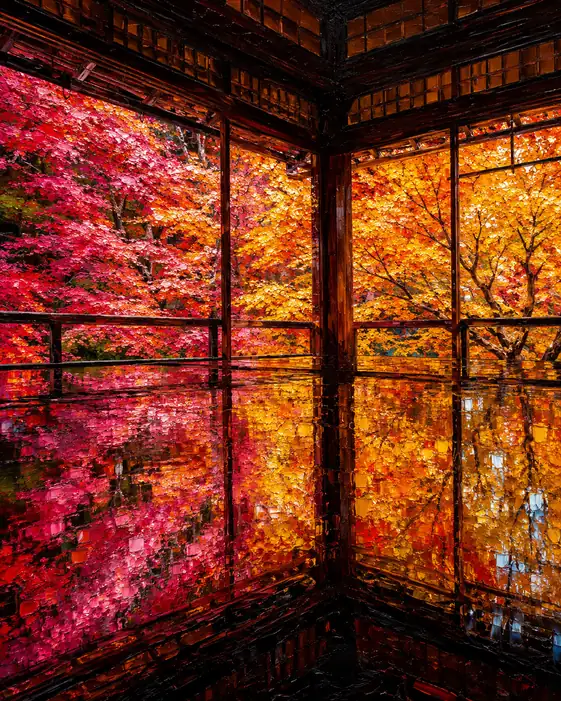 Crimson Harmony on the Polished Floor
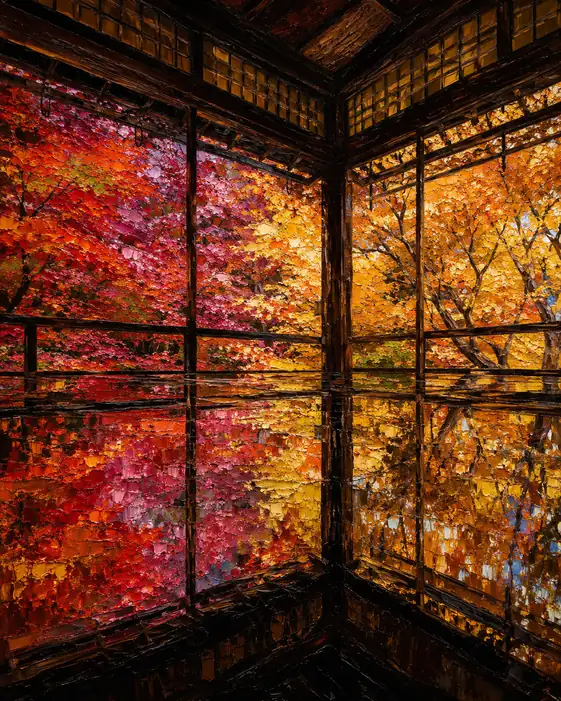 Autumn Splendor Mirrored on the Chamber Floor
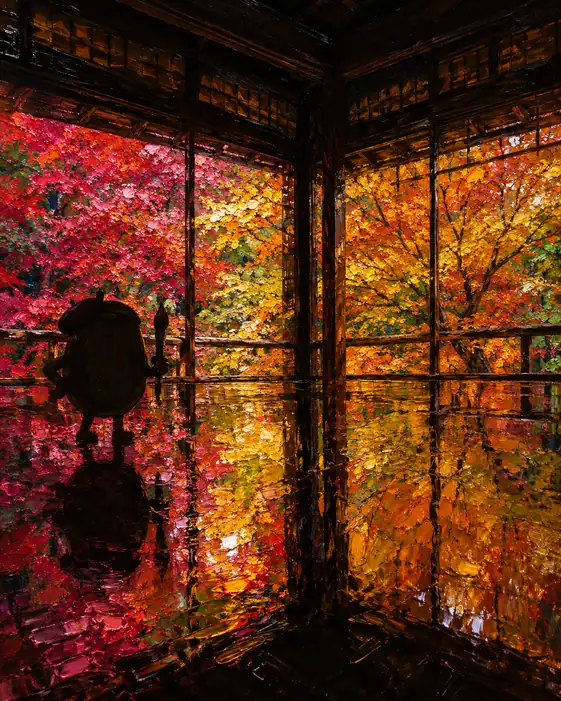 Autumn Returns in the Lapis Pure Land
 Crimson and Gold Merging into Lacquered Floors
 The Golden Road That Lights the Wind's Memory
 Whispers of Autumn on the Polished Floor
 Crimson Waterfall and the Golden Bridge
 Glistening Embers of Fall
 Golden Sighs of the Autumn Lake
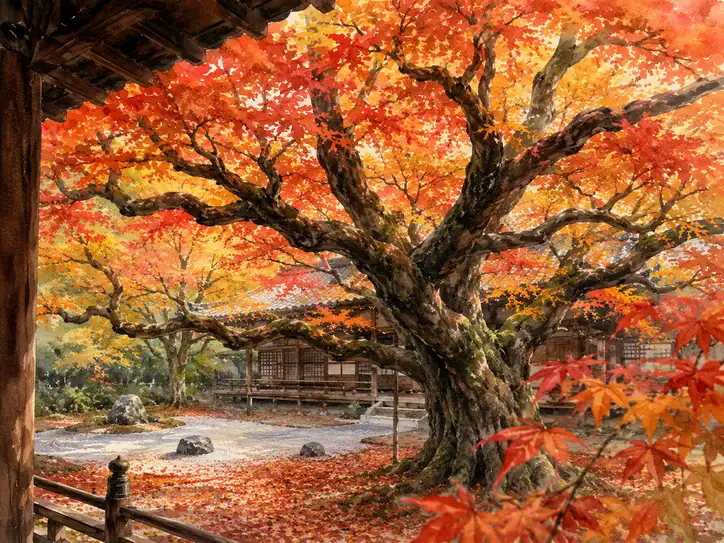 Ember of the Zen Garden