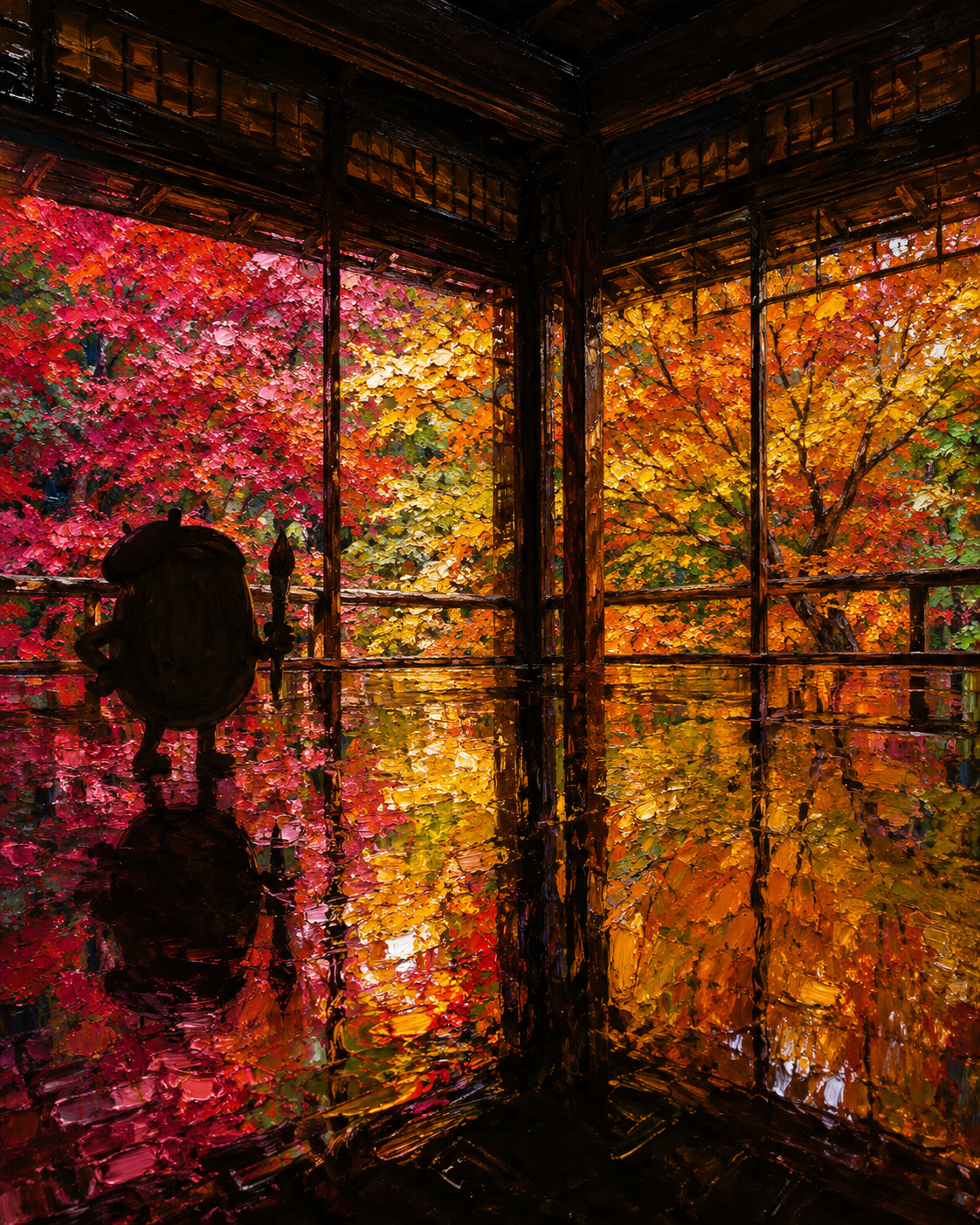
Autumn Returns in the Lapis Pure Land
Critique
Introduction A dark wooden veranda frames explosive autumn foliage and its reflection on a polished floor. At left, the silhouette of a round kettle-like object and slender implement introduces quiet human ritual into an otherwise overwhelming encounter with color. Description Deep beams, posts, transoms, and open bays enclose views of crimson maples on the left and golden-orange trees on the right. The glossy floor mirrors foliage and architecture across the lower half. A dark bulbous vessel with lid, feet, curved side form, and adjacent upright utensil stands near the left railing. No person appears. Analysis The central corner post divides red from gold and continues downward as a black reflective axis. Horizontal rails and ceiling beams form a stable grid around turbulent leaf marks. Reflection doubles the chromatic field but darkens and distorts it, distinguishing image from source. Near-black timber absorbs light and heightens saturation. The vessel’s rounded silhouette interrupts the rectilinear building and provides a compact visual counterweight to the enormous garden. Interpretation and Evaluation The object suggests tea, warming, or another domestic ceremony without requiring precise identification. Its small scale makes contemplation tangible: someone has arranged a place from which autumn can be attended. The vacant veranda invites that person’s return and allows the viewer to occupy the position. Color intensity approaches theatrical excess, yet black architecture and the silent silhouette impose restraint. Conclusion The painting makes viewing itself a ritual. Nature supplies abundance, architecture edits it into panels, and the reflective floor transforms observation into doubling. The modest object at left is crucial, giving human scale and stillness to a scene otherwise consumed by radiant foliage.
Same Subcategory
Similar Artworks
 Vermilion and Gold Reflected in the Temple Chamber
 Crimson and Gold Merging into Lacquered Floors
 Crimson Harmony on the Polished Floor
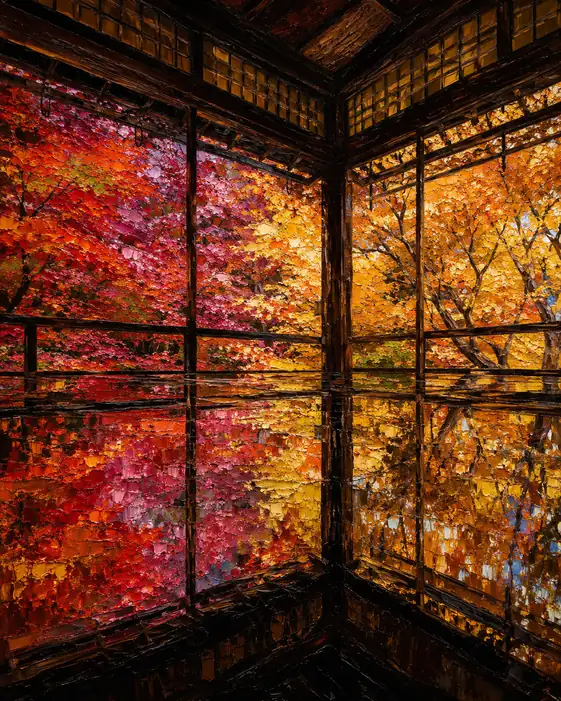 Autumn Splendor Mirrored on the Chamber Floor
 The Golden Road That Lights the Wind's Memory
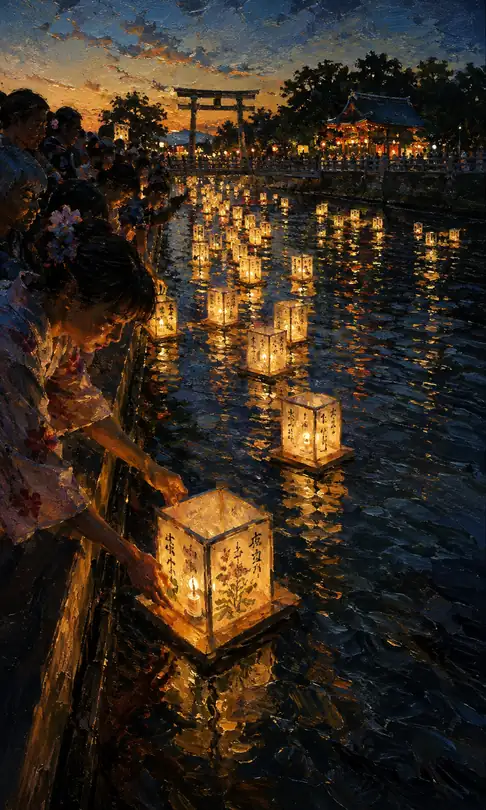 Silent Prayers Floating Past the Sacred Gate
 Dreams of Goldfish Lights on the Lake
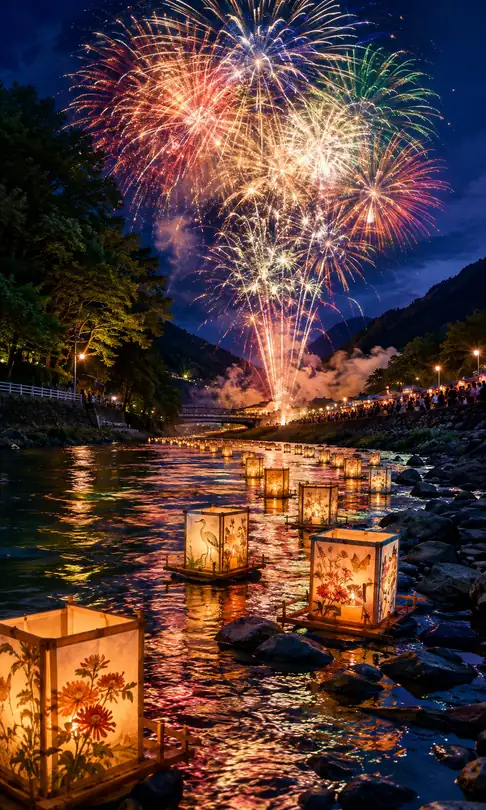 Clear Stream Lanterns and Sky Splendor
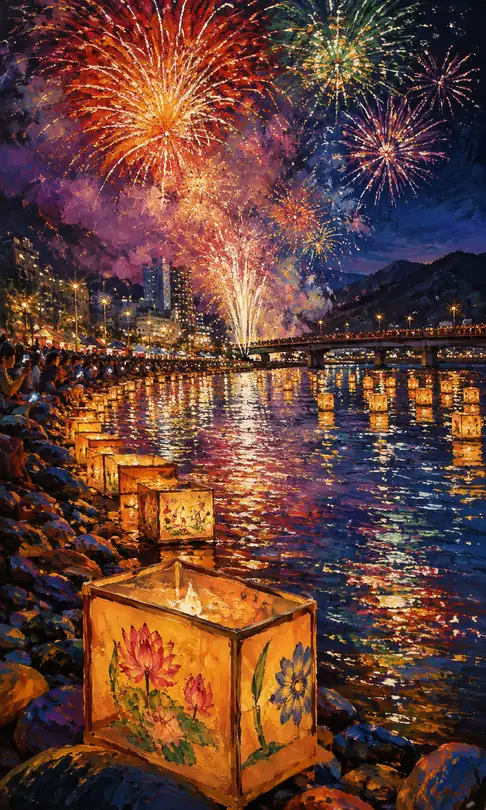 Silent Night Journey Guided by Lotus Lanterns
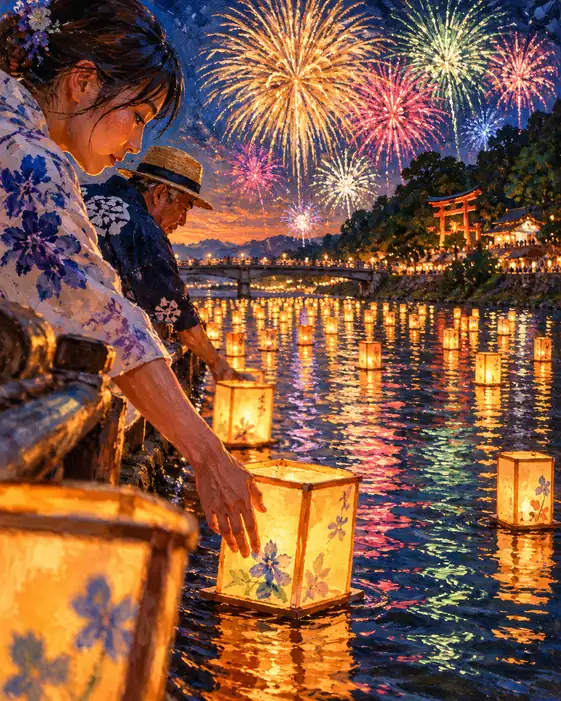 Whispering Prayers Reflected on Night Waters