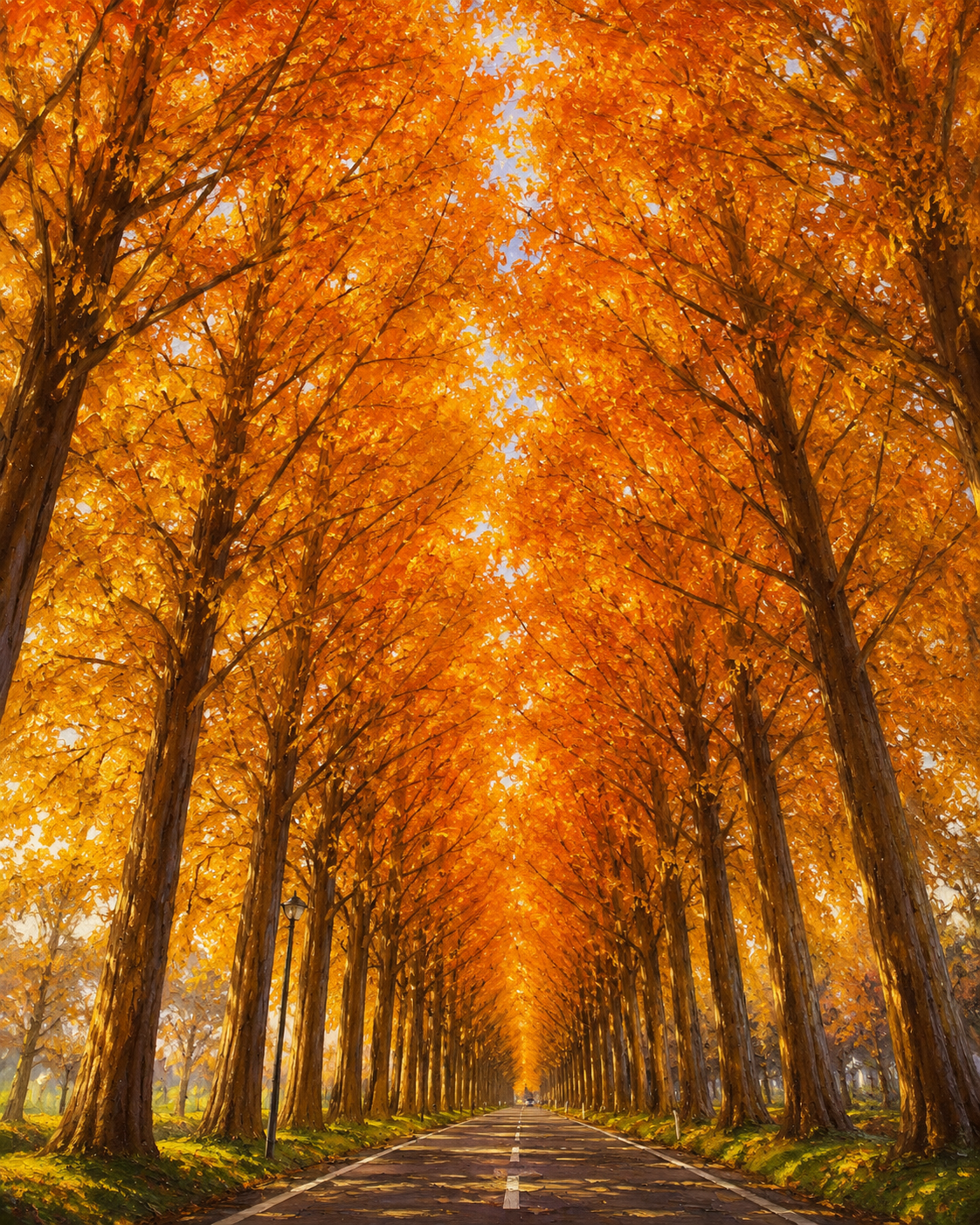
The Golden Road That Lights the Wind's Memory
Critique
Introduction An avenue of towering autumn trees becomes a cathedral of orange light in this rigorously symmetrical landscape. The image draws power from repetition and scale, converting an ordinary road into a ceremonial passage toward an almost unreachable distance. Description Two ranks of massive trunks rise from narrow green verges and lean inward beneath a dense canopy of amber, gold, and burnt orange. A straight paved road begins at the lower center and narrows to a bright vanishing point. White lane markings, curbs, and sparse dark lampposts punctuate the route. Small openings of pale blue sky appear high between leaves. Analysis One-point perspective governs every major element: trunk rows, curbs, road edges, and center markings converge precisely. Repeated verticals establish solemn rhythm, while diagonal branches knit both sides into a vaulted ceiling. Saturated orange occupies most of the surface; dark brown trunks provide structure, and thin green strips prevent chromatic monotony. Thick, faceted strokes make foliage feel abundant and tactile. The tiny vanishing point intensifies the trees’ monumental scale. Interpretation and Evaluation The road can be read as duration made visible, with repeated trees marking stages along an inevitable passage. Autumn adds awareness of change, yet the canopy’s radiance makes decline celebratory rather than mournful. Extreme symmetry risks decorative predictability, but irregular branch patterns, uneven light, and scattered leaves retain organic variation. The nearly empty road invites the viewer to enter rather than observe traffic. Conclusion The painting succeeds through disciplined excess: countless leaves are contained by an exceptionally clear structure. Its tunnel of color offers both grandeur and direction. Seasonal abundance becomes an architecture through which time, movement, and light appear to share a single destination.
Same Subcategory
Similar Artworks
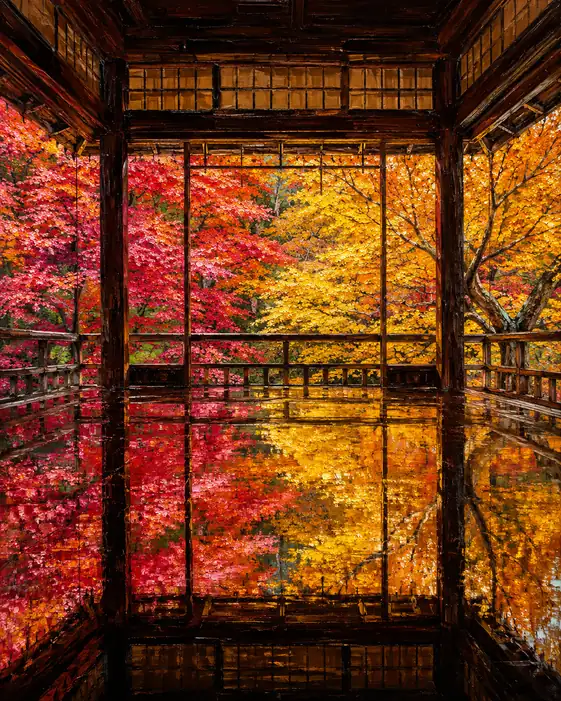 Crimson and Gold Merging into Lacquered Floors
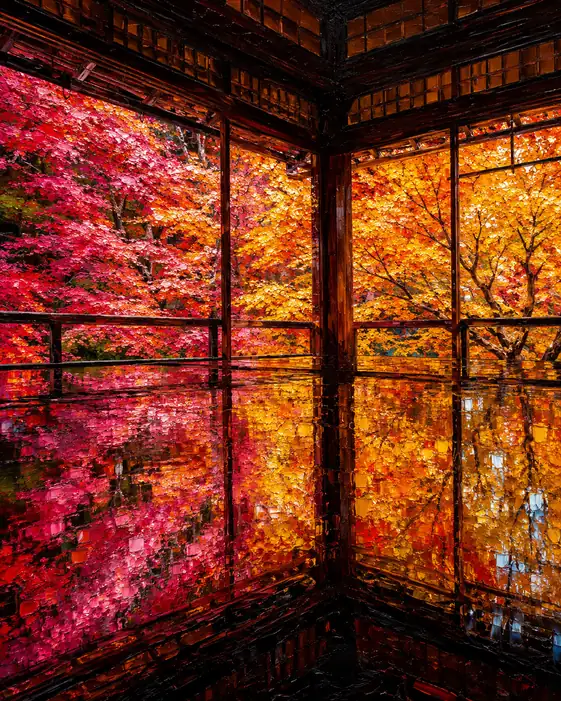 Crimson Harmony on the Polished Floor
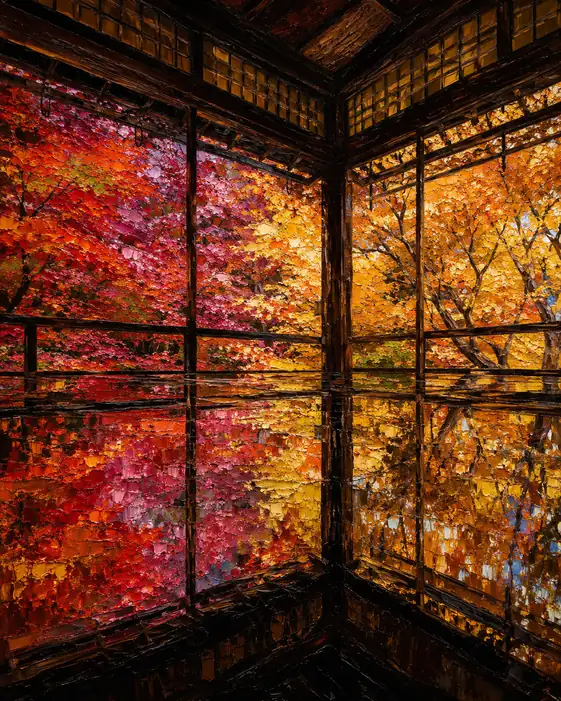 Autumn Splendor Mirrored on the Chamber Floor
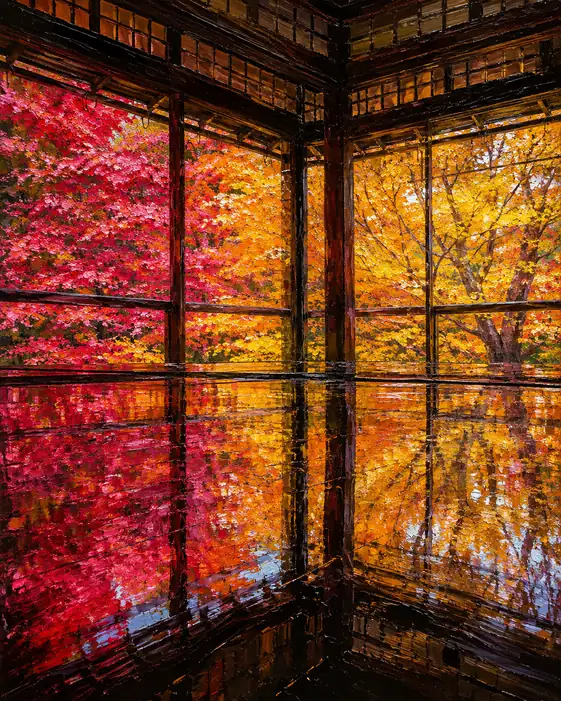 Vermilion and Gold Reflected in the Temple Chamber
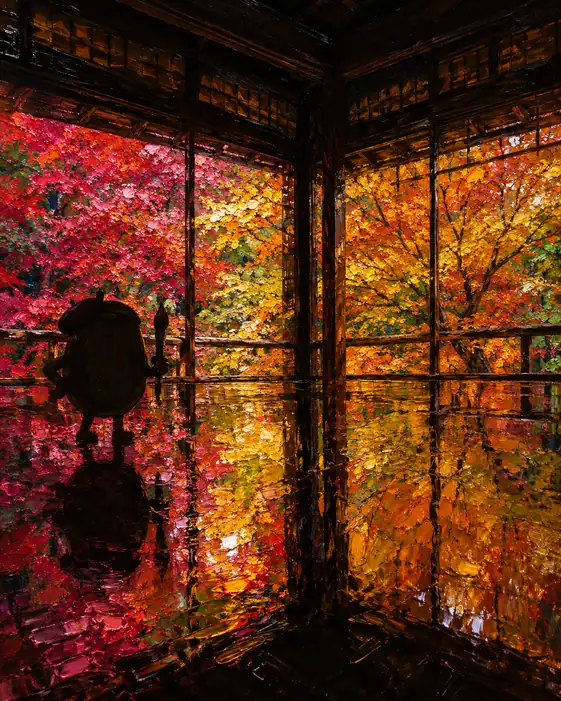 Autumn Returns in the Lapis Pure Land
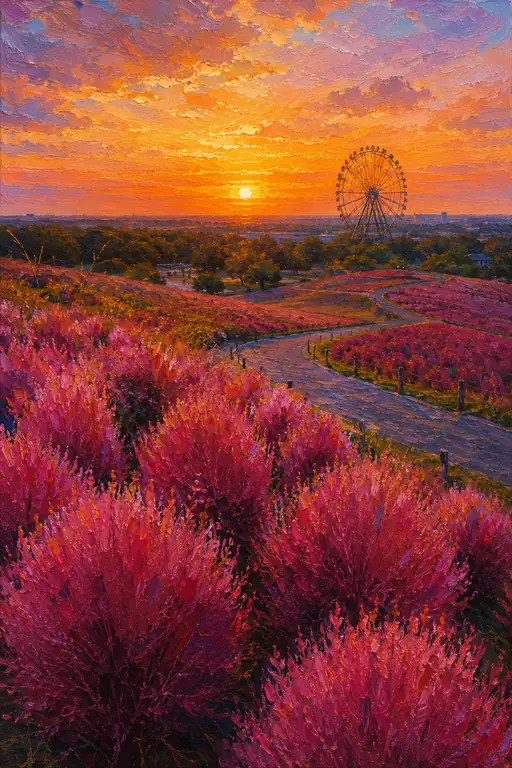 The Ferris Wheel Gathers the Last Fire
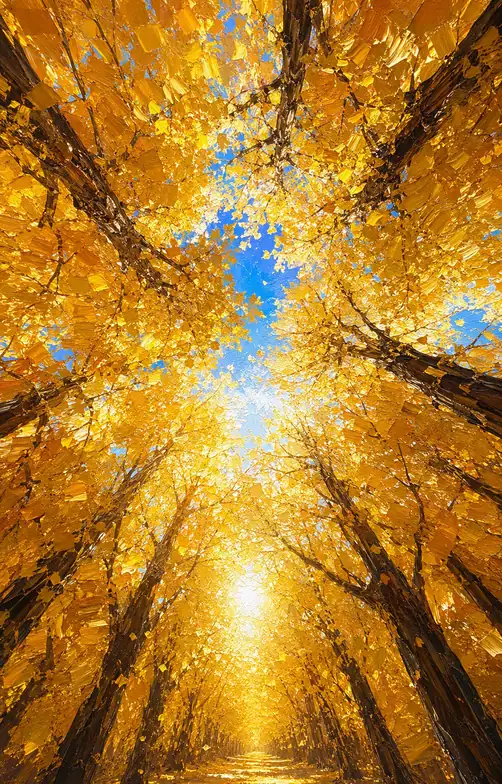 Under the Canopy of Golden Dreams
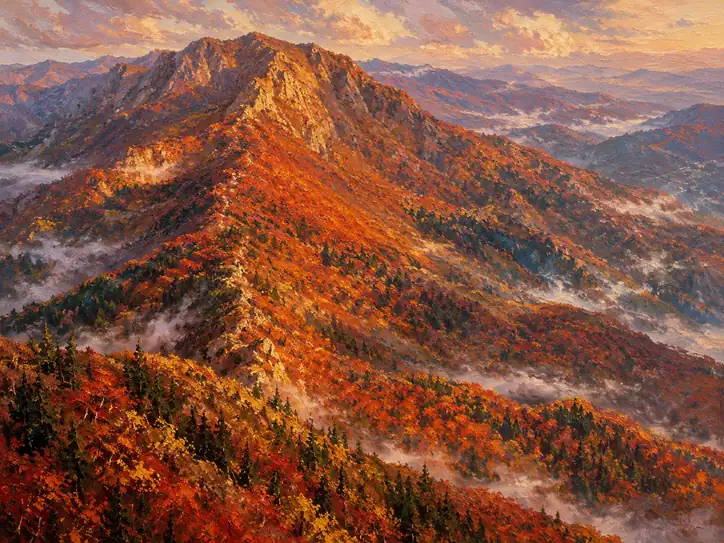 When the Mountain Dreams in Gold
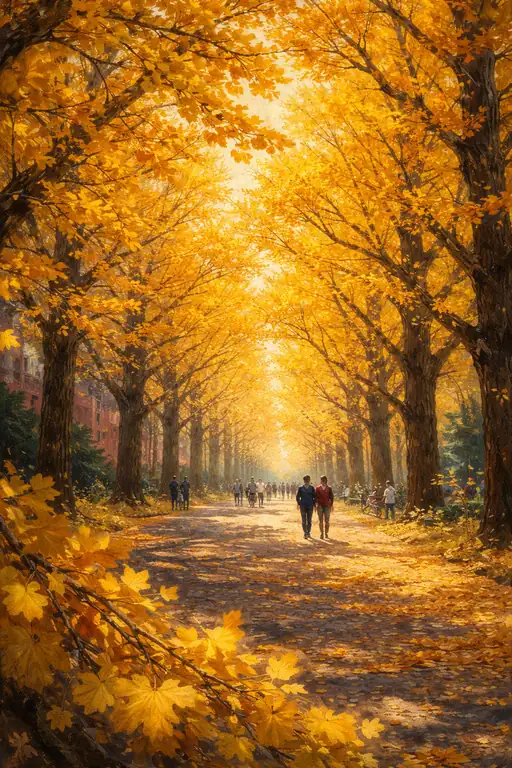 Walking the Golden Canopy
 Golden Stillness on the Water