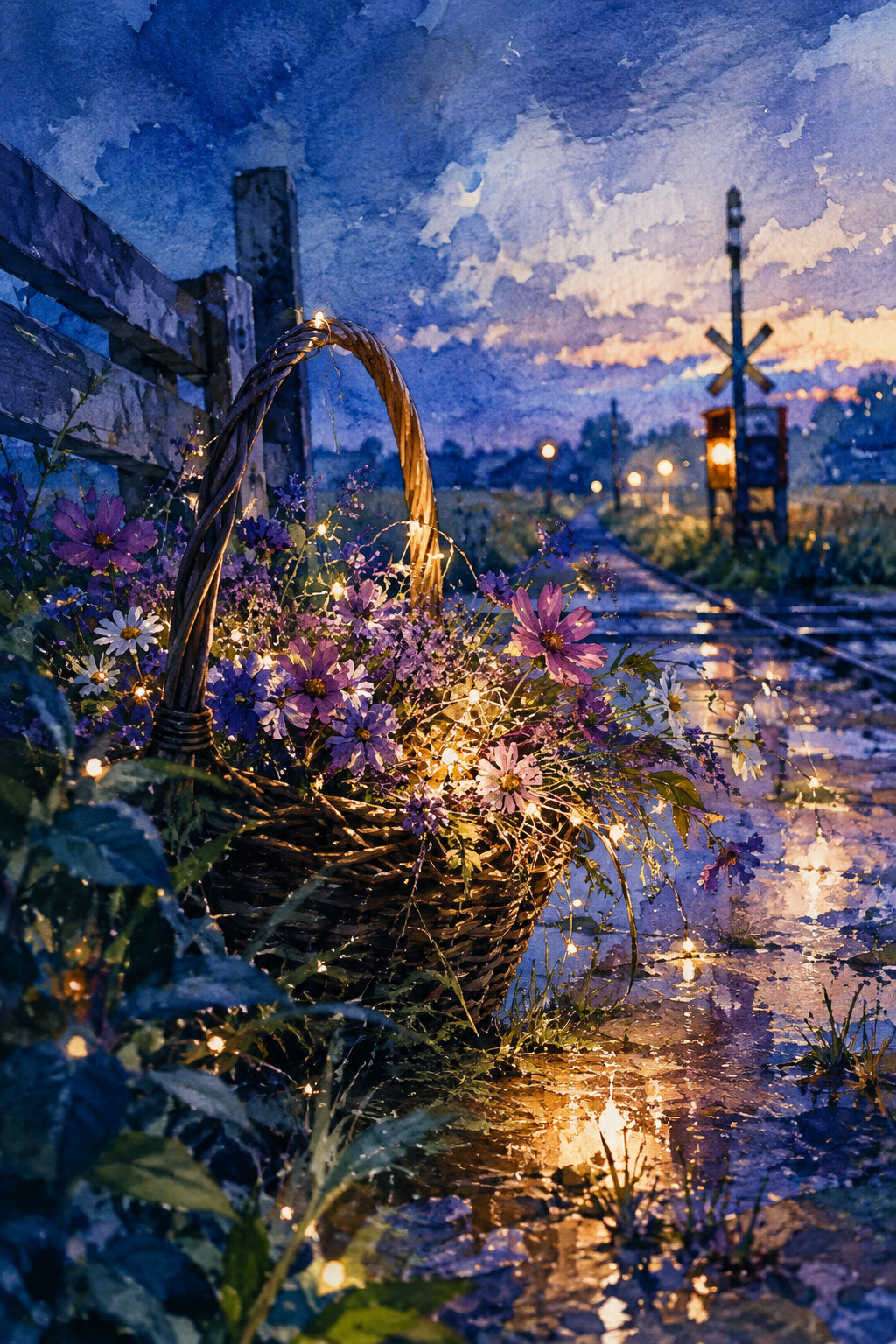
Twinkling Cosmos by the Railroad Track
Critique
Introduction A wicker basket overflowing with cosmos and small lights rests beside a railway at blue hour. The painting places handmade abundance against transport infrastructure, transforming a wet crossing into an intimate threshold between departure and welcome. Description The basket dominates the left foreground, its tall twisted handle arching over pink, purple, and white flowers. A strand of warm bulbs winds through stems and spills onto the ground. Rails and a reflective path converge toward a distant crossing signal, hut, and lamps. A rough fence frames the left; fields and low hills recede beneath violet-blue clouds and a peach horizon. Analysis The handle forms a strong oval that encloses the floral light, contrasting with straight rails, fence boards, and signal post. Track lines lead sharply into depth, while repeated amber points bridge basket and horizon. Indigo governs sky, foliage, and wet earth; magenta flowers provide a middle register between blue and gold. Crisp petals nearest the bulbs dissolve into looser marks at the edges. Reflections extend the light strand across the ground. Interpretation and Evaluation The basket resembles a gift left at a point of passage. Flowers evoke a brief season, whereas rails imply distance and repeated journeys; their meeting gives farewell and greeting equal plausibility. Electric-looking bulbs woven through natural stems suggest care deliberately added to beauty. The scene is romantic, but muddy water, weathered wicker, and dark sleepers retain physical resistance. Conclusion The painting succeeds through the encounter of curve and line, fragile bloom and durable route. Its lights do more than decorate the basket: they visually join a private offering to the public path beyond. The crossing becomes a place where travel can be tenderly acknowledged.
Same Subcategory
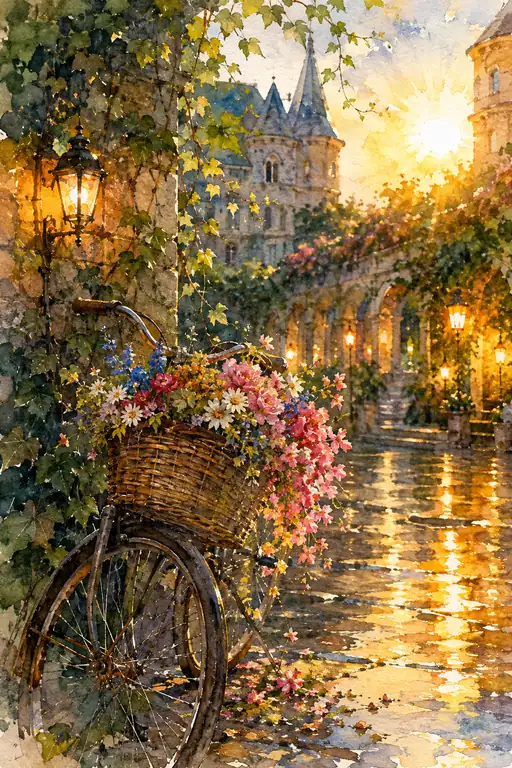 Morning Delivery Through the Golden Courtyard
Similar Artworks
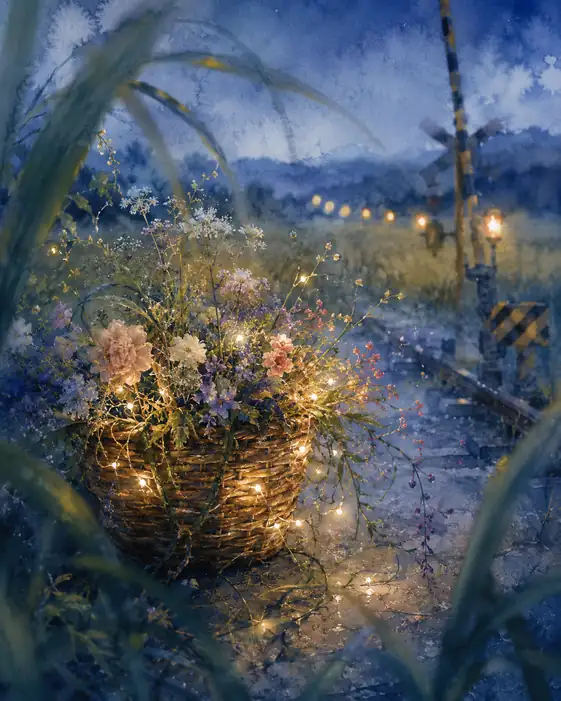 Fairy Lights in the Twilight Grass
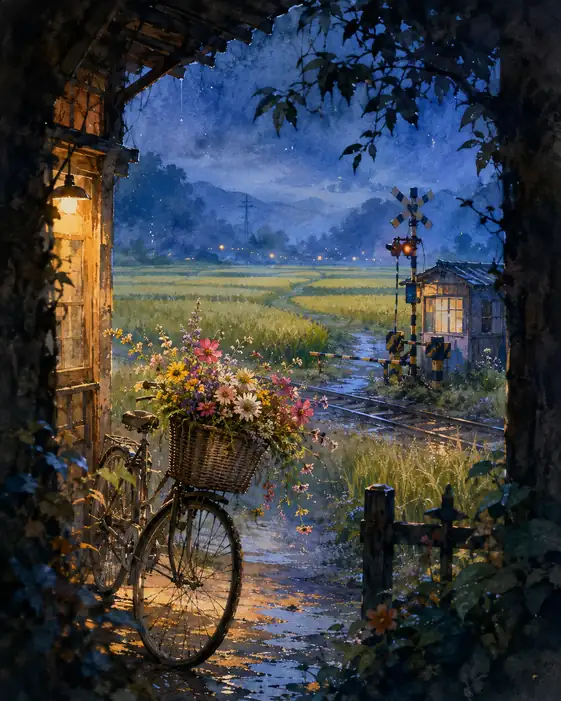 Nocturne Delivery Basket by the Station
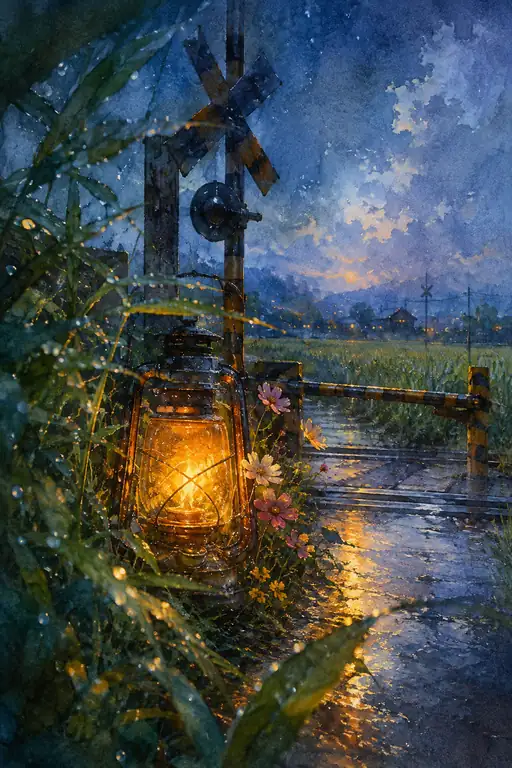 Raindrop Lamp by the Evening Railway
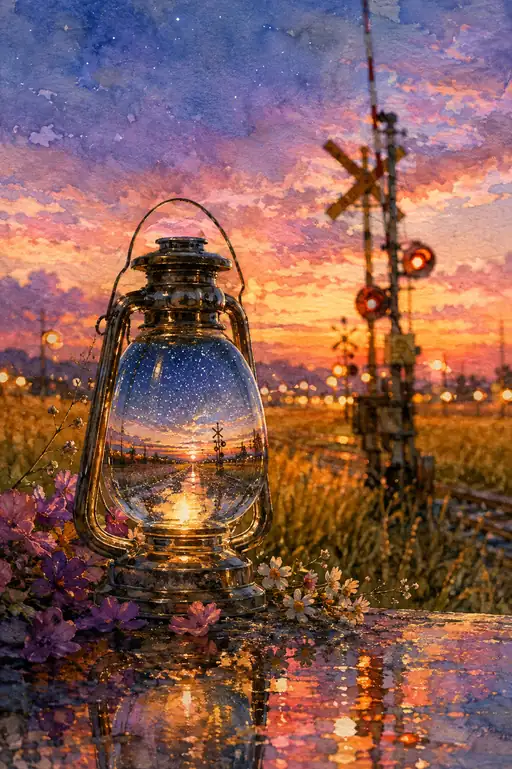 Sunset Train Path Captured in Glass
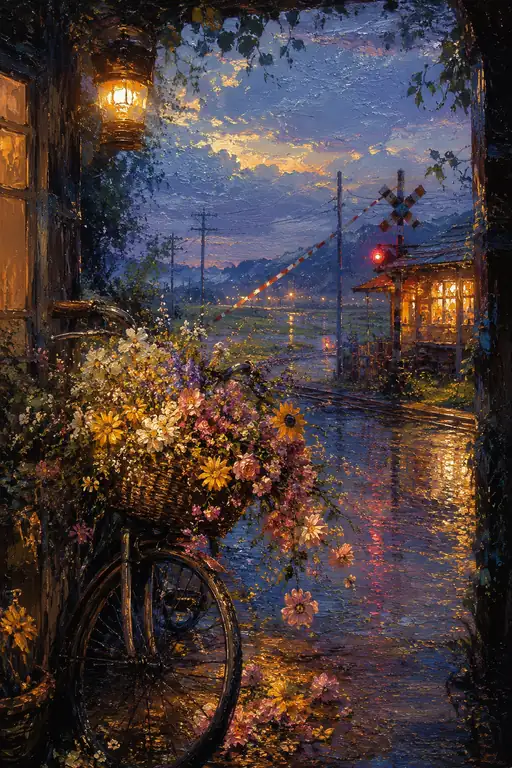 Evening Bell and Blossoming Bicycle by the Station
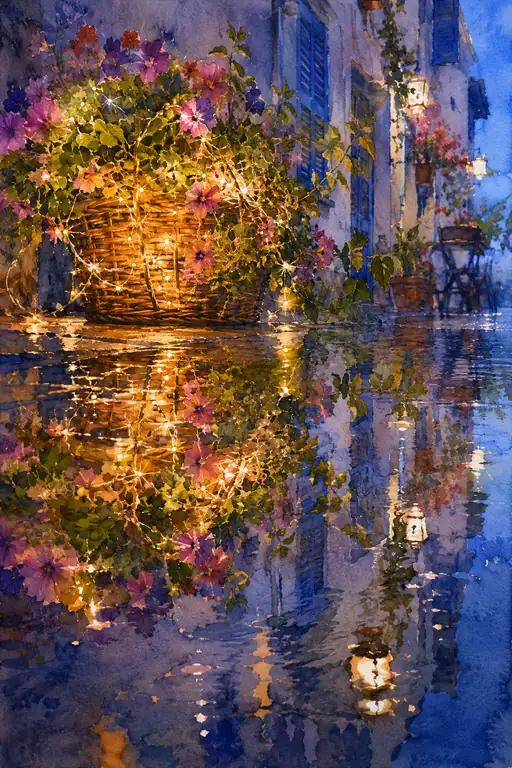 Fairy Lights Mirrored on Wet Cobblestones
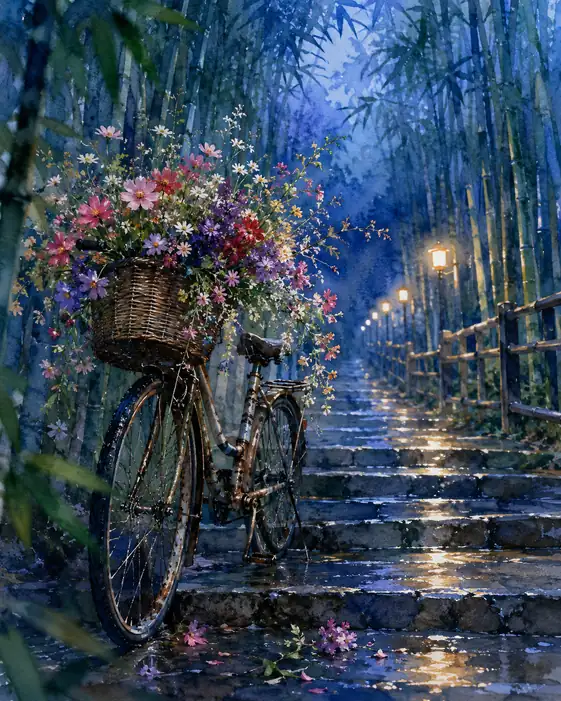 Silence on the Rain-Kissed Bamboo Steps
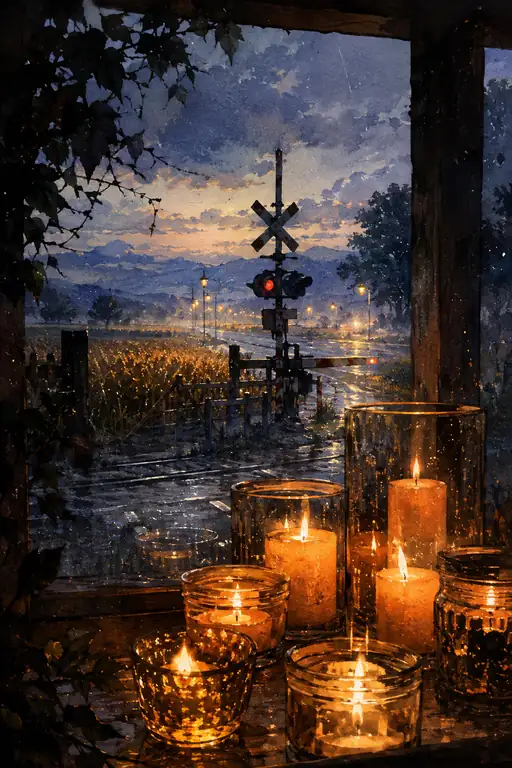 Candles by the Window Overlooking the Track
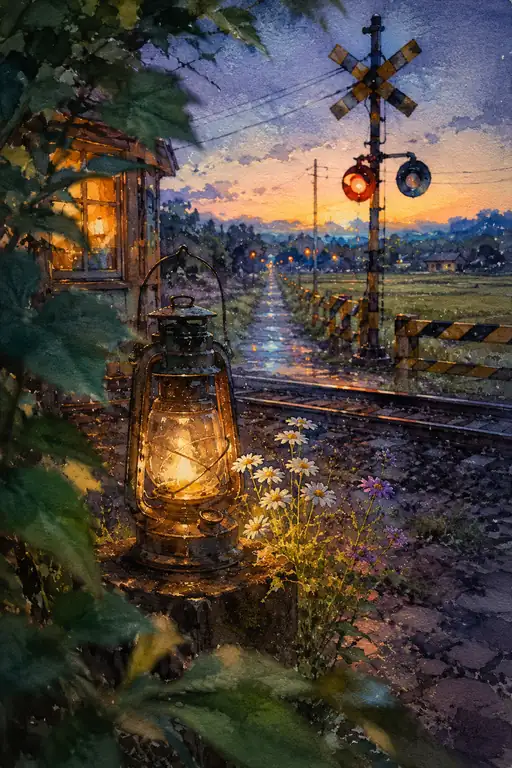 Wild Daisies by the Twilight Crossing
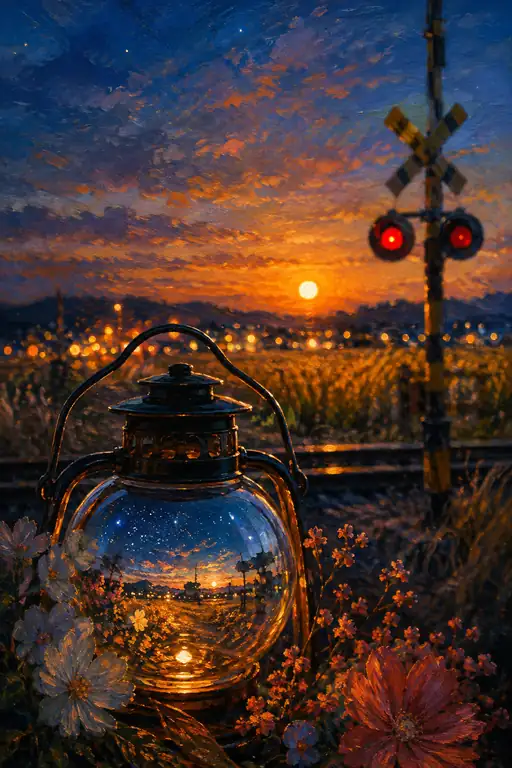 Sunset Cosmos Reflected in the Railroad Lantern