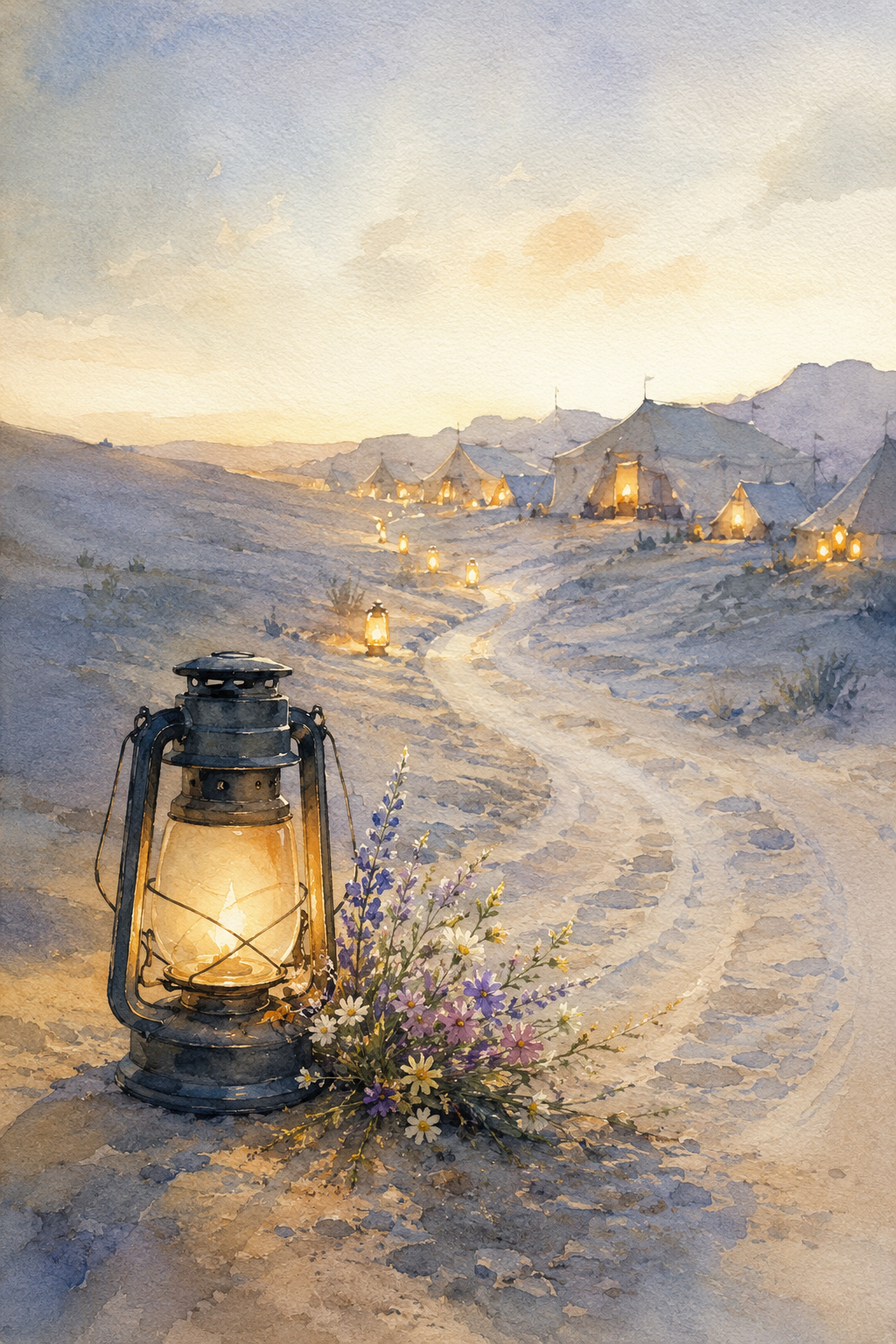
Trail of Golden Lanterns Across the Dunes
Critique
Introduction A weathered lantern and wildflowers mark the entrance to a pale desert encampment. The painting uses restraint, allowing a modest foreground light to organize an expansive landscape of sand, tents, and fading sky. Description The large black lantern occupies the lower left, its cream flame glowing behind wired glass. Purple spikes, white daisies, and fine yellow flowers gather against its base. A winding pale track begins nearby and leads uphill through smaller lanterns to numerous gray-blue tents. Low mountains form the horizon beneath a vast washed sky of blue, ivory, and faint gold. Analysis The lantern and flowers create a dense dark anchor against the broad, lightly painted terrain. The track begins as two curving ruts and narrows toward the principal tent, establishing depth without hard outlines. Repeated lamps measure distance and connect foreground to camp. Warm ochre is sparingly reserved for flames and horizon, while blue-gray models sand, canvas, and mountain. Paper texture and dry broken marks suggest aridity; softer washes keep sky and distance open. Interpretation and Evaluation The foreground pairing of durable metal and fragile flowers suggests practical care joined with welcome. Because the path is illuminated one lamp at a time, arrival feels communal and deliberate. The encampment appears temporary, yet its ordered lights give it social coherence. Sentiment is controlled by the nearly colorless terrain and worn lantern, which prevent the flowers from becoming decorative excess. Conclusion The image demonstrates how little light is needed to make a vast place inhabitable. Its ample sky and restrained palette give silence physical presence, while the curving route transforms emptiness into approach. The lantern does not conquer the desert; it offers a measured invitation through it.
Same Subcategory
Similar Artworks
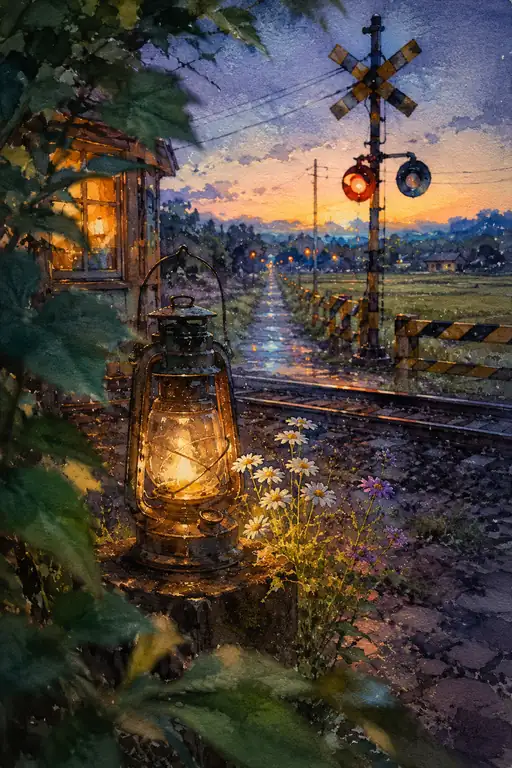 Wild Daisies by the Twilight Crossing
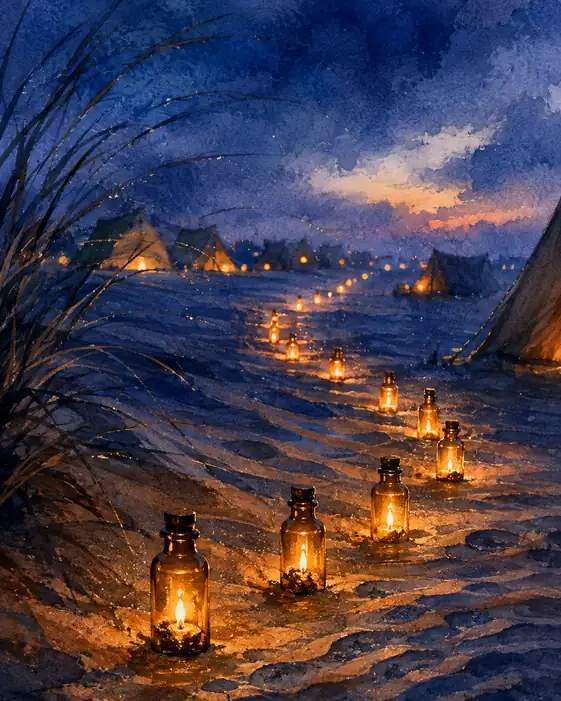 Trail of Amber Candles Along the Sandy Shore
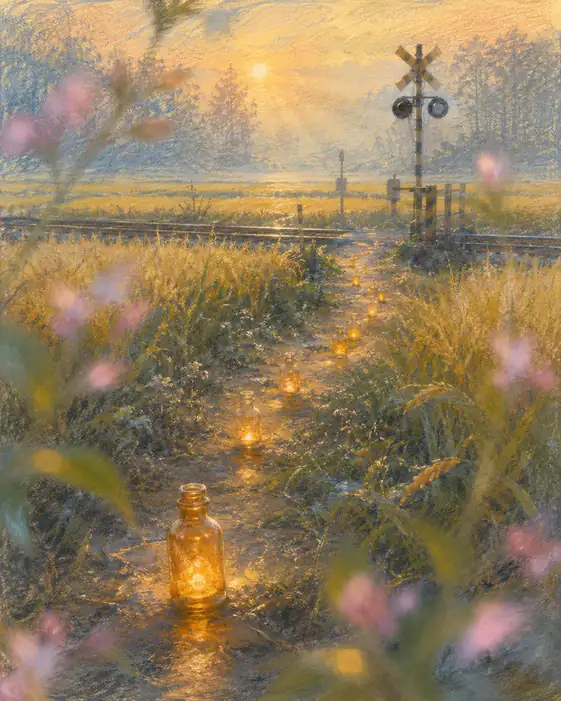 Path of Morning Glow Bottles Across the Field
 Sunset Train Path Captured in Glass
 Sunset Cosmos Reflected in the Railroad Lantern
 Raindrop Lamp by the Evening Railway
 Sunset Horizon Sealed in the Traveler's Lantern
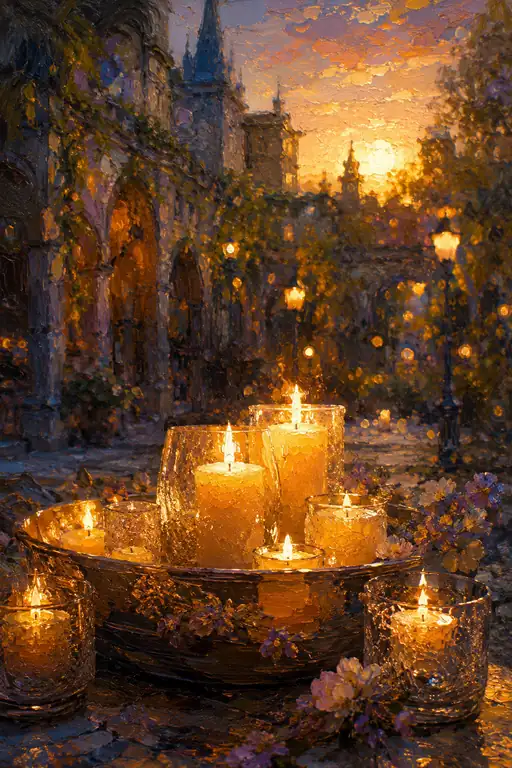 Bowl of Golden Flames in the Twilight Garden
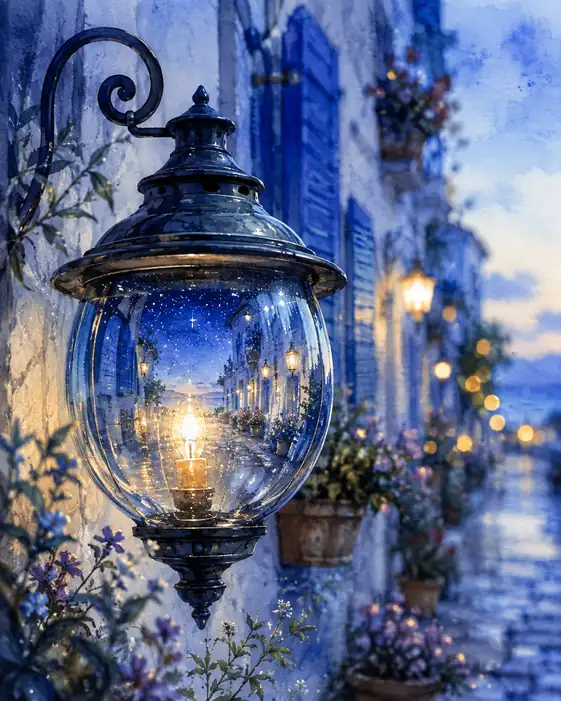 Sanctuary of Starlight in Glass
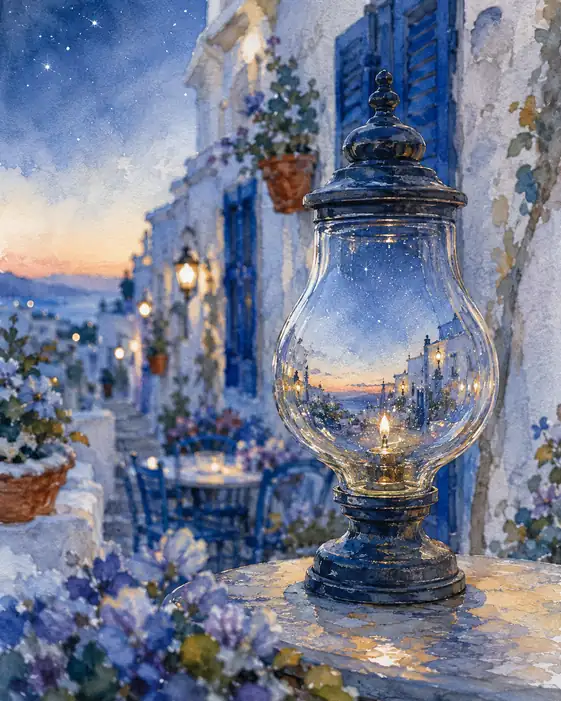 Twilight Captured in a Glass Orb