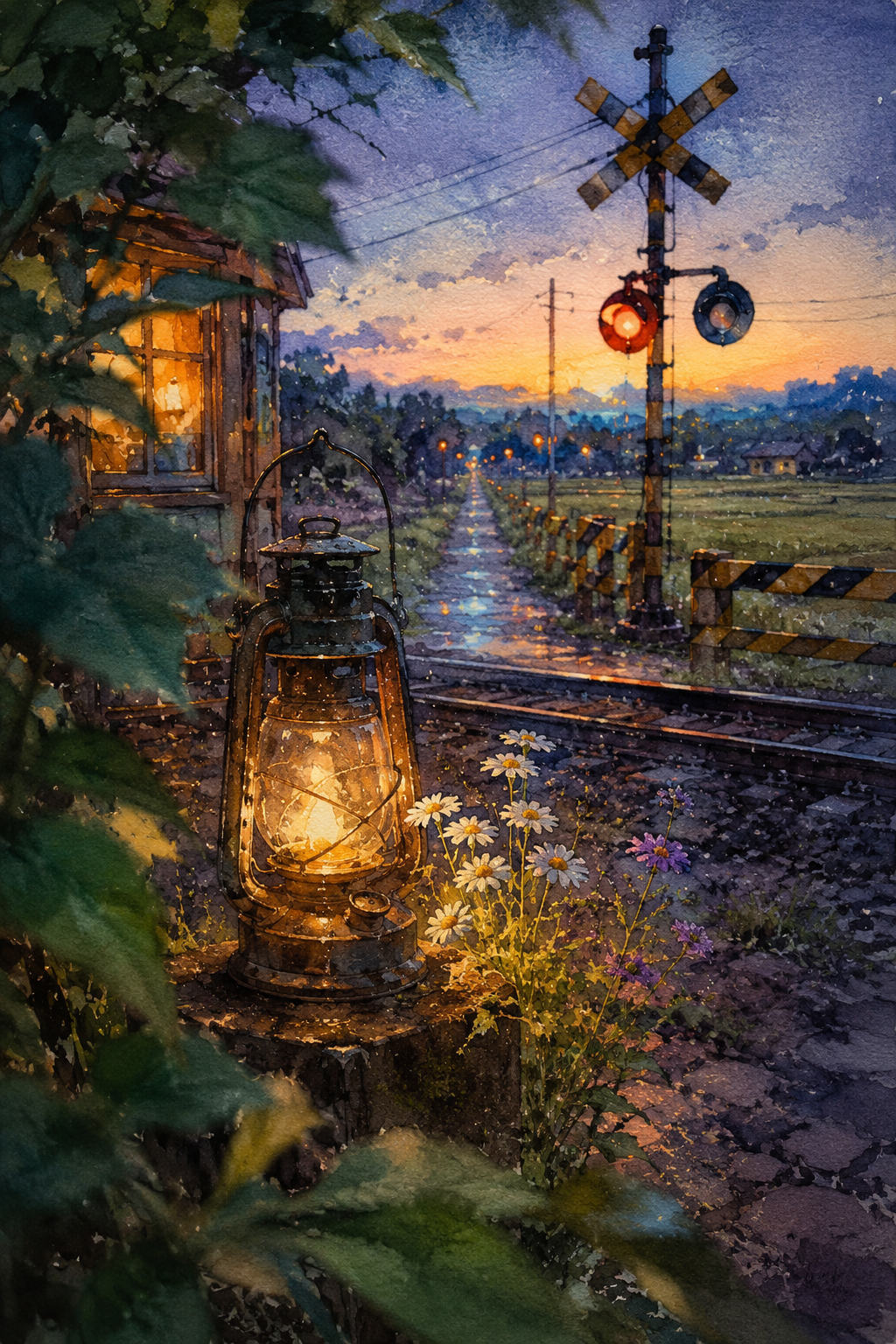
Wild Daisies by the Twilight Crossing
Critique
Introduction A glowing kerosene lantern beside a rural railway crossing turns an ordinary transport boundary into a scene of expectation. The watercolor balances handmade warmth, mechanical signals, and the long perspective of a road disappearing into twilight fields. Description The lantern stands on a low block at left center, surrounded by white daisies and purple wildflowers. Dark leaves partially screen it from the foreground. Rails cross the lower middle, while striped barriers and a signal mast occupy the right. A wet road runs straight toward distant orange lamps, scattered houses, and a peach-blue horizon. A small wooden building glows at far left. Analysis The road creates a central vanishing line, intersected sharply by the horizontal rails. Vertical signal posts add a third geometric direction. Against this rigid grid, flowers and leaves introduce irregular curves. Amber travels from the lantern to window, signal, and receding streetlights; blue-violet unifies sky, gravel, and wet road. The nearest lamp is crisply articulated in metal and glass, while distant points soften progressively. Foreground foliage creates a sheltered viewpoint. Interpretation and Evaluation Crossings embody pause and permission, and the lantern makes that waiting feel cared for rather than impersonal. Wildflowers reclaim the engineered margin without obstructing it. The empty road and raised anticipation of the signals imply an event just outside the frame, perhaps an approaching train. Romantic lighting is restrained by ballast, wires, striped paint, and the lantern’s worn metal. Conclusion The work finds lyricism in infrastructure. Its strongest achievement is integrating three kinds of guidance—rail signal, roadway lamps, and portable flame—within one coherent dusk. The result honors both travel’s systems and the small human gestures that make them hospitable.
Same Subcategory
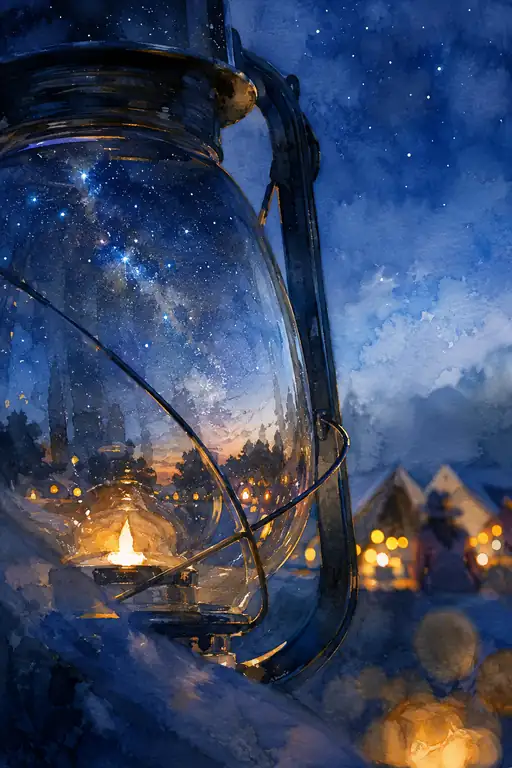 Galaxy Captured in the Traveler's Lamp
Similar Artworks
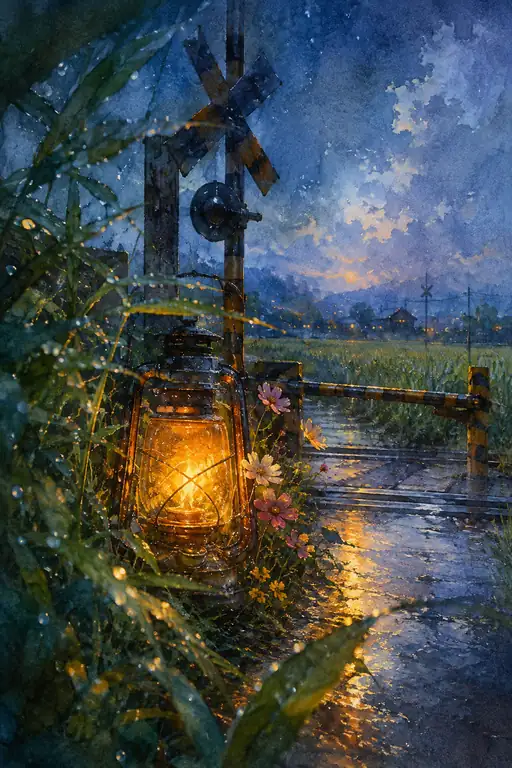 Raindrop Lamp by the Evening Railway
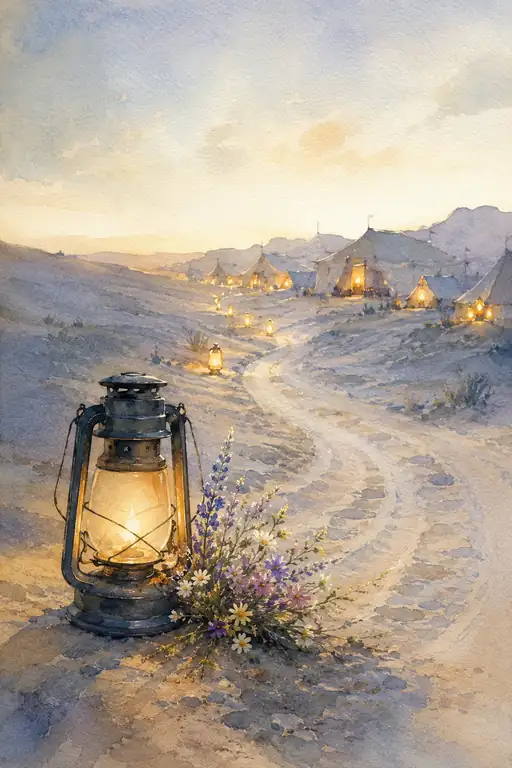 Trail of Golden Lanterns Across the Dunes
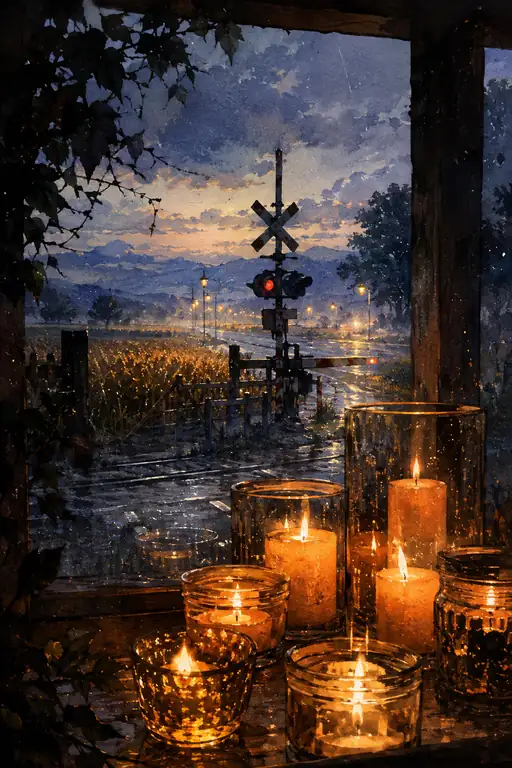 Candles by the Window Overlooking the Track
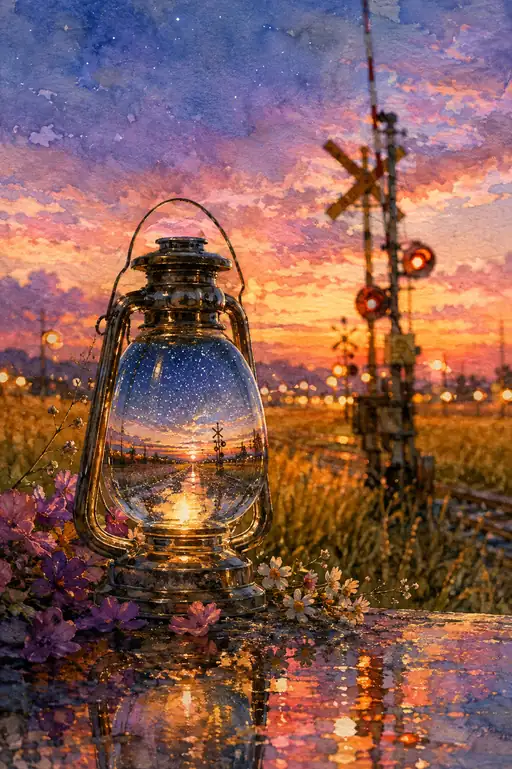 Sunset Train Path Captured in Glass
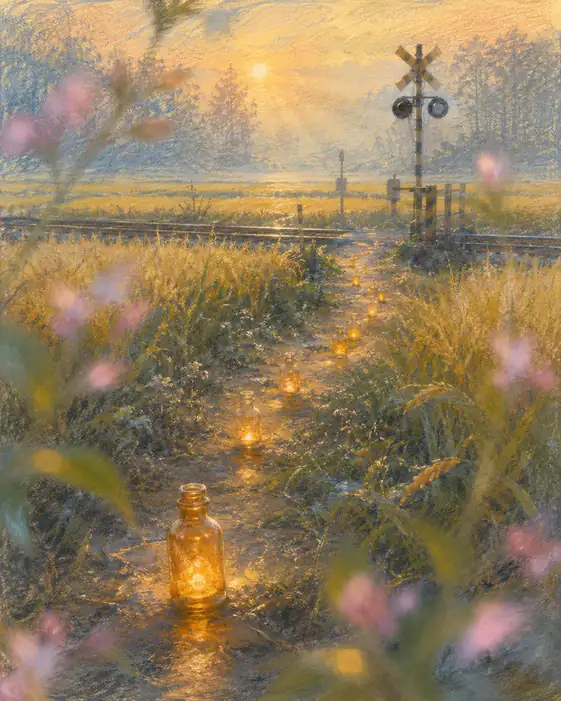 Path of Morning Glow Bottles Across the Field
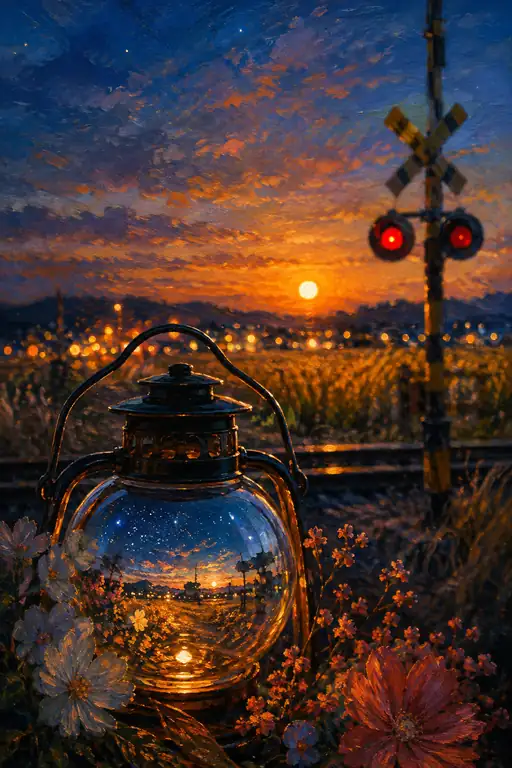 Sunset Cosmos Reflected in the Railroad Lantern
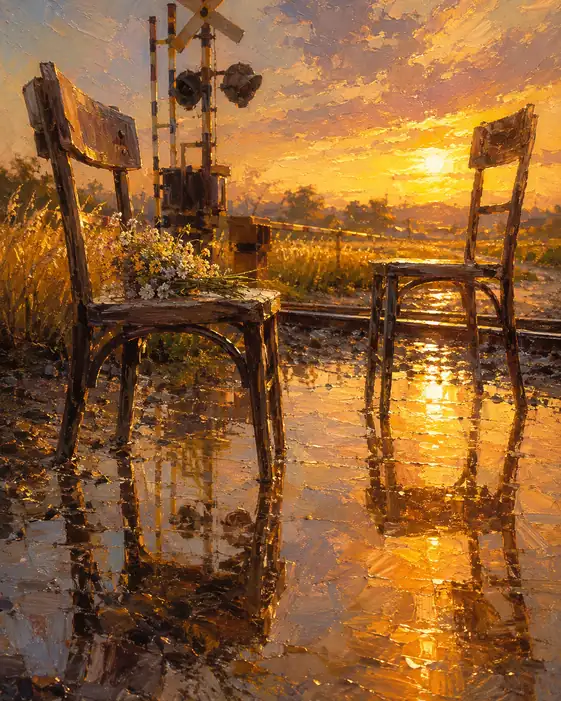 Sunset Soliloquy at the Rural Crossing
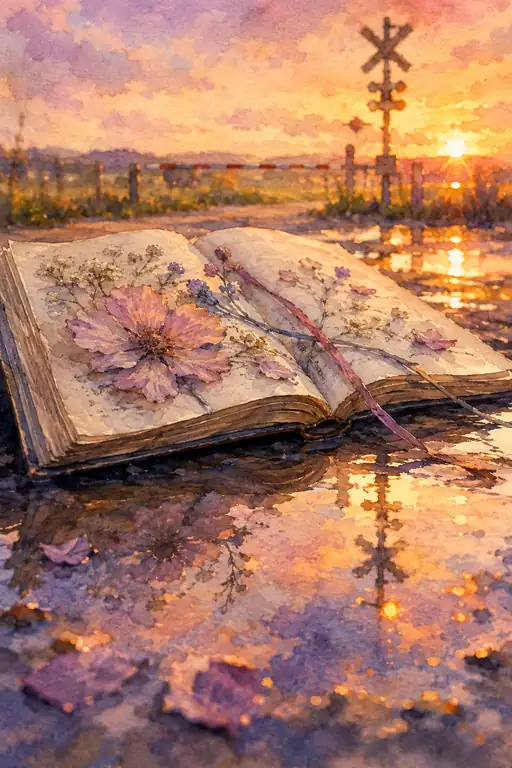 Autumn Blossom Book Beside the Sunlit Track
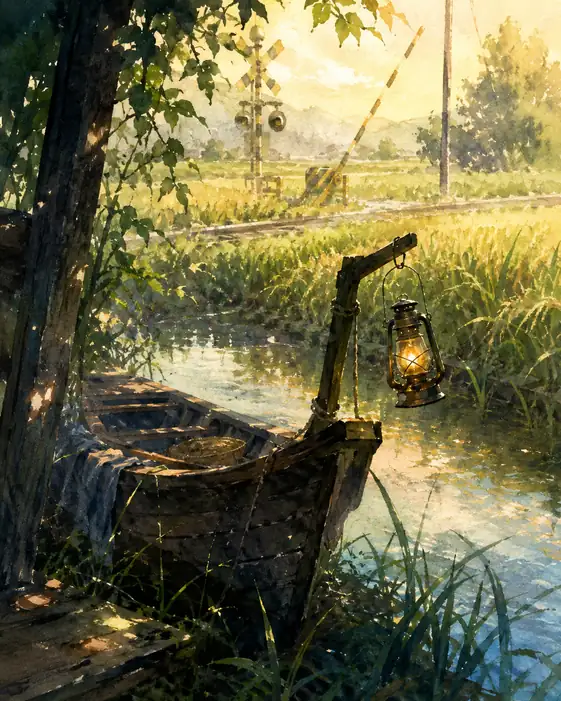 Resting Boat and Straw Hat by the Waterway
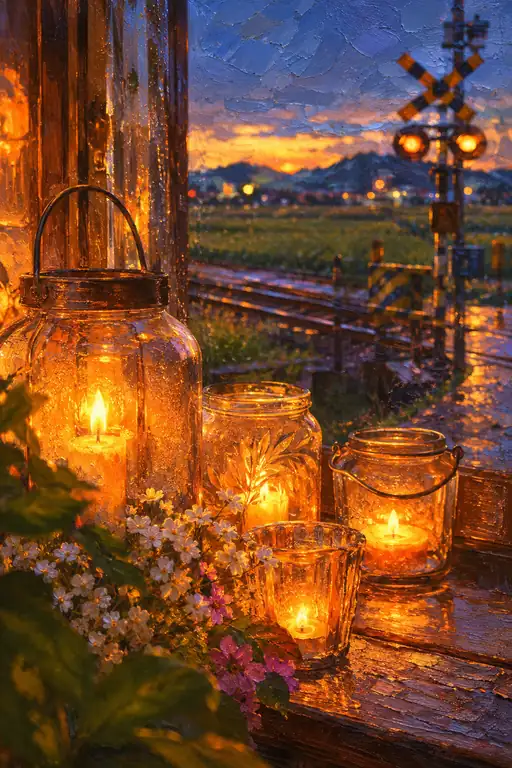 Warm Glow by the Rain-Drenched Crossing