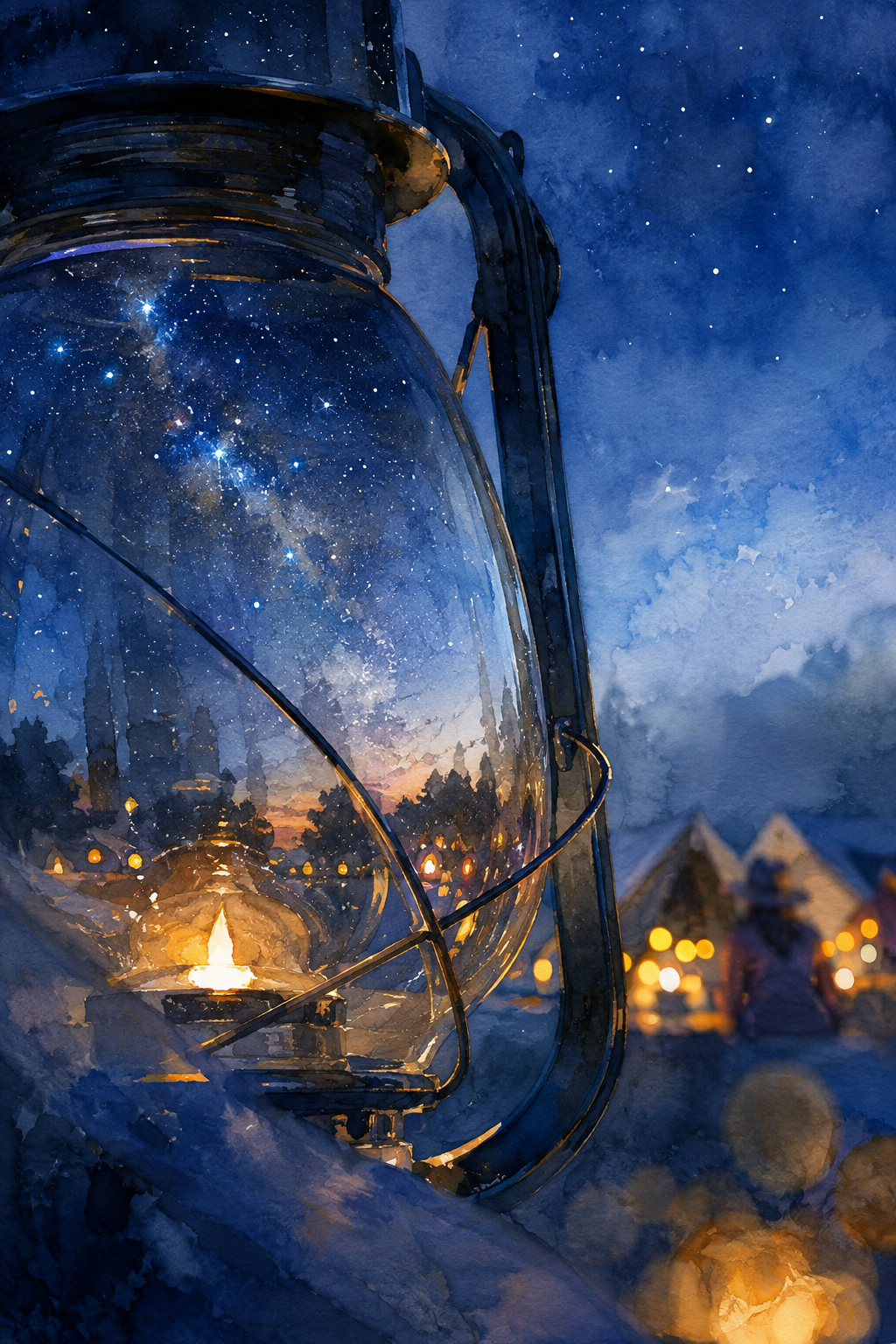
Galaxy Captured in the Traveler's Lamp
Critique
Introduction An immense oil lantern fills the foreground of a starry campsite, its curved glass reflecting a second, more elaborate world. The image turns a practical source of light into an instrument for holding landscape, memory, and cosmic scale. Description The lantern is cropped along the left and top edges, with a dark metal chimney, arched handle, crossing supports, and a small flame near its base. Across its bulbous glass appear stars, a luminous galactic band, distant spires, warm windows, and a dusk horizon. Outside the lantern, blue clouds and stars surround blurred triangular tents and amber lights at lower right. Analysis The glass globe acts as a picture within the picture. Its oval curvature bends the reflected town and concentrates the densest stars, contrasting with the more open sky outside. Black metal arcs sweep across both reflection and flame, supplying structure to otherwise fluid washes. Cobalt dominates, while limited gold traces the rim, burner, reflected windows, and camp. Sharp stellar pinpoints within the globe oppose soft bokeh in the distance, establishing distinct optical planes. Interpretation and Evaluation The lantern appears to contain more than it illuminates: an entire settlement and cosmos gather on its surface. This reversal makes human craft a vessel for wonder rather than a rival to nature. The reflected city may be literal or imagined, and that uncertainty enriches the object. Decorative abundance is considerable, yet metal wear, soot-dark parts, and the modest wick retain functional credibility. Conclusion The painting’s audacious scale allows close observation to become cosmology. By separating reflected, transparent, and distant space, it gives one glass surface remarkable depth. A humble lamp becomes a portable night world, held together by a vulnerable flame.
Same Subcategory
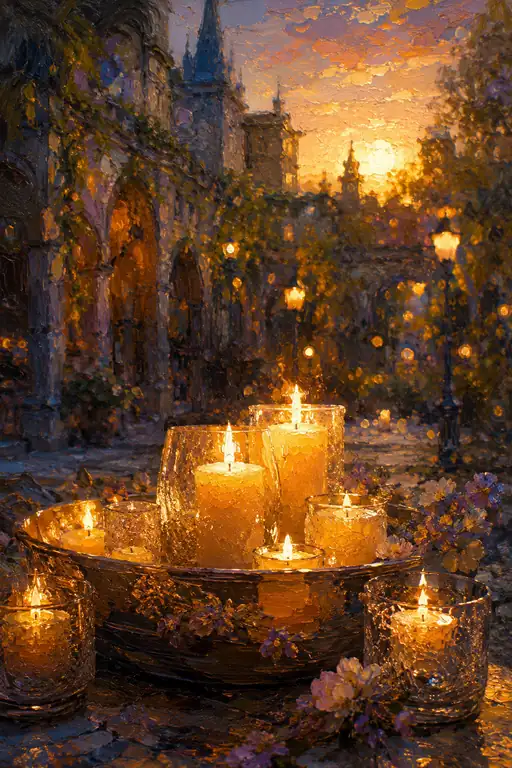 Bowl of Golden Flames in the Twilight Garden
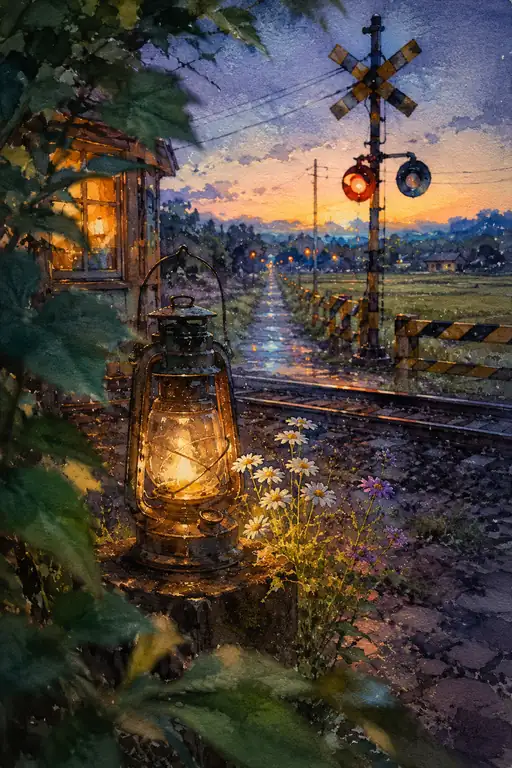 Wild Daisies by the Twilight Crossing
Similar Artworks
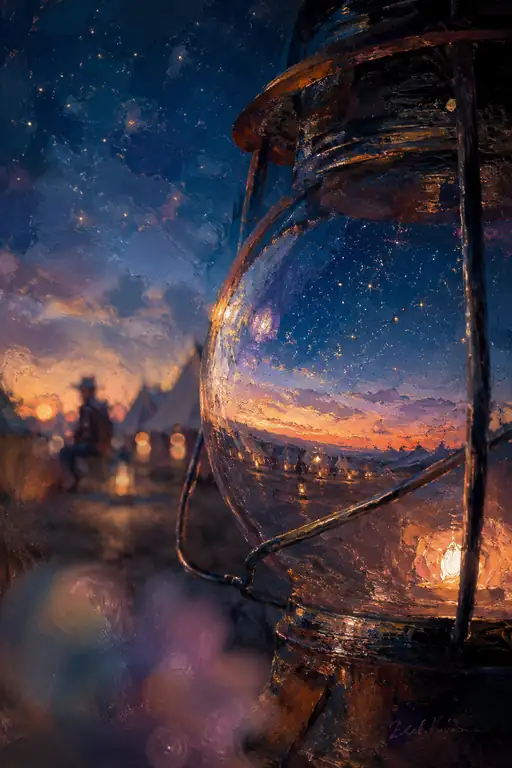 Sunset Horizon Sealed in the Traveler's Lantern
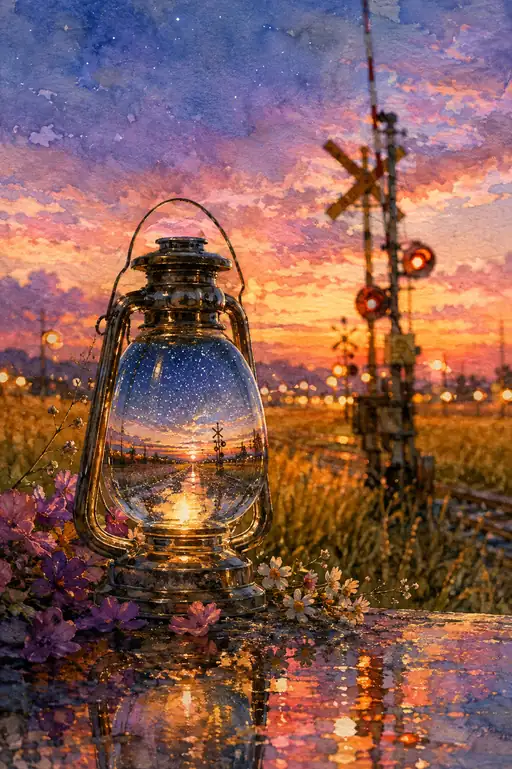 Sunset Train Path Captured in Glass
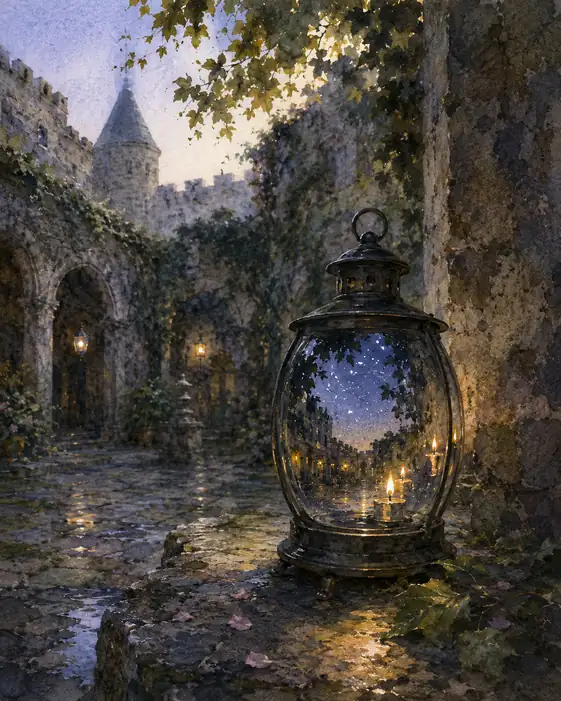 Starry Realm Within the Cloister Lantern
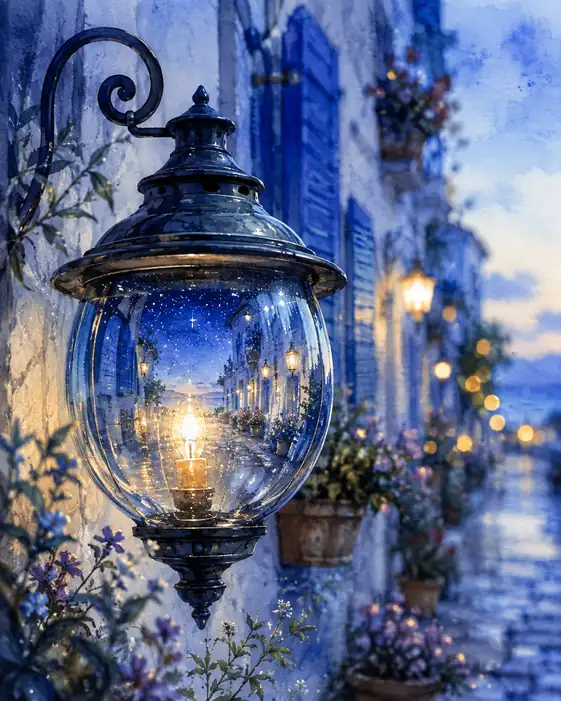 Sanctuary of Starlight in Glass
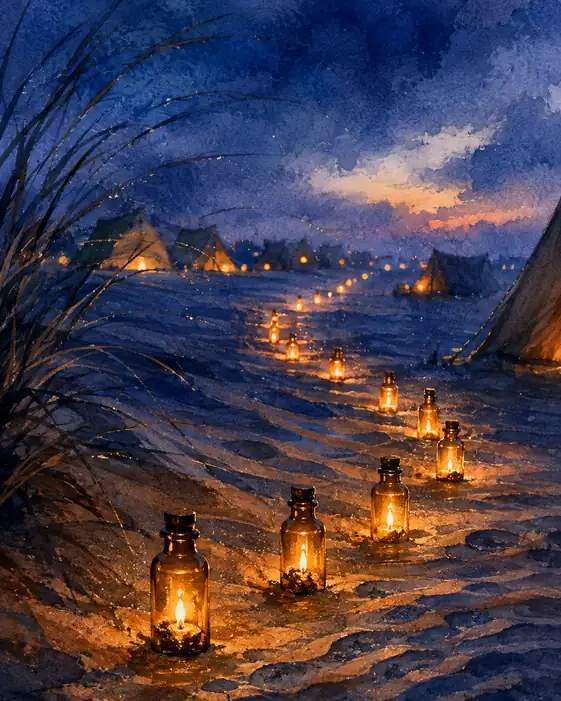 Trail of Amber Candles Along the Sandy Shore
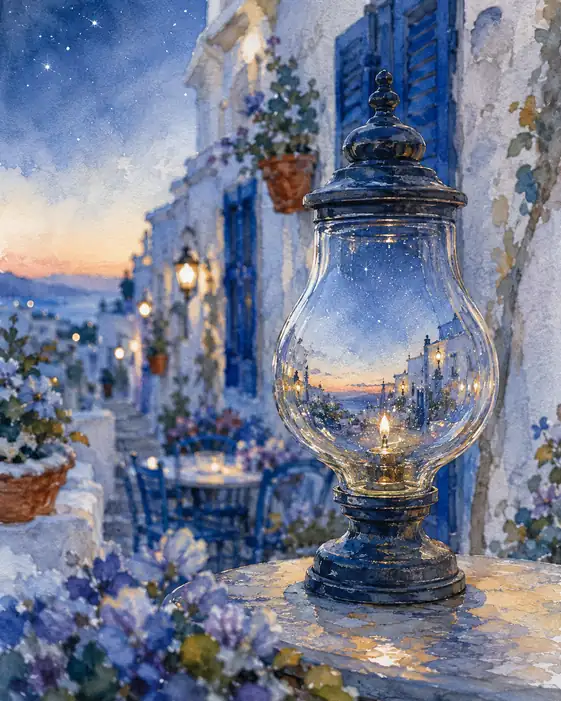 Twilight Captured in a Glass Orb
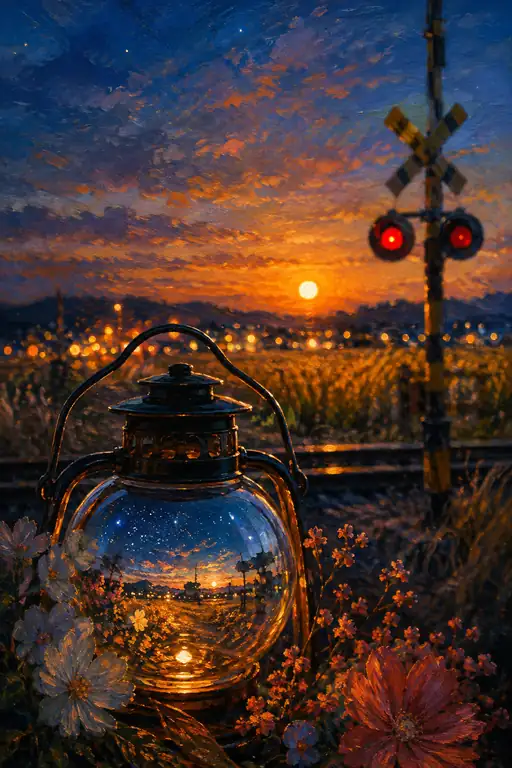 Sunset Cosmos Reflected in the Railroad Lantern
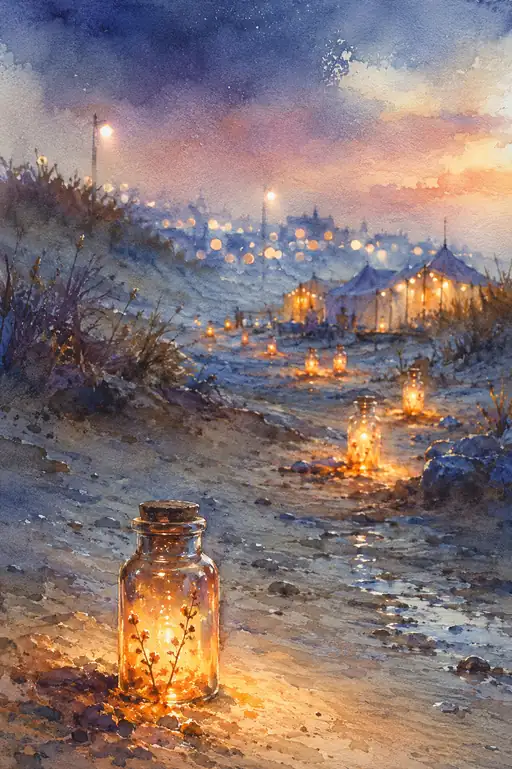 Guiding Firefly Bottles along the Twilight Trail
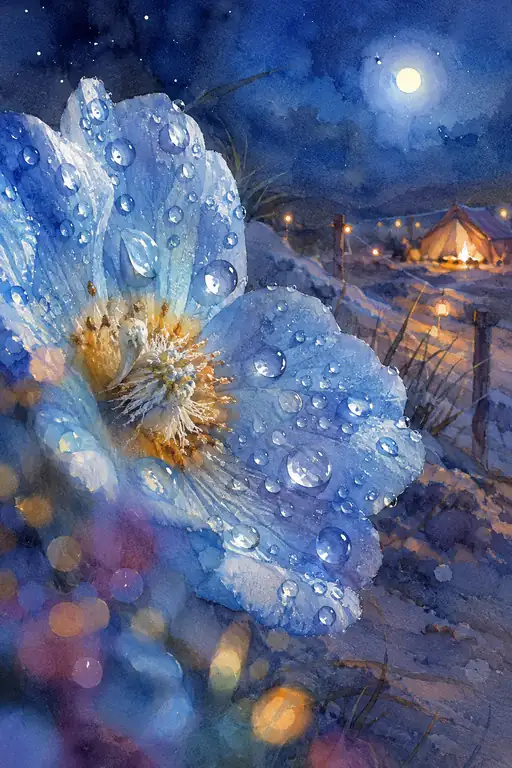 Moonlit Dew on the Azure Petals
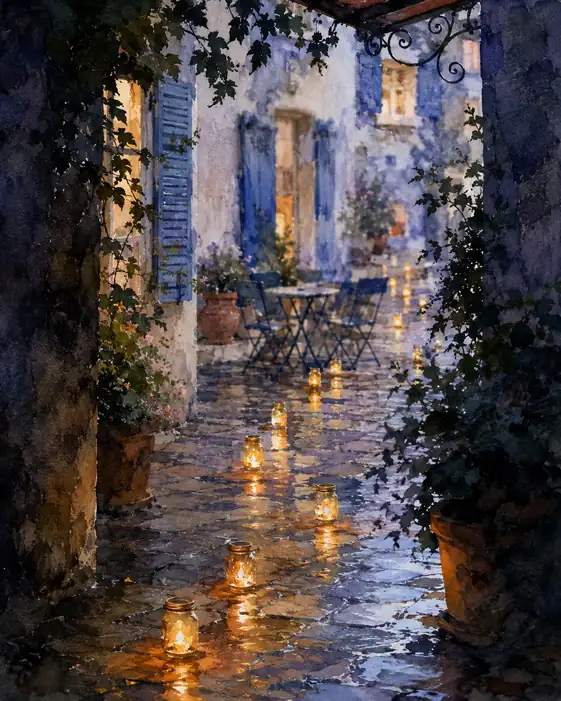 Gentle Step Across Reflected Lanterns