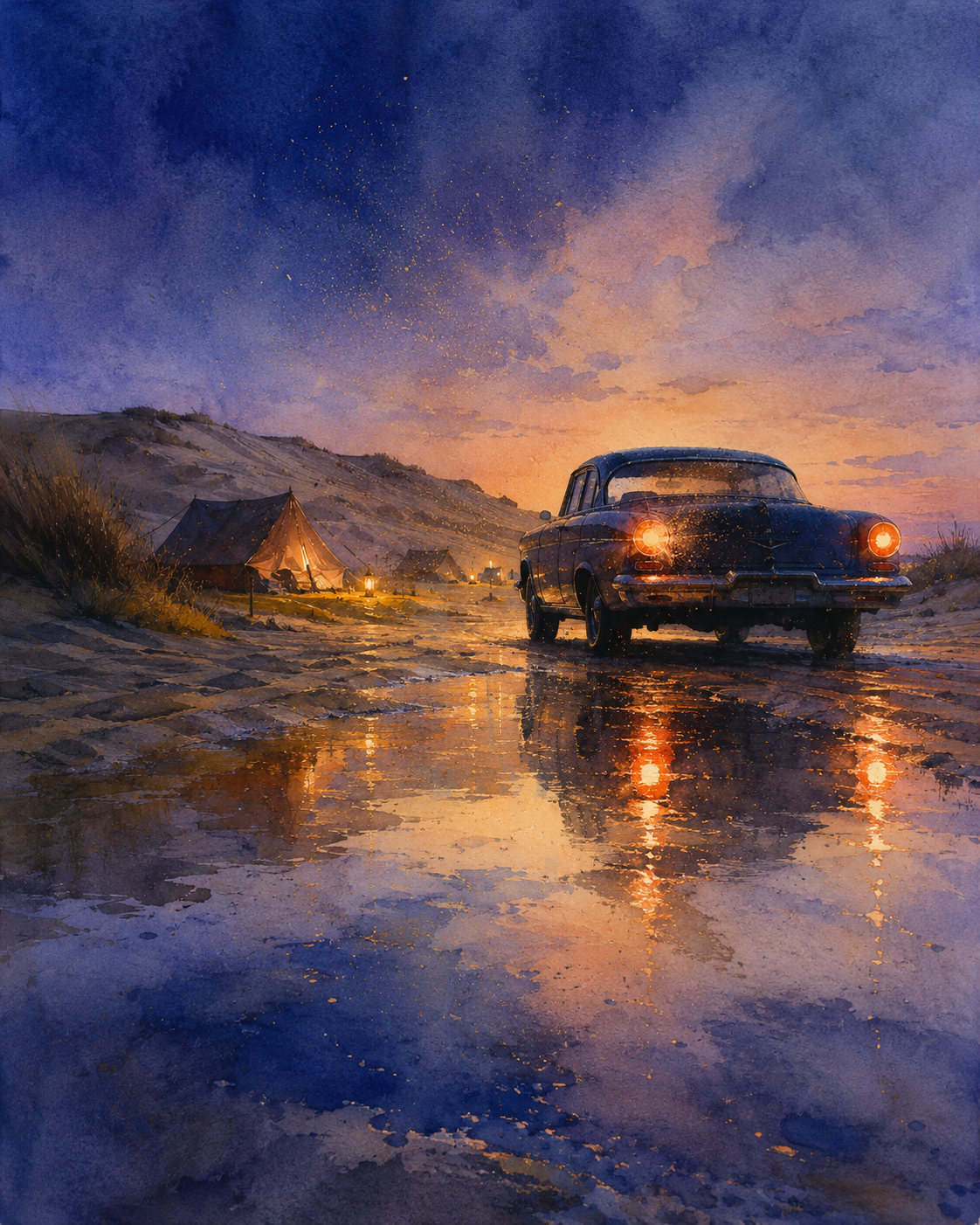
Twilight Traveler Resting by the Dunes
Critique
Introduction A vintage sedan pauses beside a camp after rain, its tail lights reflected across a puddle. The painting joins road travel with a convincing account of wet ground, temporary shelter, and fading weather. Description The car stands at mid-right, viewed from behind, with two red-orange lamps glowing. To the left, a large canvas tent shines warmly among smaller shelters and low dune grasses. The road and puddles occupy most of the foreground, mirroring car, lights, and peach horizon. Violet-blue clouds open above distant hills, and fine golden specks drift through the air. Analysis The vehicle’s horizontal mass counters the vast vertical expanse of sky and reflection. Its placement off-center leaves a clear visual route toward the lit tent. Red tail lights repeat below as elongated broken forms, while smaller camp lamps carry amber laterally. Cool indigo and mauve dominate; peach and orange concentrate near shelter and horizon. Granulating washes describe cloud and mud, whereas firmer edges preserve the car’s engineered shape. The low viewpoint amplifies reflective ground and makes arrival feel bodily immediate. Interpretation and Evaluation The illuminated rear suggests the car has only just stopped, turning the image into a threshold between motion and rest. Tents promise provisional safety rather than permanent home. Rainwater doubles the scene but distorts it, making the destination feel both real and dreamlike. Golden airborne flecks verge on enchantment, yet tire shadow, rutted ground, and damp canvas keep the mood grounded. Conclusion The work gives travel an emotional pause without resolving what comes next. Its most effective device is the puddle, which expands a modest campsite into a luminous field. Vehicle, shelter, and weather become equal participants in an image of hard-won arrival.
Same Subcategory
Similar Artworks
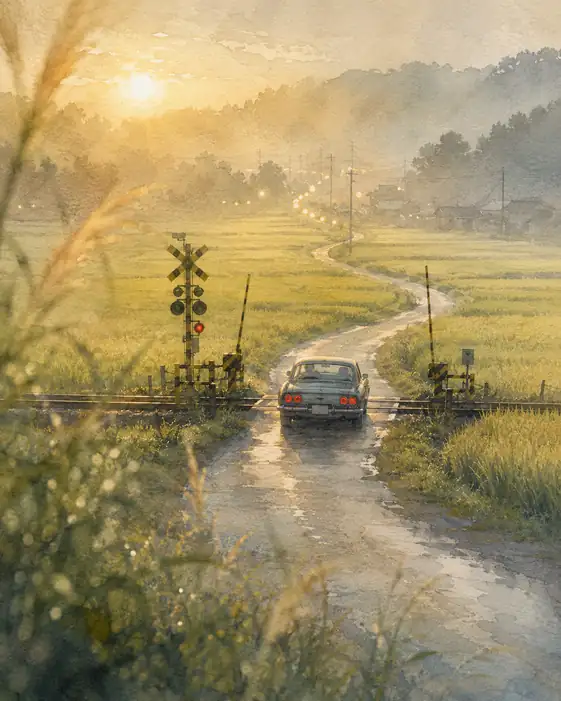 Country Crossing Journey in the Golden Mist
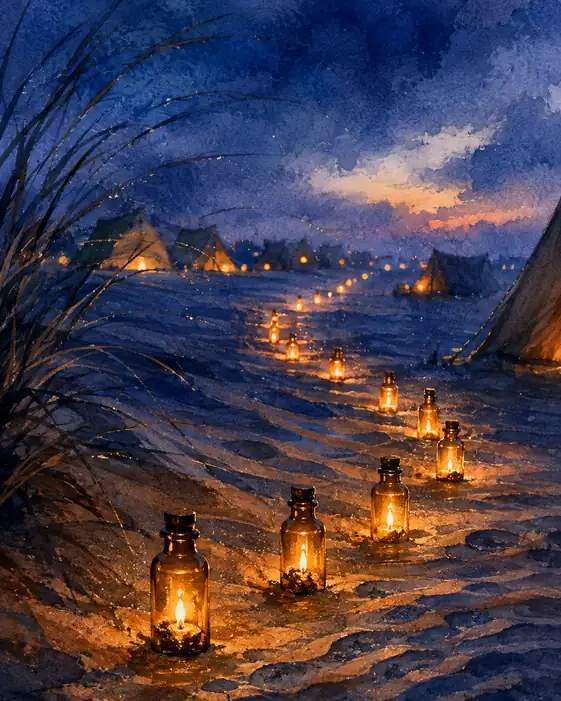 Trail of Amber Candles Along the Sandy Shore
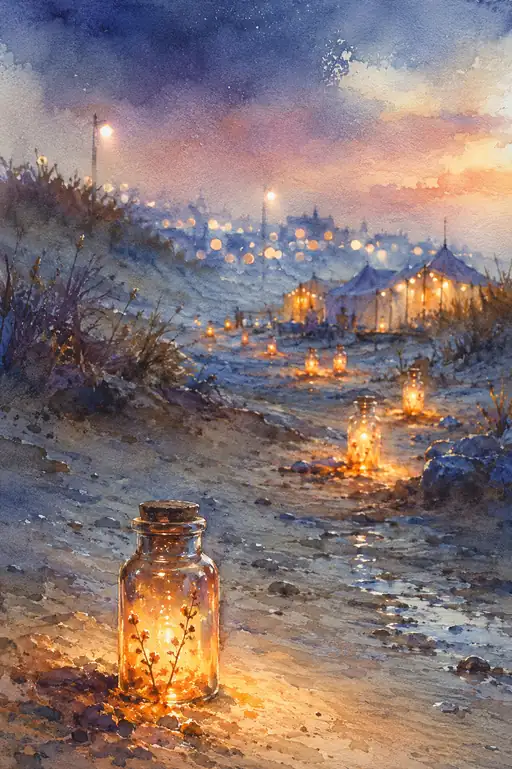 Guiding Firefly Bottles along the Twilight Trail
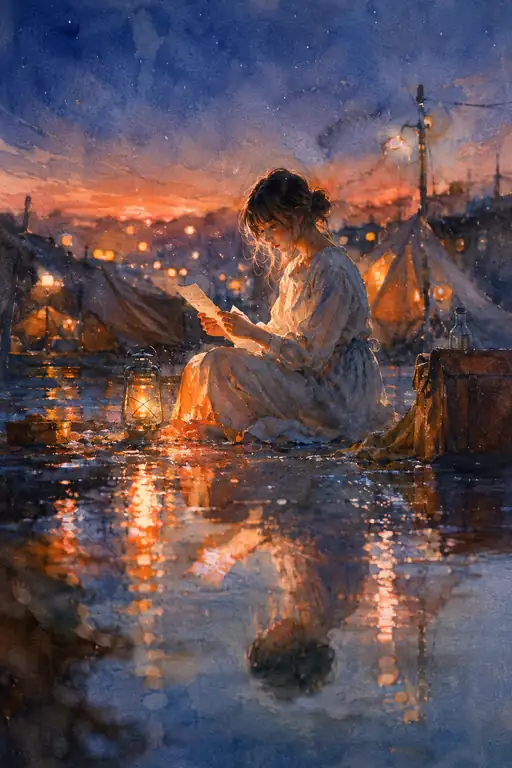 Midnight Letter Under the Canopy of Stars
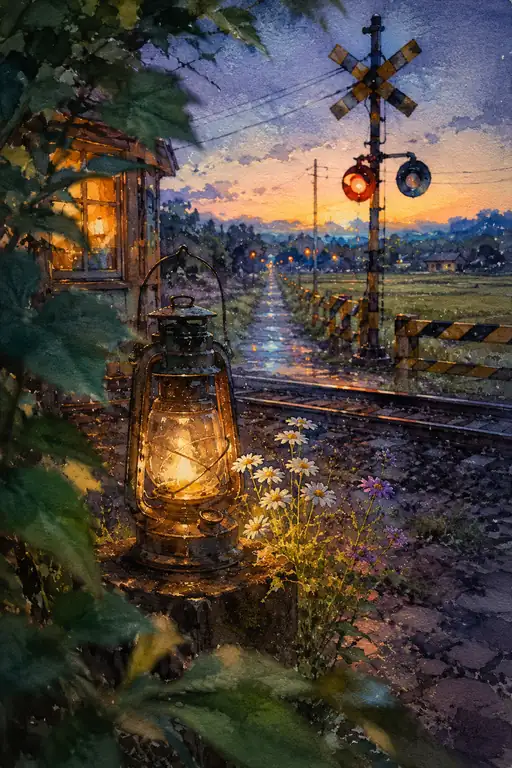 Wild Daisies by the Twilight Crossing
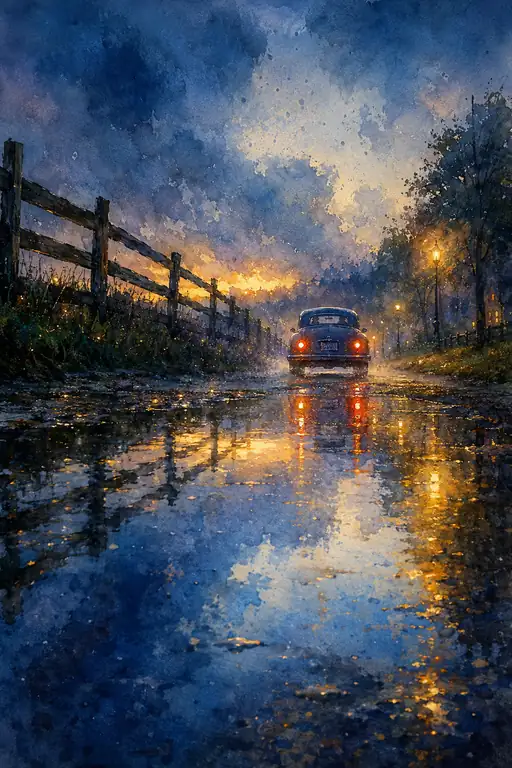 Rain Carries the Last Car Toward Sunset
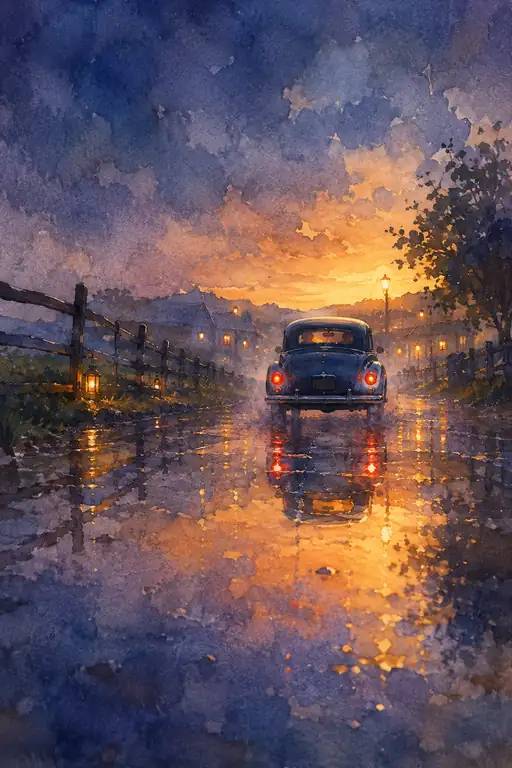 The Blue Car Drives into a Burning Sky
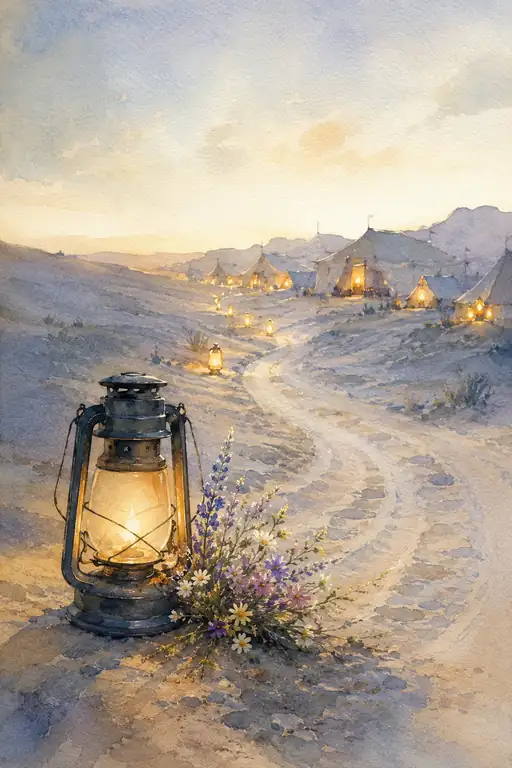 Trail of Golden Lanterns Across the Dunes
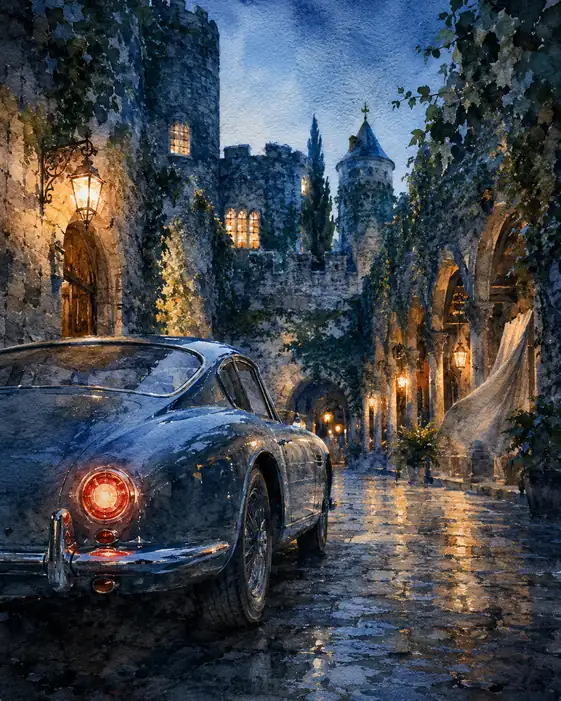 Nightfall Return to the Medieval Haven
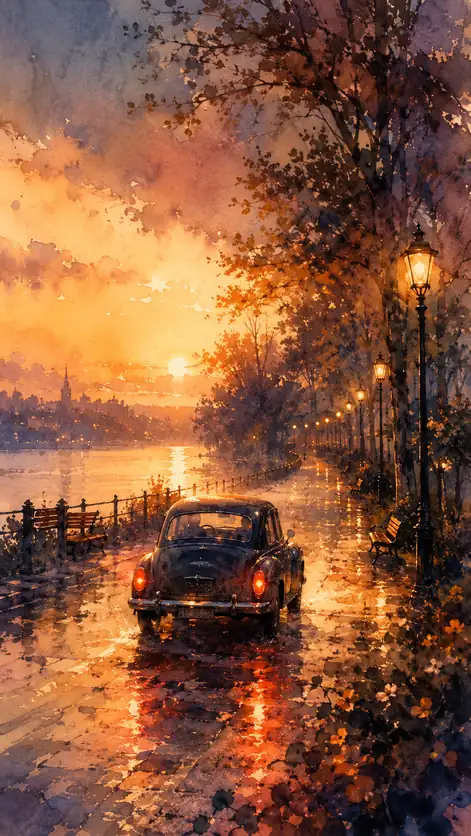 Taillights, Flowers of Dusk