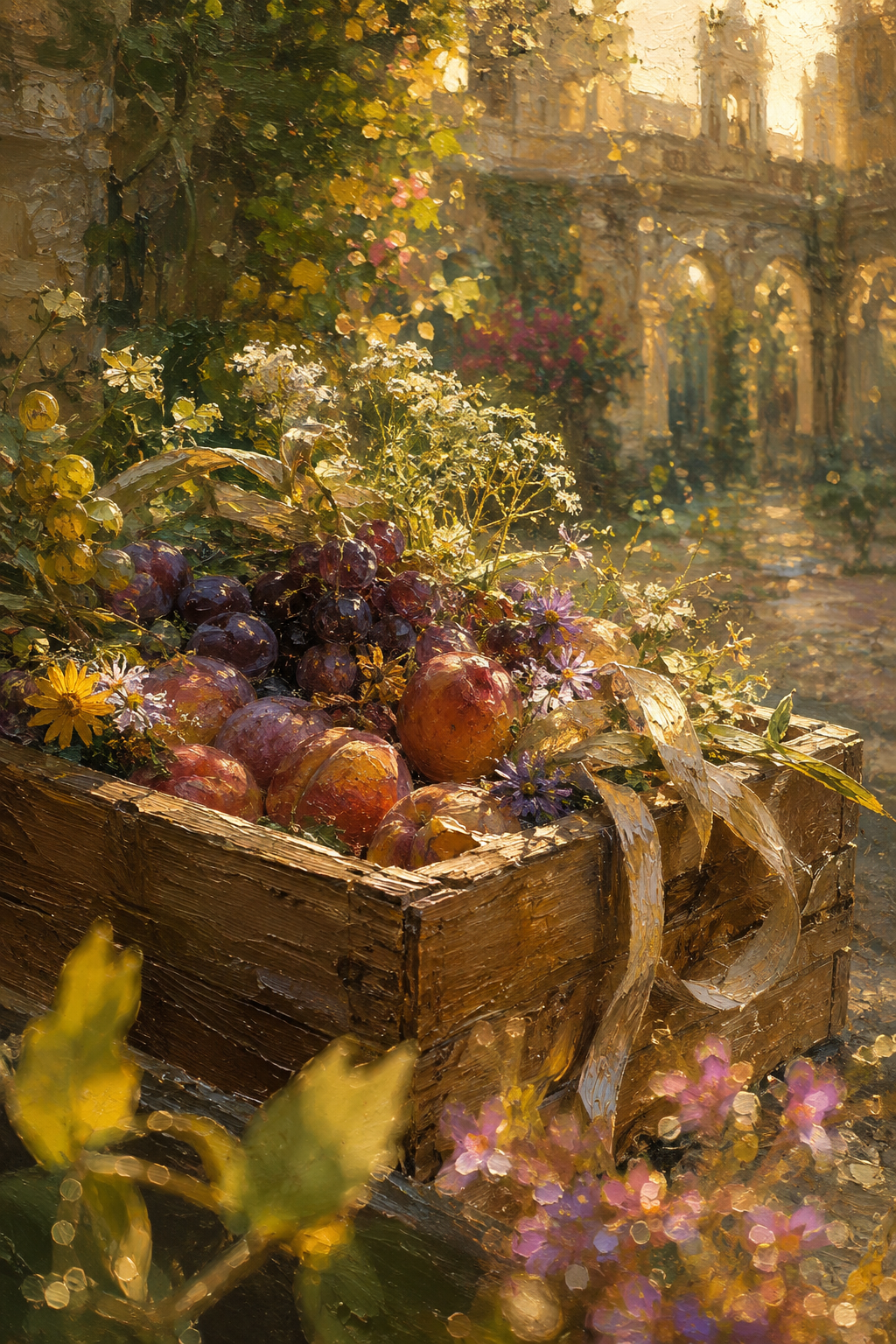
Sun-Drenched Harvest of the Abbey Garden
Critique
Introduction A wooden crate overflowing with fruit and wildflowers occupies a glowing cloister garden. The painting treats abundance not as polished display but as a freshly gathered, weighty harvest embedded in a living place. Description The crate fills the lower left and center, packed with red apples, dark purple grapes, a few green grapes, leaves, white umbels, and violet daisylike flowers. Two pale straps spill over its right edge. Behind, a sunlit path curves through climbing roses toward a Gothic arcade and ruined upper walls. Foreground leaves and pink blossoms blur along the bottom. Analysis The crate’s firm rectangle stabilizes an unruly mound of circles, stems, and petals. Fruit overlaps densely, with highlights describing taut skins and deep maroon shadows creating weight. Diagonal straps lead from the harvest into the path, while the path itself carries vision toward the arches. Gold saturates wood, stone, and foliage; purple in grapes, flowers, and distant roses supplies the principal countercolor. Thick, broken strokes unify surfaces while shifts in focus separate foreground, harvest, and architecture. Interpretation and Evaluation The mixed contents suggest gathering rather than commercial sorting: fruit, weeds, and flowers remain entangled. This makes abundance feel seasonal and connected to labor. Weathered wood and bruised color prevent the harvest from appearing immaculate. The radiant ruin implies continuity, as cultivated life fills architecture marked by loss. Although the golden light idealizes the scene, the crate’s splintered corners and crowded weight maintain credibility. Conclusion The work makes plenty persuasive through texture and disorder. Its strongest relation is between container and garden: the crate temporarily gathers what the surrounding place continues to grow. Light turns the harvest celebratory without erasing its material heaviness or fleeting season.
Same Subcategory
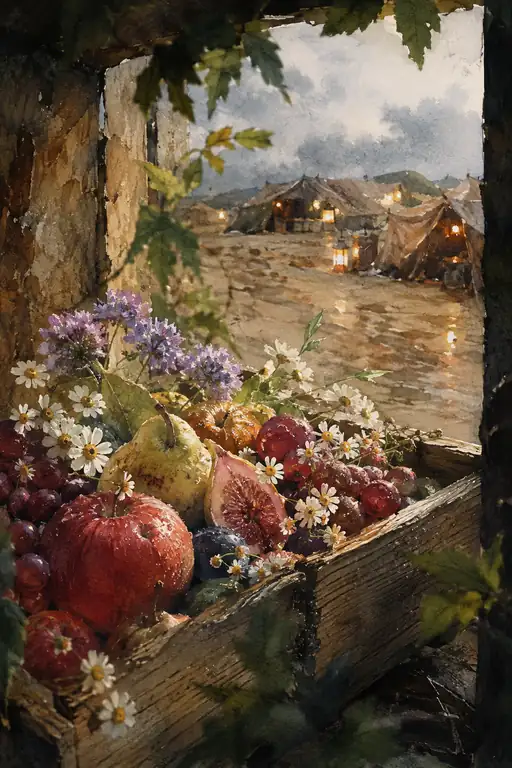 Window Still Life Before the Nomad Village
Similar Artworks
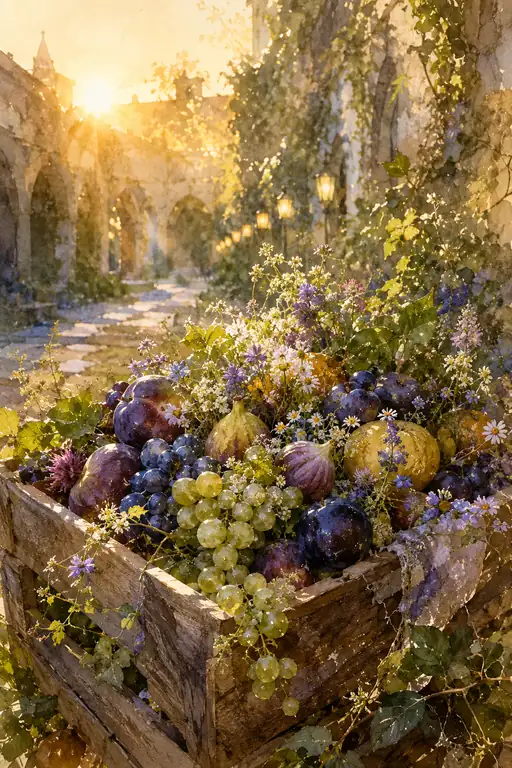 Golden Harvest in the Cloistered Sun
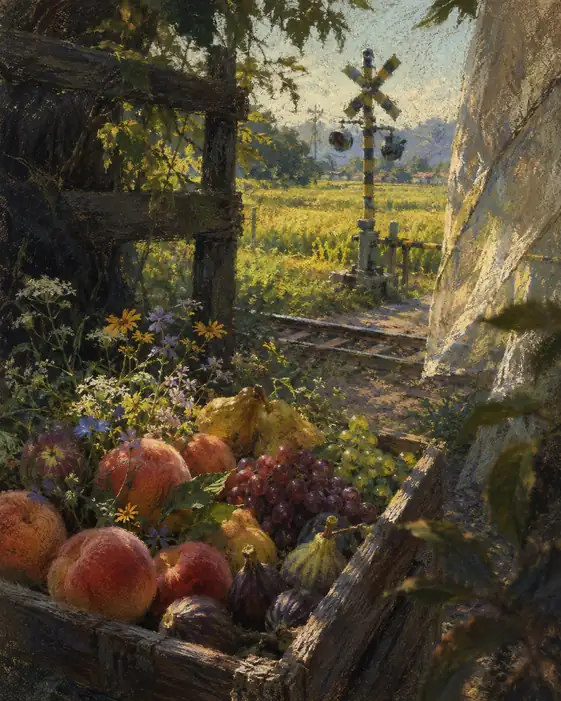 Autumn Harvest Beside the Rural Crossing
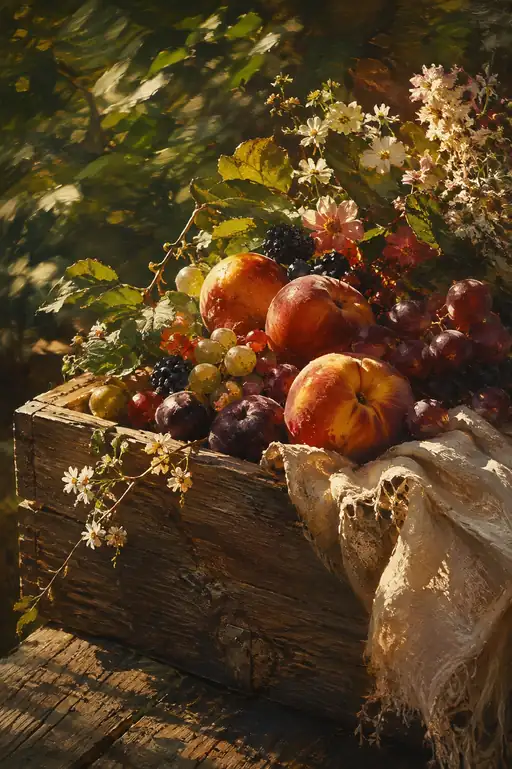 Rustic Wooden Box of Autumn Blessings
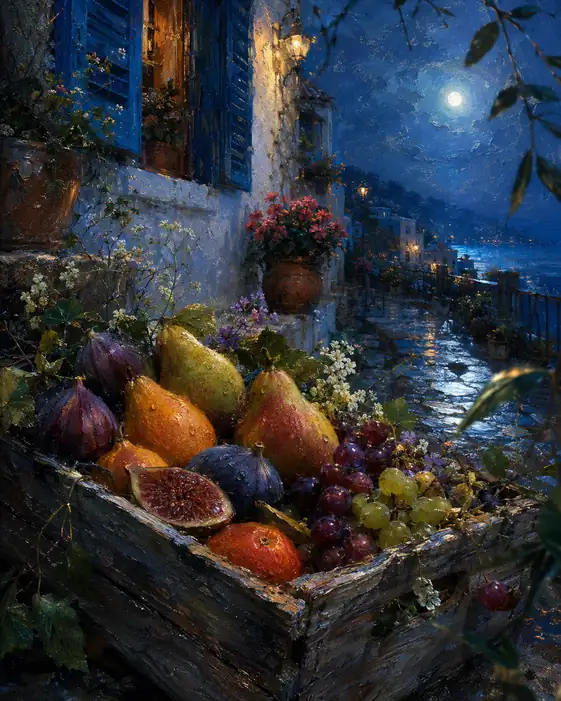 Moonlit Still Life Above the Coast
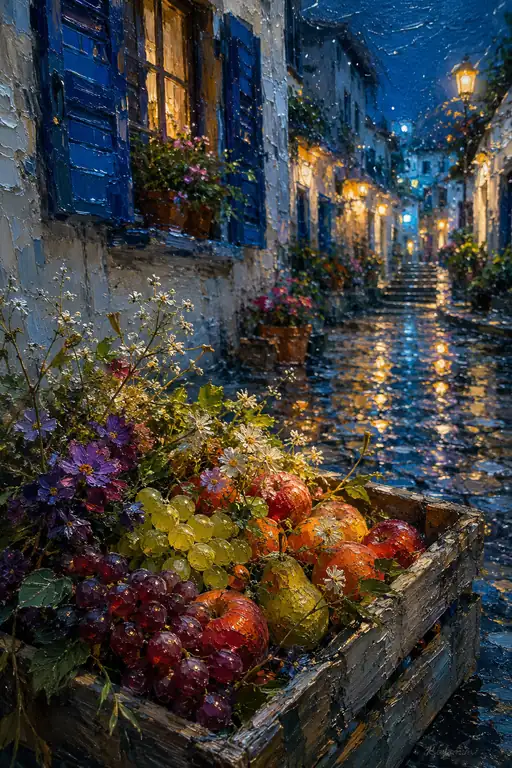 Crates of Abundance at the Lane's Foot
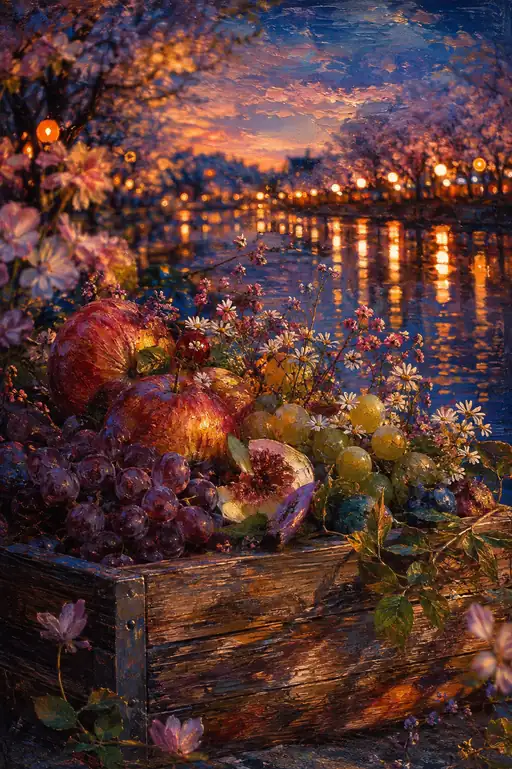 Twilight Harvest by the Blossomed Riverside
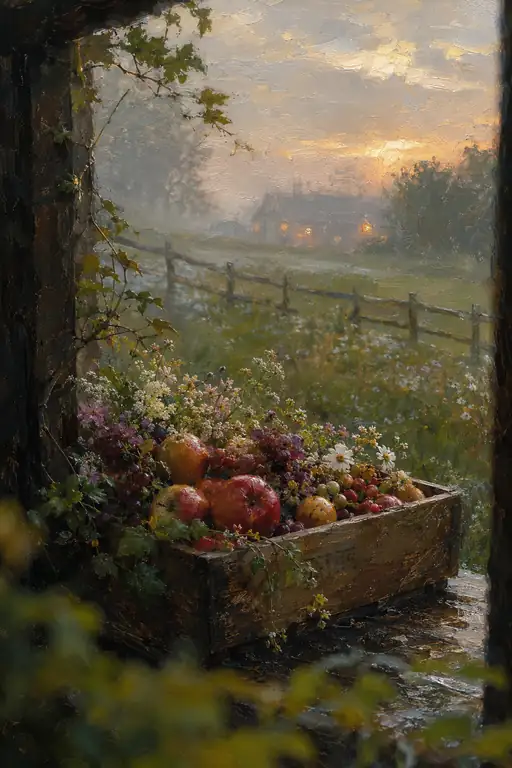 The Harvest Waits at the Threshold of Evening
 Golden Dusk Aboard the Flower Boat
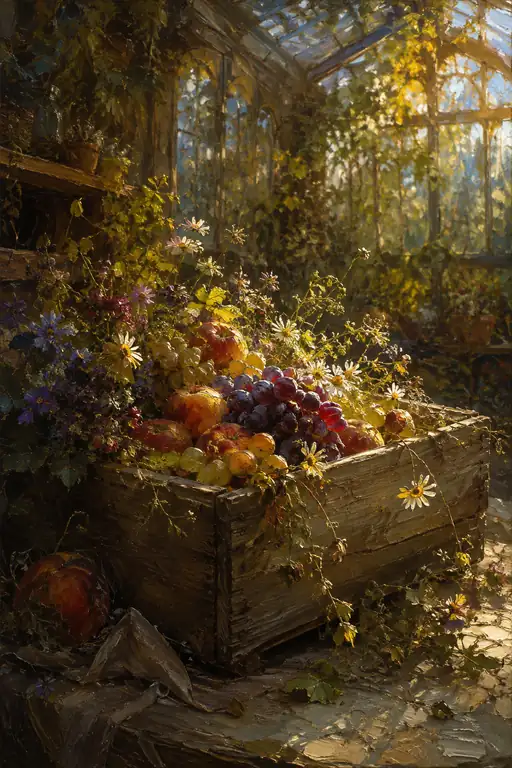 Autumn Overflows the Forgotten Crate
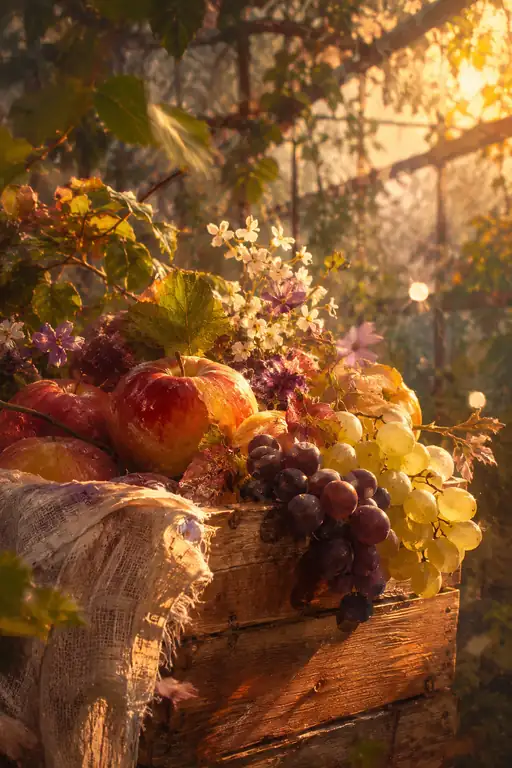 The Harvest Blushes in Greenhouse Gold