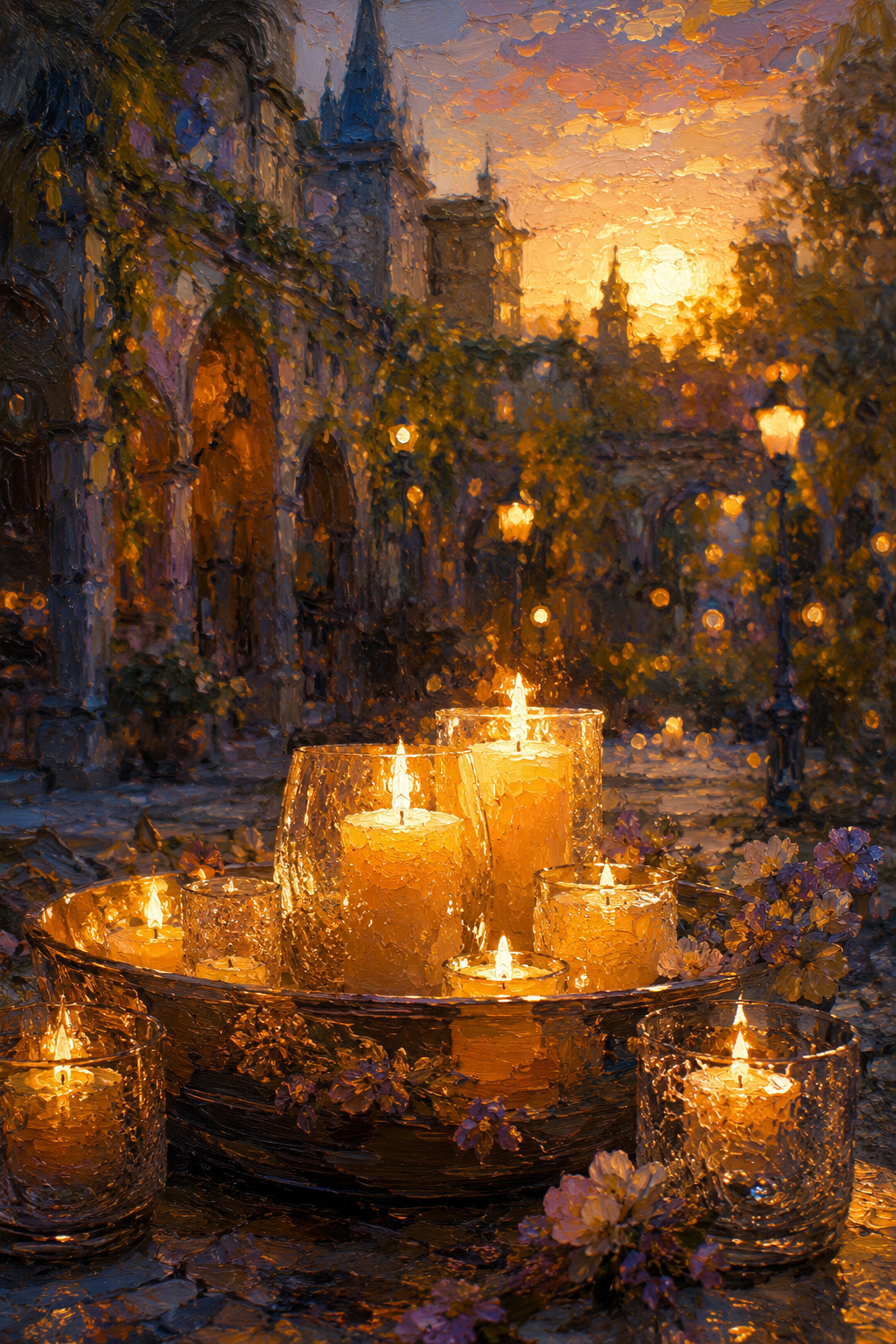
Bowl of Golden Flames in the Twilight Garden
Critique
Introduction A cluster of candles in thick glass vessels occupies the foreground of a city street at sunset. Dense impasto-like handling turns flame, architecture, and sky into one continuous material field while preserving a strong hierarchy of light. Description Several candles of different heights gather in and around a broad dark tray, accompanied by small purple and white flowers. Their golden glass fills the lower half. Beyond, a lamplit avenue recedes between Gothic facades and trees toward towers silhouetted against an orange sun. Violet clouds spread across the upper sky. Analysis Overlapping cylinders create a compact foreground pyramid, with the tallest rear candle aligning beneath the distant sun. Repeated flames and streetlamps carry amber points into depth. Complementary violet and orange organize the palette, while near-black architecture gives both colors intensity. Thick, broken strokes describe glass reflections, foliage, stone, and cloud with related texture; changes in edge sharpness distinguish their substances. The tray’s dark ellipse stabilizes the vertical candles and separates them from the road. Interpretation and Evaluation The arrangement resembles an offering or communal vigil, although no explicit event is named. Flowers soften the ceremonial gravity, and the continuation of lamps into the city suggests that private remembrance belongs to a wider inhabited world. The sheer abundance of gold approaches visual excess, but dark intervals between vessels and cool shadows preserve legibility. Each flame remains small enough to feel vulnerable against the sunset. Conclusion The work makes artificial and natural light partners rather than rivals. Its foreground candles echo the dying sun, then pass their glow to the street beyond. Material richness supports an emotionally open image of remembrance, gathering, or gratitude.
Same Subcategory
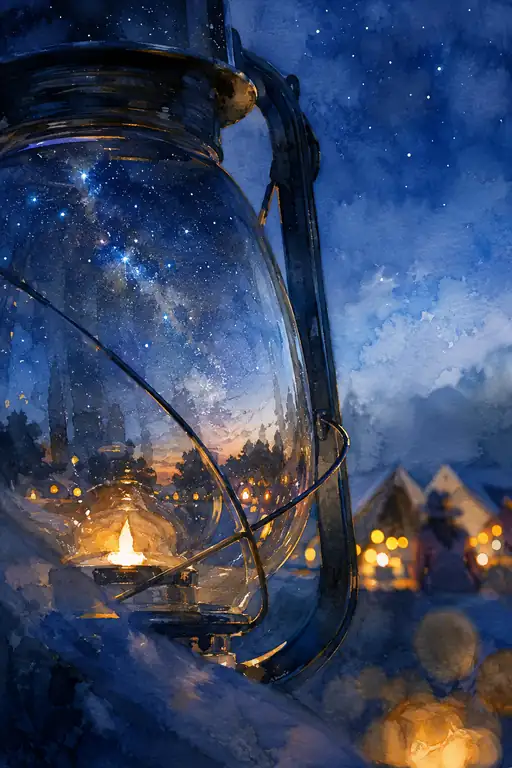 Galaxy Captured in the Traveler's Lamp
Similar Artworks
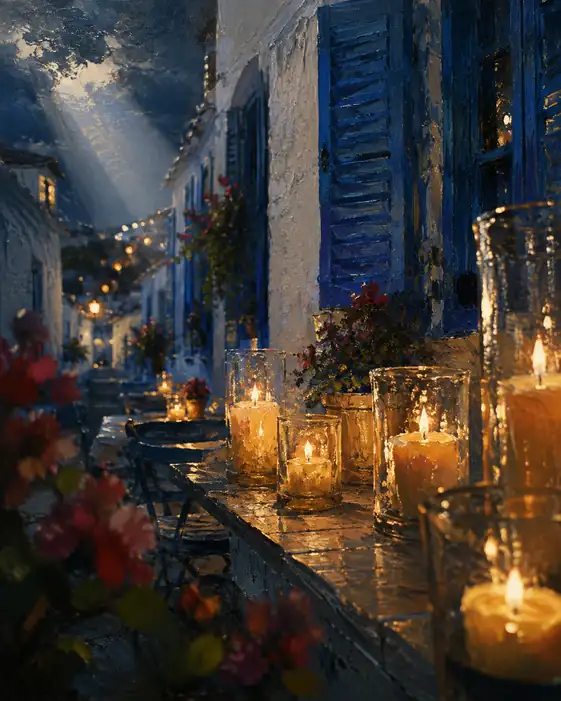 Tender Flame Kept from the Storm
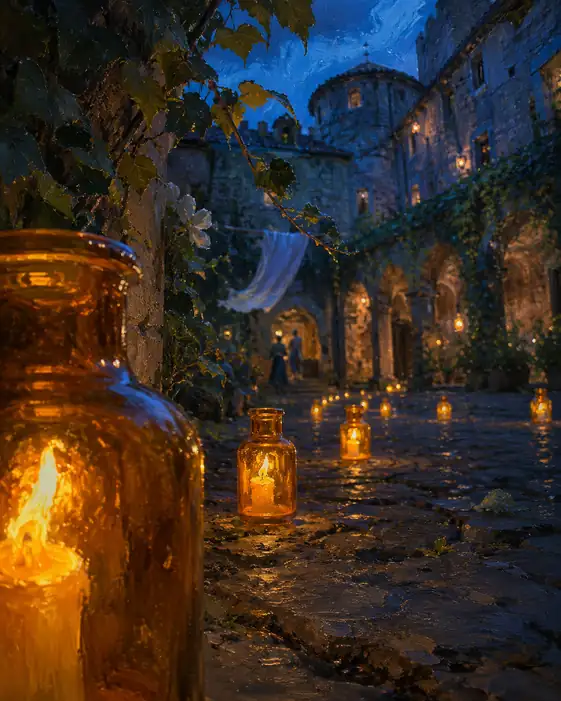 Amber Glow Guiding the Evening Walk
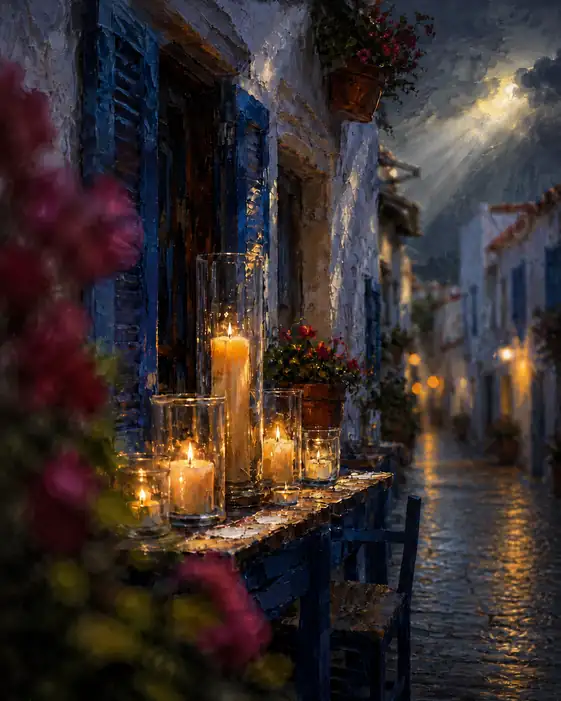 A Quiet Vigil Beneath the Storm
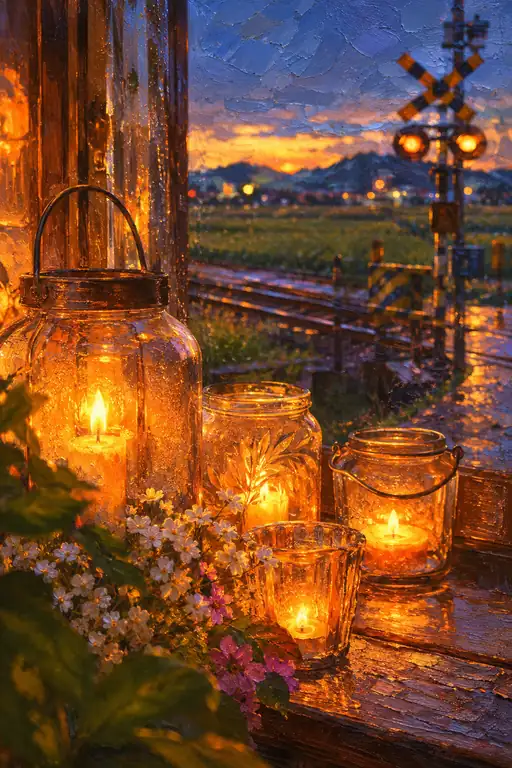 Warm Glow by the Rain-Drenched Crossing
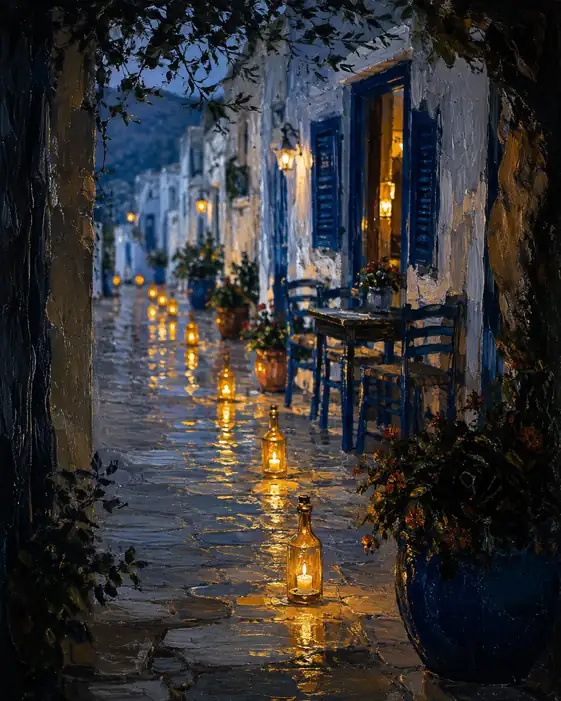 Trail of Small Flames Guided Home
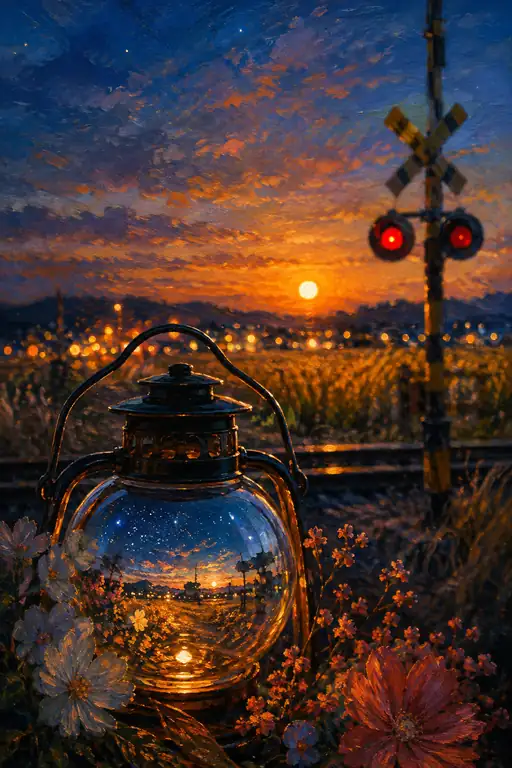 Sunset Cosmos Reflected in the Railroad Lantern
 Twilight Candles on the Country Station Sill
 Golden Reflection of the Abbey Lantern
 Candle Lantern Reflecting in the Castle Water Mirror and Twilight Floral Offering
 Evening Terrace Glow in the Old Quarter