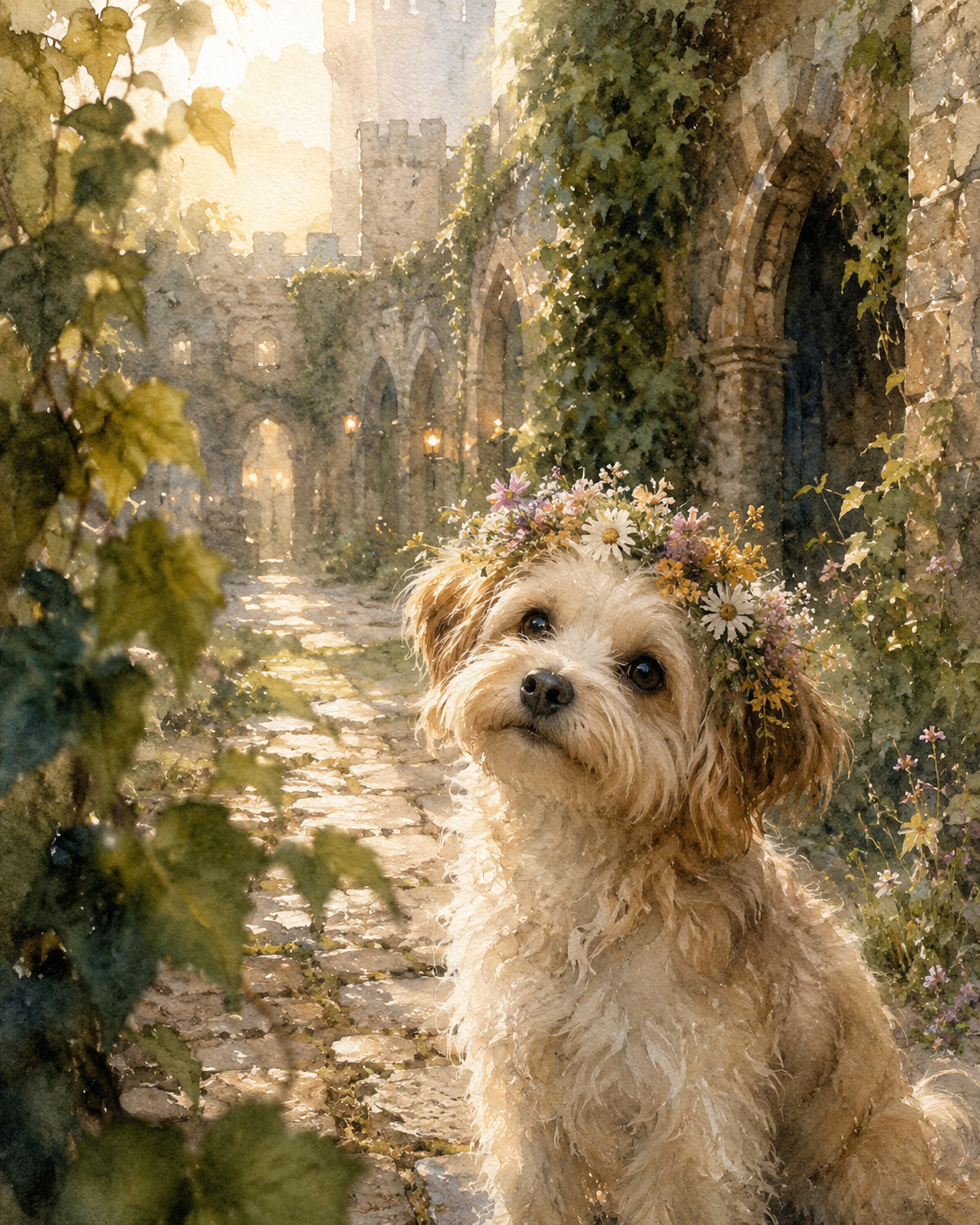
Crown of Wildflowers on the Sunlit Path
Critique
Introduction A small cream-colored dog wearing a crown of wildflowers sits in a sunlit castle passage. The portrait combines irresistible charm with a carefully structured setting, allowing personality rather than costume alone to command attention. Description The dog occupies the lower right, its curly coat glowing against a shadowed pointed arch. Daisies, purple blossoms, yellow sprigs, and grasses form an uneven wreath between its brown ears. It tilts its head and looks directly outward. A stone path curves behind it through ivy-covered arches toward crenellated towers in hazy golden light. Analysis The tilted head introduces a diagonal counterpoint to the architecture’s verticals. Dark round eyes and nose form a compact triangle, concentrating expression within the pale fur. Backlighting separates individual curls with white-gold strokes, while warm ochres in ears and masonry unify animal and place. The flower crown repeats small garden colors without becoming symmetrical. Soft foreground leaves and progressively paler towers establish depth around the sharply observed face. Interpretation and Evaluation The wreath suggests celebration, affection, or playful elevation, but the dog’s inquisitive gaze prevents it from seeming like a passive ornament. Its modest size contrasts with fortress architecture, turning grandeur into a protective setting. The image risks excessive sweetness; slight asymmetry in the crown, damp-looking curls, and the questioning head tilt preserve liveliness. Direct eye contact also converts spectatorship into a reciprocal encounter. Conclusion The painting’s success lies in giving decorative fantasy a believable animal center. Light, texture, and pose express alert gentleness, while the receding path keeps the portrait connected to a larger world. It is charming because the dog appears to possess, rather than merely wear, its moment of ceremony.
Same Subcategory
Similar Artworks
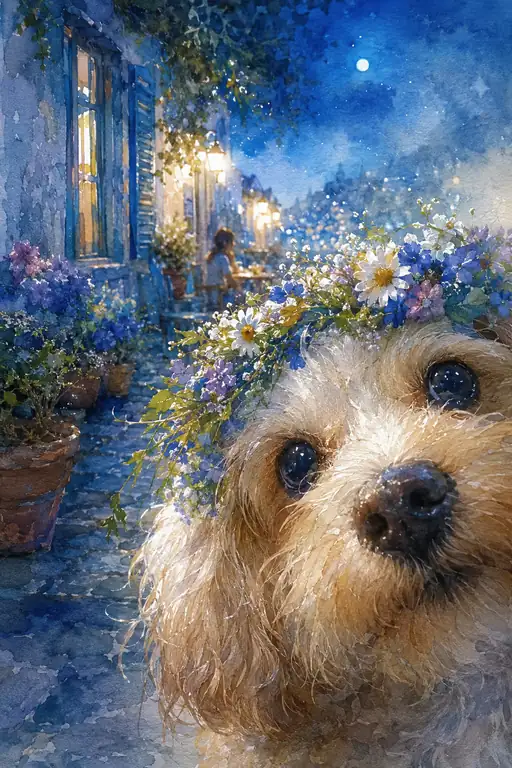 The Blue Night I Fell for You in a Flower Crown
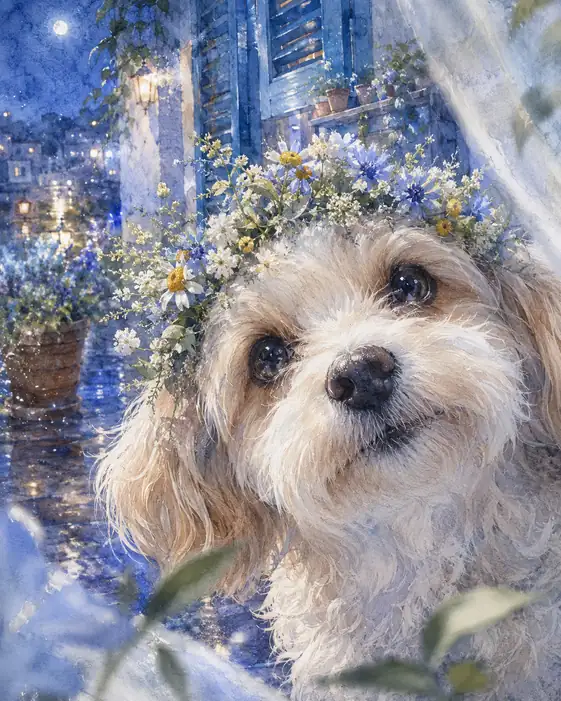 Wreath of Wild Blooms for a Midnight Friend
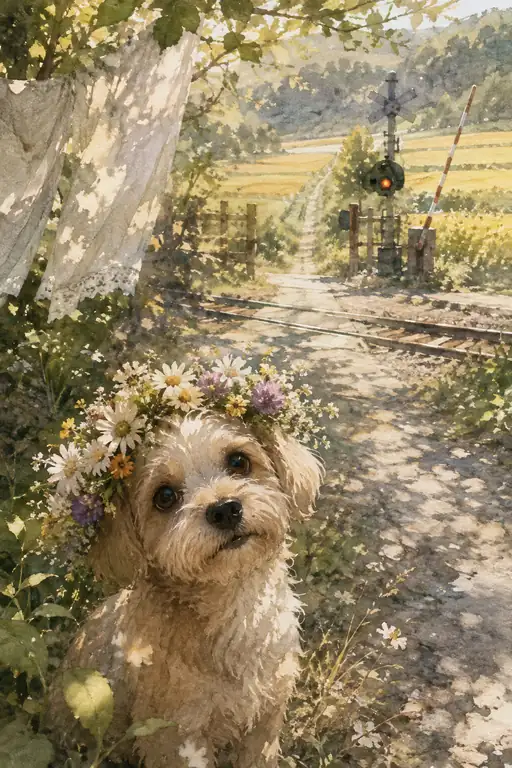 Flower Crown Pup in the Dappled Railway Light
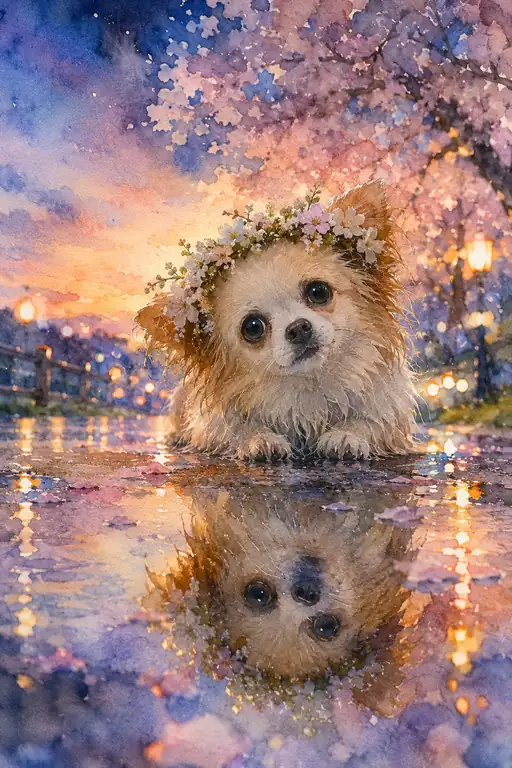 Crown of Petals in the Evening Puddle
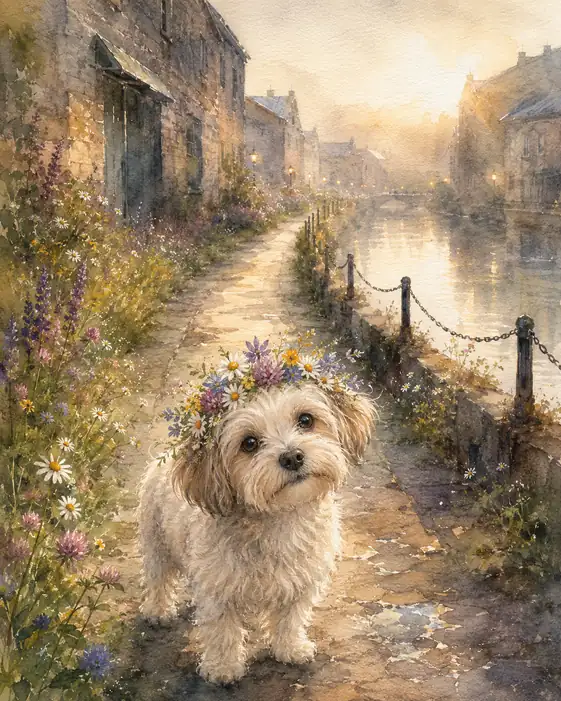 The Little Dog Crowned by Canal Flowers
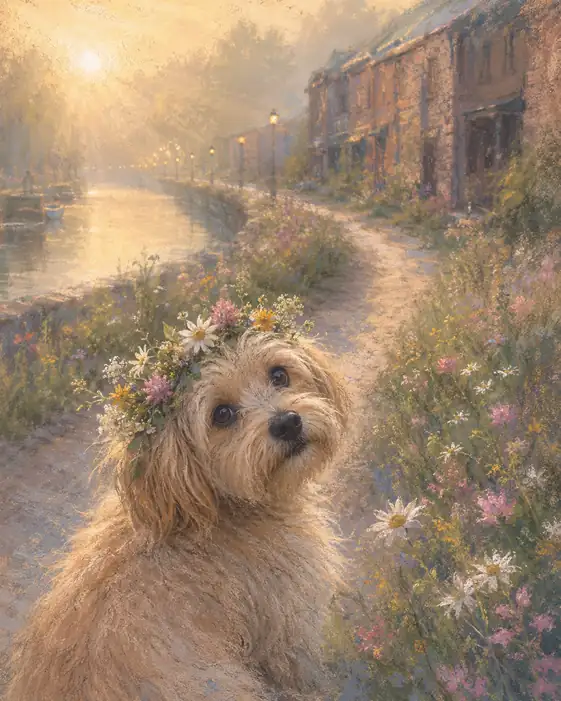 Her Flower Crown Catches the Morning
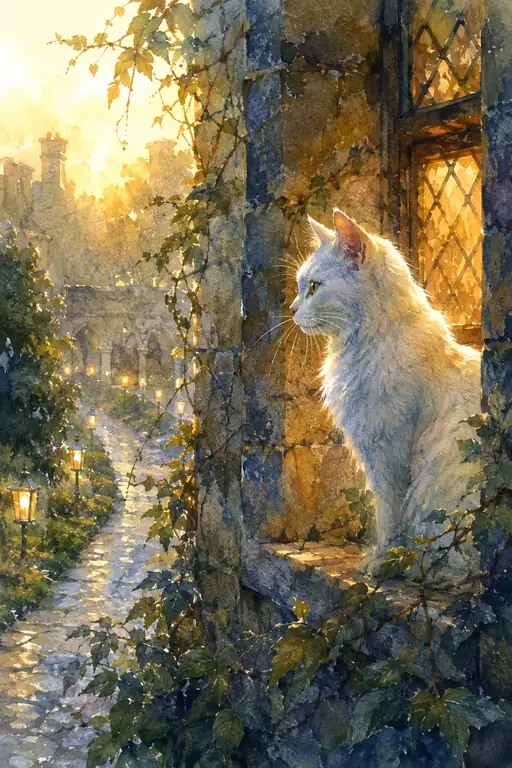 Morning Sunlight on the Castle Ledge
 Morning Solitude on an Ancient Window
 Little Guide of the Lantern Path
 Blue Shutter Curiosity on a Starlit Night