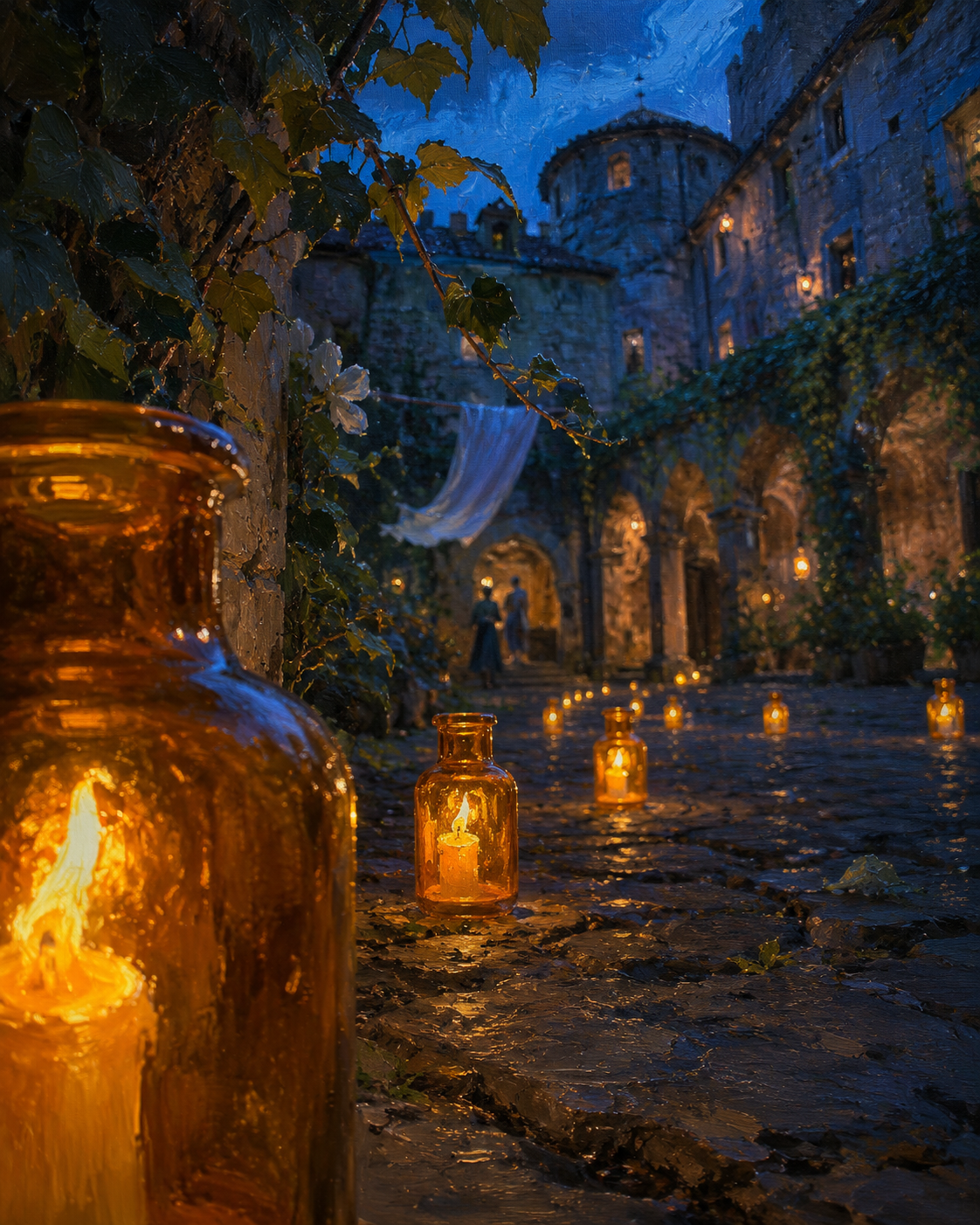
Amber Glow Guiding the Evening Walk
Critique
Introduction This blue-hour courtyard is illuminated by candles enclosed in amber bottles, turning a damp monastic space into a pathway of welcome. Intimate foreground light and distant human figures give the architecture both scale and narrative expectancy. Description A huge glass bottle and candle fill the lower left, while smaller vessels recede across wet paving toward an arched doorway. Ivy and broad leaves frame the left; a white flower and suspended cloth catch the cool air. At center, two blurred figures stand near the entrance. Round towers, arcades, and lit windows rise beneath a saturated blue sky. Analysis The nearest bottle is cropped aggressively, establishing immersion and a dramatic scale progression. Repeated amber flames trace a loose diagonal toward the figures, while reflections spread their rhythm across the ground. Orange and cobalt form the principal contrast; olive foliage mediates between them. Thick highlights describe wet glass and paving, whereas softened edges reserve mystery for the people and distant stone. The hanging cloth adds a pale, lateral movement against the courtyard’s vertical masonry. Interpretation and Evaluation The bottles appear handmade and provisional, so their procession suggests a private ceremony rather than permanent lighting. Their path culminates in two people, converting illumination into an invitation to encounter. The enormous foreground flame could dominate too completely, yet its crop makes the viewer seem physically present beside it. Moist leaves, scattered debris, and uneven stones keep the romantic setting materially credible. Conclusion The painting succeeds through guided attention: one flame becomes many, and many lead toward an unresolved meeting. Its warmth does not erase the night but organizes it, making the old courtyard feel inhabited, protective, and charged with possibility.
Same Subcategory
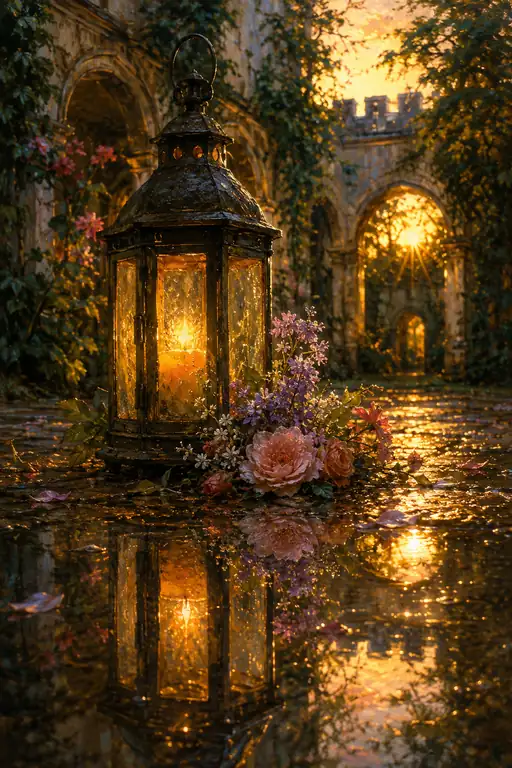 Golden Reflection of the Abbey Lantern
Similar Artworks
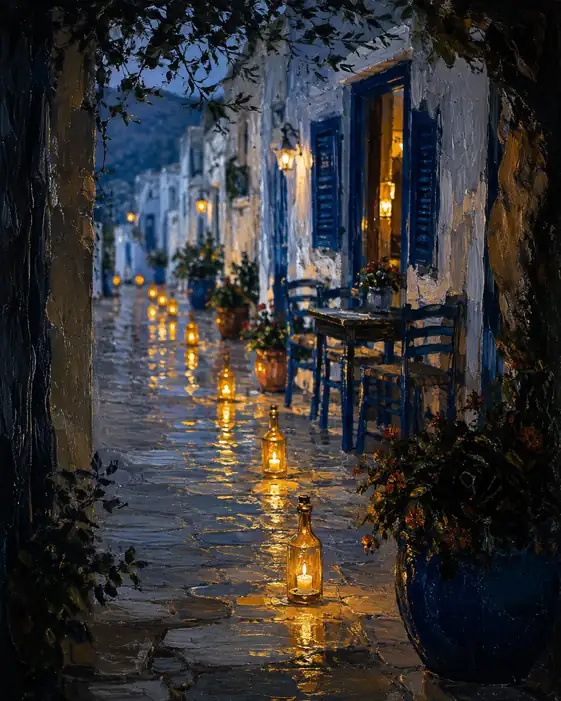 Trail of Small Flames Guided Home
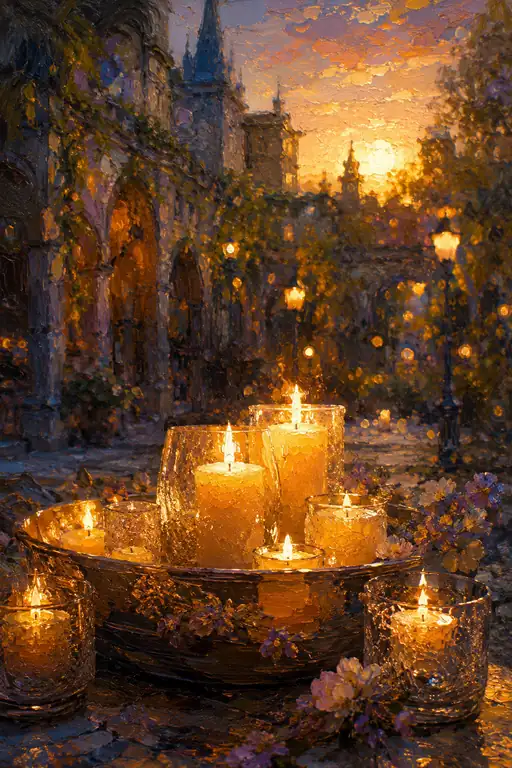 Bowl of Golden Flames in the Twilight Garden
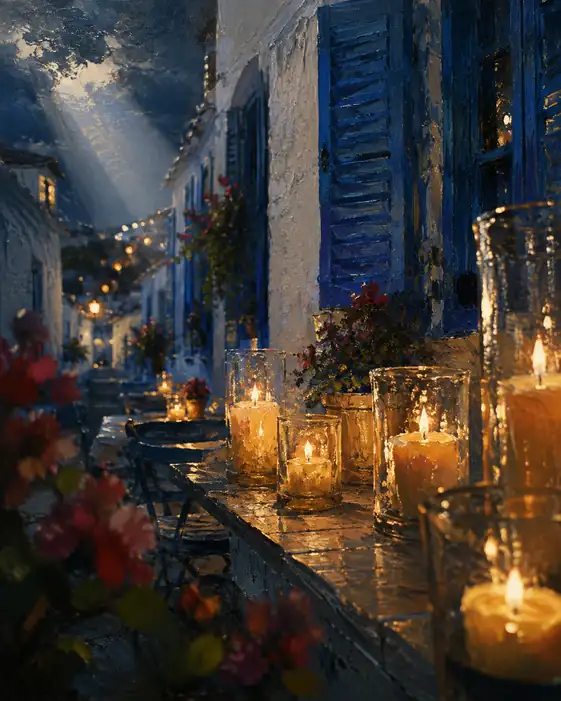 Tender Flame Kept from the Storm
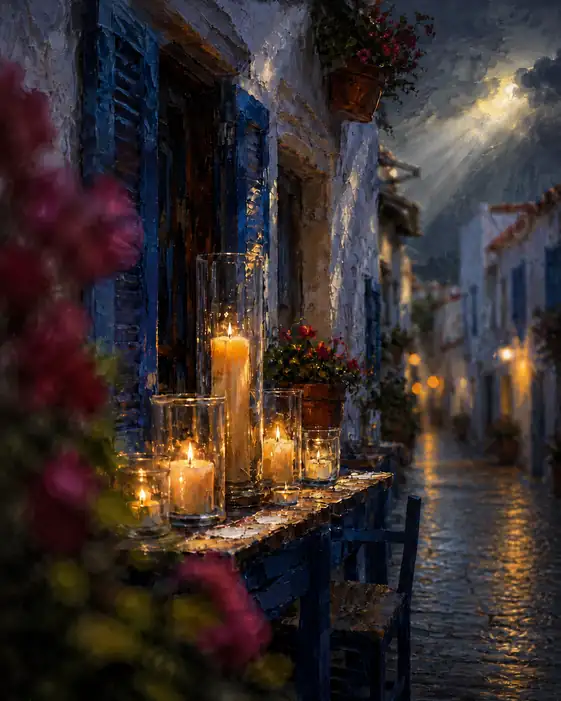 A Quiet Vigil Beneath the Storm
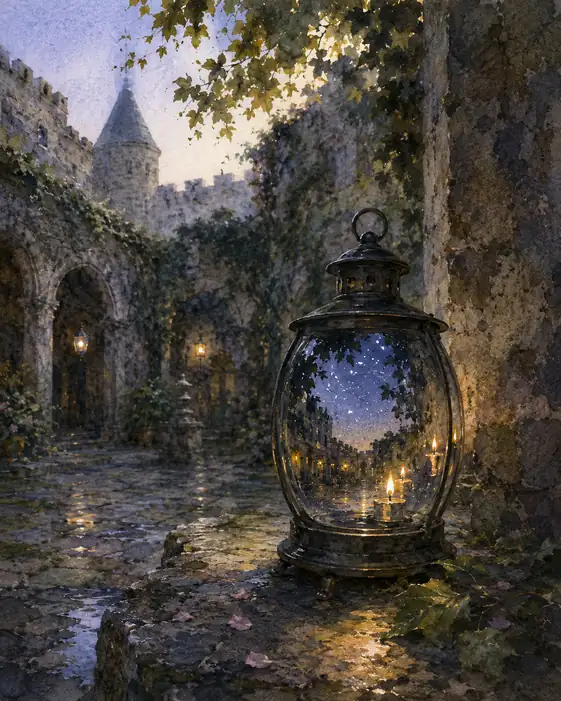 Starry Realm Within the Cloister Lantern
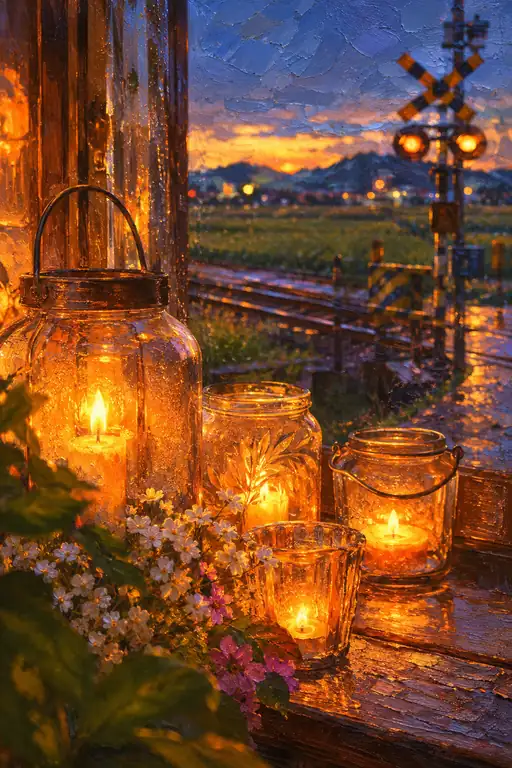 Warm Glow by the Rain-Drenched Crossing
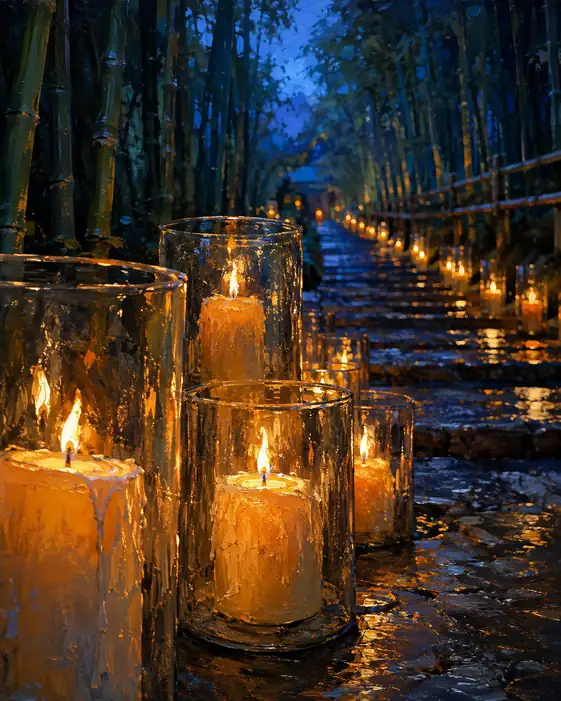 A Constellation of Candles on Forest Steps
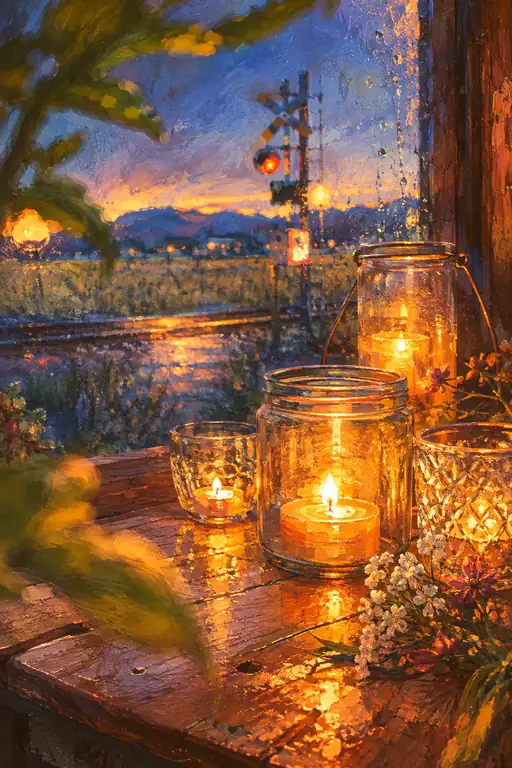 Twilight Candles on the Country Station Sill
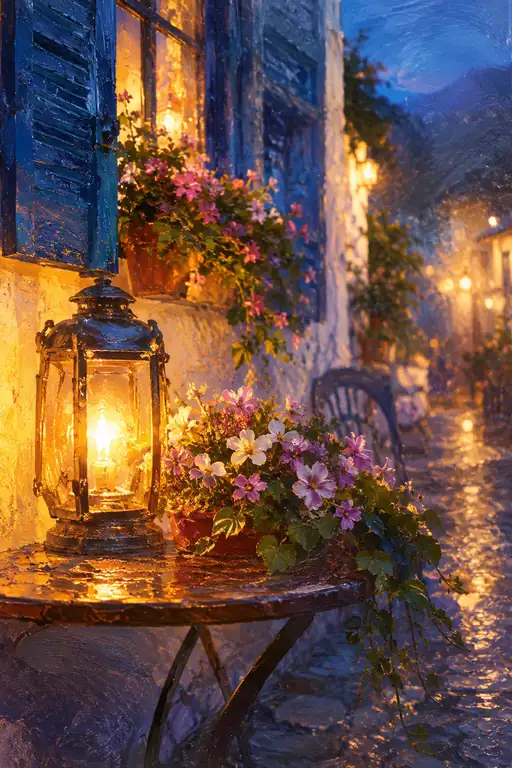 Evening Terrace Glow in the Old Quarter
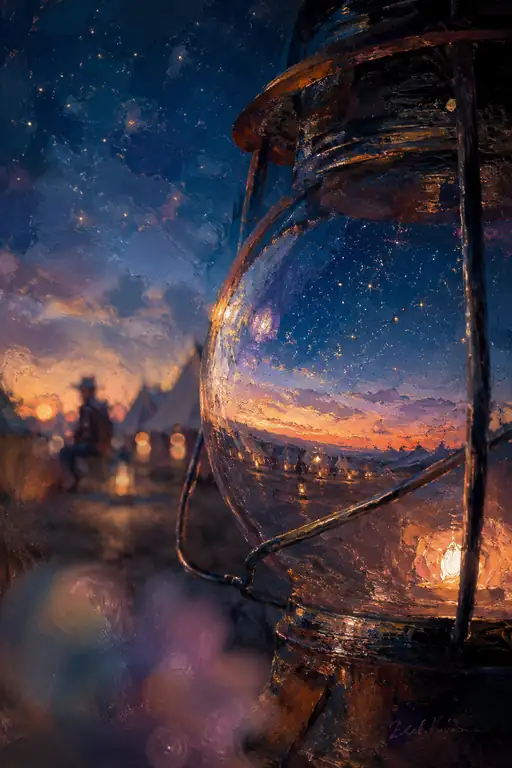 Sunset Horizon Sealed in the Traveler's Lantern