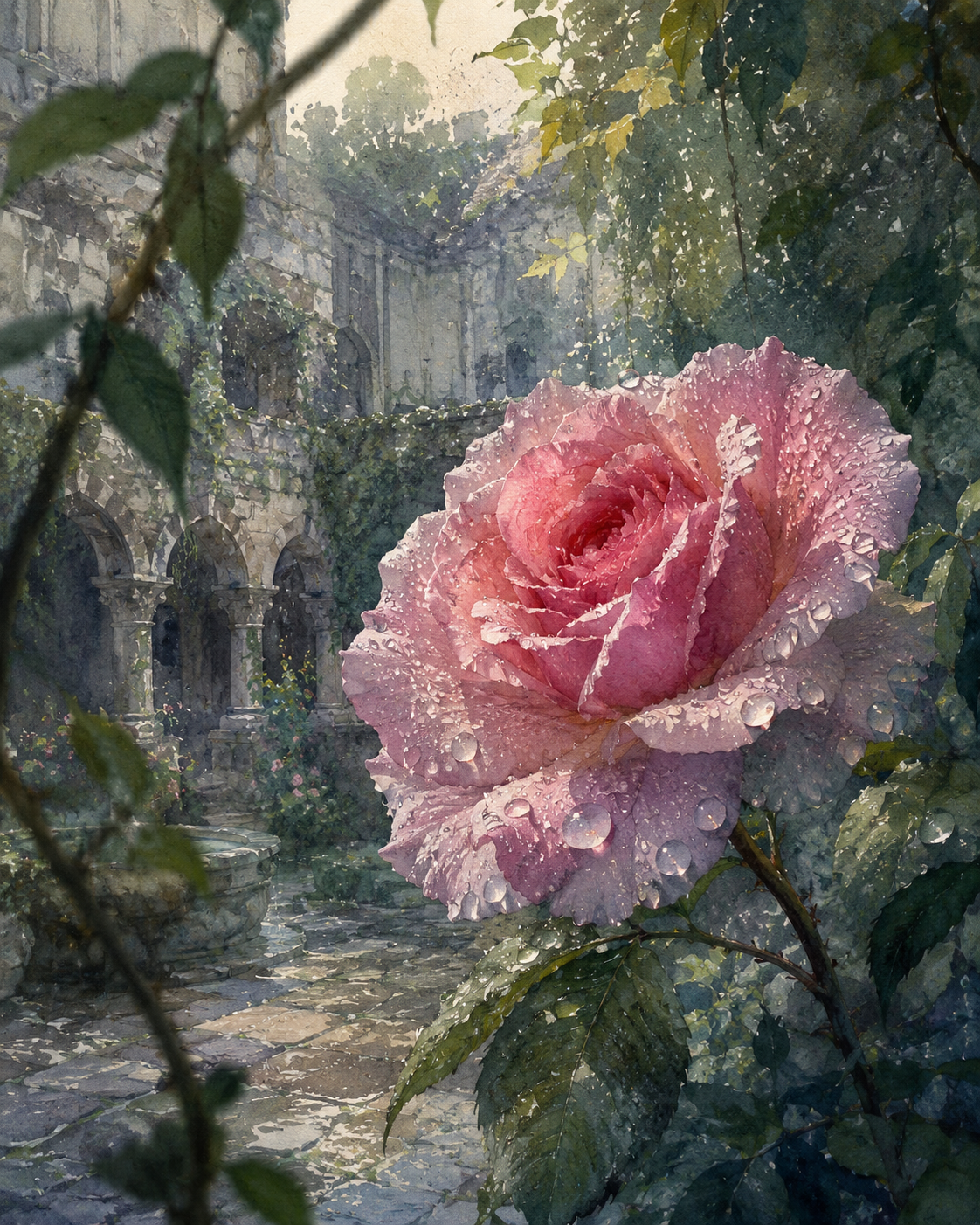
Dewdrop Sovereign of the Cloister Rose
Critique
Introduction A rain-laden pink rose dominates this secluded stone courtyard, turning a familiar flower into an architectural presence. The painting balances botanical spectacle with the muted depth of an old, ivy-covered enclosure. Description The rose projects from the right foreground, opened wide and covered with beads of water. Its coral center cools toward lavender outer petals. Dark serrated leaves and stems surround it. Behind, a wet path curves past a low circular basin toward pointed arcades and tall walls, all softened by foliage and pale overcast light. Analysis The bloom is deliberately oversized, its layered spiral echoing the courtyard’s arches and circular basin. Strong focus on the rose contrasts with softened masonry, establishing depth more through attention than linear perspective. Pink is concentrated in the flower and repeated only as tiny garden accents. Gray-green washes unify stone, leaves, and wet pavement. Droplets are modeled with dark lower rims and bright highlights, while petal edges alternate crisp contours and dissolving washes, conveying both structure and softness. Interpretation and Evaluation Set against weathered architecture, the fresh rose stages renewal within duration. Rain does not damage its beauty; it makes the flower heavier, more vulnerable, and more radiant. The empty cloister suggests privacy rather than abandonment because smaller blossoms and climbing vines remain active throughout it. The enormous scale risks making the setting incidental, yet the visual rhyme between petals, arches, and basin integrates the two subjects convincingly. Conclusion The painting is strongest as a study of reciprocal scale: the courtyard makes the rose monumental, and the rose makes the ruin intimate. Its moisture, restrained background, and carefully graded pinks create a sensuous image that retains calm and spatial credibility.
Same Subcategory
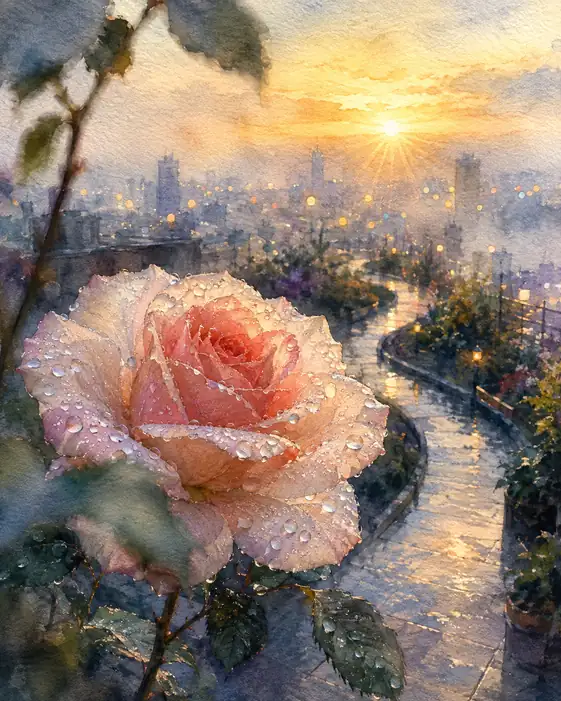 A Rose Drinks the Dawn from Every Raindrop
 Solitary White Rose in Minimalist Grace
Similar Artworks
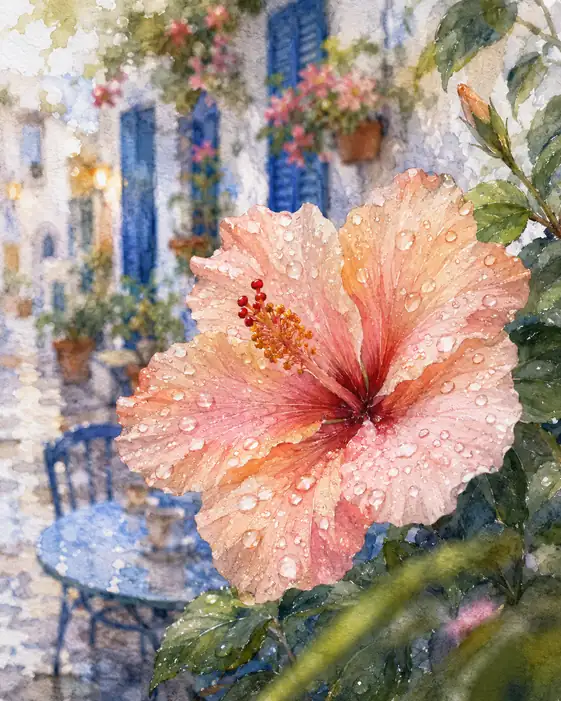 Dew-Kissed Hibiscus in the Mediterranean Morning
 Grace Under the Gentle Tears of Heaven
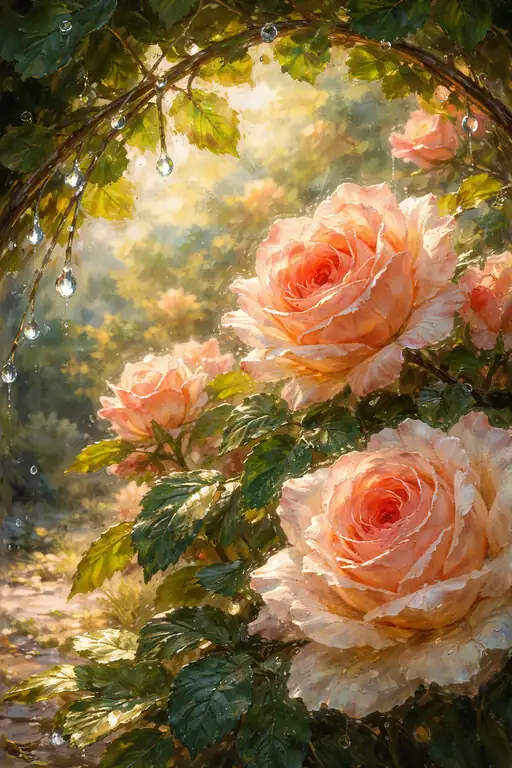 Tears of Dawn on Petals
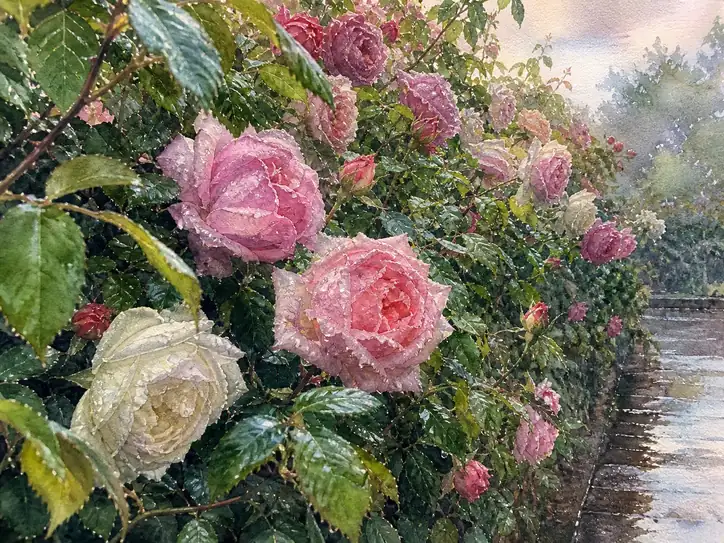 Diamonds of the Rose Garden Fog
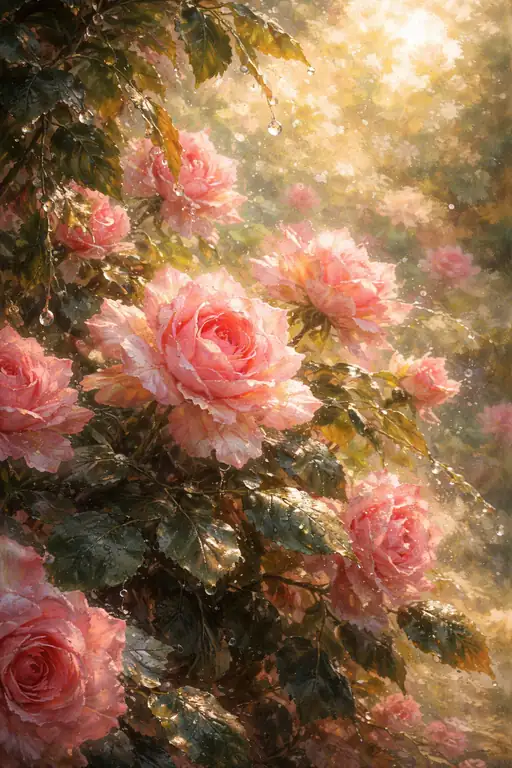 The Shimmering Breath of a Sunlit Rain
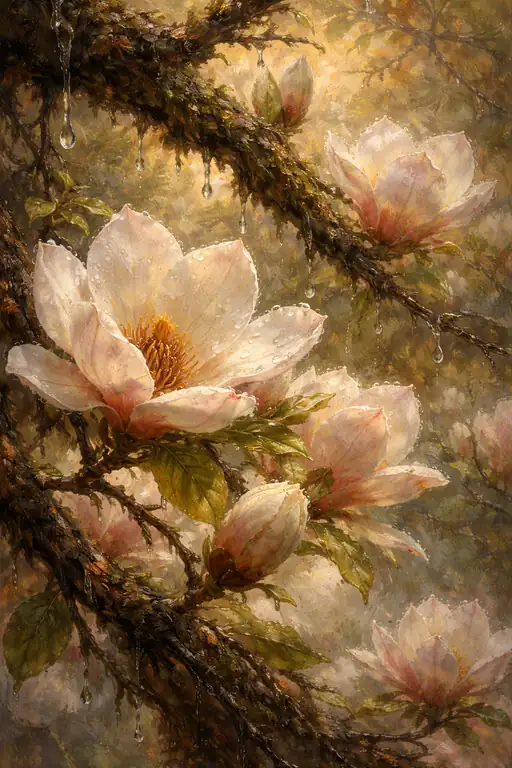 The Awakening of Spring's Breath
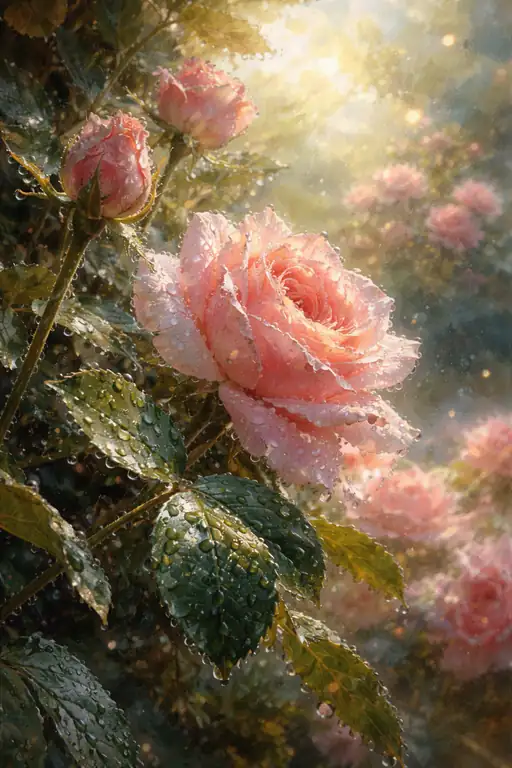 Tears of the Morning Sun
 The Morning I Opened Fully
 Dewlit Sovereign of the Fountain Garden
 Reflections of the Evening Sky