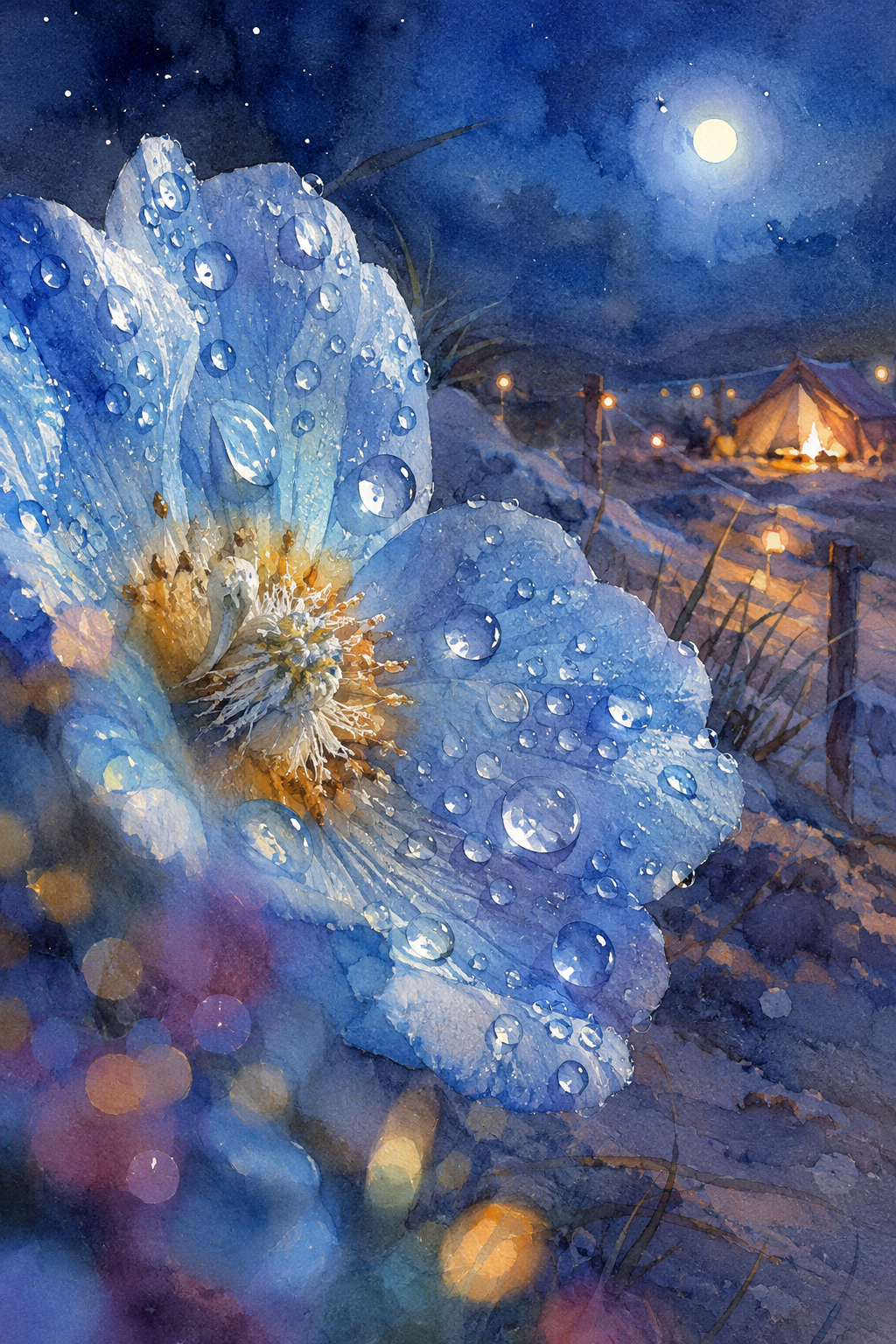
Moonlit Dew on the Azure Petals
Critique
Introduction This nocturnal watercolor magnifies a dew-covered blue flower until it becomes a landscape in its own right. Against a moonlit campsite, botanical intimacy and distant human warmth meet without collapsing into a single scale. Description The enormous bloom fills the left and lower foreground, its pale blue petals carrying dozens of round droplets. A golden center emerges near the lower left. Beyond it, a stony path and sparse grasses lead to a glowing tent at right, with small lamps marking the route. A full moon hangs in a deep cobalt sky. Analysis Radical scale is the organizing device: the flower nearly eclipses the camp, making each droplet as visually important as a lantern. Circular forms recur in moon, dew, and blurred foreground lights, binding near and far. Cool ultramarine washes dominate, while amber is restricted to stamens, lamps, and tent. Sharp white reserves describe reflections inside the droplets; looser blooms build cloud and petal. The path’s diagonal counters the flower’s expanding curves and opens depth. Interpretation and Evaluation The droplets make the flower appear to contain miniature moons, suggesting that the immense night can be encountered in a small living surface. The campsite introduces shelter and companionship without people, while the exposed bloom embodies vulnerability. Decorative bokeh at the bottom is lavish, but its repeated circles reinforce rather than distract from the central motif. The improbable scale feels intentionally dreamlike. Conclusion The work succeeds by converting close observation into wonder. Its controlled blue-gold palette gives coherence to an audacious composition, and its strongest idea is simple: dew, moonlight, and human lamps are different sizes of the same luminous experience.
Same Subcategory
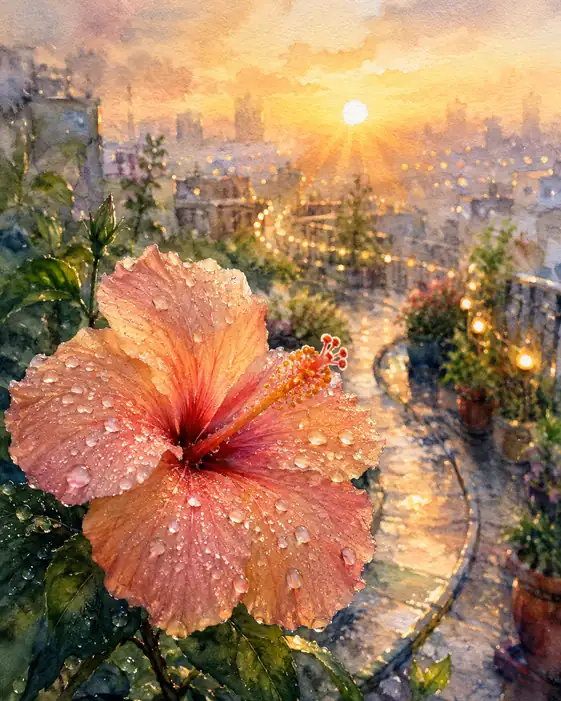 The Hibiscus Wears the City's Golden Rain
Similar Artworks
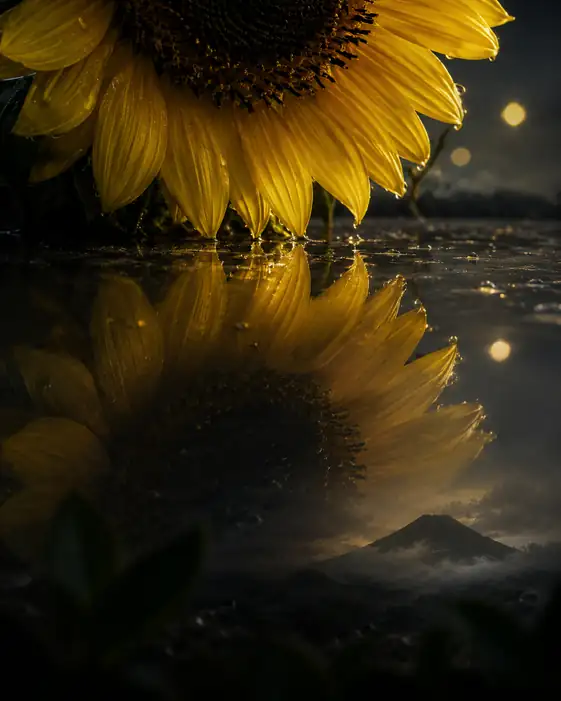 Moonlit Petals Above the Dark Waters
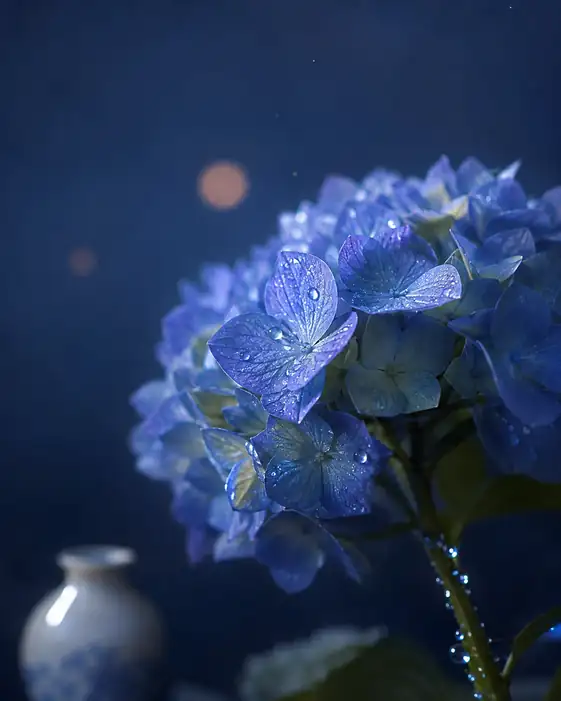 Moonlit Solitude with White Porcelain
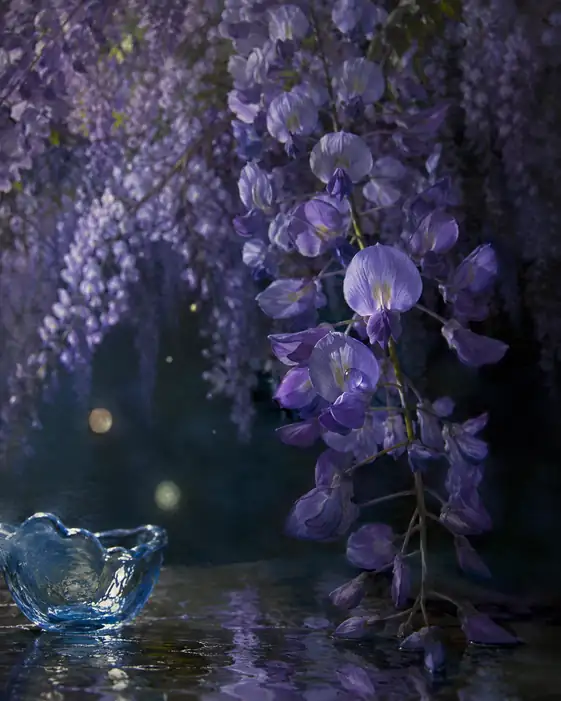 Sapphire Glass and Falling Violet Petals
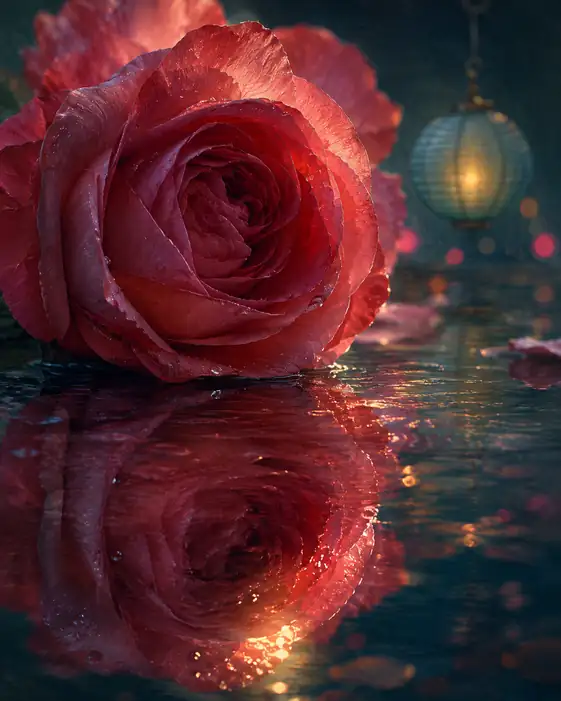 Crimson Reflection and the Floating Lantern
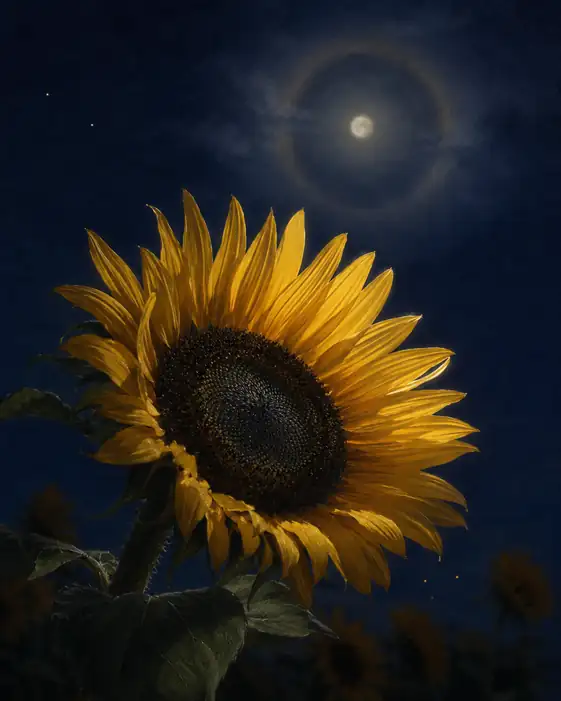 Halo of the Moon and the Golden Disc
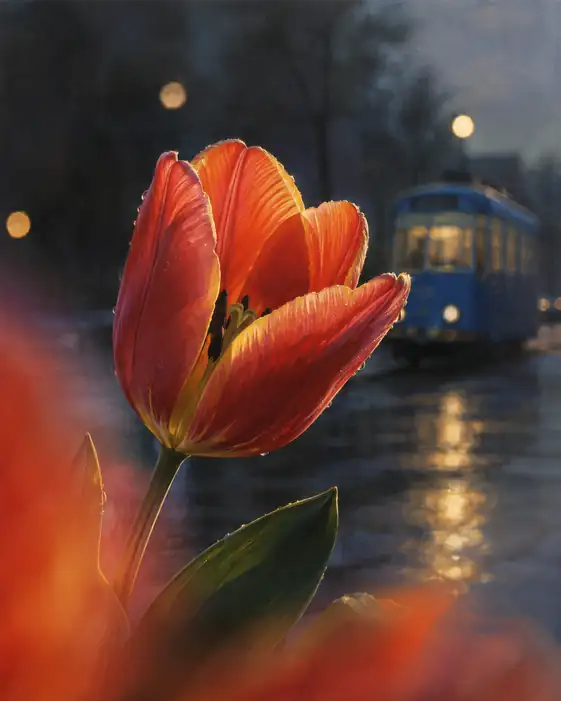 Red Tulip and the Night Tram
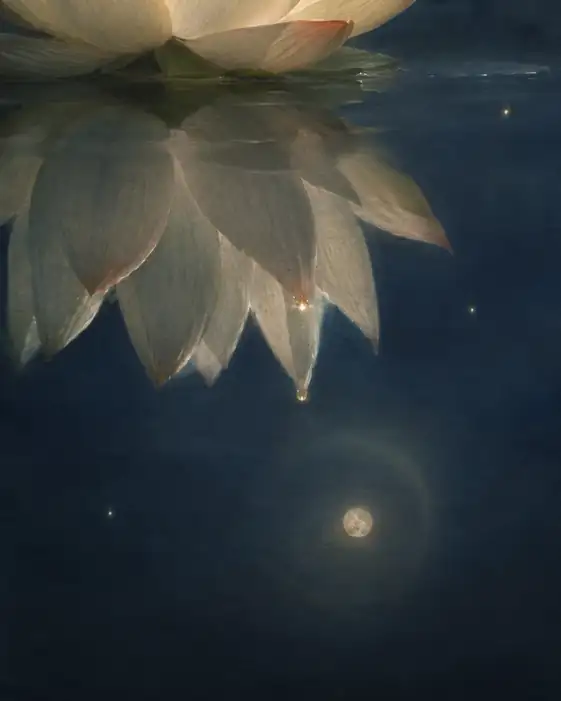 Nocturne of Moon and Lotus Shadow
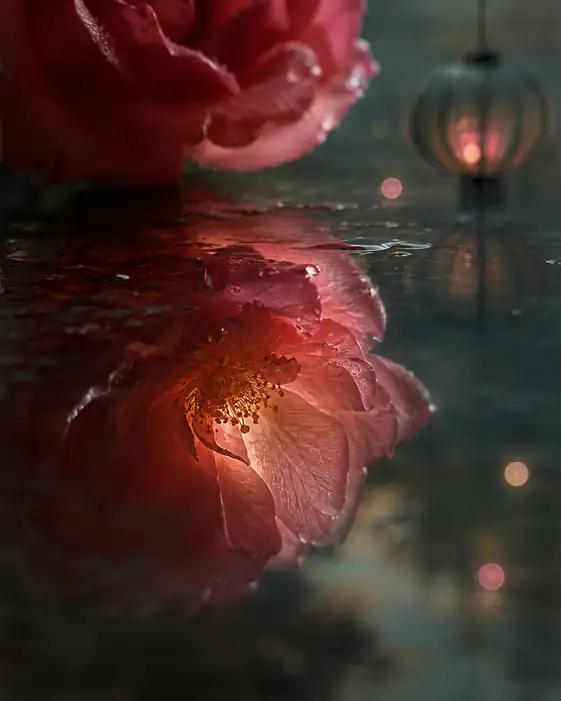 Lantern Glow on the Inverted Rose
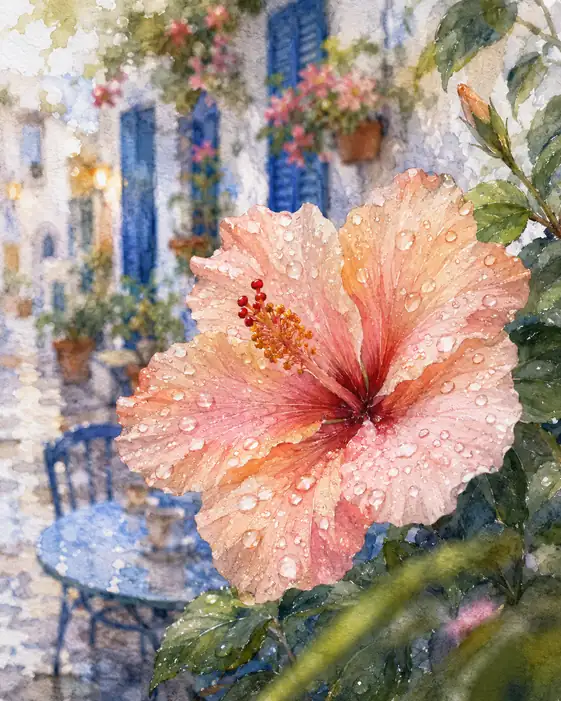 Dew-Kissed Hibiscus in the Mediterranean Morning
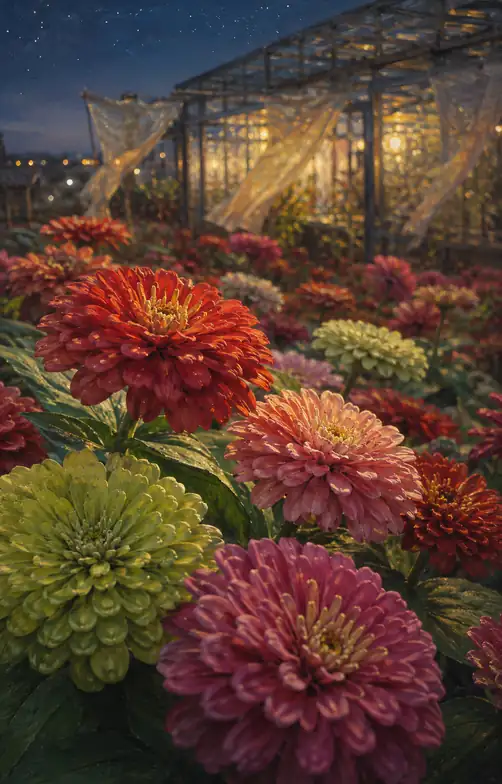 Zinnias in the Greenhouse Twilight