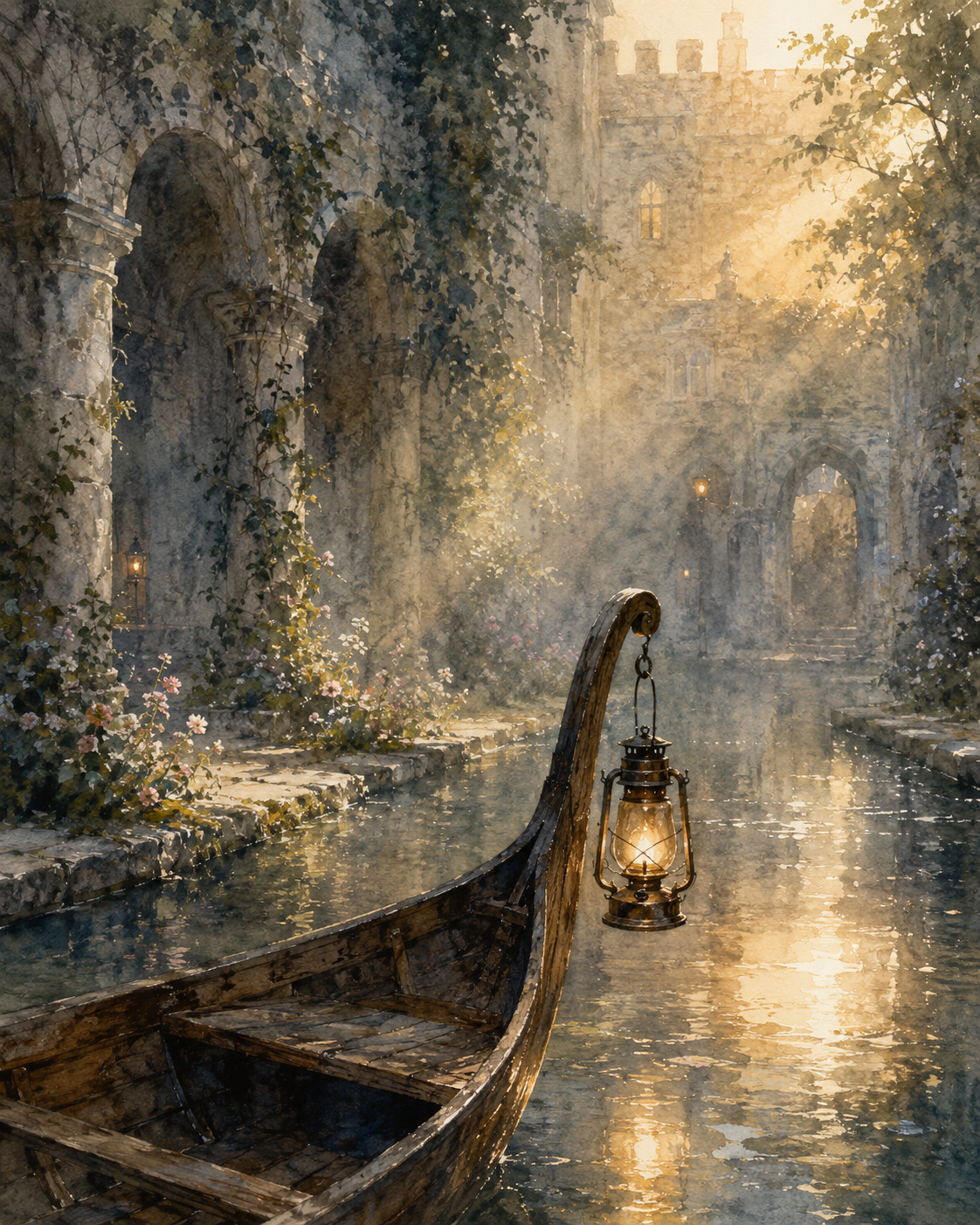
Golden Mist Drifting Through the Canal
Critique
Introduction An empty wooden boat bearing a single lantern enters a flooded castle courtyard at dawn or dusk. The image combines the romance of passage with an unusually tangible account of water, weathered timber, and old stone. Description The boat cuts diagonally from the lower left toward the center, its high curved prow supporting a hanging brass lamp. A narrow canal fills the courtyard and leads through a distant arch. Arcades and flowered banks line both sides; towers rise through pale haze. Sunbeams descend from the upper right and scatter across the water. Analysis The prow is the composition’s hinge. Its dark curve separates the shadowed boat interior from the luminous canal and carries the eye upward to the lantern. Repeated arches diminish toward the central opening, while reflections extend their vertical rhythm downward. Brown-black timber and cool gray-green water establish weight; gold appears selectively in lamp, windows, flowers, and broken reflections. Dry, angular strokes articulate planks, whereas translucent washes dissolve the far architecture into atmosphere. Interpretation and Evaluation Without a passenger, the craft feels both available and uncanny, as if it has arrived to collect the viewer. The lantern hanging from the prow turns navigation into a symbolic promise of guidance, even though daylight already suffuses the court. Flowers and illuminated mist soften the ruin, suggesting endurance rather than abandonment. The fantasy is sumptuous, but worn ribs and dark pooled water keep it from becoming weightless decoration. Conclusion The painting offers a convincing invitation into depth. Its boat is simultaneously object, vehicle, and compositional arrow. By balancing material decay with radiant atmosphere, the work makes the unknown route through the arch feel welcoming without removing its mystery.
Same Subcategory
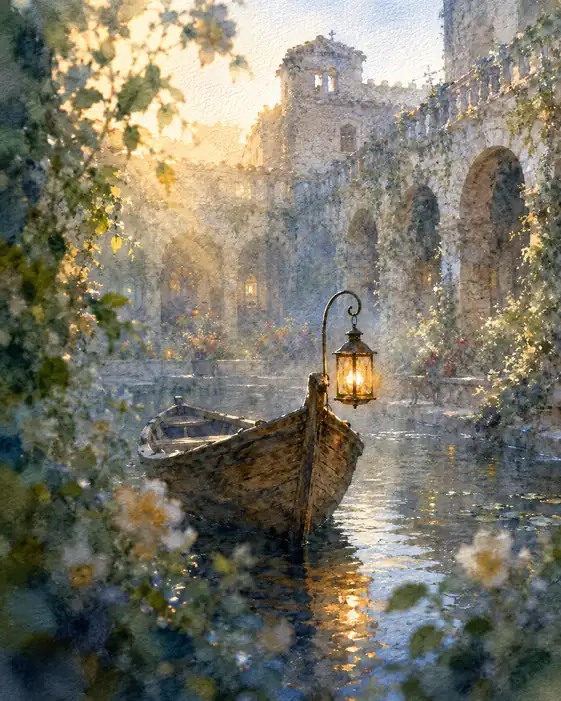 Morning Mooring in the Cloister Canal
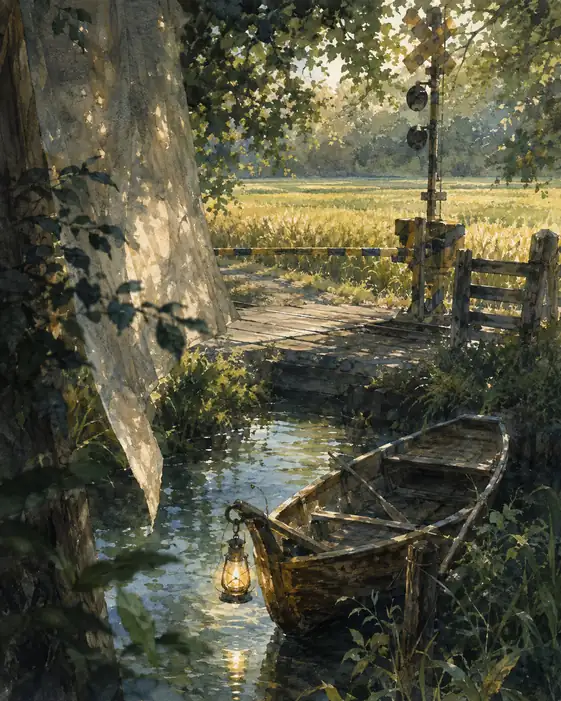 Shaded Mooring by the Railway Creek
Similar Artworks
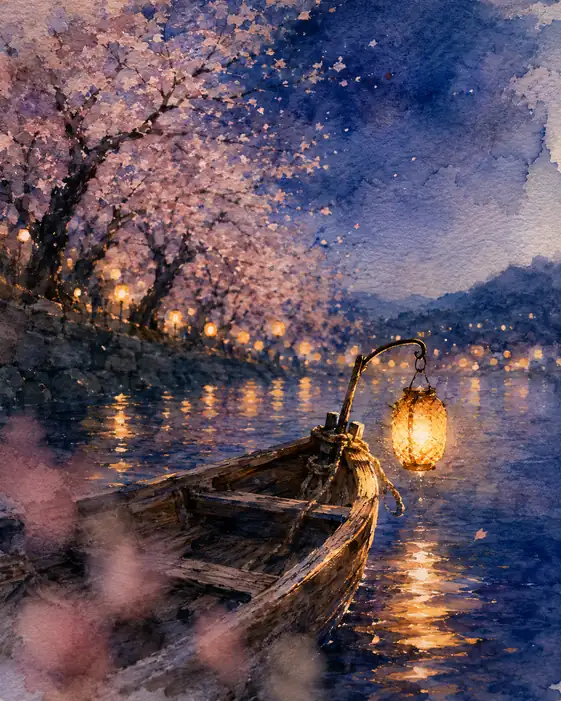 Cherry Blossom River Lantern Nocturne
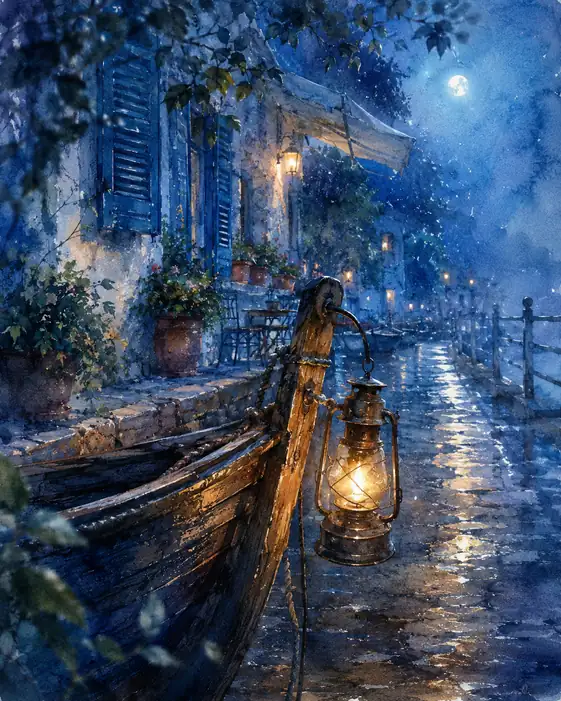 Moored to the Moonlit Tide
 Morning Sunlight on the Castle Ledge
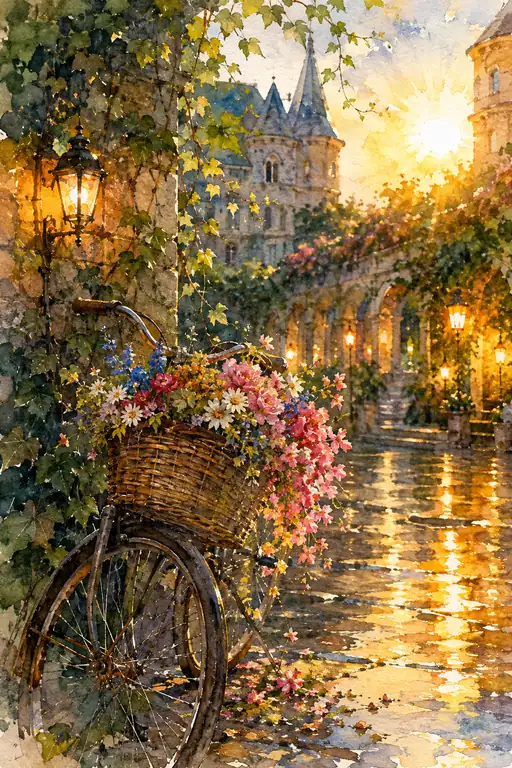 Morning Delivery Through the Golden Courtyard
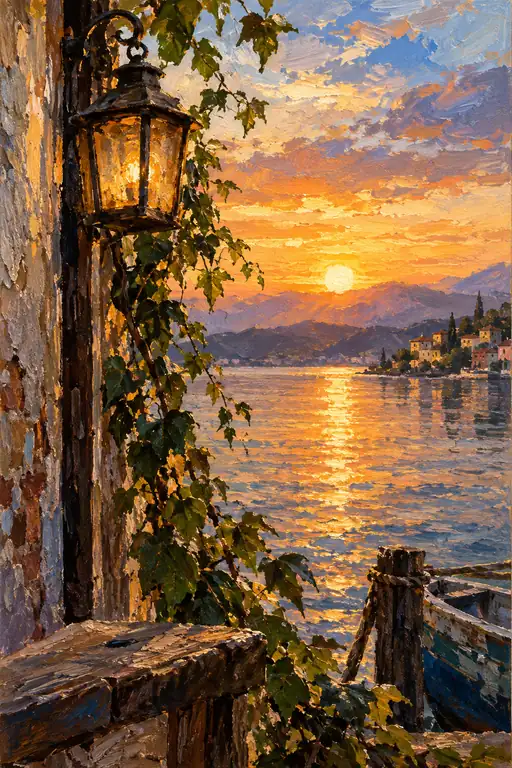 Magenta Cascade Over White Plaster
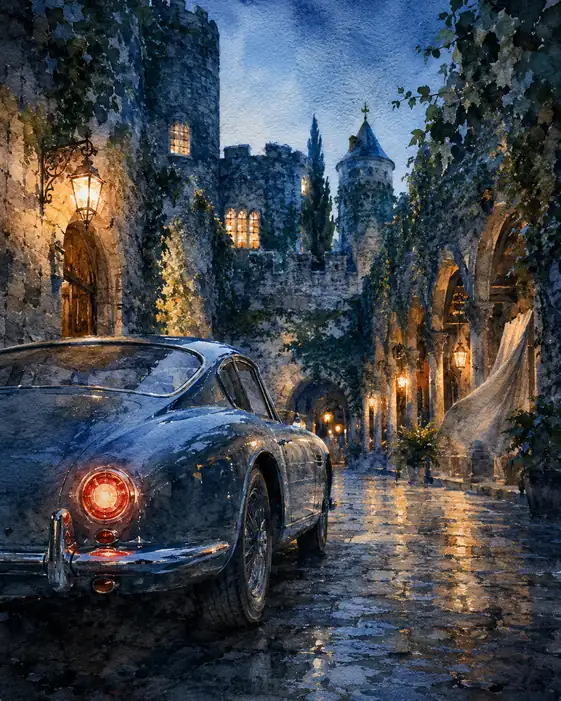 Nightfall Return to the Medieval Haven
 Bowl of Golden Flames in the Twilight Garden
 Golden Reflection of the Abbey Lantern
 Morning Solitude on an Ancient Window
 Resting Boat and Straw Hat by the Waterway