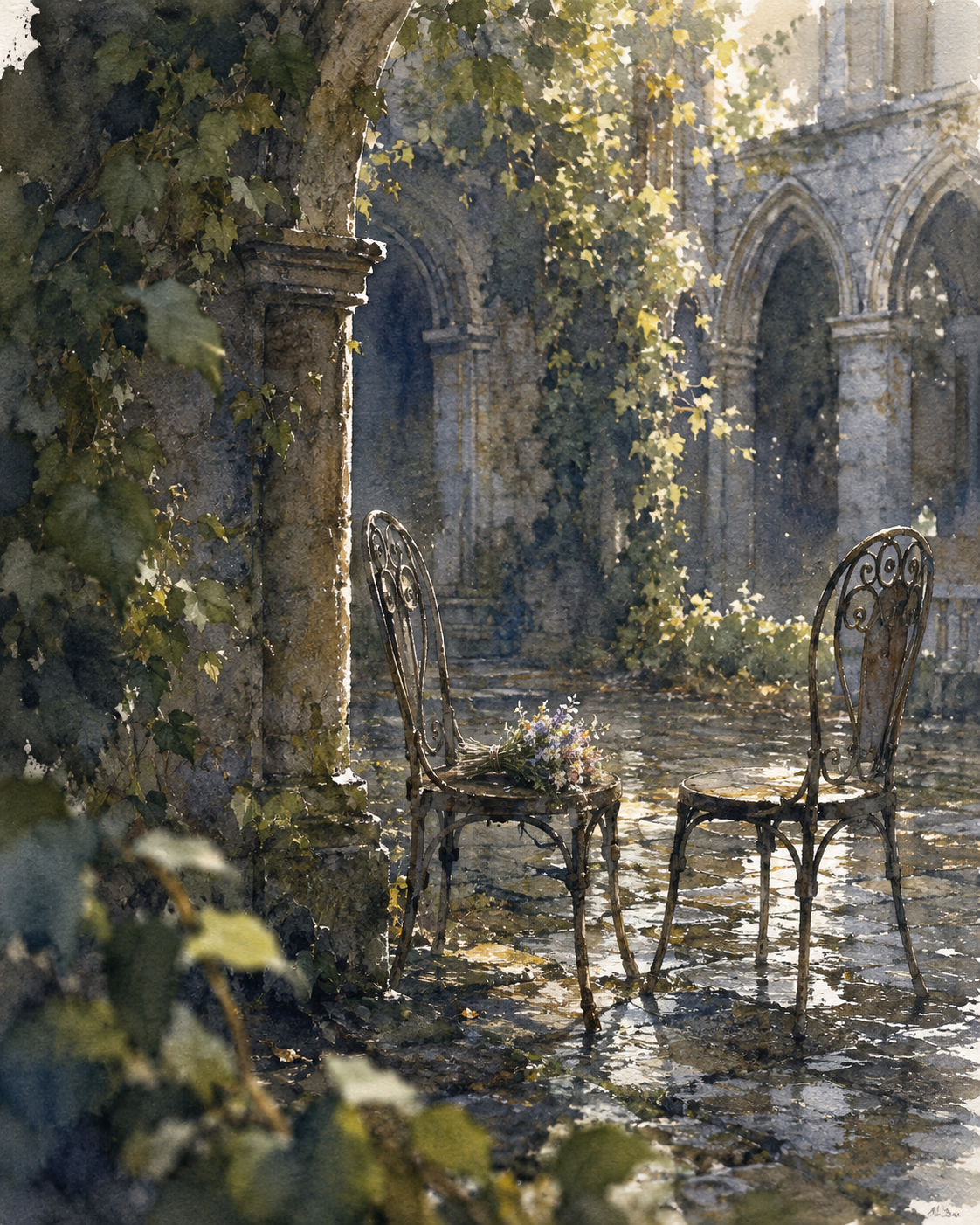
Silent Soliloquy of the Forgotten Garden
Critique
Introduction Two empty iron chairs in a wet Gothic courtyard create a meditation on presence through absence. The painting finds drama not in an event but in the delicate evidence that something personal has just occurred. Description The chairs stand slightly apart on shining flagstones, their scrollwork backs silhouetted against pale arches. A small bouquet lies across the left seat. Ivy engulfs a heavy column and descends from the upper edge, while sunlight enters from the upper right, catching leaves, damp stones, and suspended droplets. Analysis The chairs form an uneven pair: one carries flowers and angles inward, while the other remains bare and more upright. This subtle difference creates narrative tension. Receding pointed arches establish depth, but curtains of foliage interrupt their geometry and keep the space organic. Cool charcoal and blue-gray washes dominate the masonry; narrow strokes of yellow-green and white articulate sunlight. Reflections beneath the chair legs repeat their thin forms in broken, liquid marks. Soft foreground leaves increase spatial layering. Interpretation and Evaluation The vacant seats invite several readings—an anticipated meeting, a finished conversation, or a remembrance—but the image wisely refuses to decide. The bouquet is specific enough to humanize the scene without converting it into illustration. Sunlit moisture suggests renewal, whereas aged stone and rusted metal register duration. The emotional balance is especially effective: melancholy enters through emptiness, yet the living ivy and fresh flowers prevent despair. Conclusion Through exact placement and restrained storytelling, the painting makes two ordinary chairs psychologically resonant. Its most persuasive quality is the way light becomes evidence, revealing traces of weather, time, and unseen companionship without dispelling the courtyard’s mystery.
Same Subcategory
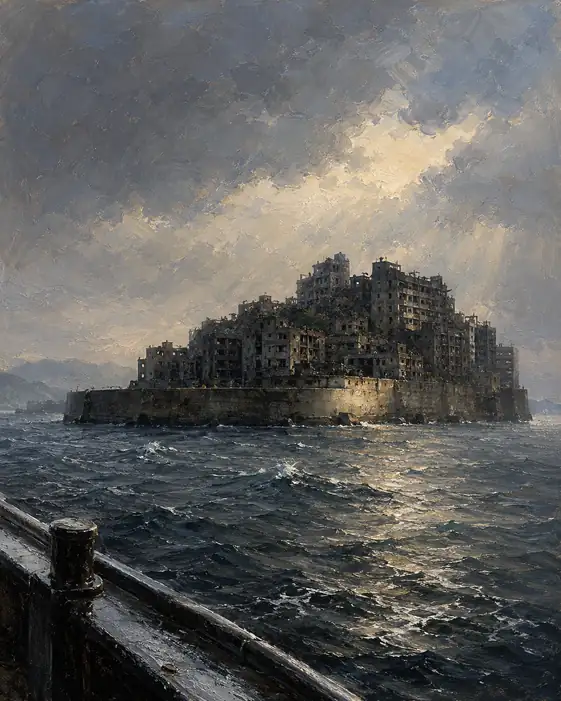 The Island That Outlived Its Voices
Similar Artworks
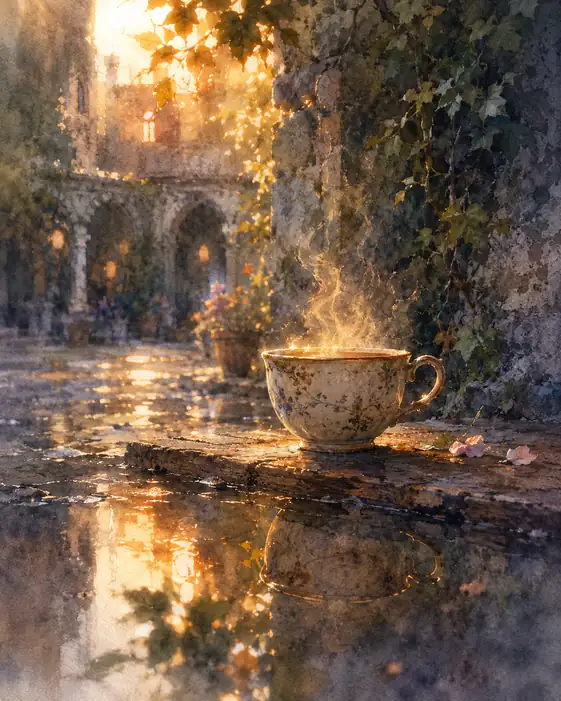 Morning Steam and Sunlit Courtyard
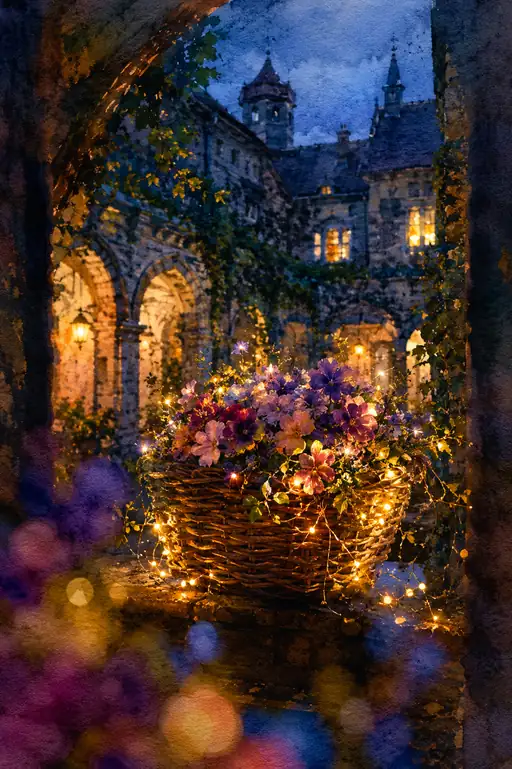 Fairy Lights Amongst the Night Blossoms
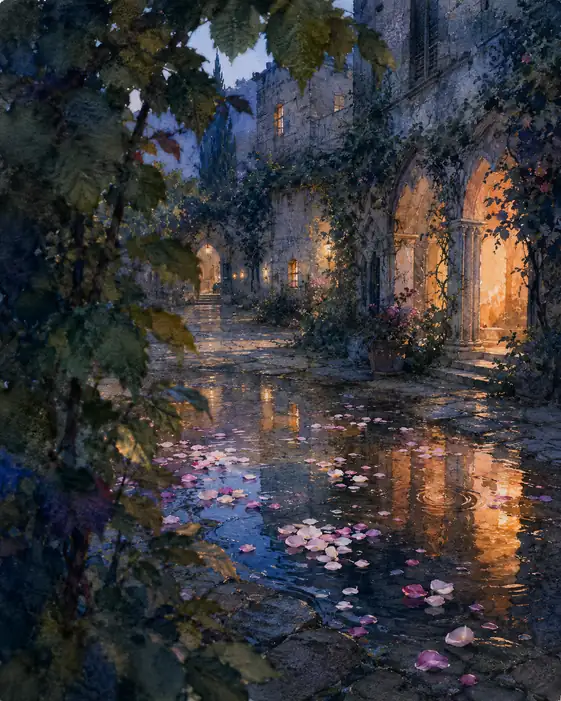 Petals Resting on After-Rain Courtyard Waters
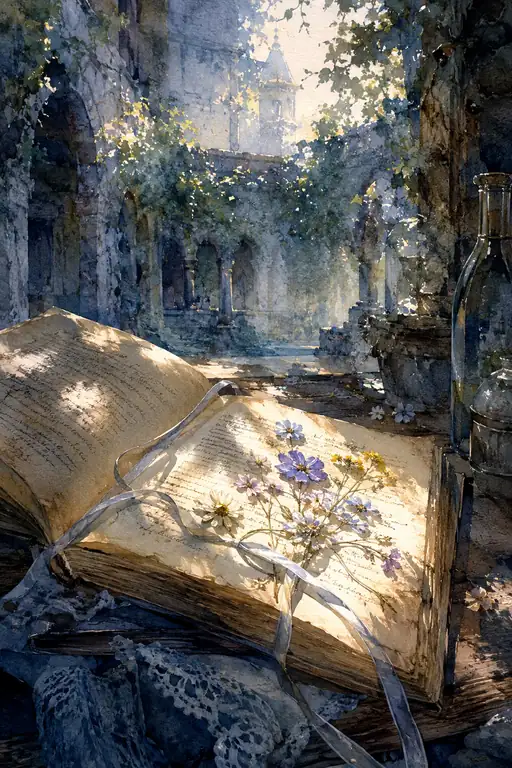 Forgotten Verses and Dried Wildflowers
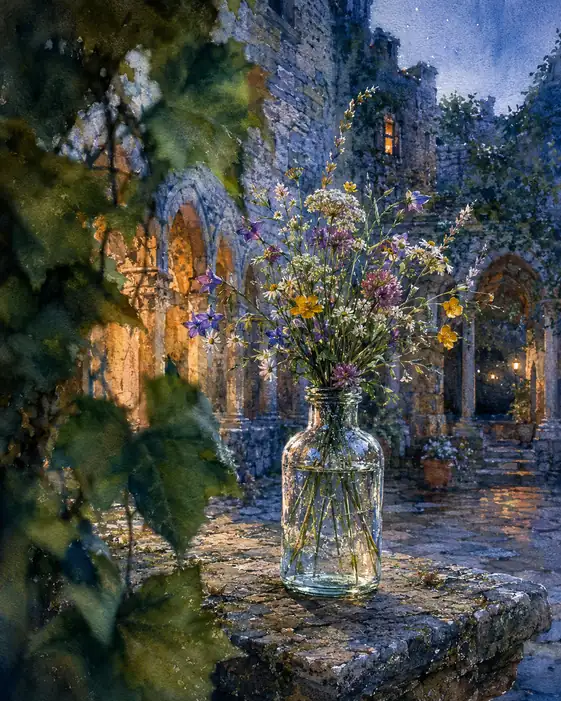 Meadow Blooms in the Abbey Light
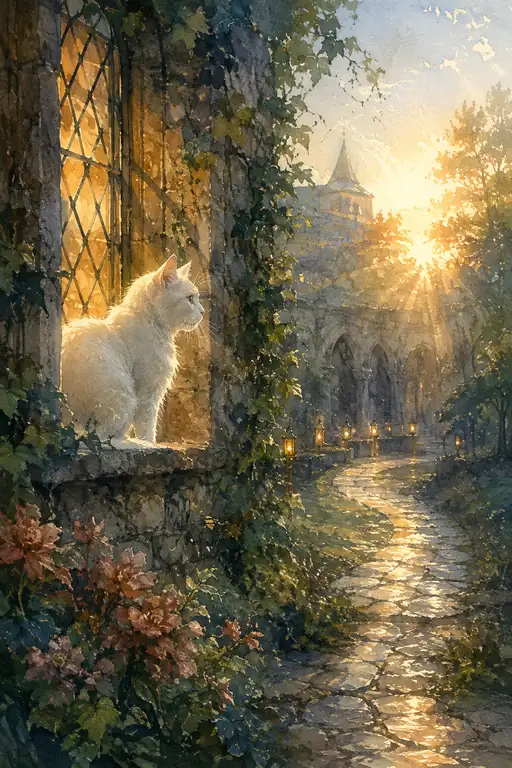 Morning Solitude on an Ancient Window
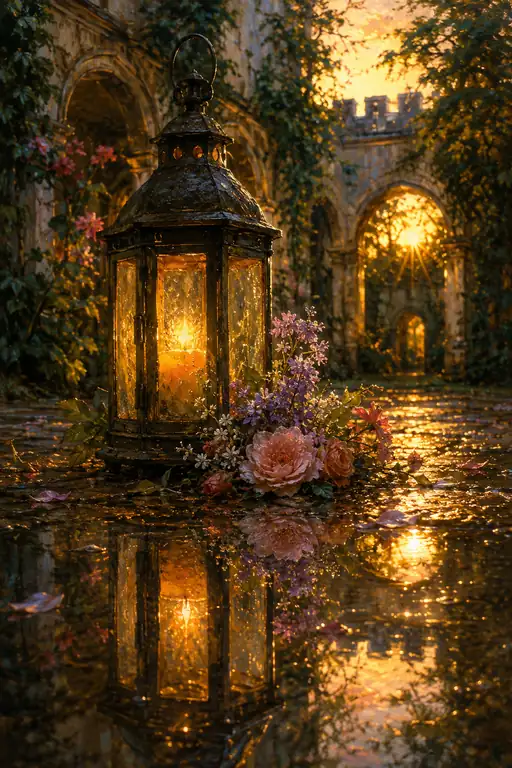 Golden Reflection of the Abbey Lantern
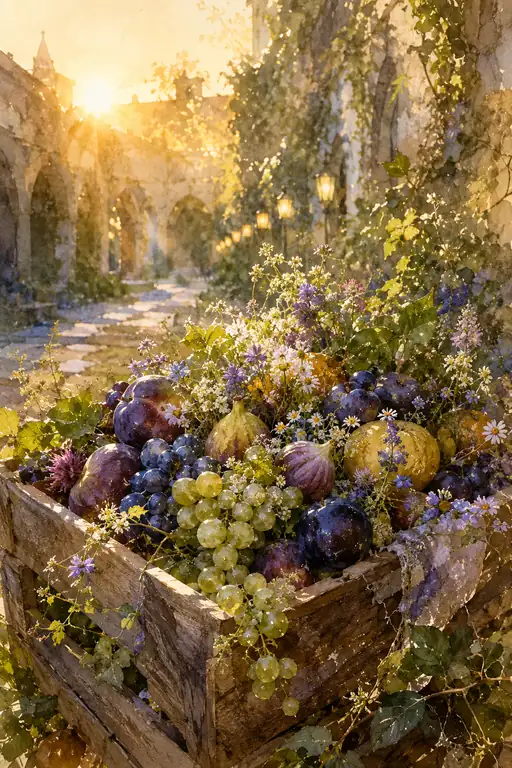 Golden Harvest in the Cloistered Sun
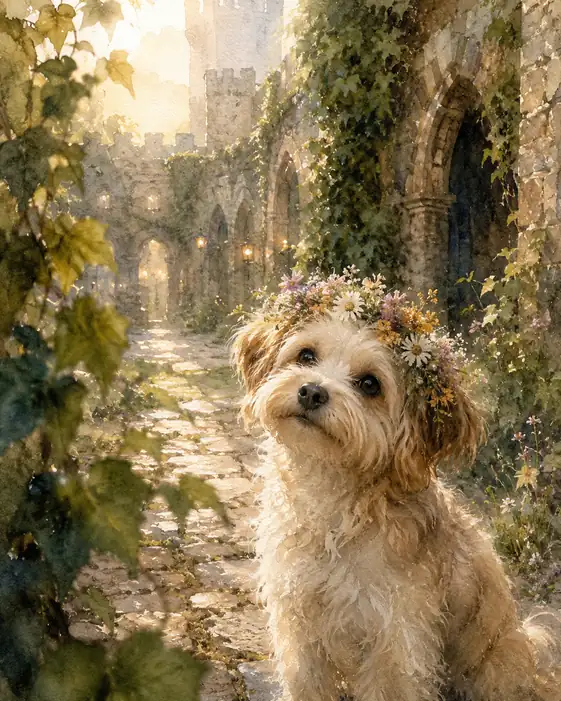 Crown of Wildflowers on the Sunlit Path
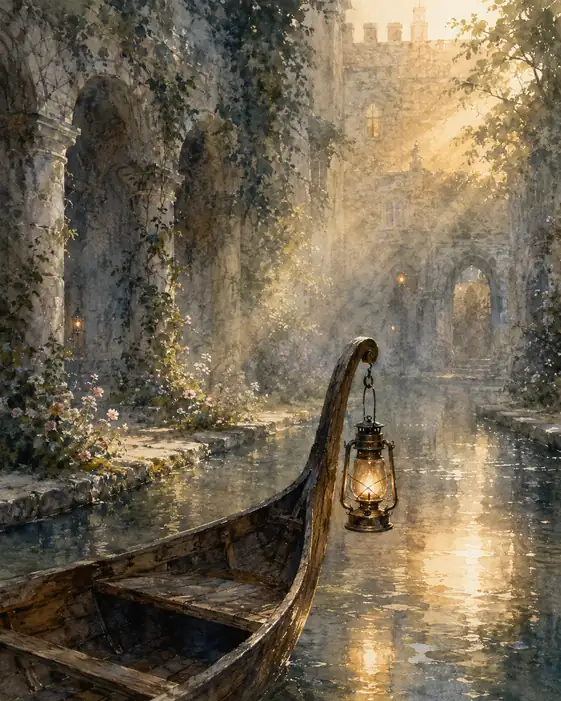 Golden Mist Drifting Through the Canal