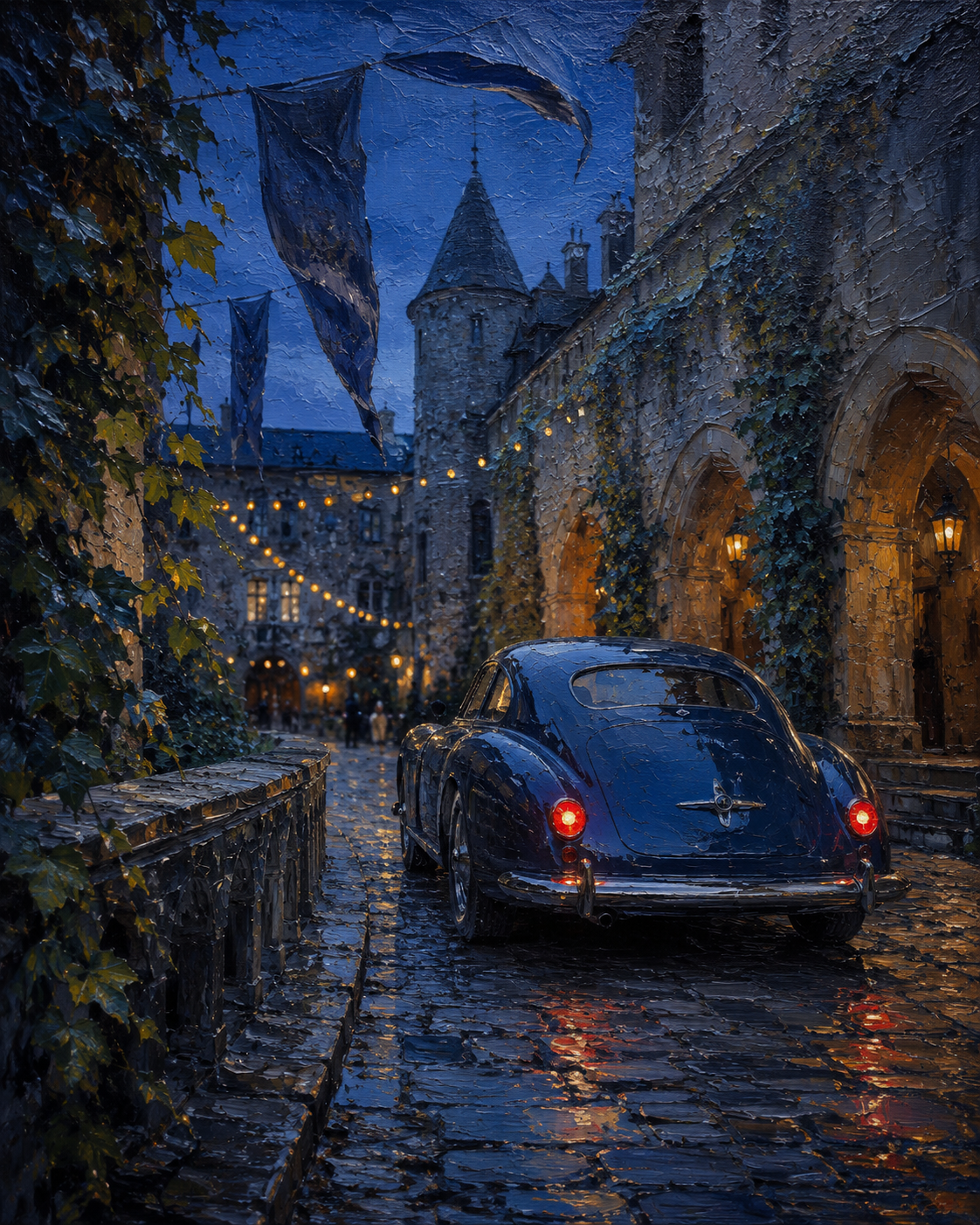
Midnight Arrival at the Castle Courtyard
Critique
Introduction This courtyard places a vintage car on wet cobbles within an ivy-covered castle. Banners, towers, arches, bulb strings, and figures surround it, merging mechanical elegance with ceremonial architecture. Description The rounded blue-black car is seen from the rear at lower right. Red tail lamps glow above chrome bumpers and cast elongated reflections across rain-dark paving. Curved fenders, small rear window, smooth trunk, and exposed tires remain legible in blue highlights. At right, amber lamps illuminate repeated arches and steps. Ivy frames the left balustrade and climbs the wall. Dark banners hang overhead, and strings of gold bulbs lead toward people gathered near a far doorway. Analysis The car's broad curved mass occupies the foreground against the vertical tower and receding wall. Its placement leaves a narrow passage at left, strengthened by paving seams, balustrade, and bulb strings. Red tail lights become sharp focal points amid blue and gold, while chrome picks up both temperatures. Rounded metal contrasts with rough stone, foliage, and angular banners. Thick impasto makes wet cobbles and masonry tactile; smoother highlights model the vehicle. Interpretation and Evaluation The image stages arrival without a driver. The lit rear suggests recent motion or departure, while figures imply an event ahead. Paint, glass, chrome, wet stone, ivy, and walls show descriptive control. Dynamic asymmetry, disciplined blue-gold-red color, and juxtaposed car and fortress create temporal tension. Conclusion At first the vehicle appears to be an elegant centerpiece, but sustained viewing makes it a threshold between the viewer and the gathering. Reflections carry its lights into the courtyard. The painting turns a parked car into an image of arrival, anticipation, and movement held briefly in place.
Same Subcategory
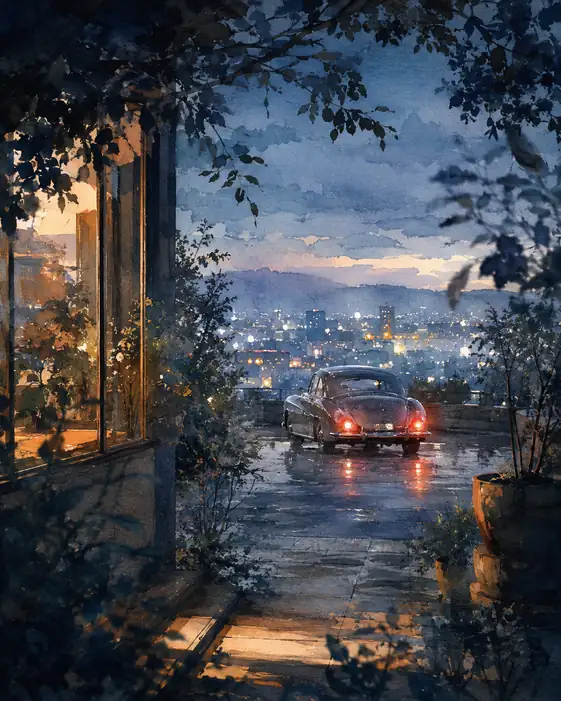 The Old Car Pauses between Home and the City Stars
Similar Artworks
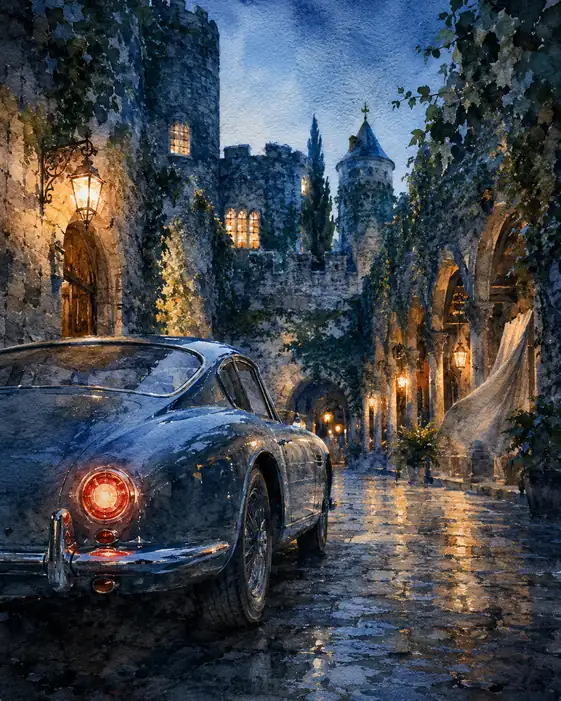 Nightfall Return to the Medieval Haven
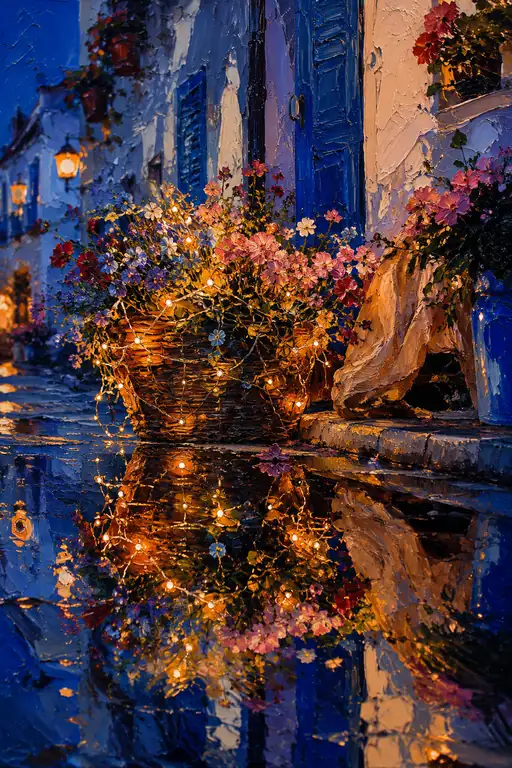 Sparkling Night Blooms Mirrored in the Rain
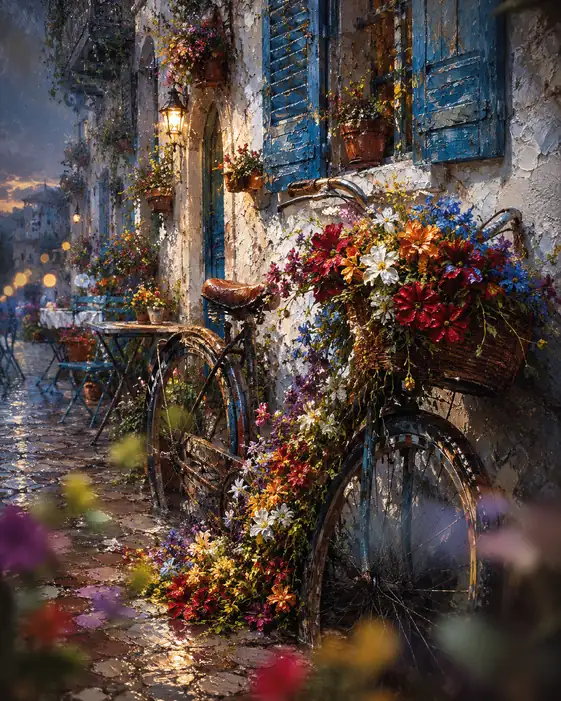 Flower-Laden Bicycle by the Twilight Shutter
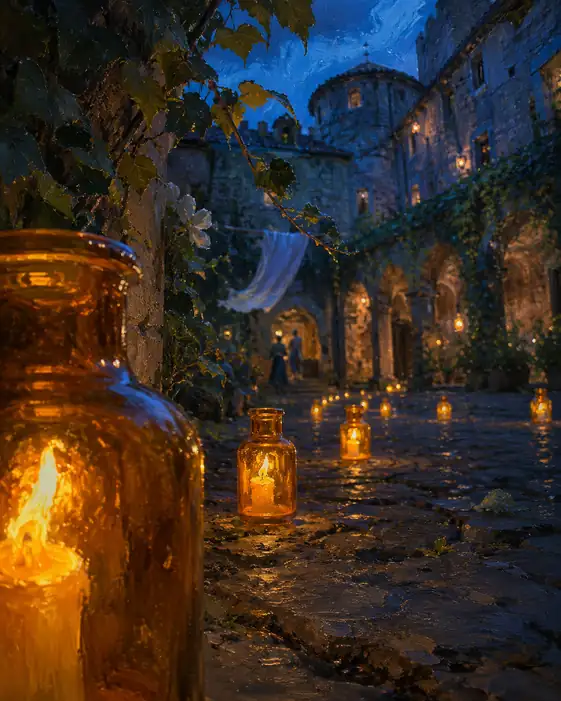 Amber Glow Guiding the Evening Walk
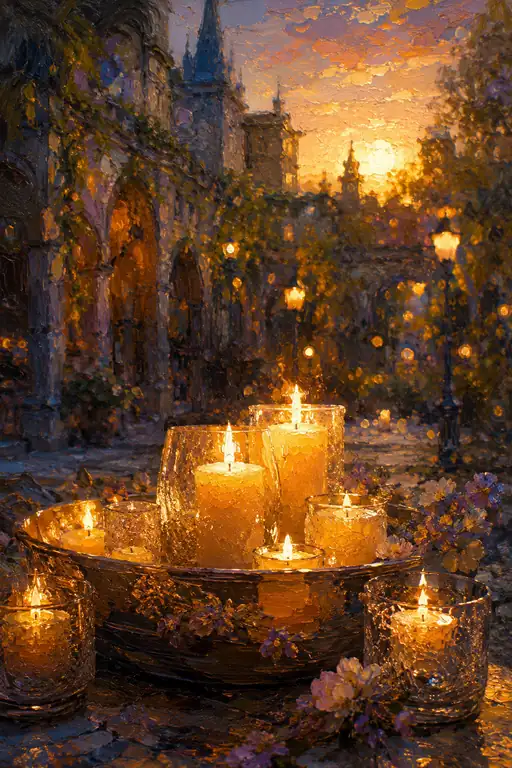 Bowl of Golden Flames in the Twilight Garden
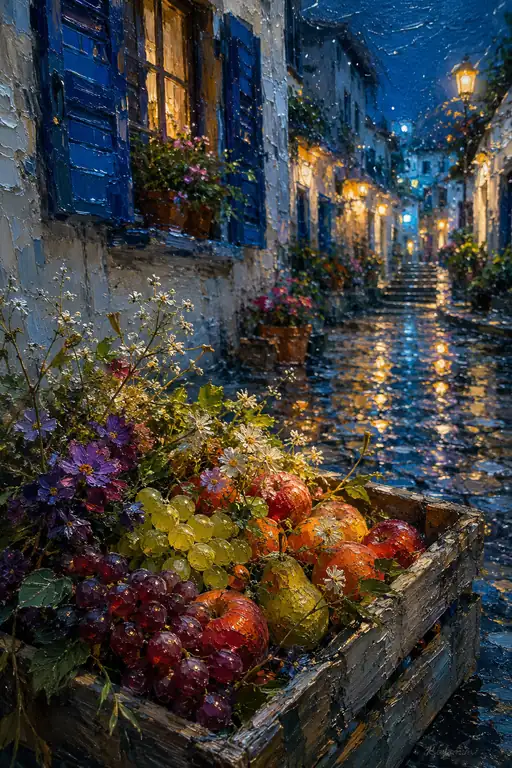 Crates of Abundance at the Lane's Foot
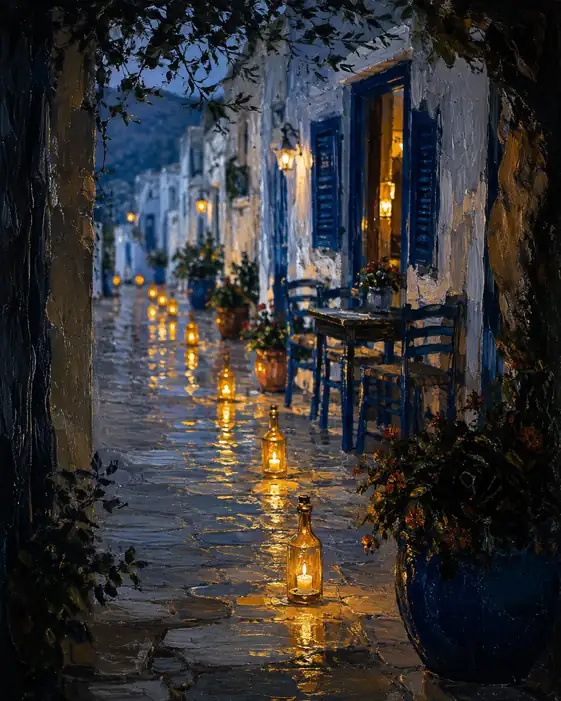 Trail of Small Flames Guided Home
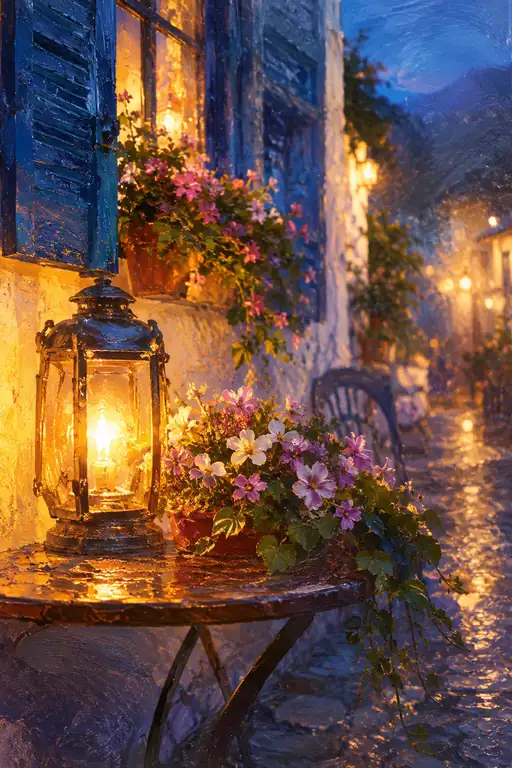 Evening Terrace Glow in the Old Quarter
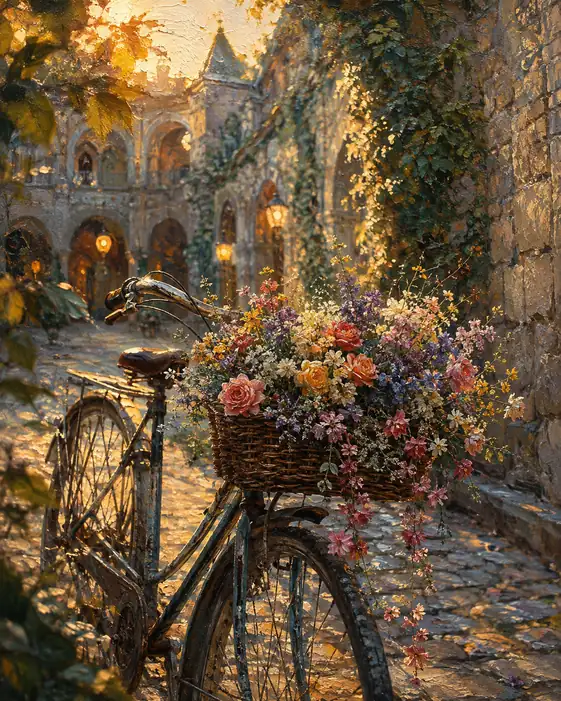 The Flower Peddler’s Courtyard at Sunset
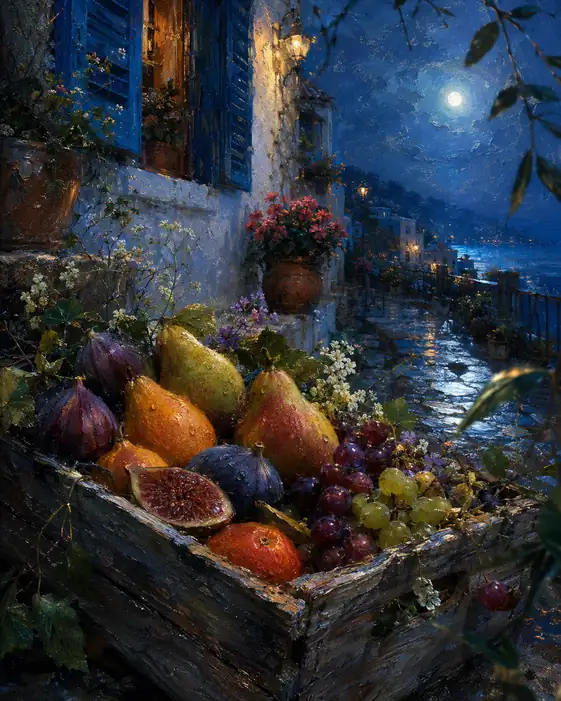 Moonlit Still Life Above the Coast