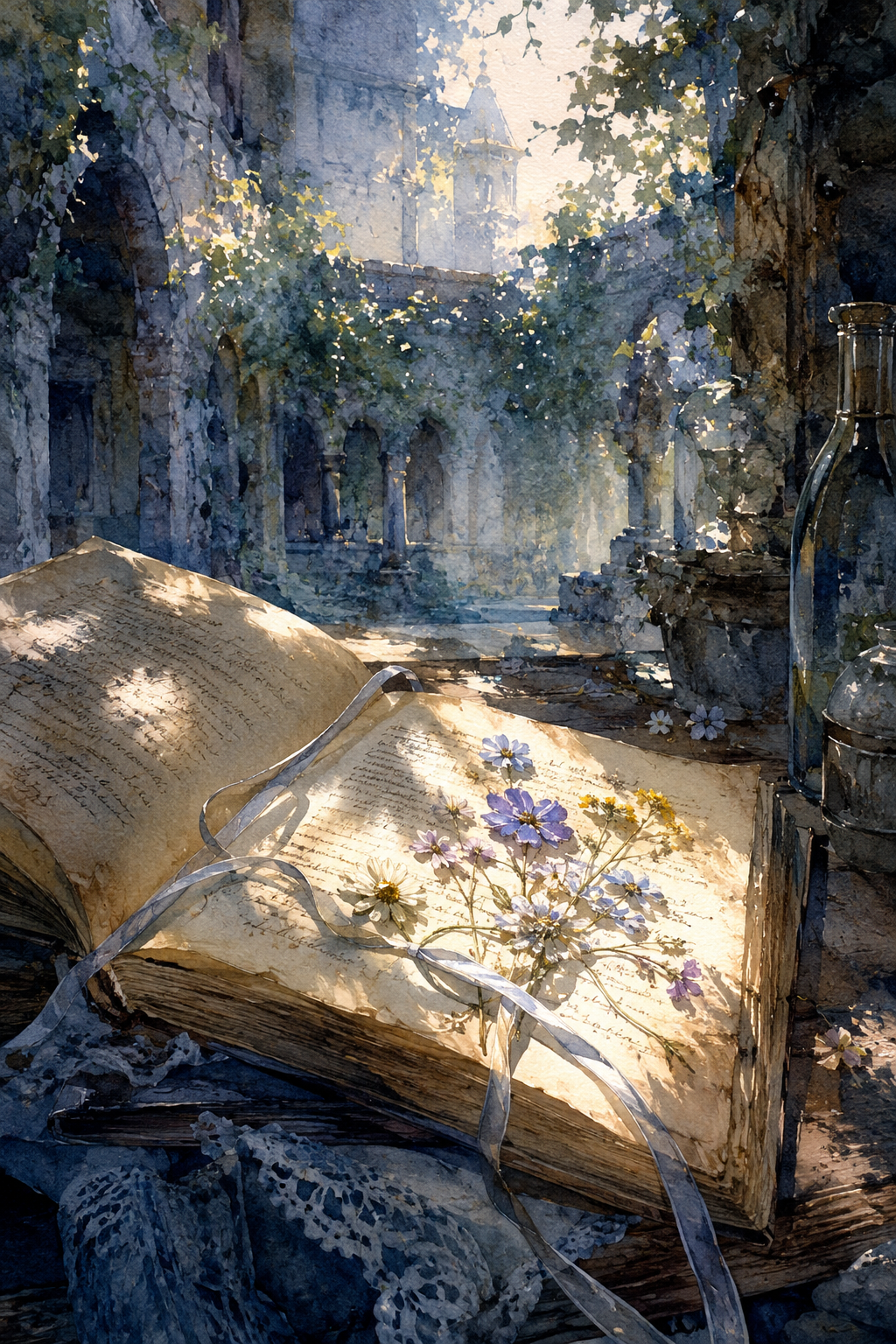
Forgotten Verses and Dried Wildflowers
Critique
Introduction This still life places an open handwritten book within an ivy-filled ruin. Pressed flowers and pale ribbons cross the pages, while a blue bottle and arches extend preservation into architectural depth. Description The thick volume lies diagonally from lower left to center right. Yellowed pages carry dense slanting script, worn edges, folds, and stains. Blue, violet, white, and yellow flowers rest on the right page beneath curling translucent ribbons. Dark lace or embroidered cloth appears below the book. At right, a tall narrow bottle catches cool light. Beyond, broken arcades, columns, foliage, and a distant tower receive shafts of pale gold. Analysis The book's broad angular planes dominate the foreground and direct the eye toward the central courtyard. Ribbons create looping diagonals across the writing, while flower stems cast fine shadows. The vertical bottle and columns counter the pages' low spread. Warm cream paper holds the brightest sunlight; cool blue glass and stone establish depth. Legible material differences among brittle edges, ink lines, petals, silk, glass, and masonry demonstrate controlled focus. Interpretation and Evaluation The work links written memory with botanical preservation. Flowers interrupt text but become another record, while ribbons suggest binding and return. The empty bottle implies past or future use. Clear space, restrained blue-gold color, and the parallel between open book and open ruin give intellectual and emotional resonance. Conclusion At first the book appears to preserve a private past, but sustained viewing connects its pages to the weathered architecture beyond. Both hold traces rather than complete stories. Light, pressed flowers, and empty glass make absence tangible without closing interpretation.
Same Subcategory
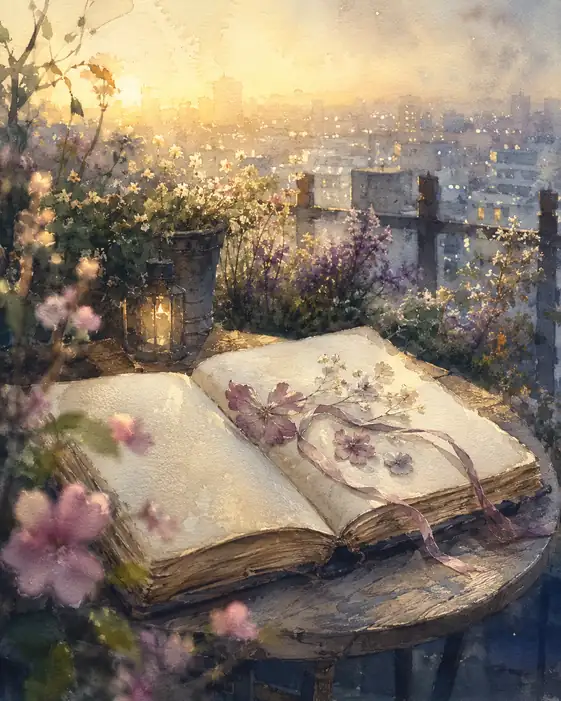 The Blank Page Waits for the City's Morning
Similar Artworks
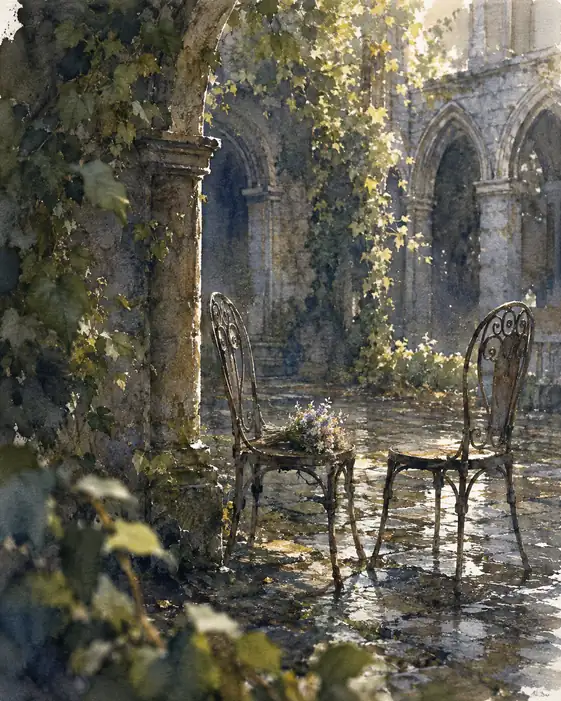 Silent Soliloquy of the Forgotten Garden
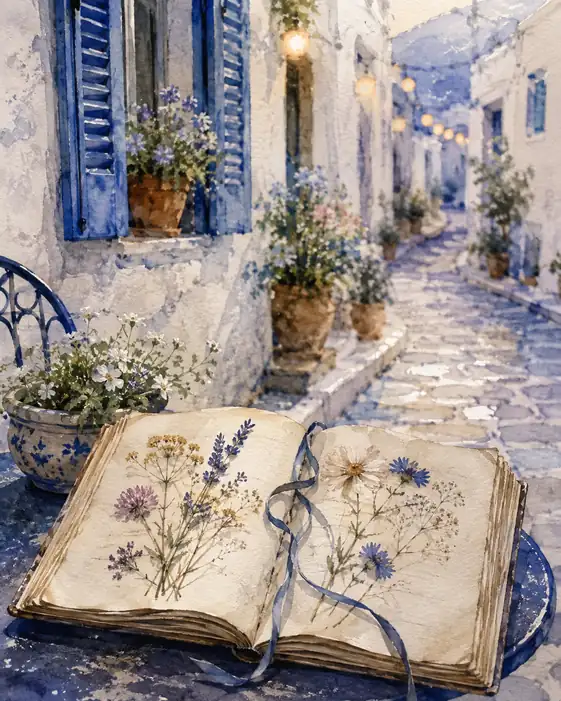 Memory Pressed in Petals and Sky
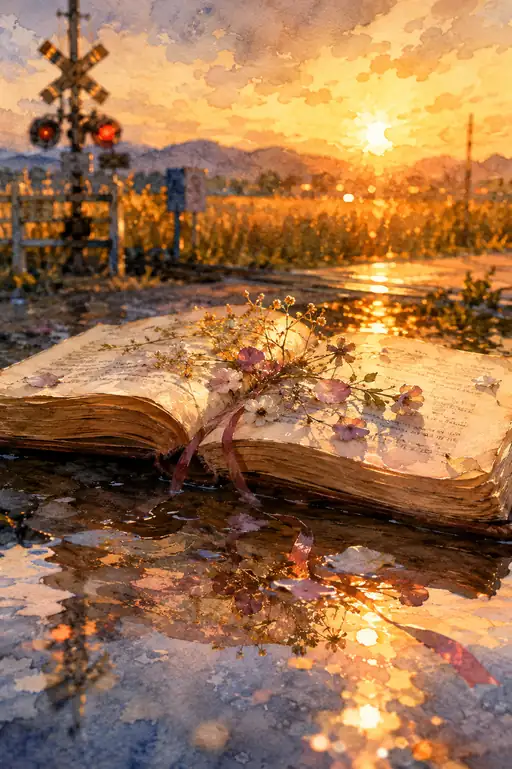 Forgotten Verses on the Sunlit Railway Water
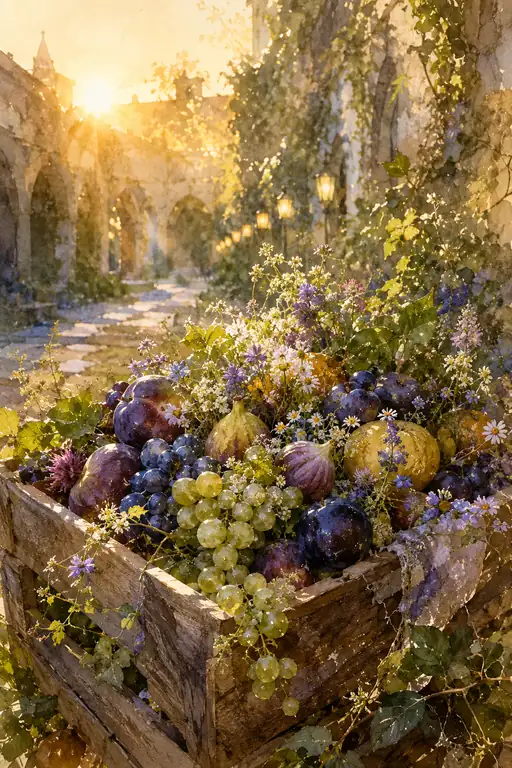 Golden Harvest in the Cloistered Sun
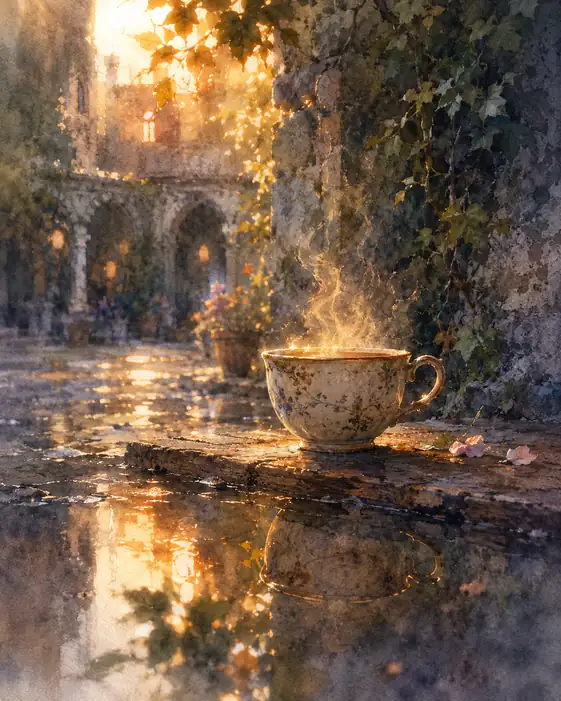 Morning Steam and Sunlit Courtyard
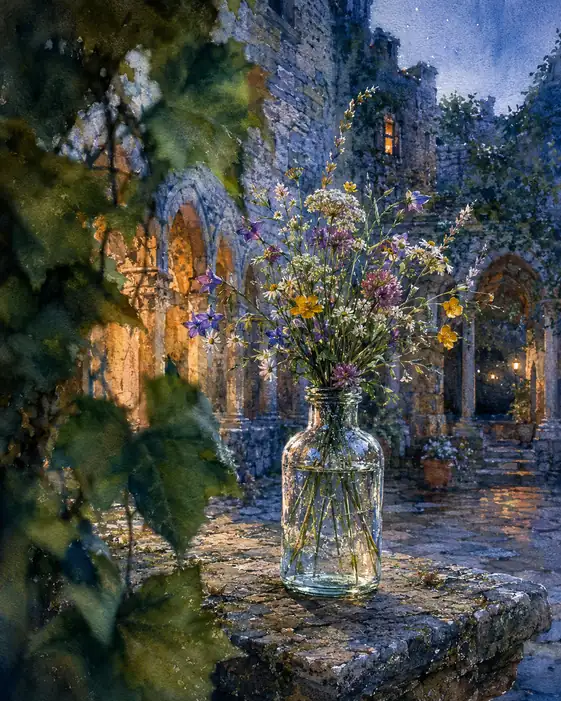 Meadow Blooms in the Abbey Light
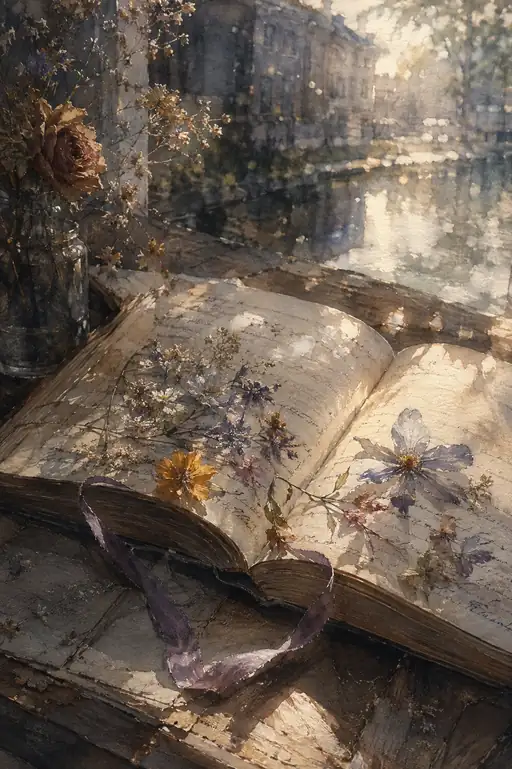 Flowers Remember What the Letter Said
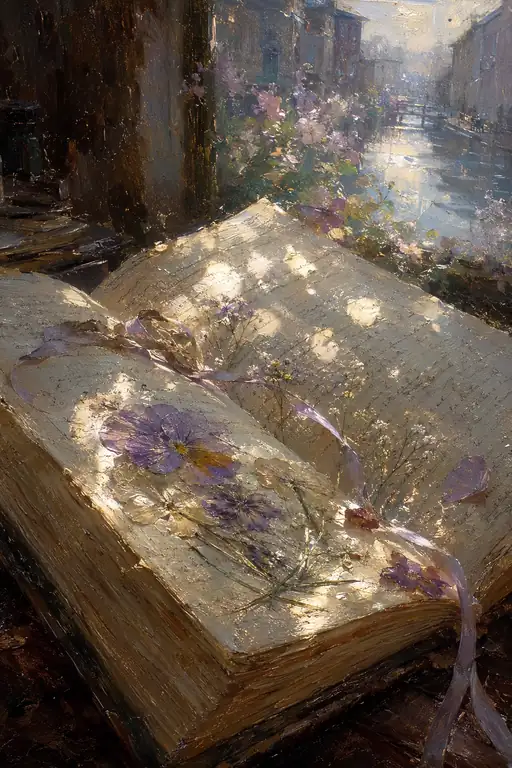 The Canal Pressed Between Beloved Pages
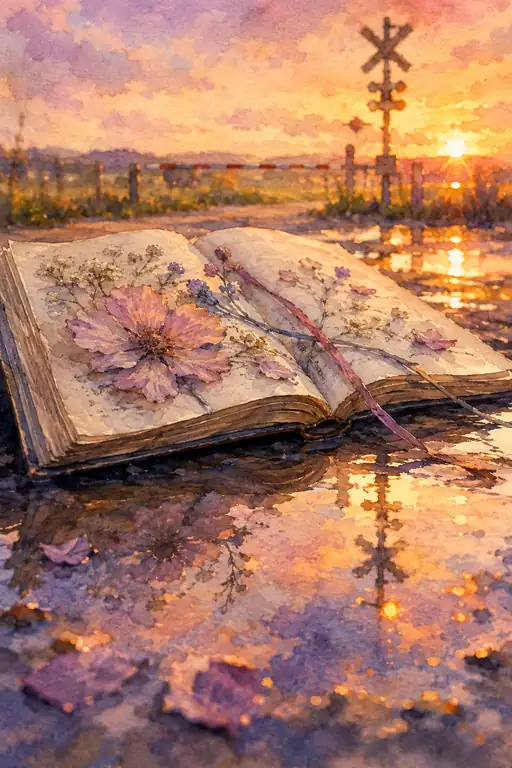 Autumn Blossom Book Beside the Sunlit Track
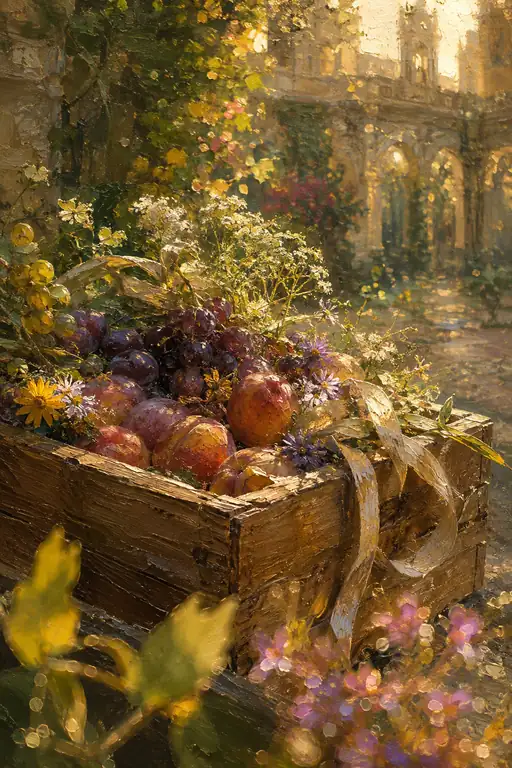 Sun-Drenched Harvest of the Abbey Garden